


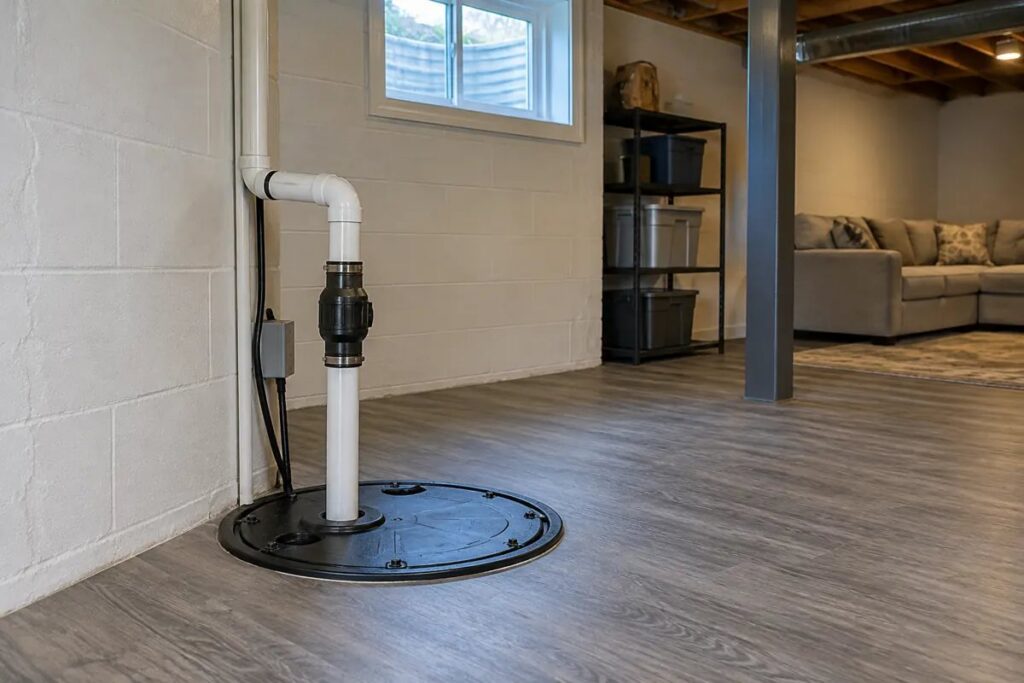
Quick answer: Submersible sump pumps sit inside the basin and generally run more quietly, while pedestal pumps keep the motor above the pit and are easier to access for service. The better choice depends on the basin dimensions, required pumping capacity and head, switch design, noise tolerance, maintenance access, and budget—not pump type alone.
Key takeaways
- Submersible pumps sit fully in the basin and run quieter, while pedestal pumps keep the motor above water and are easier to access for repairs.
- According to This Old House, most residential sump pumps cost $100 to $300, with battery backup or combination systems running $300 to $700 or more.
- HomeAdvisor reports pedestal pumps can last up to 25 years with routine care, though they clog more easily than submersible models.
- Angi puts the national average sump pump installation cost at $1,100, with pedestal jobs typically $800 to $1,500 and submersible or specialty systems $1,200 to $3,000.
- A battery backup or combination system is worth the extra cost for coastal Ocean County homes that lose power during nor’easters and summer storms.
- No sump pump can prevent water damage once flooding exceeds a home’s drainage capacity, which is when professional water extraction becomes necessary.
What Is the Difference Between a Submersible and a Pedestal Sump Pump?
A sump pump’s job is simple: collect groundwater that seeps into a basement or crawl space sump pit and push it away from the foundation before it causes damage. The two main residential types differ mainly in where the motor sits.
A submersible pump sits fully inside the sump basin, with the motor sealed in a waterproof housing below the waterline. A pedestal pump keeps the motor mounted on a pole above the pit, while only the intake sits below water. That single design difference drives almost every other tradeoff between the two, from noise level to price to how long the unit lasts.
Submersible Sump Pumps: Pros and Cons
Submersible pumps have become the most common choice for residential basements, according to This Old House, largely because they operate quietly and take up less floor space in the pit. Submersible pumps are available in many capacities, but actual performance depends on the model’s pump curve, discharge-pipe configuration, and vertical lift rather than its submerged design alone.
- Pros: Quieter operation, little equipment above the basin, and a wide selection of pumping capacities.
- Cons: Often higher purchase cost and more effort to inspect or service because the pump must be removed from the basin.
HomeAdvisor estimates submersible pump equipment alone runs $100 to $400, with full installation often landing higher once labor and basin work are factored in. These pumps may make sense where frequent cycling, limited above-basin space, or lower operating noise is a priority, provided the selected model meets the site’s required flow and head.
Pedestal Sump Pumps: Pros and Cons
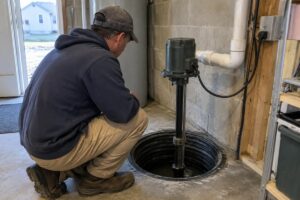
Pedestal pumps place the motor above the basin, which can make inspection and service easier, and they are often less expensive to purchase. Because the motor stays above the water, a homeowner or technician can inspect, clean, or replace parts without pulling the whole unit out of the pit.
- Pros: Lower upfront cost, simpler repairs, longer potential lifespan with routine care.
- Cons: Louder operation, equipment extending above the basin, and greater exposure of the motor and switch assembly to the surrounding space.
HomeAdvisor notes pedestal pumps typically cost $60 to $170 for the unit and can last up to 25 years with routine maintenance, though they are more prone to clogging than submersible pumps. That combination of low cost and long service life makes pedestal pumps a reasonable fit for homes with occasional, lighter water intrusion rather than sustained heavy flow.
Submersible vs Pedestal Sump Pump Comparison Table
| Factor | Submersible | Pedestal |
|---|---|---|
| Motor location | Fully inside the sump basin | Above the pit on a pole |
| Typical unit cost | 100–400 (HomeAdvisor) | 60–170 (HomeAdvisor) |
| Typical installation cost | 1,200–3,000 (Angi) | 800–1,500 (Angi) |
| Noise level | Quieter | Louder |
| Often chosen for | Quieter operation and minimal equipment above the basin | Easy motor access and installations with adequate vertical clearance |
| Maintenance access | Harder, motor is submerged | Easier, motor stays accessible |
| Service life | Varies by model, cycling frequency, installation conditions, and maintenance; HomeAdvisor says some pedestal pumps can last up to 25 years with routine care |
What Does Sump Pump Installation Cost?
Angi reports a national average installation cost of $1,100, with most homeowners paying between $800 and $1,500; its estimates range from $800 to $1,500 for pedestal installations and from $1,200 to $3,000 for submersible and specialty installations. HomeAdvisor puts the broader replacement range at $645 to $2,120, driven mainly by labor complexity and pump type.
Factors that move the price include:
- Whether you’re replacing an existing pump or installing a new pit and discharge line
- Crawl space access, which often requires hand digging and raises labor cost
- Battery backup or combination systems, which add equipment cost but protect against power outages
- Local labor rates, which HomeAdvisor estimates at $45 to $200 per hour
These figures are general industry estimates, not quotes from any specific contractor, and actual costs in Ocean County will depend on your home’s layout and the plumber or installer you hire.
Battery Backup and Combination Systems: Worth It for the Jersey Shore?
A standard electric sump pump stops working during a power outage, and coastal storms can interrupt electricity in Toms River and surrounding communities such as Bayville, Brick, and Point Pleasant Beach. This Old House notes that battery backup pumps automatically activate when the primary pump loses power, while combination systems bundle a primary electric pump with a battery backup in one unit.
A backup system may be worthwhile when a home has a history of sump activity, flooding, or storm-related outages. Consider the property’s drainage conditions, outage risk, backup runtime, maintenance needs, and the consequences of pump failure rather than relying only on distance from the water or a previously dry basement.
Local Code and Permit Considerations in New Jersey
A new sump pit, electrical supply, or discharge-line alteration may be subject to the New Jersey Uniform Construction Code and permit or inspection requirements. Requirements depend on the project scope, so verify them with the municipal construction office before work begins. Although New Jersey uses a statewide construction code, permit and inspection needs depend on the scope of work; confirm them with the municipal construction office before altering a discharge line, adding electrical work, or digging a new pit.
When a Sump Pump Isn’t Enough
Even a well-matched sump pump has limits. During major coastal storms, storm surge, or sustained heavy rainfall, incoming water can exceed a particular pump system’s rated capacity, especially if power fails or a backup battery is depleted. A pump failure combined with hours of standing water can lead to saturated drywall, warped flooring, and mold growth within 24 to 48 hours.
If your basement has already flooded, acting quickly matters more than troubleshooting the pump. PuroClean of Toms River provides residential restoration services, including water damage mitigation and restoration, professional drying, and mold remediation, in Toms River and surrounding Ocean County communities. Our comprehensive guide to water damage restoration covers what to expect once standing water has already entered a home. For broader seasonal flood preparedness beyond pump selection, see our guide to preparing your home for summer storms.
How to Choose Between Submersible and Pedestal for Your Home
Use these steps to narrow down the right pump type before you buy.
- Check how often your sump pit fills. Estimate the required flow and head, then compare each candidate pump’s rated performance; either design must be properly sized for the site.
- Measure your pit size. Pedestal pumps need vertical clearance above the basin, while submersible pumps require a basin wide and deep enough for the pump and float to operate without obstruction.
- Consider noise tolerance. If the pit sits near a finished basement living space, a submersible pump’s quieter operation matters more.
- Factor in your budget for both the unit and installation, using the cost ranges above as a starting point, and get a written quote from a licensed plumber.
- Decide on backup power. Homes in flood-prone or storm-exposed areas should weigh a battery backup or combination system against the cost of a single flooded basement.
- Confirm local code and permit requirements with your township before any new pit installation.
PuroClean of Toms River does not sell or rent sump pumps; this guide offers neutral, practical information to help homeowners compare their options. For emergency help after a flood, contact our restoration team or call (732) 930-2330; the emergency phone line is available 24/7.
Frequently Asked Questions
Can I install a sump pump myself?
Replacing an existing sump pump is a project many experienced DIYers can complete in about an hour, according to This Old House, since most replacement pumps fit standard basins. A brand-new installation involving a new pit or discharge line is more involved and often requires a licensed plumber familiar with local code.
How long do sump pumps typically last?
HomeAdvisor reports pedestal pumps can last up to 25 years with routine maintenance, while submersible pumps generally have a shorter service life because the motor stays underwater and is harder to inspect. Replacing a pump older than about 10 years is a common recommendation to avoid unexpected failure.
Do I need a battery backup sump pump in Toms River?
Homes near Barnegat Bay or in low-lying, storm-prone areas benefit from battery backup systems since power outages during nor’easters often coincide with heavy rainfall. Homes with a dry basement history farther from flood zones may not need the extra expense, though it remains a reasonable safeguard.
What should I do if my sump pump fails during a storm and my basement floods?
Do not enter standing water if outlets, appliances, or electrical equipment may be energized. Shut off power only from a dry, safe location; otherwise, contact emergency services, the utility, or a qualified electrician. After addressing immediate hazards, document visible damage and contact a restoration professional promptly for substantial or contaminated flooding, because drying within 24 to 48 hours helps reduce the risk of mold growth.
Is a submersible or pedestal pump better for a crawl space?
A submersible pump leaves less equipment above the basin, which can help in a low-clearance crawl space, but the basin must be large enough for the pump and float to operate freely. A pedestal pump requires more vertical clearance but may fit a narrower basin, so measure both the crawl-space clearance and basin dimensions before choosing.
Sources
- Best Sump Pumps of 2026: Costs and Pros and Cons – This Old House
- How Much Does It Cost to Replace a Sump Pump? – HomeAdvisor
- How Much Does It Cost to Install a Sump Pump? – Angi
- Sump Pits, Basins, and Receptors – UpCodes
Reach PuroClean of Toms River Any Time
If water, fire, mold, or biohazard damage has affected your home or business, the team at PuroClean of Toms River is available 24/7 at (732) 930-2330. You can also visit our contact page to reach our local team serving Toms River and the surrounding Ocean County communities.
Written by the team at PuroClean of Toms River, an IICRC Certified and EPA Lead-Safe Certified property restoration company at 798 Fischer Blvd., Toms River, NJ, locally owned and operated by Alex Gonzalez.