


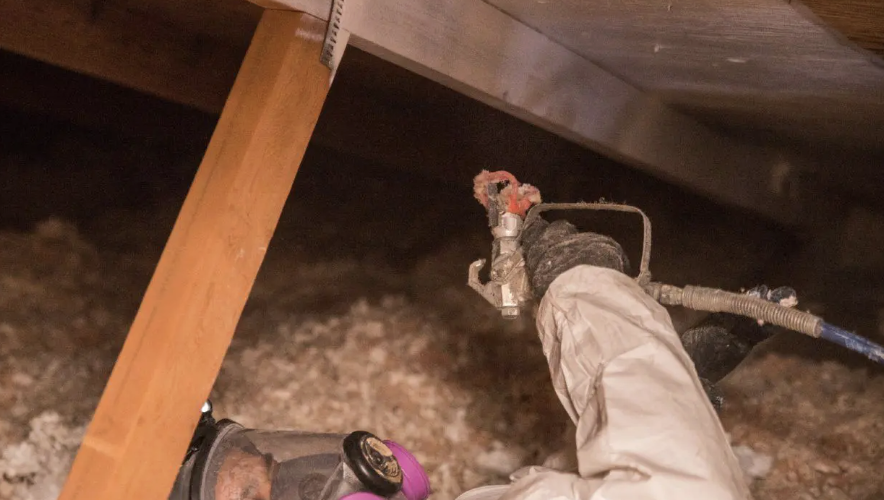
It’s Saturday morning in Port Charlotte. You’ve noticed a musty smell near the hallway ceiling, so you pull down the attic ladder to investigate. Within a few minutes, you’re sweating through your shirt. The attic is hot, the insulation makes it difficult to see where to step, and your flashlight reveals dark patches spreading across the underside of the roof decking.
Your first thought might be to grab a bottle of bleach, a scrub brush, and a respirator from the garage.
That could be a mistake.
Getting rid of attic mold isn’t simply a matter of spraying the black spots until they disappear. You need to understand why the mold developed, whether the affected materials can be cleaned, and how to remove contamination without spreading it into other areas of the house.
There’s also the attic itself to consider. In Southwest Florida, attic temperatures can become dangerously high, particularly during the summer. Combine that heat with difficult access, exposed electrical components, and the possibility of disturbing mold-contaminated materials, and a seemingly straightforward DIY project can become hazardous.
For homeowners in Port Charlotte, Charlotte Harbor, and surrounding Charlotte County communities, here’s what you should understand before attempting attic mold removal—and why professional remediation is often the safer approach.
Why Attic Mold Removal Can Be More Dangerous Than Homeowners Expect
Cleaning a small patch of mold from an accessible bathroom surface is one thing. Working above your ceiling, surrounded by insulation and exposed framing, is something else entirely.
Attic mold removal combines several hazards that homeowners may not encounter during ordinary household cleaning.
- Extreme heat: Attics can become dangerously hot during Southwest Florida’s warmer months, increasing the risk of heat exhaustion and heat stroke.
- Airborne contamination: Disturbing mold-contaminated materials can release spores, fragments, and dust into the air.
- Fall hazards: Unfinished attic floors may have exposed ceiling joists with drywall between them that cannot support a person’s weight.
- Electrical hazards: Wiring, junction boxes, and mechanical equipment may be difficult to see beneath insulation.
- Confined working conditions: Limited headroom, awkward body positions, and restricted movement make cleanup more difficult.
- Unresolved moisture: Even if visible mold is removed, growth can return when roof leaks or condensation problems remain.
These risks can compound one another. Someone wearing protective clothing and a respirator may experience additional heat strain while working in a poorly ventilated attic. Fatigue can also make it harder to maintain safe footing.
The U.S. Environmental Protection Agency recommends appropriate protective equipment and careful work practices during mold cleanup. Its guidance also identifies circumstances in which professional assistance is advisable.[1]
How Hot Do Attics Get in Port Charlotte, Florida?
Step outside on a July afternoon in Port Charlotte and the air may already feel oppressive. Inside an attic, conditions can be considerably worse.
Sunlight heats the roof covering, which transfers heat into the attic. In a conventional vented attic, temperatures can rise well above the outdoor air temperature. Depending on roof construction, insulation, ventilation, solar exposure, and weather conditions, some attics can reach approximately 120°F to 140°F or higher during hot, sunny periods.
That range is illustrative, not a measurement of Port Charlotte attics. Actual temperatures vary substantially from home to home, and conditioned or encapsulated attics may behave differently.
Now imagine spending an extended period overhead, scrubbing roof decking while wearing gloves, eye protection, and respiratory protection.
Heat becomes more than an inconvenience.
Heat Exhaustion and Heat Stroke Are Real Concerns
According to the CDC and National Institute for Occupational Safety and Health, working in hot environments can lead to heat-related illness. Risk increases with physical exertion, dehydration, inadequate acclimatization, and conditions that interfere with the body’s ability to cool itself.[2]
Warning signs of heat exhaustion can include heavy sweating, headache, dizziness, nausea, weakness, and unusual fatigue.
Heat stroke is a medical emergency. Confusion, altered mental status, collapse, or seizures during heat exposure require immediate emergency assistance.
Do not attempt attic mold removal during dangerously hot conditions. If you’re feeling dizzy, weak, or overheated while investigating an attic, stop and move to a cooler location.
For Port Charlotte homeowners, this is one of the strongest reasons to avoid treating attic remediation as a weekend DIY project.
What Happens When You Scrub or Disturb Attic Mold?
Imagine brushing a dusty surface. Even when the surface looks cleaner afterward, some of the material you’ve disturbed becomes airborne.
Mold-contaminated building materials can behave similarly. Scraping, sanding, dry brushing, or removing affected insulation may release spores, fungal fragments, and other particles.
Those particles can remain in the work area or move through openings into adjacent spaces, depending on the building and the work practices used.
This is why professional remediation may involve containment, appropriate respiratory protection, controlled material removal, and specialized cleaning equipment.
Is Black Mold More Dangerous Than Other Attic Mold?
Not necessarily. The color of mold doesn’t establish its species or predict how someone will respond to exposure.
Some homeowners associate every dark patch with Stachybotrys chartarum, commonly called black mold. But several molds can appear dark, and identifying a species requires more than visual inspection.
The CDC explains that mold exposure may cause symptoms such as nasal congestion, coughing, wheezing, or skin irritation in susceptible individuals. People with asthma, mold allergies, or weakened immune systems may face additional concerns.[3]
Not everyone exposed to mold develops symptoms, and the presence of dark staining doesn’t establish that a dangerous exposure has occurred.
Still, unnecessarily disturbing suspected mold growth is a risk worth avoiding.
If you’re uncertain whether dark attic stains are mold, our guide to black mold in Port Charlotte attics explains how mold, water staining, and wood discoloration can differ.
The Other Attic Hazards: Falls, Wiring, and Damaged Building Materials
One of the most dangerous mistakes a homeowner can make is assuming that the attic floor is solid.
In many unfinished attics, the surface between ceiling joists is drywall. That drywall is designed to form the ceiling of the rooms below—not support someone walking across it.
Stepping between framing members can result in a fall through the ceiling.
Insulation can make the situation more dangerous by concealing joists, wiring, plumbing, and other obstacles.
Other concerns include exposed electrical components, damaged roof framing, protruding fasteners, and restricted access around mechanical equipment.
If roof decking has been exposed to prolonged moisture, its condition may also be uncertain.
Never step directly onto ceiling drywall or enter an attic with suspected electrical or structural hazards. When the affected area cannot be inspected safely from an established access point, leave the evaluation to a qualified professional.
Can You Remove Mold From an Attic Yourself?
Sometimes, but the answer depends on much more than the size of the visible stain.
The EPA explains that homeowners may be able to handle certain small mold cleanup projects, generally involving areas smaller than approximately 10 square feet. Larger areas and situations involving substantial water damage or other complications may require professional assistance.[1]
That guidance doesn’t mean every mold problem smaller than 10 square feet is safe to tackle yourself.
A small patch of suspected mold on plywood directly above an exposed ceiling cavity may be much harder to address safely than a similarly sized area on an accessible household surface.
Consider the following differences.
| Situation | Why It Matters | Recommended Approach |
|---|---|---|
| Small mold area on an accessible, suitable surface | Some limited cleanup projects may fall within homeowner guidance. | Review EPA recommendations and evaluate whether safe cleanup is realistic. |
| Mold on overhead roof decking | Working above shoulder height increases fatigue and makes contamination control more difficult. | Consider professional remediation. |
| Attic temperatures are extremely high | Heat illness risk increases with exertion and protective clothing. | Do not attempt DIY cleanup in unsafe conditions. |
| Mold affects insulation or multiple framing members | Porous materials and larger work areas can complicate removal. | Arrange professional evaluation. |
| Roof decking is soft or deteriorated | Cleaning cannot restore damaged structural materials. | Have a qualified building professional assess the damage. |
| Household occupants have significant respiratory or immune-related vulnerabilities | Potential exposure deserves additional caution. | Avoid unnecessary disturbance and seek appropriate professional guidance. |
| Mold returns after previous cleaning | The original moisture problem may not have been resolved. | Investigate the source before repeating cleanup. |
For many Port Charlotte homeowners, the combination of heat, difficult access, and potential contamination makes professional cleanup the more practical choice—even when the affected area initially appears small.
Why Bleach, Mold Sprays, and DIY Foggers Often Fall Short
Walk through a hardware store and you’ll find products promising to remove mold, eliminate stains, or treat contaminated surfaces.
Some cleaning products have legitimate uses. The problem is assuming that spraying a product onto attic plywood solves the entire situation.
Consider what happens if mold develops beneath a roof penetration that leaks during heavy rain.
You spray the plywood. The stain becomes lighter. A week later, another thunderstorm sends water through the same opening.
The moisture problem hasn’t changed.
Bleach Doesn’t Replace Physical Removal of Mold Contamination
The EPA does not recommend routinely using chlorine bleach as a mold cleanup practice. Its guidance emphasizes removing mold contamination and correcting the underlying moisture problem.[4]
Attic plywood is also porous, making it different from nonporous household surfaces.
Lightening a stain doesn’t establish that contamination has been adequately removed.
Never mix bleach with ammonia, acids, or other household cleaning chemicals. Dangerous gases can result.
Fogging Isn’t a Substitute for Cleaning Contaminated Materials
Fogging products are sometimes marketed as a convenient way to treat mold without physically accessing every affected surface.
But applying a product into the air doesn’t automatically remove mold contamination from plywood, insulation, or framing.
Any treatment should be evaluated as part of an appropriate remediation plan, not assumed to replace material cleaning or removal.
Painting Over Mold Doesn’t Solve the Problem
Painting or applying a coating over visible mold without proper preparation can conceal the appearance of contamination while leaving the original moisture conditions unresolved.
The EPA advises against painting or caulking moldy surfaces before appropriate cleanup.[1]
The objective is not simply to make the attic look clean. It’s to remove contamination appropriately and address the conditions that allowed it to develop.
When Should You Call a Professional for Attic Mold Removal?
If you’ve discovered suspected mold on attic plywood, rafters, or insulation, the safest next step is often to have the situation evaluated before disturbing the materials.
Professional assistance is particularly advisable when:
- The affected area extends across multiple plywood panels or framing members.
- Mold appears on overhead surfaces that are difficult to reach safely.
- The attic is excessively hot or lacks safe walking surfaces.
- Insulation is wet or visibly contaminated.
- You suspect a roof leak, HVAC condensation problem, or other unresolved moisture source.
- The roof decking appears soft, damaged, or deteriorated.
- Previous cleaning hasn’t prevented the problem from returning.
- You need help determining whether cleaning or material replacement is appropriate.
Florida regulates certain mold assessment and remediation services, with licensing requirements and exemptions depending on the work involved. Homeowners can review the Florida Department of Business and Professional Regulation’s mold-related services information when selecting a provider.[5]
For homeowners in Port Charlotte, PuroClean of Venice provides mold remediation and restoration services. If you’ve found suspicious attic staining, call to discuss the conditions you’ve observed and the appropriate next steps.
For additional information about professional cleanup, visit our Attic Mold Removal and Cleanup Services in Port Charlotte, FL.
How Does Professional Attic Mold Remediation Work?
When you hire a professional to remove attic mold, you’re paying for more than someone to scrub the underside of your roof.
You’re paying for a plan that addresses the affected materials, controls contamination during cleanup, and accounts for the moisture problem that allowed mold to develop.
That distinction matters in Port Charlotte. A roof leak following a summer thunderstorm requires a different solution from condensation around an air-conditioning duct. Both can contribute to mold growth, but the source of moisture must be identified before anyone can reasonably expect the cleanup to last.
Step 1: Evaluate the Attic and Identify the Moisture Source
The first priority is understanding what happened.
An evaluation may consider the location and extent of suspected mold, moisture conditions, roof penetrations, HVAC equipment, insulation, and the condition of exposed wood.
For example, dark growth concentrated beneath a roof vent may point toward water intrusion. Staining around poorly insulated ductwork may suggest condensation. Neither can be confirmed from appearance alone.
If a roof, HVAC, or other building defect is responsible, the appropriate contractor must correct that problem. Mold remediation doesn’t replace necessary roofing or mechanical repairs.
Step 2: Establish Appropriate Contamination Controls
One reason homeowners should be cautious about DIY attic cleaning is the possibility of disturbing mold-contaminated materials.
Professional remediation may involve containment, controlled access, respiratory protection, and equipment designed to reduce the spread of particles during the work.
The methods depend on the size and condition of the affected area. Not every attic requires the same containment setup.
What matters is that the work is planned around the actual contamination rather than simply spraying chemicals into an open attic.
Step 3: Clean or Remove Affected Materials
Structurally sound wood may be suitable for cleaning using methods appropriate to the material and contamination. Severely deteriorated building components or certain contaminated porous materials may require removal.
Depending on the remediation plan, professional work may involve specialized cleaning techniques, HEPA-filtered equipment, controlled removal of affected materials, and other measures appropriate to the conditions.
The objective is to address mold contamination—not merely change the color of the plywood.
Step 4: Address Moisture and Evaluate the Finished Work
Before the project is considered complete, the moisture source should be corrected and affected materials should be appropriately dry.
Completion criteria may include visual evaluation, moisture measurements, documentation, and, when appropriate, independent post-remediation verification.
The EPA emphasizes that mold cleanup should address both contamination and moisture. If the water problem remains, mold can return.[1]
Can Moldy Attic Plywood and Insulation Be Saved?
One of the first questions Port Charlotte homeowners ask is whether discovering mold means replacing the roof decking.
Not necessarily. Dark staining alone doesn’t establish that plywood has lost its structural integrity.
Some wood surfaces can be appropriately cleaned when the material remains sound. But cleaning isn’t a substitute for repairing wood that has softened, separated, or deteriorated after prolonged moisture exposure.
Insulation presents a different challenge. Many insulation products are porous, and contaminated or water-damaged materials may not be suitable for cleaning.
| Attic Material | Can It Be Cleaned? | When Replacement May Be Needed |
|---|---|---|
| Structurally sound plywood | Often possible, depending on the extent and condition of contamination. | When the material is deteriorated or cannot be appropriately restored. |
| Wood rafters and framing | May be suitable for professional cleaning when structurally sound. | When deterioration compromises the material or a building professional recommends replacement. |
| Fiberglass insulation | Depends on its condition, contamination, and the remediation plan. | When wet, heavily contaminated, damaged, or unsuitable for effective cleaning. |
| Cellulose insulation | Generally difficult to clean thoroughly when contaminated. | When affected by mold growth or significant water damage. |
| Drywall and other porous finishes | Limited cleaning may be possible in some circumstances. | When materials are extensively contaminated or water-damaged. |
Don’t assume that every dark plywood panel needs replacement. Equally, don’t assume that applying a cleaning product makes damaged wood safe to retain.
If roof decking appears soft, sagging, or delaminated, have a qualified roofing or building professional evaluate its condition.
For a closer look at what dark staining actually means, read our guide to black mold and dark stains on attic plywood in Port Charlotte.
Why Does Attic Mold Develop in Port Charlotte Homes?
Port Charlotte’s location near Charlotte Harbor means homeowners live with a warm, humid coastal climate, a pronounced summer rainy season, and the possibility of tropical storms and hurricanes.
Those conditions create challenges for roofs, air-conditioning systems, and building moisture control. But they don’t make attic mold inevitable.
The important question is how moisture reached the affected materials.
Roof Leaks After Heavy Rain and Tropical Weather
Wind-driven rain can exploit damaged flashing, compromised roof penetrations, or other openings in a roof system.
Even a relatively small leak can repeatedly wet the same section of roof decking during Southwest Florida’s rainy season.
That repeated exposure matters. Materials that don’t dry adequately can support mold growth.
If staining appeared after a major storm, document the condition from a safe location and have a qualified roofer investigate possible water intrusion.
Condensation Around Air-Conditioning Ducts
Many Southwest Florida homes rely heavily on air conditioning, and some have ductwork or equipment located in the attic.
When humid attic air contacts a surface cold enough to fall below its dew point, condensation can form.
Damaged duct insulation, air leakage, or equipment problems may contribute to localized moisture accumulation.
An HVAC professional should evaluate suspected mechanical or ductwork problems. Mold cleanup alone won’t correct condensation caused by an unresolved equipment issue.
Bathroom Exhaust and Uncontrolled Air Movement
Bathroom exhaust fans should discharge outdoors, not into an attic.
When moist bathroom air is released into an attic, repeated exposure can contribute to condensation and moisture-related damage.
Air leaks around ceiling penetrations, access openings, and ductwork can also affect moisture movement between conditioned rooms and attic spaces.
Because Port Charlotte homes vary in age, construction, and attic design, there isn’t one ventilation adjustment that solves every moisture problem.
Find the moisture source before paying for cleanup. Otherwise, the same problem may return.
How Much Does Professional Attic Mold Removal Cost in Port Charlotte?
The cost depends on the size of the affected area, the materials involved, and the work required to remove contamination safely.
Two homes can have similar-looking attic stains but very different remediation needs.
In one home, the affected area may be limited to a small section of sound roof decking. In another, contamination may extend across multiple panels, framing members, and insulation.
Accessibility also matters. Working in an attic with limited headroom, difficult entry, or unsafe conditions may require additional precautions and labor.
| Cost Factor | Why It Matters |
|---|---|
| Size of the affected area | Larger contaminated areas generally require more labor, equipment, and materials. |
| Attic accessibility | Restricted access and difficult working conditions can increase project complexity. |
| Contaminated insulation | Removal and replacement may add material and labor costs. |
| Condition of roof decking | Deteriorated materials may require separate repair or replacement. |
| Containment requirements | More complicated projects may need additional contamination-control measures. |
| Independent assessment or verification | Separate professional services may add to the overall project expense. |
| Roofing or HVAC repairs | Correcting the moisture source may require work outside the remediation scope. |
Be cautious about any estimate based entirely on a photograph or the number of visible black spots. A useful proposal should explain which materials are affected, what work is recommended, and which repairs are handled separately.
For pricing considerations, see our 2026 Attic Mold Removal Cost Guide for Southwest Florida.
How Do You Keep Attic Mold From Coming Back?
After remediation, the priority shifts from removing existing contamination to preventing the conditions that supported its growth.
In Port Charlotte, that means paying attention to the roof, HVAC system, and the way moisture moves through the home.
Inspect the Roof After Significant Storms
Southwest Florida thunderstorms and tropical weather can damage roofing components or expose existing weaknesses.
After severe weather, look for new ceiling stains, signs of water intrusion, or visible exterior damage from a safe location.
Arrange a professional roof inspection when conditions suggest a possible leak. Don’t climb onto a damaged roof or enter an unsafe attic.
Maintain Air-Conditioning Equipment and Ductwork
Have HVAC equipment serviced according to the manufacturer’s recommendations and address condensate drainage problems promptly.
Damaged duct insulation and air leakage can contribute to condensation in humid attic environments.
Correcting those issues may help prevent moisture from accumulating on nearby building materials.
Make Sure Exhaust Fans Discharge Outdoors
Bathroom exhaust ducts should terminate outdoors through an appropriate vent.
If an exhaust fan releases humid air into the attic, have the duct routing corrected by a qualified contractor.
Address Air Leaks and Insulation Problems
Air leakage around attic access panels, ceiling openings, and duct penetrations can contribute to unwanted moisture movement.
Appropriate air sealing and insulation improvements may be useful, but they should account for the home’s construction and ventilation design.
Simply adding more attic vents isn’t a universal solution, particularly in a hot, humid climate.
The goal isn’t to eliminate every trace of humidity from a Florida attic. It’s to prevent moisture from repeatedly accumulating on materials where mold can grow.
Frequently Asked Questions About Removing Attic Mold
What is the safest way to get rid of mold in an attic?
The safest approach is to identify the moisture source, evaluate the affected materials, and use cleanup methods appropriate to the contamination and working conditions. Because attics can present heat, fall, electrical, and exposure hazards, professional remediation is often the safer choice.
Can I spray attic mold with bleach and leave it?
No. Spraying bleach doesn’t necessarily remove mold contamination from porous materials or correct the moisture problem. The EPA does not recommend routinely using bleach for mold cleanup.[4]
How hot can an attic get during a Florida summer?
Some conventional attics can reach approximately 120°F to 140°F or higher during hot, sunny weather, although actual temperatures depend on the building and conditions. Working in that environment can increase the risk of heat-related illness, particularly during physical exertion.[2]
Do I need to replace plywood that has black mold?
Not automatically. Structurally sound plywood may be suitable for professional cleaning. Replacement may be necessary when materials are deteriorated or cannot be appropriately restored. A qualified roofing or building professional should evaluate structural concerns.
Can attic mold spread into the living areas of a house?
Potentially. Air and particles can move through openings between an attic and occupied rooms. However, mold in an attic doesn’t automatically mean the living space is contaminated. Building construction, air movement, and the extent of contamination all matter.
Will a mold fogger get rid of attic mold?
Fogging alone should not be assumed to remove mold contamination from plywood, framing, or insulation. Effective remediation focuses on appropriate cleaning or removal of affected materials and correcting the moisture source.
How long does professional attic mold removal take?
The timeline depends on the size of the affected area, attic access, material condition, drying requirements, and whether repairs are needed. A limited project may be completed relatively quickly, while extensive contamination or structural repairs can take longer. Ask for a project-specific schedule after evaluation.
Should I get mold testing before hiring a remediation company?
Not always. The EPA explains that sampling is generally unnecessary when visible mold is already present. Independent assessment may be useful when the extent or nature of the problem is uncertain or when the findings will guide the remediation plan.[6]
Need Attic Mold Removed in Port Charlotte? Call PuroClean of Venice
Discovering mold in your attic is frustrating, especially when you’re unsure whether the damage is limited to surface staining or involves a larger moisture problem.
But trying to scrub mold from overhead plywood in a hot Southwest Florida attic can introduce risks that aren’t worth taking.
Extreme heat, unsafe footing, electrical hazards, and the possibility of disturbing mold-contaminated materials make attic cleanup different from ordinary household cleaning.
You don’t have to climb into a dangerously hot attic or attempt mold removal yourself to begin addressing the problem.
PuroClean of Venice provides mold remediation and restoration services for homeowners in Port Charlotte and surrounding communities. If you’ve found suspected attic mold, call to discuss the situation and the appropriate next steps.
Learn more about our professional attic mold removal and cleanup services in Port Charlotte, FL.
References
The following resources provide additional information about mold cleanup, heat-related illness, exposure concerns, and Florida mold remediation regulations.
- U.S. Environmental Protection Agency. Mold Cleanup in Your Home. Guidance on cleanup practices, protective equipment, and when professional assistance may be appropriate.
- Centers for Disease Control and Prevention / National Institute for Occupational Safety and Health. Heat Stress. Information about heat-related illness and working in hot environments.
- Centers for Disease Control and Prevention. About Mold. Information about mold exposure and potential health effects.
- U.S. Environmental Protection Agency. Should I Use Bleach to Clean Up Mold? Guidance on bleach use during mold cleanup.
- Florida Department of Business and Professional Regulation. Mold-Related Services. Information about Florida licensing and regulatory requirements.
- U.S. Environmental Protection Agency. Mold Testing or Sampling. Guidance on when mold testing may be useful.