


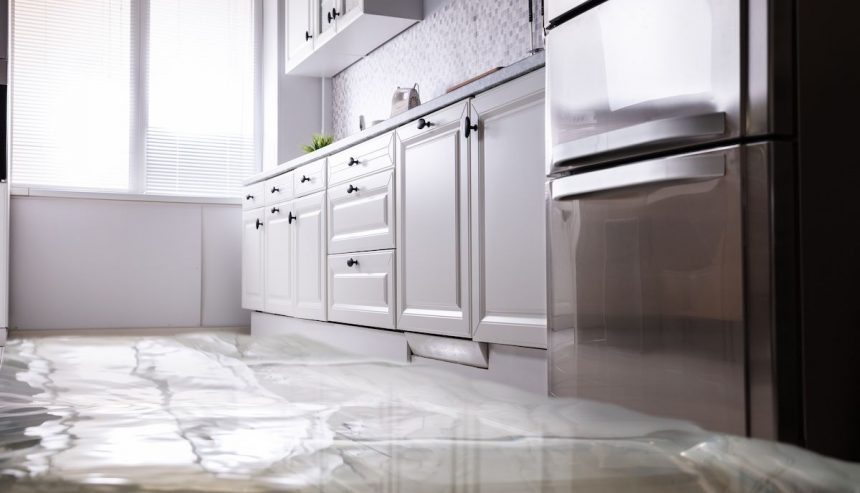
A dishwasher overflow may sound like a relatively small plumbing problem. But when enough water escapes into a kitchen, it can quickly become a whole-home water damage project.
Recently, PuroClean of Waxahachie was called to a home after a dishwasher overflow flooded the kitchen. Water spread from the immediate area and affected laminate flooring that continued through much of the home. As the flooring absorbed moisture, it began to swell and could no longer be restored.
What started with a dishwasher became a project involving water extraction, removal of damaged materials, structural drying, documentation, coordination with the homeowner’s insurance adjuster, and ultimately reconstruction.
It is a good example of why professional water damage restoration is about much more than removing the visible water.
Why Dishwasher Water Damage Can Spread So Quickly
When a dishwasher overflows or a supply or drain line fails, water doesn’t necessarily stay in the kitchen.
Water can migrate underneath cabinets, baseboards and flooring before a homeowner realizes how far it has traveled. With continuous flooring, water can also spread beneath the finished surface into adjoining rooms.
Laminate flooring is particularly susceptible to water damage. Once moisture reaches the core of many laminate products, the material can swell, separate or distort. Drying the surface doesn’t necessarily reverse that physical damage.
At this home, the affected laminate flooring had begun swelling after the loss. Our team evaluated the extent of the water damage and removed flooring that could not be successfully restored.
But removing damaged flooring was only the beginning.
Finding and Drying the Water You Can’t See
One of the most important parts of professional water damage restoration happens after the standing water is gone.
Water can remain trapped in the subfloor, drywall, wall cavities, cabinets and other building materials. A room may look dry while moisture remains inside the structure.
Our technicians use professional moisture-detection equipment to identify affected materials and determine the extent of the loss. Once damaged materials were removed from this home, we established the appropriate drying environment and dried the affected structure.
Throughout the process, moisture levels were monitored to verify drying progress rather than simply assuming the home was dry because surfaces looked or felt dry.
This is an important distinction between cleaning up a leak and professionally restoring a water-damaged property.
Prompt structural drying is important after any water loss. The EPA recommends drying water-damaged materials within 24–48 hours to help prevent mold growth.
From Water Mitigation to Insurance Reconstruction
For many homeowners, mitigation is only the first half of the process.
Once the structure is dry, someone still has to put the home back together.
In this case, PuroClean was able to continue with the project after the water damage restoration was completed. We worked with the homeowner and provided the documentation needed during the insurance process while communicating with the assigned adjuster regarding the restoration and reconstruction work.
The rebuild included new flooring along with additional repairs such as painted cabinetry, baseboards and other finishes necessary to restore the affected areas.
Instead of the homeowner having to find one company to remove the water, another contractor to repair the flooring, and additional trades to complete the finish work, the restoration could continue from mitigation into reconstruction with one team managing the project.
Documentation Matters on an Insurance Water Damage Claim
Insurance-related restoration requires more than telling an adjuster that something got wet. The Texas Department of Insurance provides helpful information about water damage and homeowners insurance, including the distinction between sudden and accidental water damage and damage caused by gradual leaks.
A properly documented water loss can include photographs, moisture readings, measurements, drying records, estimates and documentation showing which materials were affected and what work was performed.
We can, provide detailed restoration documentation and communicate with the homeowner’s adjuster about our scope of work, estimates and the conditions we observed at the property.
That documentation becomes especially important when a loss transitions from emergency mitigation into reconstruction.
One Restoration Company From the Initial Loss Through the Rebuild
Water damage can leave homeowners managing several different problems at once.
The immediate priority is stopping the source, removing water and preventing additional damage. Then the structure must be properly dried. Damaged materials have to be addressed. Finally, the property needs to be repaired and returned to a finished condition.
At PuroClean of Waxahachie, our ability to provide both water damage restoration and reconstruction services allows us to stay involved throughout that entire process.
For this homeowner, the project began with an overflowing dishwasher and swollen laminate flooring. It ended with a dry structure, new flooring, repaired and painted finishes, new baseboards and a restored home.
That’s what complete property restoration should look like.
Water Damage Restoration and Reconstruction in Waxahachie
If a dishwasher, washing machine, water heater, plumbing line or other appliance causes water damage in your home, don’t assume the damage ends where the visible water stops.
PuroClean of Waxahachie provides 24/7 water damage restoration along with post-loss reconstruction for homeowners throughout Waxahachie, Midlothian, Red Oak, Ennis and surrounding Ellis County communities.
From the initial inspection and structural drying through documentation and the final rebuild, our goal is to provide a clear path from unexpected property damage back to a restored home.
Call PuroClean of Waxahachie at (945) 259-7876 for 24/7 water damage restoration and reconstruction services.