24/7 Emergency Services For Water, Fire, Mold and Biohazard in Midlothian, TX

Midlothian is the second-largest city in PuroClean of Waxahachie’s service area and one of the most distinctive communities in all of North Texas. With a population of more than 35,000 residents across 50 square miles in northwestern Ellis County, it sits nine miles northwest of Waxahachie on US-287 — the same highway that serves as the primary commercial artery between the two cities — and positions itself as the “Southern Star of the Dallas-Fort Worth Area.” The city’s self-description is not hyperbole. Midlothian has built a genuinely diverse economic and civic identity that spans industrial production at a global scale, rapid residential growth, a four-campus higher education center, and a historic downtown that holds its own against the suburban pressure surrounding it.
The name itself arrived with the railroad in 1882 or 1883. The community at Hawkins’ Springs — named for William Alden Hawkins, who built the area’s first structure on Waxahachie Creek in time to claim his 640-acre Peters Colony land grant in 1848 — had been operating under the post office name of Barker since 1877. When the Gulf, Colorado and Santa Fe Railway laid tracks through the area, a Scottish train engineer is said to have looked out at the rolling Blackland Prairie and told his colleagues that the landscape reminded him of home. Midlothian is a county in southeast Scotland, and the name stuck. Whether the story is entirely accurate or has accumulated some storytelling polish over the decades, Midlothian, Texas has been answering to a Scottish county’s name for more than 140 years. The historic Santa Fe Depot was dedicated on July 4, 1883, when the first steam locomotive arrived at noon from Cleburne on its way to Dallas, and the town that grew around it became one of the more consequential communities in North Texas.
That consequence is written in cement — literally. Midlothian sits atop the Austin Escarpment, a limestone ridge running in a northeast-to-southwest direction through the city that represents one of the largest accessible limestone reserves in the region. The Escarpment’s geology attracted Texas Industries Inc. (TXI) in 1959, when they began construction of the first cement plant in Midlothian. Ash Grove Texas and Holcim (Texas) followed, and today Midlothian is home to three separate cement production facilities plus a steel manufacturing and recycling mill — making it the undisputed hub of the cement industry in North Texas and earning the title it carries without apology: the Cement Capital of Texas. The RailPort and The Auto Park industrial complexes, the LNG manufacturing facility, the electrical generation plant, the data center complex, and the foreign trade zone round out an industrial presence that no other city in Ellis County approaches. Midlothian’s fire department alone responds to more than 5,500 calls annually across a 115-square-mile territory that includes three cement plants, a steel mill, two railroads, and the only airport in Ellis County accommodating commercial aircraft.
PuroClean of Waxahachie serves all of Midlothian — the residential subdivisions, the historic downtown, the Higher Education Center area, the industrial corridors along US-287 and US-67, and the surrounding unincorporated Ellis County Emergency Services District that extends 51 square miles beyond the city limits — with 24/7 emergency water damage restoration, mold remediation, fire damage cleanup, and sewage decontamination. Midlothian is where Kimmel Park sits on the grounds of the old Polytechnic Academy, where the Saturday farmers market runs through the fall in historic downtown, where the annual Fall Festival and Holiday Light Up Christmas Parade draw the community together, and where Chris Kyle — the Navy SEAL whose service was memorialized in the film American Sniper — grew up. It is a city with deep roots and fast growth, and the homes and businesses built here deserve the same thorough, certified restoration response as any other community we serve.
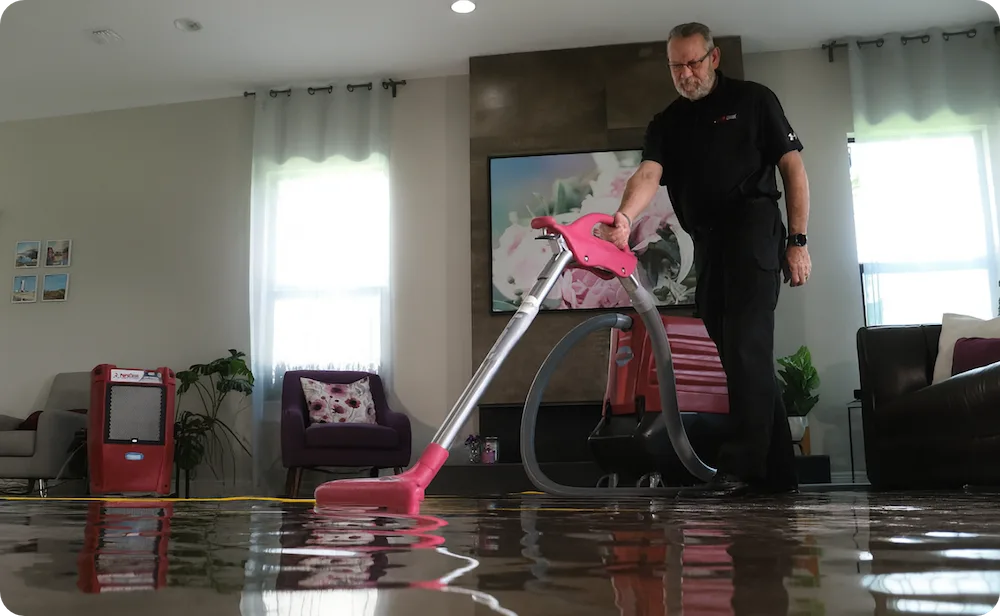
The water damage and property damage calls we handle in Midlothian reflect a city with a uniquely diverse built environment:
Midlothian is nine miles northwest of our Waxahachie location on US-287 — one of the shortest and most direct drives in our entire service area. We take US-287 northwest from Panorama Loop and we are in Midlothian in approximately 15 to 20 minutes under normal traffic conditions. US-287 runs straight between the two cities, passes through the heart of Midlothian’s commercial district, and connects to the city’s internal street grid in multiple places. For emergency calls from Midlothian, that proximity and the directness of the US-287 corridor translate into some of the fastest response times in our service territory.
Here is how we navigate to different parts of Midlothian:
Midlothian’s size — 50 square miles of city limits plus an additional 51-square-mile ESD — means that the far edges of the city’s territory are farther than the 15-to-20-minute downtown estimate. Properties in the northern portions of the city near the Cedar Hill and Grand Prairie borders, or in the western sections near Venus, add travel time. We give honest arrival estimates that reflect actual driving distance from our Waxahachie location, not an optimistic guess based on the nearest edge of the city.
Midlothian sits at the highest elevation in Ellis County — approximately 733 feet above mean sea level, compared to Waxahachie at 551 feet and Ferris at 471 feet. That elevation is not incidental. The Austin Escarpment, the limestone ridge that runs northeast to southwest through the city and made it the Cement Capital of Texas, is the geographic feature that establishes Midlothian’s drainage character. Unlike the flat eastern portions of the county where water sits and accumulates, Midlothian’s elevated position means that water drains away from the city in multiple directions — toward Waxahachie Creek to the east, toward the drainage corridors that feed Joe Pool Lake to the north, and toward the waterways of the western county. Properties in the lower-lying areas of Midlothian’s broader landscape collect the runoff that originates from those higher elevations.
The Austin Escarpment’s limestone geology also creates a soil and drainage environment in Midlothian that differs meaningfully from the deep Blackland Prairie clay that defines the lower-elevation communities of central and eastern Ellis County. The limestone formation produces shallower soils with less clay content in the areas directly above the Escarpment, which means more rapid drainage of surface water but also less soil moisture retention during dry periods. However, as Midlothian’s development has spread onto the surrounding Blackland Prairie clay soils beyond the Escarpment’s direct influence — and the city covers 50 square miles — the majority of the city’s residential foundation inventory is sitting on or transitioning through the same expansive clay conditions that affect properties throughout northwestern Ellis County. Post-tension slab foundations in newer Midlothian subdivisions are engineered to manage that clay movement, but they are not immune to the moisture intrusion that follows when the clay cycles through extreme drought and saturation.
The cement and steel industrial operations that define Midlothian’s economic identity create one property damage dynamic that is specific to the city: airborne cement dust and industrial particulate. The three cement plants and the steel mill produce fine particulate that settles on residential properties throughout their air shed. Over time, cement dust accumulation on roofing materials can accelerate the weathering of composition shingles — the alkaline chemistry of cement dust interacts with the asphalt in shingles differently than rain and UV exposure alone. Properties in the neighborhoods closest to the industrial corridor may experience accelerated roof aging that makes their composition shingle systems more vulnerable to hail damage and more prone to the micro-fracturing that produces delayed interior water intrusion after storm events. This is not a reason to avoid Midlothian — it is a reason to include the industrial environment in the assessment of roof condition after any significant hail event.
Midlothian’s rapid residential growth — the city has welcomed thousands of new residents in the past decade as DFW suburbanization pushes deeper into Ellis County along US-287 — produces a large cohort of newer homeowners in master-planned subdivisions who are experiencing Texas’ severe weather for the first time. For the transplants from other states and from the DFW urban core who chose Midlothian for its schools (Midlothian ISD is consistently well-regarded), its proximity to Fort Worth and Dallas, and its slower pace of life, the first major hailstorm, tornado watch, or winter freeze event is a genuine education in what North Texas weather can produce. PuroClean of Waxahachie serves as both the emergency responder and the educator for this segment of Midlothian’s growing population.
The Midlothian Higher Education Center — bringing together Navarro College, Texas A&M University-Commerce, Tarleton State University, and the University of North Texas at Dallas on a shared campus — is a reflection of what the city has built beyond its industrial identity. Kimmel Park on the site of the old Polytechnic Academy, the weekly farmers market in historic downtown, the annual Fall Festival, and the Holiday Light Up Christmas Parade are the expressions of a community that has chosen to grow without losing its character. When a Midlothian homeowner calls PuroClean after a burst pipe or a hailstorm’s delayed ceiling intrusion, they are calling a contractor that is as invested in this community as they are.
For expert water, fire, mold, and biohazard restoration in Midlothian, TX, trust PuroClean of Waxahachie. We provide fast response, professional service, and complete property recovery solutions.
Call (945) 259-7876 today for immediate emergency service or to schedule an inspection.
PuroClean of Waxahachie is your local restoration partner, committed to restoring your property and your peace of mind after fire and smoke damage.
Owned & Operated by Jordan Durham
201 Panorama Loop #300, Waxahachie, TX, 75165
(945) 259-7876
Water damage can result from unexpected leaks, flooding from storms, plumbing failures, or appliance malfunctions. Our certified teams focus on rapid water removal, drying, and stabilization to help prevent further damage and mold growth.
 Explore Our Water Damage Mitigation Services
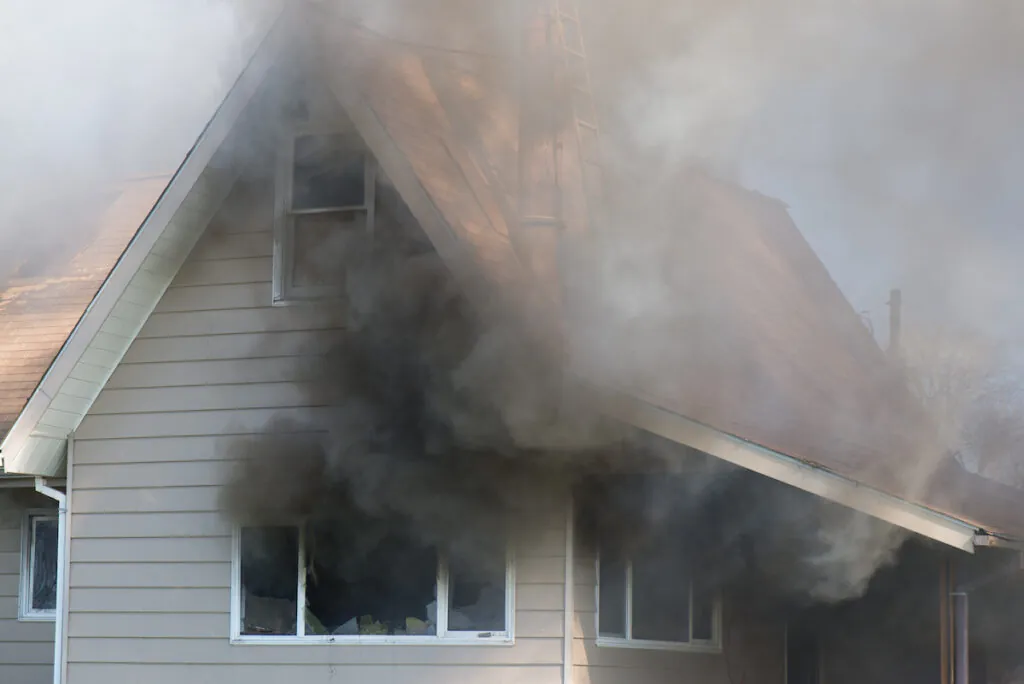
Even after a fire is extinguished, smoke, soot, and odor can continue to affect your home. Fire damage restoration services address visible damage while also helping reduce lingering effects that impact indoor air quality and surfaces.
Explore Our Fire and Smoke Damage Restoration Services
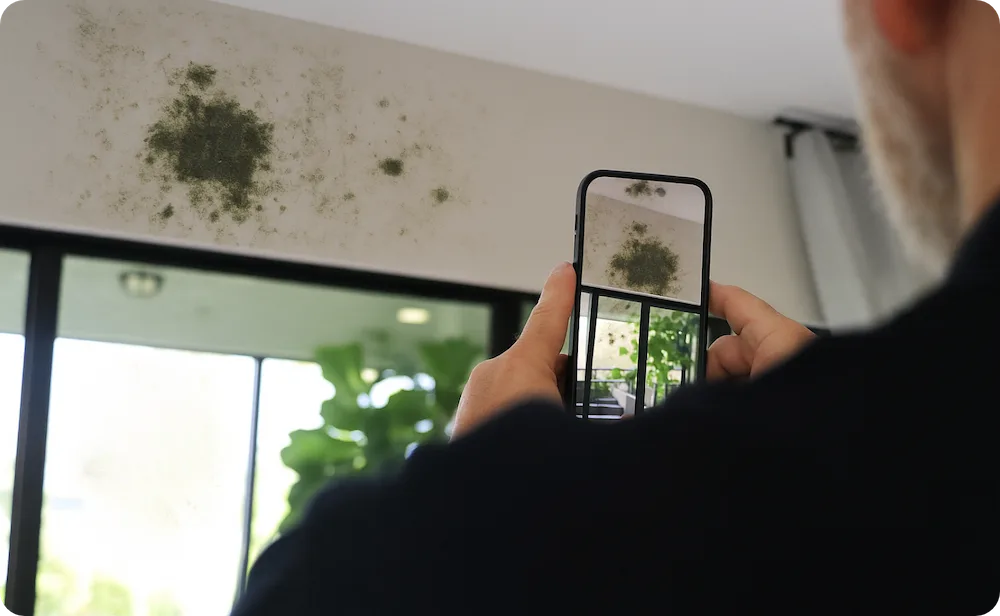
Mold often develops as a result of unresolved moisture or hidden water damage. Professional mold remediation helps identify affected areas, contain growth, and restore healthy indoor conditions.
Explore Our Mold Removal and Remediation Services
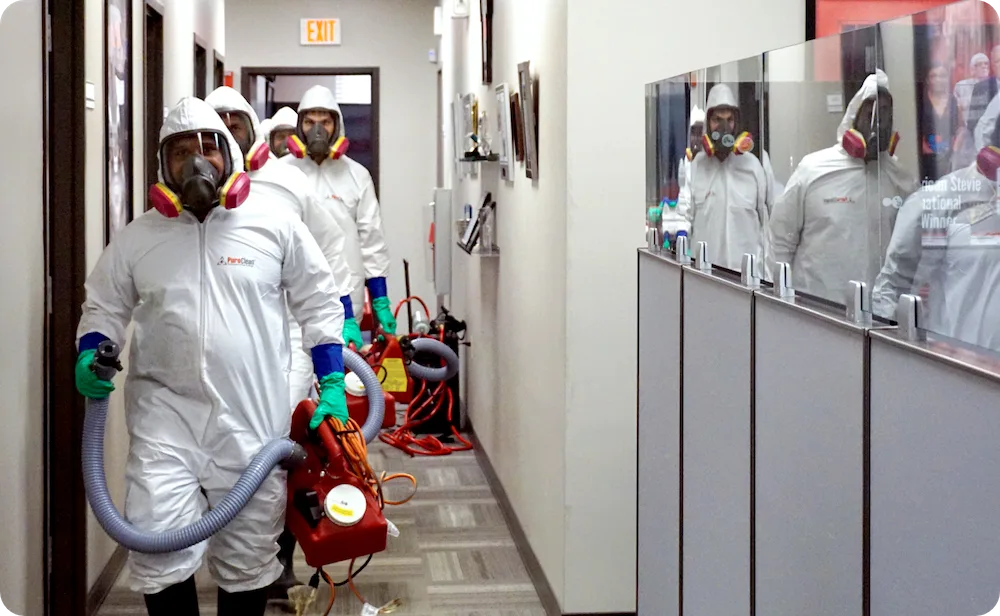
Biohazard situations, including crime scene cleanup and virus decontamination, require specialized cleaning and handling to protect health and safety. Biohazard cleanup services address contamination using proper protocols and professional care.
Explore Our Biohazard Cleanup Services
In some cases, property damage requires repairs beyond cleanup and mitigation. Reconstruction services help restore damaged areas of the home after water, fire, or other incidents, supporting a smoother transition from damage to recovery.
Explore Our Reconstruction Services Services
Expert commercial water damage restoration for Waxahachie, TX businesses. PuroClean of Waxahachie provides rapid water extraction, structural.
Explore Our Commercial Water Damage Restoration Services
Professional commercial fire and smoke damage restoration for Waxahachie, TX businesses. PuroClean of Waxahachie provides fire damage cleanup, smoke.
Explore Our Commercial Fire Damage Restoration Services
Licensed commercial biohazard cleanup and decontamination for Waxahachie, TX businesses. PuroClean of Waxahachie provides biohazard remediation, trauma.
Explore Our Commercial Biohazard Cleanup Services
Certified commercial mold remediation and prevention for Waxahachie, TX businesses. PuroClean of Waxahachie provides mold assessment, contained.
Explore Our Commercial Mold Remediation Services
Water damage can result from unexpected leaks, flooding from storms, plumbing failures, or appliance malfunctions. Our certified teams focus on rapid water removal, drying, and stabilization to help prevent further damage and mold growth.
Explore Our Water Damage Mitigation Services
Water and property damage restoration questions specific to Midlothian, Texas homeowners and property owners
The historic homes around Founders Row in downtown Midlothian represent some of the oldest residential construction in the city, dating back to the railroad era of the 1880s and the decades that followed. These homes typically have original wood siding, plaster interior walls over wood lath, true dimensional lumber framing, and foundations that have settled meaningfully over more than a century. A water event in one of these homes requires careful, room-by-room thermal imaging to map moisture through original materials separately from any later additions, since plaster and lath dry differently than modern drywall and require different equilibrium moisture content targets under IICRC S500 before equipment can be safely removed.
Midlothian sits near the highest elevation in Ellis County atop the Austin Escarpment, a limestone chalk ridge that has supplied the cement plants that earned the city its reputation as the Cement Capital of Texas. While the limestone bedrock itself is stable, the soils above it in residential areas are often a mix of limestone-derived clays that still exhibit shrink-swell behavior, though sometimes less dramatically than the deep Blackland Prairie clays found elsewhere in Ellis County. Foundation movement and perimeter moisture intrusion still occur in Midlothian homes, particularly in neighborhoods built on transitional soil zones where limestone outcroppings meet clay-rich areas, and we assess each property’s specific conditions during a moisture mapping inspection.
Midlothian has grown from around 5,000 residents in the 1990s to more than 40,000 today, and the vast majority of that growth has come in the form of new subdivisions with attic-mounted HVAC systems — a configuration that makes condensate drain line clogs and pan overflows one of the most frequent sources of ceiling water damage we see in newer Midlothian homes. The North Texas heat and humidity during summer months mean these systems run for extended periods and generate significant condensate, and a clogged drain line or cracked pan can soak attic insulation and ceiling drywall before a homeowner notices anything beyond a small stain. We dry the ceiling assembly and attic insulation with commercial equipment and document the full extent with thermal imaging for your insurance carrier.
The US 67 corridor in Midlothian is home to a wide range of commercial and light industrial properties that have grown alongside the city’s cement, steel, and distribution industries, and a weekend pipe burst in this type of space often means significant standing water before anyone discovers it on Monday. We respond with truck-mounted extraction equipment sized for larger commercial floor plans, assess any inventory, equipment, or materials affected by the water, and provide Xactimate-compatible documentation that addresses both the structural drying scope and any contents claim. If your operation has business interruption coverage, our daily progress documentation supports that portion of the claim as well.
We see different patterns depending on the age and location of construction within Midlothian. The historic core near downtown and Founders Row tends to generate calls related to aging plumbing, original construction materials, and foundation settling. The large subdivisions built during the major growth period from the late 1990s through the 2010s generate frequent HVAC condensate and appliance supply line failures typical of that construction era. And the newest developments on the city’s expanding edges occasionally see builder-related plumbing connection issues in the first few years of occupancy. Regardless of where your home falls in that range, we document every loss to IICRC S500 standards and provide Xactimate-compatible reporting for your insurance carrier.
What Our Customers Say:
When you need water damage restoration services near you, call the experts at PuroClean. We are here day or night, 24/7, to help remove any standing water quickly and begin your water restoration service. We monitor the drying process so you can rest assured that your property is dried thoroughly. We offer commercial water restoration services for businesses and residential water damage restoration for homeowners.

PuroClean of Waxahachie
(945) 259-7876
201 Panorama Loop #300, Waxahachie, TX 75165


© 2026 PuroClean. All Rights Reserved.