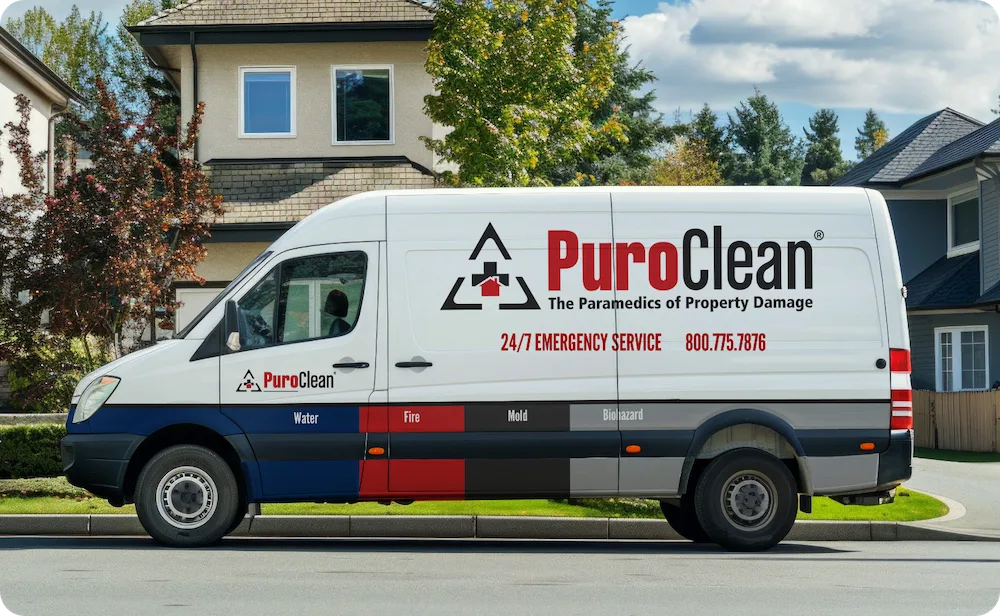
24/7 Emergency Services For Water, Fire, Mold and Biohazard in Ferris, TX
Ferris is a city of roughly 4,000 residents in northeastern Ellis County, sitting astride Interstate Highway 45 and US Highway 75 about fifteen miles northeast of Waxahachie and twenty miles south of downtown Dallas. Named for Judge Justus W. Ferris of Waxahachie — a county civic and business leader — the city was formally established in 1874 when the Houston and Texas Central Railway laid out a settlement on land donated by the McKnight family, one of the area’s pioneer clans who had arrived in the early 1850s. Within a decade the community had gristmills, cotton gins, four churches, and a school. By the early twentieth century, Ferris had found its defining industry: brick.
The Eagle Ford Clay that runs through the soils of northeastern Ellis County turned out to be among the finest brick-making material in the country. By 1914, Ferris was home to six brick plants, a broom factory, and a weekly newspaper, and the city had earned the title that its Chamber of Commerce still celebrates today: “The Brick Capital of the Nation” — or, in the more colorful phrase locals prefer, “The City that Bricked the World.” That legacy is embedded in the landscape. The Old Brickyard Golf Course — voted the best golf course in Ellis County — is literally built on the grounds of one of those historic brick yards. The Ferris Downtown Historic District preserves the early twentieth-century commercial buildings along Main Street and Town Plaza that the brick boom produced, and the annual Ferris Brick Festival draws visitors to celebrate the city’s industrial heritage. The Texas Historical Commission marker at the intersection of West Sixth Street and Town Plaza near Ferris City Hall tells the story in summary: brick-making center since 1895, a Ferris Institute that operated from 1892 to 1907, and a railroad town that built something lasting.
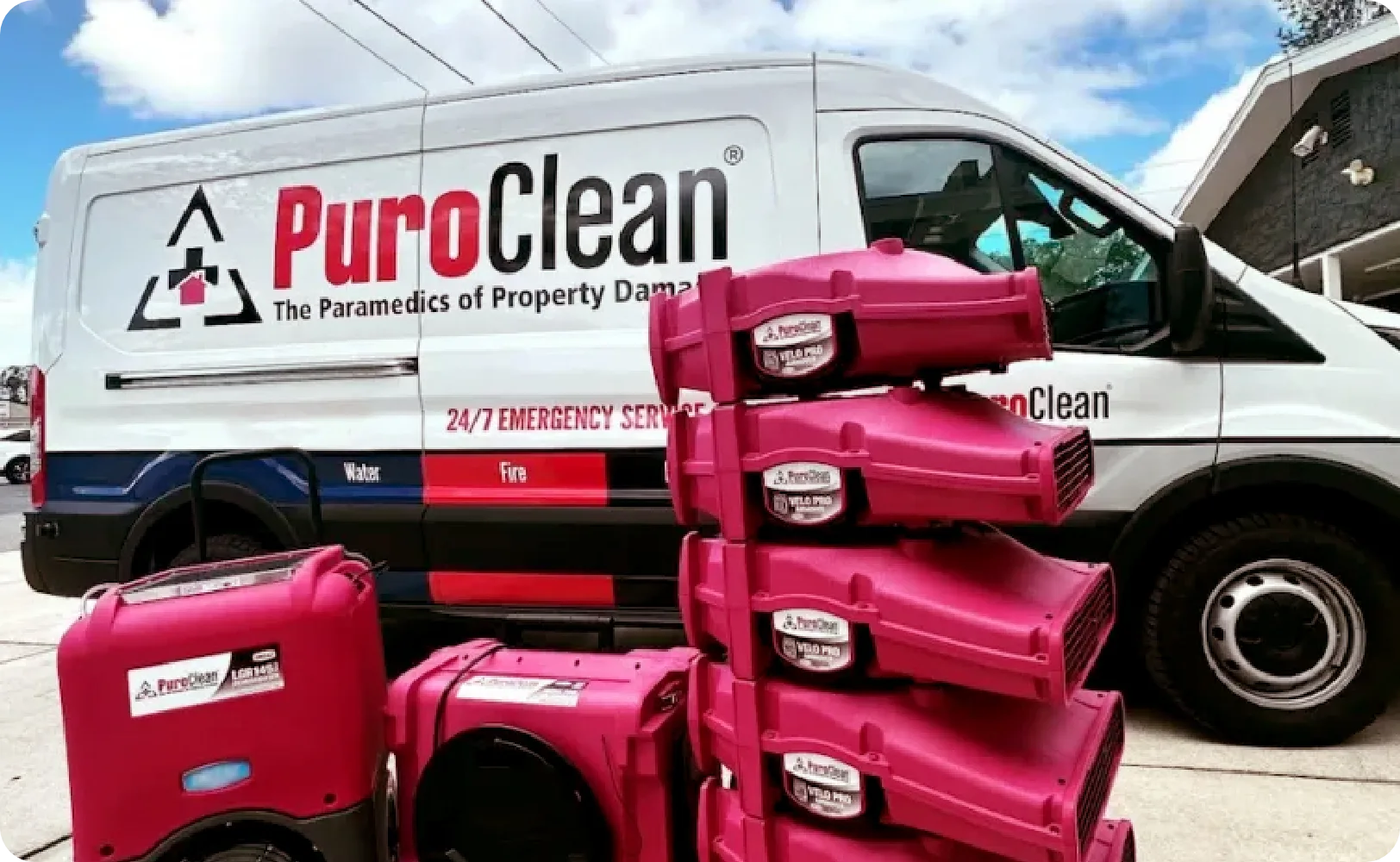
PuroClean of Waxahachie serves all of Ferris with 24/7 emergency water damage restoration, mold remediation, fire damage cleanup, and sewage decontamination. Ferris is one of the more accessible communities in our service territory — IH-45 puts a significant portion of the city within direct highway reach from our Waxahachie location. The clients here are year-round families, working households, small business operators along the IH-45 and Main Street corridors, and longtime Ferris residents whose homes reflect every era of the city’s development, from early twentieth-century structures in the historic district to mid-century residential neighborhoods to newer slab-on-grade homes in the growing subdivisions around the city’s edges.
The water damage calls we handle in Ferris reflect its position as a working-class community on the Trinity River corridor with a mix of older construction and rapid new growth:
Ferris’s community character is genuinely close-knit. Neighbors know each other, local businesses are part of the family fabric, and word-of-mouth through the school community, through local churches, and through the Chamber of Commerce network is the most powerful referral mechanism in the city. When PuroClean of Waxahachie serves a Ferris family well during a water or fire emergency, that experience travels through the community’s tight social networks far more efficiently than any advertisement.
Ferris is approximately 20 to 30 minutes from our Waxahachie location on Panorama Loop. The most direct route takes us north on US-287 from Waxahachie through the Midlothian area, then east on FM 664 or other county connectors to reach IH-45, and then north into Ferris on the interstate. For calls in the southern part of Ferris near the city’s IH-45 entry, this route puts us on-site efficiently. For calls in the central and northern parts of the city, we use IH-45 as the primary corridor once we’ve reached it from the west.
Here is how we navigate to different parts of Ferris:
IH-45 is one of the most direct highway connections in our service area, and Ferris benefits from that accessibility. There is no barrier island, no rural county road maze, and no bridge chokepoint between our Waxahachie location and the center of Ferris. What matters most on a Ferris call is knowing which part of the city — the historic district core, the IH-45 commercial strip, or the newer residential growth areas — and what water category we’re likely dealing with before we arrive.
Ferris sits at the lower end of Ellis County’s elevation gradient — the county’s historical records put Ferris at 471 feet above mean sea level, compared to Midlothian at 733 feet and Waxahachie at 551 feet. That lower elevation matters in the context of the Trinity River basin. Northeastern Ellis County, where Ferris sits, drains toward the Trinity River, which forms the eastern boundary of the county. During significant rainfall events, the drainage corridors that carry water from the higher elevations of central and western Ellis County toward the Trinity move substantial volumes of water through the Ferris area. The IH-45 corridor, with its underpasses and drainage structures, is a documented flash flood concern. Residents in the lower-lying sections of Ferris — particularly near the IH-45 underpasses and the drainage channels that cross the city from west to east toward the Trinity — have watched streets flood and garages take on water during the kind of intense summer storms that drop two or three inches of rain in an hour.
The Eagle Ford Clay that made Ferris famous as the Brick Capital of the Nation is the same soil type that creates ongoing challenges for Ferris homeowners and building owners. The clay’s extraordinary expansion and contraction behavior — absorbing water during rain and swelling, then drying and shrinking in the heat of a Texas summer — subjects every building foundation in Ferris to movement over time. Older structures in the Downtown Historic District bear the evidence of that movement in cracked brick facades, settled floors, and shifted door and window frames. Newer slab-on-grade homes in the residential subdivisions deal with it through engineered post-tension slab systems designed to handle soil movement, but those systems have their limits when prolonged drought followed by heavy rain produces the maximum differential soil movement the clay is capable of. Foundation gaps and slab cracks that open during these extreme cycles create pathways for moisture entry into the building.
The brick structures of Ferris’s Downtown Historic District present a specific restoration context that is different from the standard residential drywall-and-insulation job. Masonry buildings from the early twentieth century — the commercial storefronts along Main Street, the civic buildings near Town Plaza, the older industrial structures near the original brick yard sites — absorb and retain moisture differently than frame construction. Brick walls wick water through mortar joints and brick face during prolonged rain events and can retain that moisture for extended periods, creating conditions for efflorescence, mortar deterioration, and mold growth in wall cavities behind the masonry. Restoration of water damage in these structures requires understanding how historic masonry behaves and how to dry it without causing further damage to original materials.
Winter Storm Uri’s impact in Ferris was felt throughout the community, particularly in the older residential neighborhoods where homes built in the mid-twentieth century had plumbing in uninsulated crawl spaces and exterior wall cavities that had never been tested against sustained below-zero temperatures. Properties that experienced pipe burst damage during Uri and were not fully and professionally dried still carry elevated mold risk in their wall and subfloor systems years later — a slow, hidden problem that surfaces when a homeowner renovates, when a musty odor develops, or when a routine home inspection reveals staining and soft spots in the original damage zones.
Owned & Operated by Jordan Durham
201 Panorama Loop #300, Waxahachie, TX, 75165
(945) 259-7876
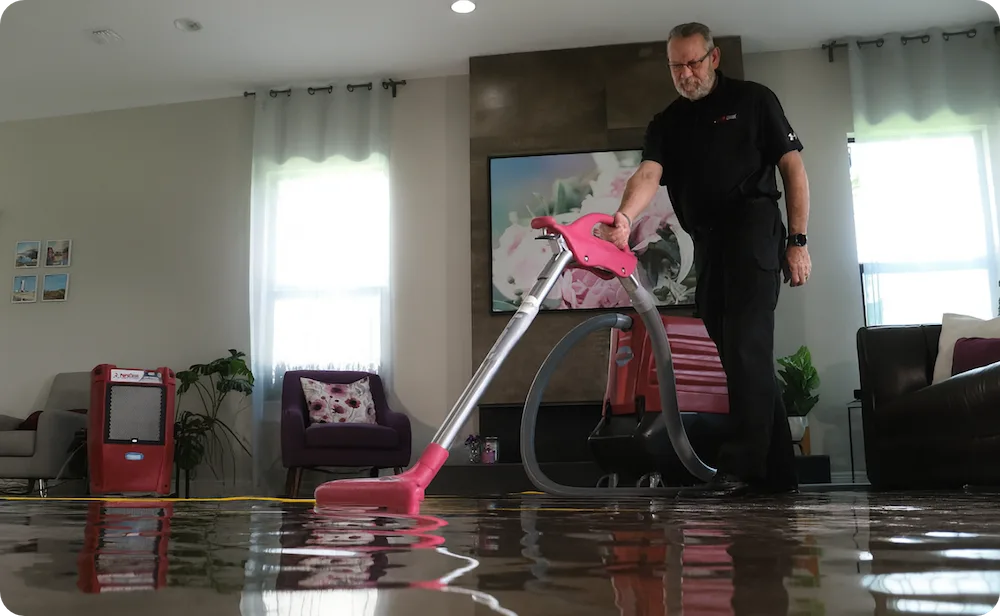
Water damage can result from unexpected leaks, flooding from storms, plumbing failures, or appliance malfunctions. Our certified teams focus on rapid water removal, drying, and stabilization to help prevent further damage and mold growth.
 Explore Our Water Damage Mitigation Services
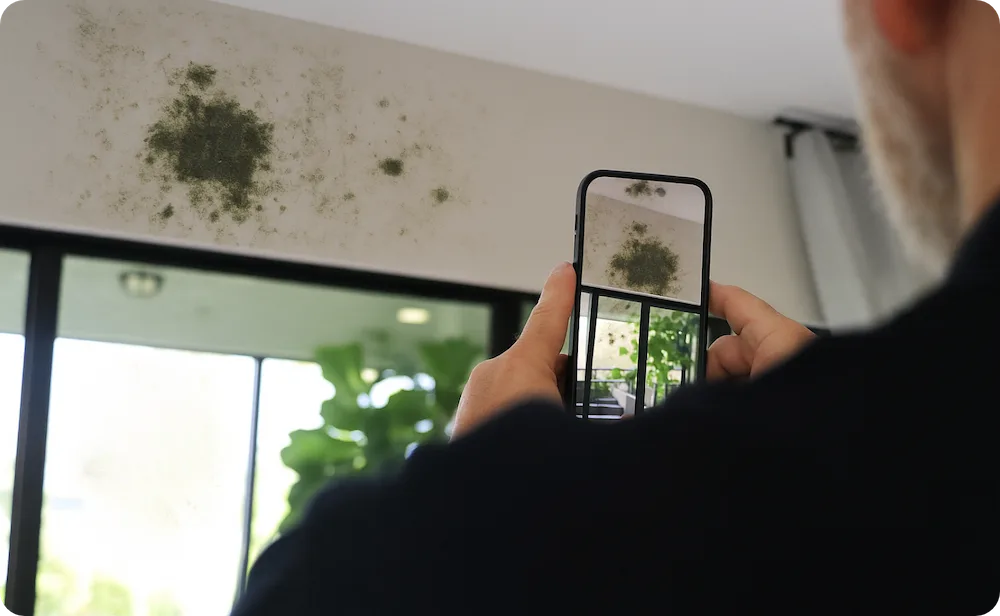
Mold often develops as a result of unresolved moisture or hidden water damage. Professional mold remediation helps identify affected areas, contain growth, and restore healthy indoor conditions.
Explore Our Mold Removal and Remediation Services
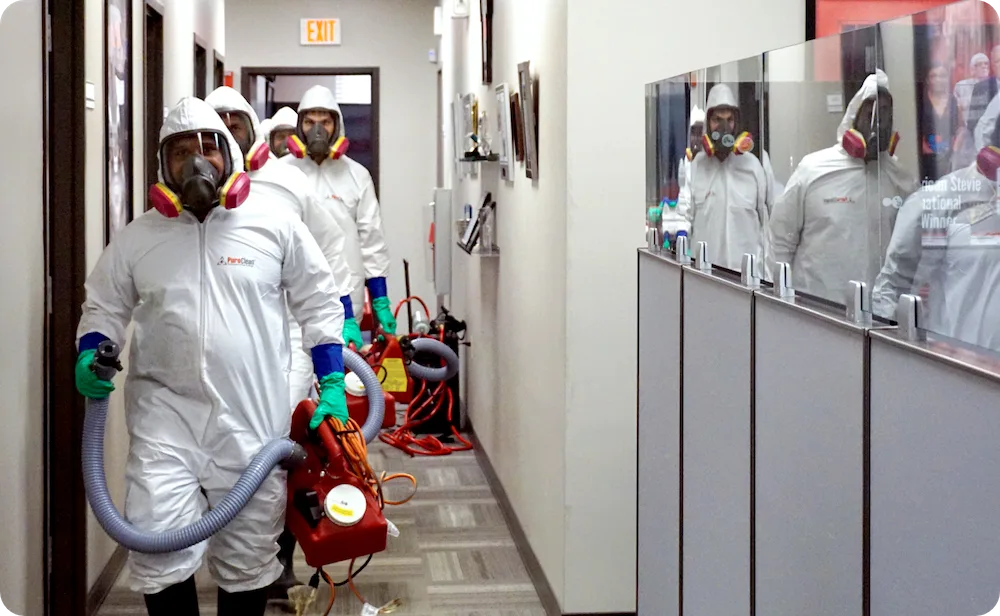
Biohazard situations, including crime scene cleanup and virus decontamination, require specialized cleaning and handling to protect health and safety. Biohazard cleanup services address contamination using proper protocols and professional care.
Explore Our Biohazard Cleanup Services
In some cases, property damage requires repairs beyond cleanup and mitigation. Reconstruction services help restore damaged areas of the home after water, fire, or other incidents, supporting a smoother transition from damage to recovery.
Explore Our Reconstruction Services Services
You have to isolate the affected zone while keeping unaffected, customer-facing areas functional. Every hour without extraction and controlled drying expands the wet footprint into flooring, wall cavities, and shared assemblies—raising disruption, rebuild scope, and secondary mold risk. Commercial mitigation succeeds when drying is verified, access is controlled, and re-entry happens by milestones instead of “all at once.”
Explore Our Commercial Water Damage Restoration Services
For hotels, restaurants, and other guest-facing properties, fire, smoke, and soot damage is a public-facing risk. PuroClean of Waxahachie helps Risk and Compliance stakeholders control liability, document the loss, and reopen guest zones to brand standard—not just “usable” condition. In guest-facing commercial environments, fire damage becomes immediate brand exposure—visible soot, lingering odor, and remediation activity can signal “not ready” to customers and invite complaints or liability.
Explore Our Commercial Fire Damage Restoration Services
When a workplace biohazard event occurs, cleanup isn’t discretionary—it can trigger OSHA bloodborne pathogen obligations, regulated waste handling, and documentation requirements. PuroClean of Waxahachie helps business owners and operators restore safe use of affected areas with controlled access, discreet containment, and records your insurer, regulator, or legal team can review.
Explore Our Commercial Biohazard Cleanup Services
If mold keeps returning in guest-facing or tenant-occupied spaces, the problem is usually hidden moisture—not what you can wipe off. PuroClean of Waxahachie investigates the moisture source, contains the affected area, and documents clearance so you can reopen with confidence. Commercial mold cleaned without addressing the moisture source will return, often within weeks. Source identification is the critical first step—surface treatment alone is incomplete remediation.
Explore Our Commercial Mold Remediation Services
Water and property damage restoration questions specific to Ferris, Texas homeowners and property owners
Solid masonry homes from Ferris’s brick-making heyday in the early-to-mid twentieth century behave very differently from modern frame construction when water intrudes. Brick and the mortar joints between courses can absorb and hold moisture for extended periods, and that moisture can migrate inward to wood framing, plaster, and lathe on the interior side of the wall. We use thermal imaging and both invasive and non-invasive moisture meters to track how deep the moisture has traveled into the masonry assembly itself, not just the interior finishes. Drying these structures to IICRC S500 equilibrium moisture content targets often takes longer than a typical wood-frame home, and we plan equipment placement accordingly.
Mixed-use buildings along Ferris’s historic Main Street corridor present a layered restoration challenge because a single water event can affect a commercial tenant’s space, a residential unit, and shared structural elements like floor joists and ceiling assemblies all at once. We assess each affected space separately for documentation purposes — commercial business interruption considerations differ from residential displacement concerns — while treating the structure as one integrated drying project. Our project managers provide separate Xactimate-compatible scopes for each affected unit if your insurance involves multiple policies or tenants, while coordinating equipment placement and access so the drying timeline stays consistent across the whole building.
A water heater failure in an older home near downtown Ferris typically starts as a Category 1 clean water loss, but the outcome depends heavily on how long the leak ran before discovery and what flooring materials were affected. Older homes in this part of Ferris often have a mix of original hardwood, later vinyl or laminate additions, and tile — each requires a different drying approach, and some flooring, particularly laminate and certain vinyl products, cannot be effectively dried in place once delaminated. We extract standing water immediately, assess each affected material separately, and document moisture readings to determine what can be saved versus what requires removal under your homeowner’s policy’s replacement cost value provisions.
Yes — properties near the rail corridor and I-45 frontage in Ferris can experience accelerated wear on plumbing joints, slab cracks, and seal failures around windows and doors due to the cumulative effect of vibration from passing trains and highway traffic over many years. This is a real factor we account for when assessing the cause of a water loss in this part of town, because it can affect how a claim is classified — vibration-related gradual deterioration is treated differently under most HO-B policies than a sudden, accidental failure. We document the condition of plumbing connections, slab penetrations, and window and door seals during our assessment to help establish whether a loss qualifies as sudden and accidental for insurance purposes.
Firefighting water intrusion is one of the most common secondary damage sources we address after a residential fire in Ferris, and it requires immediate attention even before fire and smoke restoration begins — standing water and saturated materials will develop mold within 48 to 72 hours regardless of the fire damage around them. Our process addresses both simultaneously: we extract water and begin structural drying in unaffected and lightly affected areas right away, while documenting the fire-damaged areas separately for soot, smoke, and heat damage assessment. Both scopes are combined into a single Xactimate-compatible estimate for your insurance carrier, since most homeowner’s policies cover firefighting water damage as part of the overall fire loss.
What Our Customers Say:
When you need water damage restoration services near you, call the experts at PuroClean. We are here day or night, 24/7, to help remove any standing water quickly and begin your water restoration service. We monitor the drying process so you can rest assured that your property is dried thoroughly. We offer commercial water restoration services for businesses and residential water damage restoration for homeowners.

PuroClean of Waxahachie
(945) 259-7876
201 Panorama Loop #300, Waxahachie, TX 75165


© 2026 PuroClean. All Rights Reserved.