


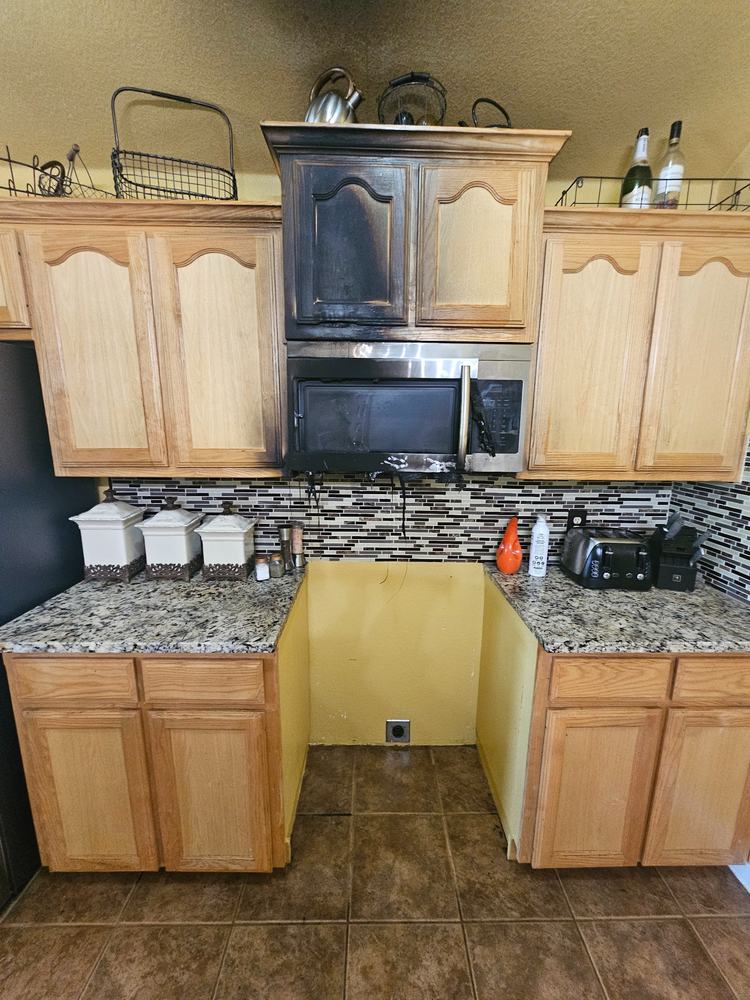
When most homeowners think about fire damage, they picture burned walls, destroyed furniture, and extensive structural repairs. However, some of the most challenging fire restoration projects begin with relatively small fires.
Recently, PuroClean of Waxahachie responded to a residential kitchen fire that demonstrated just how far smoke and soot can travel throughout a home.
What started as a stovetop grease fire resulted in smoke contamination across nearly the entire house. Although the actual flames were limited to the cooking area and a nearby cabinet, the damage extended far beyond the kitchen.
This project required comprehensive smoke damage restoration, including structural cleaning, contents cleaning, deodorization, fine-particle cleaning, HVAC duct replacement, and coil cleaning.
Here is how our team approached the restoration process.
Experiencing smoke or fire damage? Call PuroClean of Waxahachie at (945) 259-7876 for professional assistance.
How a Small Grease Fire Became a Whole-Home Problem
The homeowner was preparing food on the stovetop when they stepped outside briefly. During that short time, grease ignited, and the flames spread from the cooking area to a nearby cabinet.
Fortunately, the fire itself remained relatively small. However, the smoke produced during the incident traveled throughout the home.
One of the biggest contributing factors was the home’s heating and air conditioning system.
As smoke accumulated in the kitchen, the HVAC return pulled smoke and soot particles into the system. Those contaminants were then distributed through the ductwork and supply vents, reaching rooms that had never been directly exposed to the flames.
Bedrooms, living areas, and other spaces throughout the house were affected.
This is an important distinction for homeowners: The size of a fire does not necessarily determine the extent of the smoke damage.
Even when flames are contained to one room, smoke can travel throughout a property and leave behind residue on surfaces and personal belongings.
Why Smoke and Soot Damage Can Be Difficult to Identify
Unlike charred cabinets or burned drywall, smoke damage is not always immediately visible.
Smoke contains a mixture of gases and fine particles. As it moves through a home, soot and other residues can settle on walls, ceilings, furniture, electronics, clothing, and household contents.
In a grease fire, the residue can be particularly challenging because burning cooking oils may produce an oily film that adheres to surfaces.
Some rooms may have obvious discoloration or visible soot deposits, while others may appear relatively clean but still contain smoke residue or lingering odors.
For this particular project, the HVAC system had helped distribute contamination throughout the property, making it necessary to evaluate the home beyond the original fire location.
A simple cleaning of the burned cabinet and surrounding kitchen would not have addressed the full extent of the damage.
Our Smoke Damage Restoration Process
After evaluating the affected areas, PuroClean developed a comprehensive restoration approach to address the smoke contamination throughout the home.
1. Full Structural Smoke and Soot Cleaning
Our technicians performed extensive cleaning of affected interior surfaces.
This included addressing smoke residue on walls, ceilings, trim, cabinetry, and other building materials throughout the property.
Different surfaces require different cleaning methods. What works on a painted wall may not be appropriate for unfinished wood, delicate finishes, or other materials.
Our goal was to physically remove smoke and soot contamination rather than simply cover it with paint or mask the resulting odors.
2. Fine-Particle Cleaning
One of the most important parts of this project was removing the fine particulate residue left behind by the fire.
Smoke particles can settle on surfaces throughout the home, including areas that appear unaffected at first glance.
PuroClean performed detailed small-particle cleaning to address contamination in the affected spaces.
This additional cleaning was particularly important because the HVAC system had circulated smoke and soot throughout the house.
Thorough particulate cleaning helps reduce residual contamination and supports the overall deodorization process.
3. Contents Cleaning and Inventory
Smoke damage does not stop at the structure of a home.
Furniture, decorations, household goods, and other personal belongings can also be exposed to soot and odors.
For this loss, PuroClean performed a full contents inventory and cleaning of affected household items.
The inventory process helped document the belongings involved in the loss and organize the restoration work.
Our team evaluated and cleaned affected contents using methods appropriate for the materials and their condition.
This step was especially important because replacing every smoke-exposed item is not always necessary. Many household belongings can be successfully restored when the contamination and materials allow.
Proper documentation also helps homeowners and their insurance adjusters understand which items were affected and what restoration work was performed.
4. HVAC Duct Replacement and Coil Cleaning
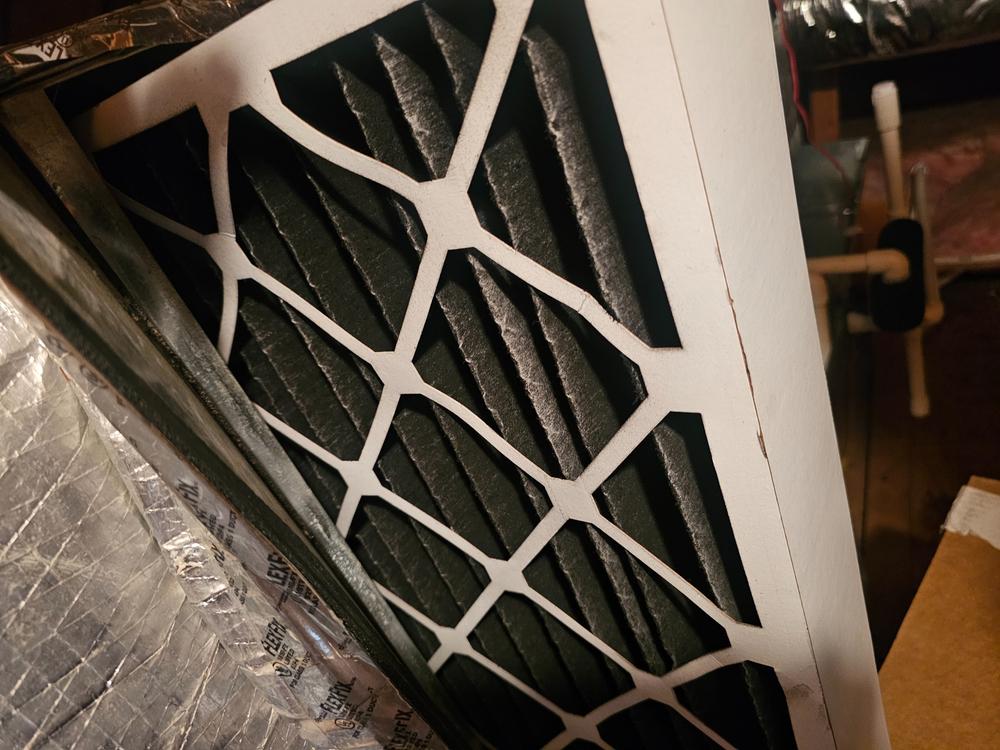
One of the most significant aspects of this project involved the home’s HVAC system.
Because the return had pulled smoke and soot into the system, the ductwork became part of the contamination problem.
Rather than treating the fire as an isolated kitchen incident, the restoration scope addressed the HVAC components affected by smoke.
The project included air duct replacement and HVAC coil cleaning to address contamination associated with the system.
This work was critical because leaving affected HVAC components untreated could allow residual contamination or odors to remain after the rest of the house had been cleaned.
Not every kitchen fire requires duct replacement. The appropriate solution depends on the extent of contamination, the duct materials, and the condition of the HVAC system.
In this case, replacement and cleaning were necessary parts of the overall restoration scope.

5. Professional Smoke Odor Removal and Deodorization
Even after visible soot has been removed, smoke odors can remain in building materials and personal belongings.
That is why deodorization was another important component of this restoration.
PuroClean performed professional smoke deodorization as part of the whole-home cleaning process.
Effective odor restoration begins with addressing the source of the contamination. Simply spraying fragrances or using household air fresheners may temporarily mask an odor without removing the underlying smoke residue.
By combining structural cleaning, contents cleaning, HVAC-related work, and deodorization, our team addressed multiple sources of smoke contamination rather than focusing on the smell alone.
Working With the Homeowner’s Insurance Adjuster
Although the fire damage itself was limited, the overall restoration scope was much larger than the homeowner might initially have expected.
That made documentation especially important.
Throughout the project, PuroClean maintained an inventory of affected contents, documented restoration activities, and communicated with the homeowner’s insurance adjuster regarding the work being performed.
This helped establish why cleaning was necessary throughout the home, even in rooms that had no direct flame damage.
For insurance-related fire restoration, documenting the difference between visible fire damage and widespread smoke contamination can be particularly important.
Our focus is helping homeowners understand the work needed to restore their property while keeping the process organized and transparent.
What Homeowners Can Learn From This Kitchen Fire
The biggest lesson from this project is that a small fire can create a much larger restoration problem.
The flames affected only a relatively small portion of the kitchen, but the smoke traveled through the HVAC system and reached nearly every room.
Homeowners experiencing a similar incident should avoid assuming that rooms without visible soot are unaffected.
It is also important to avoid operating an HVAC system suspected of smoke contamination until it has been professionally evaluated. Continuing to circulate air through affected ductwork may spread remaining residues.
The U.S. Fire Administration’s cooking fire safety guidance emphasizes the importance of staying with food while cooking and turning off the burner when leaving the kitchen.
Even a brief distraction can lead to a dangerous situation.
Once a fire has been extinguished and the property is safe to enter, a professional assessment can help determine the extent of smoke damage and the appropriate cleaning and restoration steps.
Professional Smoke Damage Restoration in Waxahachie and Ellis County
At PuroClean of Waxahachie, we understand that fire damage is not always measured by how much of a home actually burned.
Smoke, soot, and odors can affect areas far removed from the original fire, sometimes requiring extensive cleaning and specialized restoration.
Our team provides fire and smoke damage restoration services for homeowners and businesses throughout Waxahachie, Midlothian, Red Oak, Ennis, and surrounding Ellis County communities.
Whether you are dealing with a small kitchen grease fire or a more extensive property loss, PuroClean can help assess the damage, document affected areas, clean and restore salvageable materials, and coordinate restoration details with your insurance adjuster.
Experiencing smoke or fire damage? Call PuroClean of Waxahachie at (945) 259-7876 for professional assistance.
How can I tell if smoke damage spread beyond the kitchen?
Look for smoke odor in rooms away from the fire, gray or dark film around ceiling vents and supply registers, and soot on window sills, light fixtures, and outlet covers. A clean white cloth wiped across a wall or shelf will often pick up residue you can’t see. If the HVAC system ran during or after the fire, assume other rooms may be affected until they’ve been checked.
Does homeowners insurance cover smoke damage in rooms the fire didn’t reach?
In many cases, smoke and soot carried into other rooms through the HVAC system are treated as part of the same fire loss. What PuroClean does is document smoke residue room by room, inventory affected belongings, and share that documentation with your adjuster.