24/7 Emergency Flooded House Cleanup Palmdale Services in Palmdale, CA
A flooded house in Palmdale can develop significant water damage quickly, even when the water source is stopped within a short period of time. Standing water can spread beneath flooring, soak drywall, enter cabinets and wall cavities, damage insulation, and affect rooms far from the original source. PuroClean of West Antelope Valley provides professional flooded house cleanup in Palmdale to help remove standing water, identify hidden moisture, dry affected materials, and reduce the risk of secondary damage.
Flooded home cleanup may be needed after a burst pipe, failed appliance, overflowing plumbing fixture, water heater failure, roof leak, slab leak, or another sudden water-loss event. The restoration process depends on where the water came from, how much water entered the property, how long materials remained wet, and which parts of the home were affected.
If water is actively entering your Palmdale home, the first priority is protecting people and stopping the source when it can be done safely. Water can continue spreading beneath flooring and into walls even after the visible flooding begins to slow.
If the flooding is caused by plumbing and it is safe to do so, shut off the affected fixture, appliance supply line, or the home’s main water supply. If the source is a damaged pipe or plumbing component, a plumber may be needed to complete the repair.
Do not enter standing water when outlets, electrical panels, appliances, extension cords, or other energized equipment may be involved. Electrical conditions should be evaluated before anyone enters an unsafe flooded area.
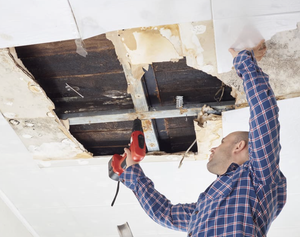
Wet flooring may become slippery or unstable, ceilings may sag when water accumulates above them, and contaminated water can create additional health concerns. Keep occupants and pets away from affected areas until conditions are evaluated.
When possible, take photos or video showing the water source, standing water, affected rooms, damaged belongings, flooring, walls, and other visible conditions before cleanup begins. This documentation may be useful if an insurance claim is filed.
Once the source is controlled and the property can be entered safely, standing water should be removed so technicians can begin identifying wet materials and hidden moisture.
For active standing-water emergencies, see our emergency water extraction in Palmdale service.
A flooded home does not always result from severe weather. Many residential flooding events begin inside the house when plumbing, appliances, fixtures, or building components fail unexpectedly.
A broken or separated plumbing line can release water continuously until the supply is shut off. Depending on the location of the failure, water may affect multiple rooms or floors.
For plumbing-related losses, see our burst pipe water damage cleanup in Palmdale service.
Washing machines, dishwashers, refrigerators, ice makers, and other appliances can release significant amounts of water when hoses, pumps, supply lines, or internal components fail.
Our appliance leak water damage cleanup in Palmdale page covers appliance-related water losses in more detail.
Toilets, tubs, showers, sinks, and bathroom supply lines can overflow or fail suddenly. Water may migrate beneath flooring, through walls, or into rooms below.
See our bathroom water damage cleanup in Palmdale service for bathroom-specific losses.
Dishwashers, sinks, refrigerator supply lines, garbage disposals, and under-sink plumbing can cause flooding that spreads beneath cabinets and flooring before it is fully discovered.
For these losses, see our kitchen water damage cleanup in Palmdale service.
A ruptured or leaking water heater may release water into garages, closets, utility spaces, hallways, or adjacent rooms. A failed tank can create significant standing water depending on its capacity and location.
See our water heater leak cleanup in Palmdale service for water-heater-related losses.
Water leaking beneath the foundation can migrate through or beneath the slab and affect flooring, walls, cabinets, or other materials before the plumbing problem becomes obvious.
For these situations, see our slab leak water damage cleanup in Palmdale service.
Water does not remain confined to the room where the flooding starts. Gravity, capillary action, pressure, and porous building materials can move moisture into areas that initially appear unaffected.
Floodwater may spread into:
A flooded room may look substantially better after visible water is removed while moisture remains underneath flooring or inside walls. That hidden moisture is why professional extraction is often followed by moisture detection, dehumidification, and structural drying.
Homeowners researching the broader restoration process can also review water damage restoration hero, a non-location-specific resource covering damage-recovery and restoration topics. Current 2026 Los Angeles-area consumer cost data places average water-damage restoration at about $3,728, with many projects falling between roughly $1,567 and $5,960 depending on the size and severity of the loss. Actual flooded-house cleanup costs in Palmdale can be lower or substantially higher depending on the amount of water, affected materials, contamination, drying requirements, and repairs needed.
Flooded house cleanup should follow a structured process that removes standing water, identifies hidden moisture, dries affected materials, and addresses damage that may not be visible from the surface. PuroClean of West Antelope Valley develops the restoration plan based on the source of the water, the amount of flooding, the areas affected, and how long materials remained wet.
The first step is determining where water is visible and where it may have migrated. The inspection may include flooring, drywall, cabinets, ceilings, closets, adjoining rooms, lower levels, and other areas that can absorb or conceal moisture.
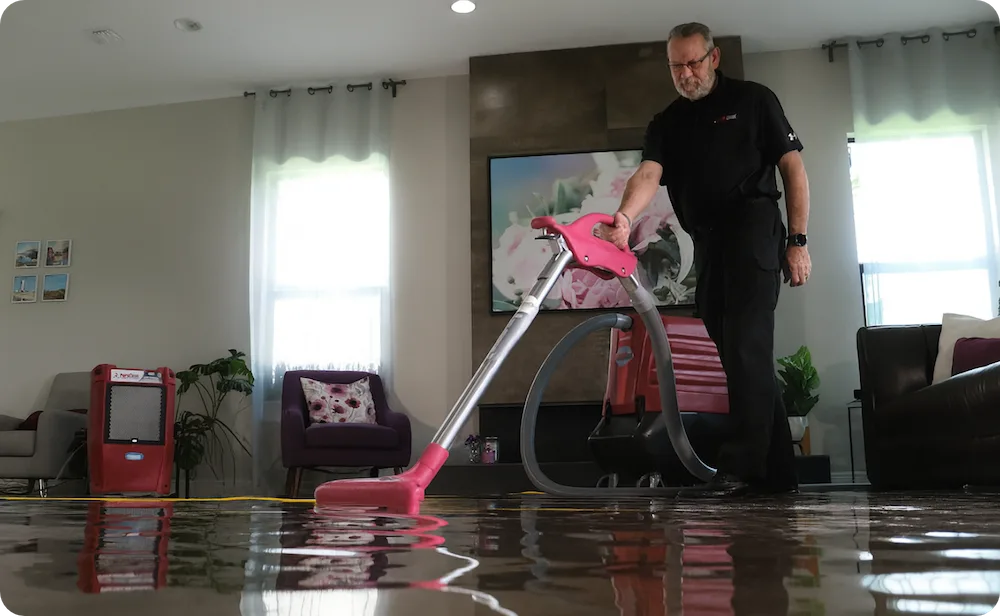
Professional extraction equipment may be used to remove standing or pooled water from affected areas. Removing liquid water quickly helps reduce continued absorption into porous materials and allows the drying process to begin sooner.
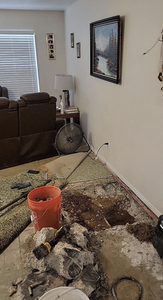
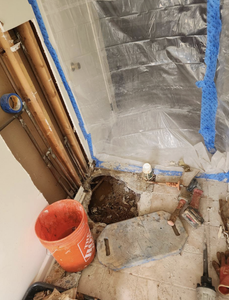
Moisture can remain beneath flooring, behind drywall, inside cabinets, and within wall or ceiling cavities after visible water has been removed. Moisture-detection equipment may be used to help identify these concealed wet areas.
Some building materials may be suitable for drying and restoration, while others may require removal because of severe saturation, swelling, deterioration, contamination, or loss of structural integrity.
Air movement and dehumidification may be used to reduce moisture in affected materials and the surrounding air. Equipment placement should be based on the actual drying conditions within the property.
Moisture levels can be checked during the drying process to determine whether affected materials are responding as expected. Drying conditions may be adjusted as moisture levels change.
Once affected materials are dry, surfaces may be cleaned and the property prepared for repairs or reconstruction when necessary. The final scope depends on what was damaged and what materials had to be removed.
Emergency water extraction is one of the first major steps after a house floods. The objective is to remove standing water before it can continue soaking into flooring, drywall, cabinets, and other porous materials.
Extraction may be needed across a single room or multiple areas depending on how far the water traveled. In larger losses, water may move through doorways, beneath walls, into adjacent rooms, or down to lower levels.
For active standing-water emergencies, see our emergency water extraction in Palmdale service.
Removing visible water does not mean the structure is dry. Drywall, wood framing, flooring, subflooring, cabinets, carpet padding, and insulation may continue holding moisture after extraction is complete.
Structural drying may involve:
The goal is to reduce moisture in affected materials to appropriate levels and identify areas that are not drying as expected.
For homes that require continued drying after water removal, see our structural drying in Palmdale service.
Different building materials respond to flooding in different ways. Some materials may be dried successfully when the loss is addressed quickly, while others may swell, warp, delaminate, deteriorate, or trap moisture.
Drywall can absorb water through both the paper surface and gypsum core. Limited moisture may sometimes be dried, but heavily saturated, deteriorated, or contaminated drywall may require removal.
Carpet, laminate, hardwood, vinyl, tile assemblies, and subflooring all react differently to water. Carpet may appear dry while the padding underneath remains wet. Wood and laminate products may swell, cup, warp, or separate depending on the severity and duration of exposure.
Floodwater can move underneath kitchen and bathroom cabinets where particleboard, toe kicks, drywall, flooring, and wall cavities may remain wet. Whether cabinetry can be restored depends on the material and extent of swelling, separation, staining, or moisture penetration.
Wet insulation may retain moisture inside walls and ceilings. Depending on the insulation type and amount of saturation, removal may be necessary to allow surrounding materials to dry properly.
The cost of flooded house cleanup in Palmdale can vary significantly because no two water losses affect a property in exactly the same way. A smaller loss confined to one room may require far less extraction, drying, and repair than a multi-room or multi-level flood.
Common factors that affect cleanup cost include:
The source of the water also matters. Cleanup after a clean plumbing supply-line failure may differ from a loss involving contaminated water or sewage.
Because the scope can vary so widely, an on-site assessment is generally the best way to estimate the actual cost of flooded house cleanup.
Yes. Flooding can create conditions favorable for mold when drywall, wood, carpet, insulation, or other organic materials remain damp for an extended period.
Mold risk depends on factors such as:
Prompt water removal and controlled drying can help reduce the conditions that support microbial growth, but hidden moisture may still remain after the surface appears dry.
If mold is discovered during or after cleanup, additional evaluation or remediation may be appropriate. PuroClean of West Antelope Valley also provides mold removal services in Palmdale for properties where microbial growth has developed.
Homeowners insurance may cover water damage from certain sudden and accidental events, but coverage depends on the cause of the loss, policy terms, exclusions, maintenance history, and specific circumstances.
For example, a burst pipe or failed appliance supply line may be treated differently from long-term seepage or flooding caused by an outside natural flood event. Standard homeowners policies also commonly treat external flooding differently from internal plumbing-related water damage.
Useful documentation may include:
Homeowners should contact their insurance carrier or adjuster to determine how their specific policy applies to the loss.
PuroClean of West Antelope Valley helps Palmdale homeowners address the full impact of residential flooding, from standing water and hidden moisture to structural drying and damaged building materials.
Our approach focuses on identifying where the water traveled, removing excess water, evaluating affected materials, beginning controlled drying, and monitoring moisture conditions as the property stabilizes.
Because floodwater can move beneath flooring, behind walls, into cabinets, and across multiple rooms, professional moisture evaluation can help identify areas that may otherwise be overlooked.
PuroClean of West Antelope Valley serves Palmdale and surrounding Antelope Valley communities and can assist with flooded homes caused by burst pipes, appliance failures, water heater leaks, bathroom and kitchen plumbing, slab leaks, roof leaks, and other sudden water-loss events.
If it can be done safely, stop the source of the water first. This may mean shutting off a fixture, appliance supply line, or the home’s main water supply. Avoid entering standing water if electrical outlets, appliances, panels, or other energized equipment may be involved. Once the source is controlled and the area is safe, document the damage and begin arranging water extraction and moisture evaluation.
Standing water should generally be removed as soon as the source is controlled and the area can be entered safely. The longer water remains in contact with flooring, drywall, cabinets, insulation, wood, and other porous materials, the greater the chance of swelling, staining, deterioration, and hidden moisture migration.
Drying time depends on how much water entered the property, how many rooms were affected, the materials involved, indoor humidity, and whether moisture reached concealed areas. Some losses may dry relatively quickly, while larger or more complex losses may require several days of controlled drying and moisture monitoring.
Sometimes. Whether flooring can be restored depends on the material, amount of water, duration of exposure, contamination level, and whether moisture reached the subfloor. Carpet, hardwood, laminate, vinyl, and tile assemblies all respond differently to flooding and should be evaluated individually.
No. Limited moisture may sometimes be dried successfully, but drywall that is heavily saturated, deteriorated, contaminated, or structurally compromised may require removal. Moisture behind the drywall can also affect insulation or framing even when the surface appears intact.
Mold risk increases when organic materials remain damp for an extended period. The exact timing depends on moisture levels, temperature, humidity, ventilation, and the materials involved. Prompt extraction and structural drying can help reduce the conditions that support microbial growth.
Flooded house cleanup costs vary widely because the scope depends on the amount of water, number of rooms affected, materials involved, contamination, drying time, demolition requirements, and repairs needed afterward. A smaller one-room loss may cost significantly less than a multi-room or multi-level flood, so an on-site assessment is usually the most reliable way to determine the actual cleanup scope.
It may, depending on the cause of the flooding and the terms of the policy. Sudden and accidental plumbing losses may be treated differently from long-term seepage or outside natural flooding. Homeowners should contact their insurance carrier or adjuster to determine how their specific policy applies.
If your Palmdale home has standing water, saturated flooring, wet drywall, swollen cabinets, ceiling stains, or moisture spreading into adjoining rooms, prompt cleanup can help limit continued absorption and begin the drying process sooner.
PuroClean of West Antelope Valley provides flooded house cleanup in Palmdale for residential water losses caused by burst pipes, appliance failures, water heater leaks, bathroom and kitchen plumbing, slab leaks, roof leaks, and other sudden sources of water intrusion.
For active standing-water emergencies, see our emergency water extraction in Palmdale service. If moisture remains after extraction, our structural drying in Palmdale service addresses the deeper drying phase.
The sooner the water source is controlled and the affected materials are evaluated, the easier it is to determine which areas can be dried and restored and which materials may require additional repair.
What Our Customers Say:
Find answers to common questions about our services
You can check the walls and ceilings for water stains, the floors for warping and buckling, and the pipes for corrosion, leaks, missing grout, and mold. Attics and basements may have damaged flooring, mildew or mold, dampness, and odors. Also, be sure to inspect the exterior of the home for cracked roof tiles, puddles, standing water, and whether the ground is sloping away from the house.
First, if safe, shut off the utilities in your home to avoid further damage. Don’t enter your home if it has suffered structural damage. Don’t walk through floodwater if electricity hasn’t been turned off, and avoid contaminants. Next, contact a water-damage restoration company, such as PuroClean of West Antelope Valley, as soon as possible. Don’t wait, as water can cause mold and irremediable damage to the wood, walls, and carpet. Then, depending on the extent of the damage and the recommendation of the remediation company, contact your insurance provider to start the claim process.
There are many variables that determine whether a flooded property can be saved: the amount of water, and even more important, the amount of time the water was in/around the property. Every situation is different, and PuroClean of West Antelope Valley expert restoration professionals can determine what can be salved once one site.
Property water damage can pose several dangers including structural instability, electrical hazards, mold and mildew growth leading to health issues, contamination from sewage or chemicals, and potential collapse of weakened structures.
Water flooding can cause extensive damage including structural damage to walls, floors, and foundations, damage to personal belongings, electrical hazards, and potential health risks from mold and bacteria growth. The longer water sits, the more severe the damage becomes.
Water damage can result from unexpected leaks, flooding from storms, plumbing failures, or appliance malfunctions. Our certified teams focus on rapid water removal, drying, and stabilization to help prevent further damage and mold growth.
 Explore Our Water Damage Mitigation Services
Even after a fire is extinguished, smoke, soot, and odor can continue to affect your home. Fire damage restoration services address visible damage while also helping reduce lingering effects that impact indoor air quality and surfaces.
Explore Our Fire and Smoke Damage Restoration Services
Mold often develops as a result of unresolved moisture or hidden water damage. Professional mold remediation helps identify affected areas, contain growth, and restore healthy indoor conditions.
Explore Our Mold Removal and Remediation Services
Biohazard situations, including crime scene cleanup and virus decontamination, require specialized cleaning and handling to protect health and safety. Biohazard cleanup services address contamination using proper protocols and professional care.
Explore Our Biohazard Cleanup Services
In some cases, property damage requires repairs beyond cleanup and mitigation. Reconstruction services help restore damaged areas of the home after water, fire, or other incidents, supporting a smoother transition from damage to recovery.
Explore Our Reconstruction Services Services
PuroClean provides 24/7 commercial property damage restoration services for businesses and facilities across the United States.
Explore Our Commercial Services
Water damage can result from unexpected leaks, flooding from storms, plumbing failures, or appliance malfunctions. Our certified teams focus on rapid water removal, drying, and stabilization to help prevent further damage and mold growth.
Explore Our Water Damage Mitigation Services

PuroClean of West Antelope Valley
(661) 544-1885
Palmdale, CA


© 2026 PuroClean. All Rights Reserved.