


Introduction
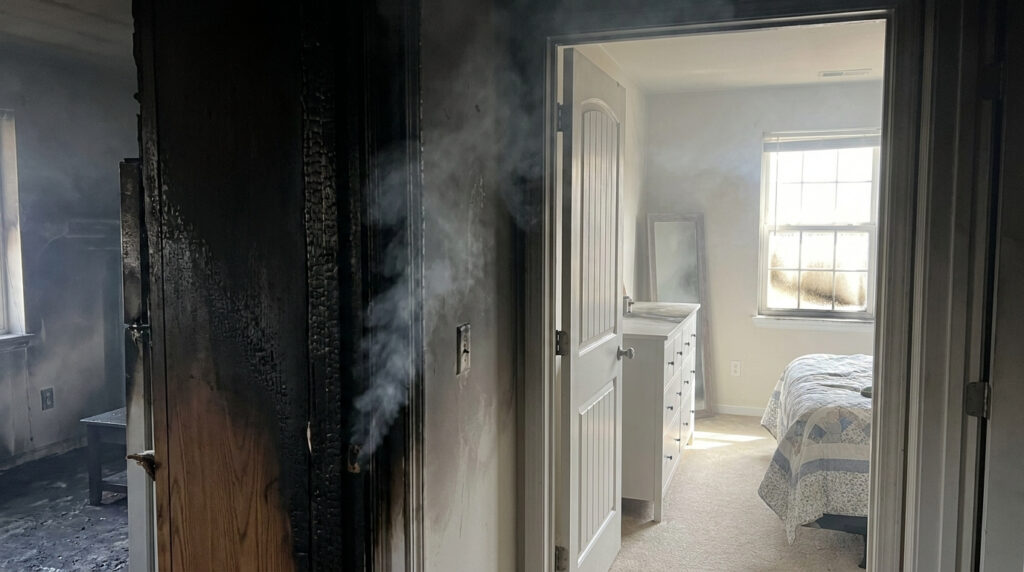
A house fire doesn’t need to reach every room to affect the entire home. Even if flames were contained to one area, smoke travels fast, clings to surfaces, and seeps into spaces you might assume are untouched. That raises a common and important question for homeowners: can smoke damage spread beyond the fire zone?
The short answer is yes, and often more extensively than expected. Smoke behaves like a gas, moving through vents, under doors, and into porous materials. Understanding how and why this happens can help you spot hidden issues early and avoid long-term damage that quietly worsens over time.
How Smoke Moves Beyond The Fire Zone
Smoke doesn’t stay put. It’s driven by heat, pressure, and airflow, which means it naturally seeks cooler areas away from the fire source. This movement allows it to infiltrate rooms that appear untouched at first glance.
As hot air rises, smoke travels upward and outward, entering attics, upper floors, and ventilation systems. HVAC systems can then distribute smoke particles throughout the house, even into closed rooms. Tiny particles settle on walls, fabrics, and inside cabinets, often leaving no immediate visual trace.
This is where the question can smoke damage spread becomes more than theoretical. It’s a practical concern that affects cleanup, safety, and long-term air quality.
What Determines How Far Smoke Damage Spreads
Not all smoke damage behaves the same way. Several factors influence how far it travels and how deeply it embeds into materials.
Key Factors That Influence Smoke Spread
Understanding these variables helps explain why some homes experience widespread contamination while others see more contained effects.
– Fire intensity: Hotter fires produce finer particles that travel farther and penetrate deeper into materials
– Duration of the fire: Longer fires allow more time for smoke to circulate through the home
– Ventilation system activity: Running HVAC systems can distribute smoke rapidly across multiple rooms
– Building layout: Open floor plans allow easier movement compared to compartmentalized spaces
– Door and window positions: Openings create pathways that guide smoke into adjacent rooms
These factors work together, often making smoke damage less predictable than fire damage itself.
Signs Of Smoke Damage In Unaffected Rooms
Rooms without visible fire damage can still carry hidden contamination. Recognizing the signs early helps prevent deeper structural or health-related issues.
Common Indicators To Look For
Some signs are subtle, especially in the early stages, but they tend to worsen if ignored.
– Lingering odor: A persistent smoky smell, especially in closed spaces like closets
– Discoloration: Yellowing or gray film on walls, ceilings, or vents
– Dust-like residue: Fine soot settling on surfaces that were previously clean
– HVAC odor bursts: Smoke smell intensifies when heating or cooling systems run
– Fabric absorption: Curtains, upholstery, and carpets holding onto smoke scent
If you notice even one of these signs, it’s worth investigating further rather than assuming the room is unaffected.
Why Smoke Damage Is Often Worse Than It Looks
Smoke damage isn’t just about visible soot. It involves microscopic particles that embed into materials and continue to affect the environment long after the fire is out.
Porous materials like drywall, wood, and fabric act like sponges, trapping smoke particles and odors. Over time, these particles can resurface, especially with changes in humidity or temperature. That’s why a room may seem fine initially but develop a noticeable smell weeks later.
There’s also the issue of chemical residue. Depending on what burned, smoke can carry acids, oils, and toxins that degrade surfaces and impact indoor air quality. This makes proper assessment and cleanup critical, even in rooms that look untouched.
How Professionals Assess Hidden Smoke Damage
A visual inspection alone isn’t enough to determine the extent of smoke damage. Professionals use a combination of tools and techniques to uncover what’s not immediately visible.
Steps In A Professional Smoke Damage Assessment
These steps help create a complete picture of the damage and guide the cleanup process.
– Air quality testing: Measures airborne particles and identifies lingering contaminants
– Surface sampling: Detects residue on walls, ceilings, and furniture
– Thermal imaging: Reveals hidden smoke pathways behind walls or ceilings
– HVAC inspection: Checks ducts and filters for soot buildup
– Odor tracing: Identifies the source of persistent smells
This thorough approach ensures that no affected area is overlooked during restoration.
Can Smoke Damage Be Prevented From Spreading Further
Once smoke has entered multiple areas, the focus shifts from prevention to containment and cleanup. However, there are steps you can take immediately after a fire to limit further spread.
Immediate Actions To Reduce Smoke Spread
Acting quickly can make a significant difference in how much of your home is affected.
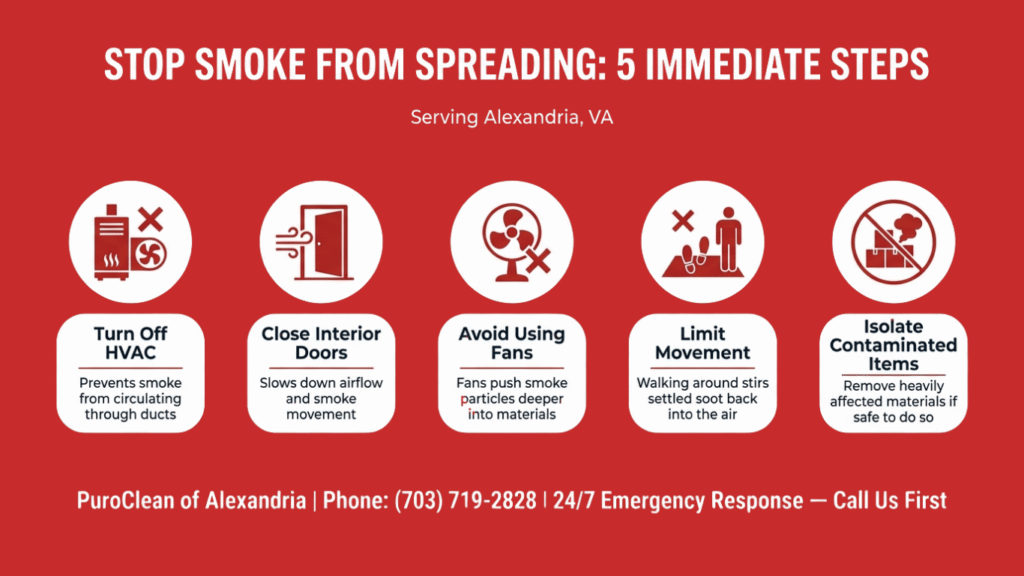
– Turn off HVAC systems: Prevents smoke from circulating through ducts
– Close doors to unaffected rooms: Slows down airflow and smoke movement
– Avoid using fans: Fans can push smoke particles deeper into materials
– Limit movement: Walking around can stir settled soot back into the air
– Isolate contaminated items: Remove heavily affected materials if safe to do so
These steps help contain the issue until professional cleanup begins.
The Impact Of Smoke Damage On Health And Living Conditions
Even in rooms without visible fire damage, smoke contamination can affect daily life. Air quality becomes a major concern, especially for people with respiratory conditions, allergies, or sensitivities.
Particles left behind by smoke can irritate the eyes, throat, and lungs. Odors can also create discomfort and make living spaces feel unclean. Over time, untreated smoke damage can contribute to persistent indoor pollution, which is harder to resolve the longer it’s left unaddressed.
This is why addressing smoke damage in unaffected rooms is not just about appearance. It’s about restoring a safe and livable environment.
When To Call A Professional Restoration Service
Not every situation requires professional help, but many do, especially when smoke has spread beyond the immediate fire area.
Situations That Require Expert Intervention
Some conditions are too complex or risky to handle without specialized equipment and training.
– Strong odor persists after basic cleaning
– HVAC system shows signs of contamination
– Soot appears in multiple rooms
– Walls or ceilings show discoloration
– Household members experience irritation or breathing issues
In these cases, professional restoration is the most reliable way to fully remove contaminants and restore your home.
Conclusion
Smoke rarely respects room boundaries. It travels through air systems, gaps, and materials, leaving behind contamination that isn’t always visible right away. What looks like an untouched room can still carry hidden damage that affects both the structure and the air you breathe.
Addressing smoke damage in unaffected rooms requires more than surface cleaning. It calls for careful inspection, proper containment, and often professional restoration to fully resolve the issue. If you suspect smoke has spread beyond the fire area, taking action early will save time, cost, and future complications.
If your home has experienced a fire, consider scheduling a professional inspection to ensure no hidden damage is left behind.
FAQs
Q: Can smoke travel through closed doors?
A: Yes, smoke can seep through small gaps around doors and even penetrate materials, allowing it to reach enclosed spaces.
Q: Is it safe to stay in a home with smoke damage in other rooms?
A: It depends on the extent of the damage. Minor cases may be manageable, but widespread contamination can affect air quality and should be addressed before prolonged exposure.
Q: How long does smoke odor last in unaffected rooms?
A: Without proper cleaning, smoke odor can linger for weeks or even months, especially if particles have settled into porous materials.