


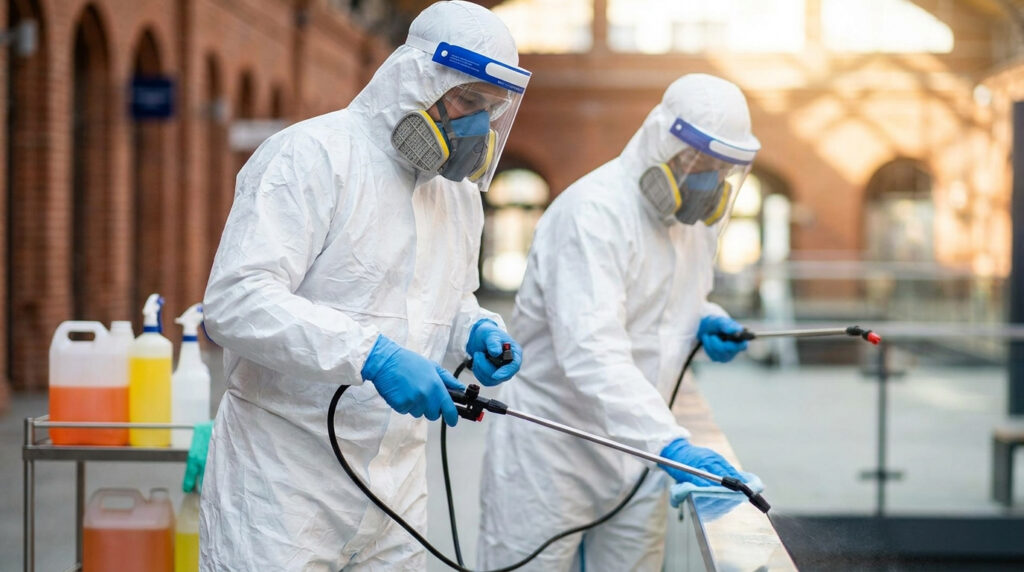
Introduction
After an infectious event, cleaning visible soil is only one part of restoring a space. Germs can remain on high-touch surfaces, porous materials, and areas affected by bodily fluids. The disinfectant selected, the way it is mixed, and the time it stays wet all affect whether the product can work as intended.
For infectious disease cleanup Alexandria VA property owners and managers, EPA registration offers a practical starting point for choosing a product. It confirms that a disinfectant has been reviewed for specific antimicrobial claims, but it does not mean every product works against every organism or on every surface. Reading the label closely is what turns a registered product into a useful cleaning tool.
What EPA Registration Actually Means
An EPA registration number indicates that the Environmental Protection Agency has evaluated a pesticide product, including disinfectants, for its labeled uses and antimicrobial claims. The number is usually displayed on the front or back label as “EPA Reg. No.” followed by a series of numbers.
Registration is not a blanket promise that a product will eliminate every pathogen in every setting. A disinfectant may be approved for certain bacteria, viruses, fungi, or emerging viral pathogens only under listed conditions. Its label identifies the organisms it addresses, the surfaces it can be used on, dilution instructions, and the contact time needed for disinfection.
A product marketed as “antibacterial,” “sanitizing,” or “natural” may not carry the same disinfecting claims. Sanitizers reduce some germs to a level considered safer for routine use, while disinfectants are designed to kill or inactivate specified microorganisms on hard, nonporous surfaces.
How Product Labels Direct Safe Use
The label is a legal use instruction, not marketing copy. Before applying any EPA-registered disinfectants, identify the target organism, surface type, and required exposure time.
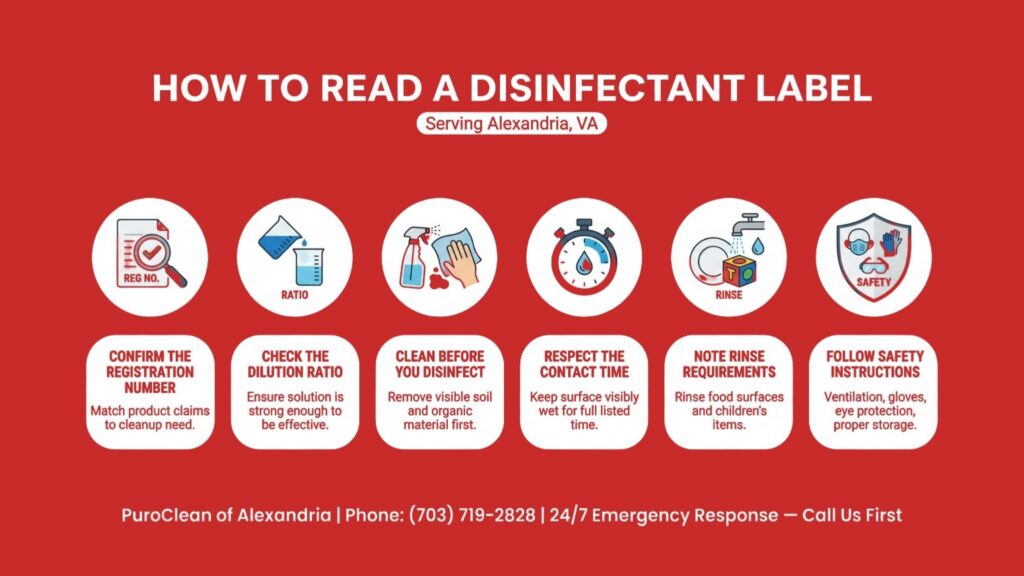
• Confirm the EPA registration number and match the product’s claims to the cleanup need.
• Read the dilution ratio carefully; overly weak solutions may not disinfect effectively.
• Clean away visible soil and organic material before disinfecting the surface.
• Keep the surface visibly wet for the full contact time shown on the label.
• Check whether the label requires rinsing on food-contact surfaces or children’s items.
• Follow ventilation, glove, eye protection, and storage instructions listed by the manufacturer.
Using the product exactly as labeled protects both the people handling it and the people returning to the space.
Why Cleaning Comes Before Disinfection
Blood, respiratory secretions, food residue, dust, and other organic material can block disinfectant from reaching microorganisms on a surface. Disinfectant applied over a visibly contaminated countertop, doorknob, or bathroom fixture may lose effectiveness because the chemical is reacting with the soil instead of the target pathogens.
Cleaning removes that barrier. In most cases, the work begins with detergent and water or a compatible cleaning product, followed by physical removal of residue with disposable towels or equipment that can be properly decontaminated. The surface should then receive disinfectant while still accessible and free of visible debris.
This two-stage approach also prevents a common mistake: treating a disinfectant as an all-purpose cleaner. Some products can clean and disinfect under specific label instructions, but many still require pre-cleaning for heavily soiled surfaces.
Selecting A Product For The Cleanup Environment
A suitable disinfectant depends on the affected material and the reason for cleanup. The product that works well on a sealed tile floor may damage unfinished wood, corrode metal, or discolor fabric.
• Use hard-surface disinfectants on sealed counters, fixtures, handles, floors, and similar nonporous materials.
• Verify compatibility before treating electronics, painted surfaces, natural stone, or finished wood.
• Treat porous materials such as mattresses, carpet, and upholstered furniture differently because liquid disinfectants may not penetrate evenly.
• Select products with pathogen-specific claims if the cleanup involves a known infectious agent.
• Use ready-to-use products where accurate dilution is difficult to control.
• Avoid relying on scent, color, or packaging language as proof of disinfecting performance.
The right product is one that is labeled for the organism, surface, and conditions present at the site.
Safe Handling Practices During Cleanup
Disinfectants can cause skin irritation, breathing discomfort, eye injury, or surface damage if used carelessly. Safe handling begins before the bottle is opened and continues through disposal of used materials.
• Wear gloves that are appropriate for the chemical and replace them if torn or contaminated.
• Increase airflow by opening windows or using the building’s ventilation system where appropriate.
• Never mix disinfectants with bleach, ammonia, acids, or other cleaning products.
• Use separate cleaning tools for contaminated areas and routine household cleaning.
• Place used disposable towels, gloves, and contaminated waste into secure bags before disposal.
• Keep chemicals in their original containers so directions and hazard information remain available.
Careful handling limits accidental exposure and reduces the chance of spreading contamination to unaffected areas.
Contact Time Is The Detail Most Often Missed
Contact time, sometimes called dwell time, is the period a disinfectant must remain wet on a surface to achieve its labeled claim. Depending on the product and pathogen, that period may range from less than one minute to several minutes.
Spraying a surface and immediately wiping it dry can leave the disinfectant without enough time to work. On vertical surfaces, a cloth or wipe may provide better coverage than a quick spray because it helps keep the area wet. Large surfaces may need to be treated in sections so the product does not dry before the stated contact time is complete.
Temperature, airflow, and surface condition can affect drying speed. In a warm room with strong ventilation, a product may evaporate faster than expected, requiring additional application to maintain a wet surface.
Situations That Need More Than Household Cleaning
Some cleanup events involve a level of contamination that is difficult to manage with ordinary supplies. This is especially true when bodily fluids affect multiple rooms, porous materials, ventilation pathways, or shared spaces.
• Large contamination areas can spread material through shoes, cleaning tools, and improper waste handling.
• Bloodborne pathogen concerns require controlled cleanup methods and appropriate protective equipment.
• Apartments, offices, and rental properties may need documentation of cleaning procedures for occupants or management.
• Porous items may require removal rather than surface disinfection.
• Odor alone does not confirm that contamination has been removed or that a surface is safe.
Professional infectious disease cleanup Alexandria VA services can assess the affected area, isolate contaminated materials, and apply appropriate cleaning and disinfection methods.
Conclusion
EPA registration helps identify disinfectants with reviewed antimicrobial claims, but the label determines how each product should be used. Effective cleanup depends on removing visible soil, selecting a compatible product, maintaining the required contact time, and preventing cross-contamination during the work.
EPA-registered disinfectants are most effective when the listed directions are followed from start to finish. For extensive contamination, shared commercial areas, or exposure involving bodily fluids, arrange a professional assessment rather than relying on a quick surface wipe-down.
FAQs
Q: How can I tell whether a disinfectant is EPA registered?
A: Look for an EPA registration number on the product label. It is commonly written as “EPA Reg. No.” followed by numbers. Also review the label’s organism claims, contact time, and approved surface uses.
Q: Is bleach always the best disinfectant for infectious disease cleanup?
A: No. Bleach can be effective for certain uses, but it can damage surfaces, lose strength if mixed incorrectly, and create hazardous fumes if combined with other chemicals. Use the product specified for the surface and pathogen involved.
Q: Can disinfectant be applied directly to a dirty surface?
A: It may not work as intended on a visibly soiled surface. Remove dirt, residue, and organic material first, then apply the disinfectant and keep the area wet for the full label contact time.