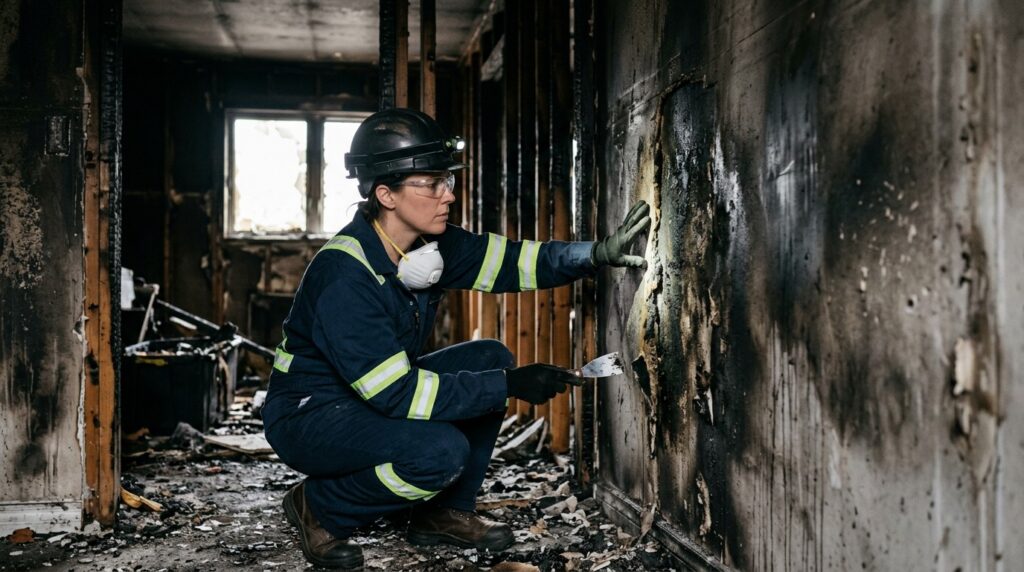
A wall can look intact after a fire and still be the wrong material to save. The hard decision is not whether smoke left a mark; it is whether cleaning can leave the wall suitable for the room again. That decision affects the scope of cleanup, the order of repairs, and the records you keep for an insurance claim. This guide explains how to sort drywall that may be cleaned from drywall that may need removal.
TL;DR
- Do not enter a fire-damaged area until fire officials say it is safe.
- Replace drywall when damage, odor, residue, or moisture cannot be resolved through appropriate cleaning.
- Check adjoining spaces and both sides of a wall before deciding what can stay.
- Photograph damage before cleanup or disposal.
- Ask your insurer what documentation is needed before major materials are removed.
What Fire-Damaged Drywall Actually Tells You
Drywall is not simply “burned” or “fine.” Its condition should be judged alongside heat exposure, residue, odor, moisture, and damage to nearby materials.
A small smoke mark near a contained fire is different from a wall exposed to heavy heat, firefighting water, or widespread residue. The paper facing, seams, insulation, framing, and opposite side of the wall may all affect the decision.
That is why painting should not be the first step. Before repairs begin, determine whether the drywall is clean, dry, stable, and suitable to remain.
Replacing drywall after a fire should begin with inspection. The goal is to separate materials that can remain from those that need more cleaning, drying, or removal.
Inspect the Wall as a System
The right first move is to inspect the whole wall assembly, not just the visible surface.
Start with the room where the fire occurred, then consider nearby rooms, hallways, closets, and areas above or below the affected space. Smoke can leave a path that does not match the most obvious burn marks. Water used during firefighting can also change the condition of materials far from the fire itself.
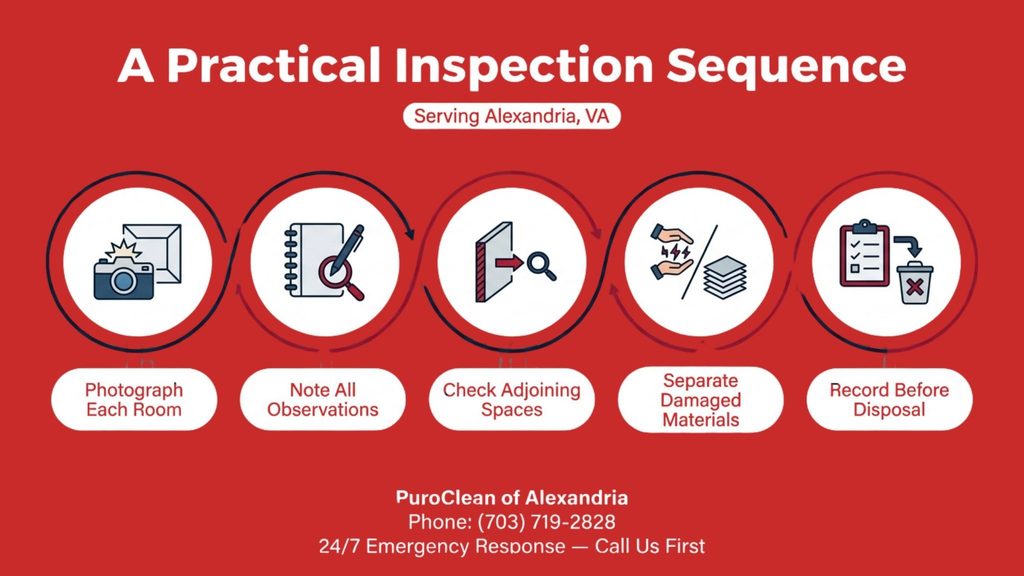
A practical inspection sequence keeps the work organized:
1. Photograph each room before moving furniture, debris, or wall materials.
2. Note where discoloration, soot, odor, bubbling paint, or softened drywall appears.
3. Check adjoining spaces and the opposite side of shared walls.
4. Separate clearly damaged materials from materials that need further evaluation.
5. Record what is removed and why before disposal.
A wall may need replacement if the drywall has lost its shape, feels soft, has open damage, or cannot be evaluated without opening the assembly. That is not a rule for every darkened wall. It is a reason to stop treating the problem as a surface-cleaning project.
The back of the wall can change the decision
Drywall often hides the area that needs the closest look. A clean-looking painted surface can sit in front of insulation, framing, wiring, or the reverse side of drywall that has been exposed to residue or water.
Opening a limited area may be part of determining whether the wall can stay. That opening should be planned so it helps answer a specific question: Is the problem limited to the room-facing surface, or does it continue into the wall cavity?
If the cavity is affected, replacing a larger section may be more sensible than patching a small opening and hoping the rest of the wall is unchanged. The goal is not to remove more material than necessary. It is to avoid closing a wall before the inside has been properly addressed.
Keep Cleaning, Drying, and Rebuilding in the Right Order
Drywall should not be rebuilt until cleanup and drying decisions are complete.
Cleaning addresses residue on materials that remain. Drying addresses moisture from firefighting or cleanup. Removal deals with materials that cannot reasonably stay. Rebuilding comes after those steps are settled.
A lightly stained section may still need evaluation before painting, while obvious heat damage may require removal. In either case, surrounding materials should also be checked.
Keeping these stages separate helps avoid both unnecessary removal and rebuilding over unresolved damage.
Odor is a decision point, not a finishing detail
Persistent smoke odor should be addressed before finishing work begins. Paint, fragrance, or new furnishings may cover the smell temporarily without resolving its source.
If odor remains, pause the rebuild and identify which materials still need attention, including drywall, insulation, contents, or nearby surfaces.
Document the Scope Before Materials Leave the House
The decision to remove drywall should be documented before disposal makes the damage harder to show.
Insurance questions often become more difficult after debris bags leave the property. Photos, room notes, and a simple list of removed materials can help preserve the condition of the loss without turning the homeowner into a claims expert. The point is to keep a clear record of what was present when decisions were made.
Take wide photos that show the room, then closer photos that show the affected wall, openings, residue, and damaged materials. If you have a conversation with an insurer, contractor, or restoration professional, write down the date, the person’s name, and the next requested action. Keep those notes with estimates and claim correspondence.
Do not discard major materials solely because they are unpleasant to keep around. Ask what documentation is needed first. If removal is necessary for safety or cleanup, photograph the material and record the reason before it leaves.
For Alexandria homeowners, the repair plan may also involve permits, condominium rules, landlord requirements, or shared-wall questions. Those details are separate from the condition of the drywall, but they can affect when rebuilding can begin. Confirm the property-specific requirements before scheduling finish work.
Cleaning, Removal, and Rebuilding Compared
| Option | Works when | Breaks when | What it costs you |
| Surface cleaning | Residue appears limited to accessible finishes | Damage extends into wall materials | Time spent testing an incomplete solution |
| Targeted drywall removal | Damage is limited to a defined wall section | Nearby cavities remain unchecked | Patching and finish coordination |
| Broad drywall removal | Multiple areas need access for evaluation | Sound materials are removed without a plan | More disruption and rebuilding work |
| Finish repairs after cleanup | Materials are ready for paint and repair | Odor, moisture, or residue remains | Rework after the room looks complete |
What Goes Wrong Most Often
One common mistake is treating the visible stain as the whole problem. Damage may also involve the wall cavity, insulation, or adjacent materials.
Another is removing drywall before documenting its condition. Photos and notes are easier to gather before cleanup changes the scene.
Rebuilding too early can also create unnecessary rework if odor, moisture, or residue remains.
Finally, not every wall needs the same response. A small contained fire may require limited work, while wider smoke, heat, or water damage may justify a broader review.
Final Verdict
If the drywall is only lightly affected and the issue appears limited to an accessible surface, cleaning and later finishing may be reasonable. If the wall is soft, open, heat-damaged, carrying persistent odor, or hiding conditions that cannot be evaluated, replace drywall after fire rather than covering the question with a repair. The practical goal is to make the removal decision before new finishes make access harder.
Smoke-damaged drywall repair should begin with documentation and a clear scope, not with paint or new wallboard. If you are unsure whether a wall can remain, pause the rebuild, record the condition, and ask for an evaluation that separates cleaning, removal, and reconstruction decisions.
FAQs
Q: Can drywall be cleaned after smoke damage?
A: Sometimes, but the answer depends on the condition of the drywall and the extent of the smoke exposure. Cleaning may be considered when the material remains stable, and the issue appears limited to reachable surfaces. If the drywall is damaged, softened, strongly odorous, or affected beyond the visible face, cleaning alone may not resolve the problem.
Q: Should I remove drywall after a small fire?
A: A small fire does not automatically mean every nearby wall needs removal. Start by documenting the room and looking beyond the obvious burn area. The decision should account for the drywall’s condition, nearby surfaces, the opposite side of the wall, and whether the wall cavity needs to be examined before repairs begin.
Q: Can I paint over smoke-damaged drywall?
A: Painting should come after the condition of the drywall has been addressed. Paint can change how a wall looks, but it does not determine whether residue, odor, moisture, or hidden damage remains. If the wall has unresolved issues, painting first can create more work because finished surfaces may need to be opened again later.
Q: How do I know if smoke odor is inside the walls?
A: You may notice that the odor is stronger in enclosed rooms, closets, or areas that have been closed for a while. That does not identify the exact source by itself. If odor continues after accessible surfaces have been addressed, the repair plan may need to consider materials behind the finished wall surface.
Q: Will insurance pay to replace drywall after a fire?
A: Coverage depends on the policy, the cause of the loss, the insurer’s review, and the documentation provided with the claim. Keep photos, written notes, estimates, and records of removed materials. Ask your insurer what it needs before discarding major damaged items or approving rebuilding work.