


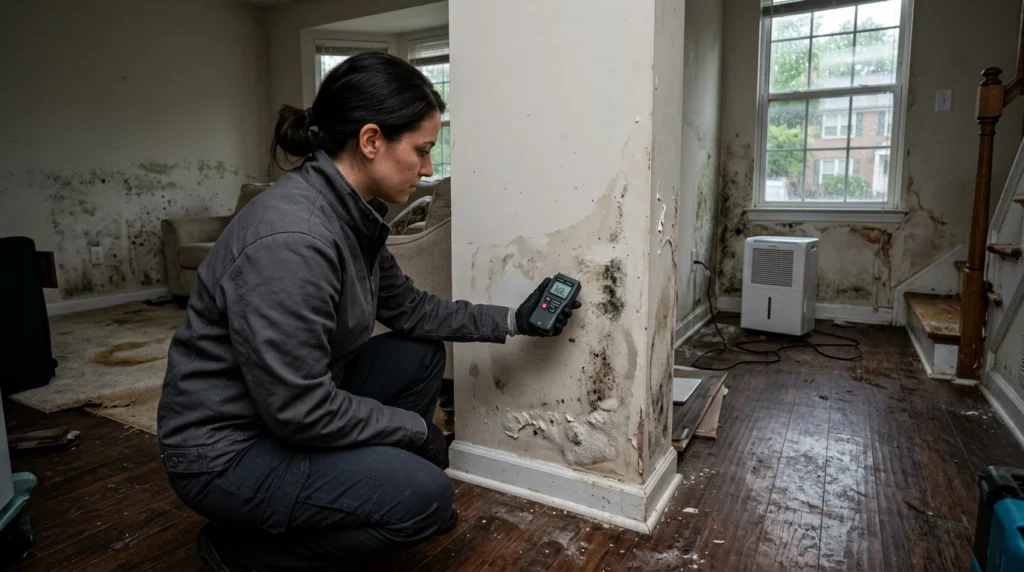
The floor looks dry, but the air still feels damp. After water damage, materials beneath flooring or inside walls may retain moisture even after standing water is removed. Room humidity provides one clue, but it cannot confirm whether the structure has dried. This guide explains how moisture affects your home, what drying equipment does, and when measurements are needed before repairs begin.
Why humidity keeps rising after the visible water is gone
When standing water is removed, moisture absorbed by porous materials begins releasing back into the air, often raising indoor humidity after the floor looks dry.
Drywall, carpet pad, insulation, wood framing, and subflooring can all hold water beneath the surface. As those materials dry, stored water turns into vapor and moves into the air. A room can look normal while materials around it continue releasing moisture.
That is why humidity after water damage Alexandria homes experience is not only an air-quality concern. It can be a sign that building materials remain wet. When the air is already humid, those materials dry more slowly and moisture can move into closets, nearby rooms, and enclosed wall cavities.
According to EPA guidance, indoor relative humidity should stay under 60 percent, with an ideal range of 30 to 50 percent to limit conditions that support mold growth. Humidity after a water event can exceed that range even when the room feels cooler than usual.
Opening windows helps drying only when outdoor conditions allow moisture to leave the building. Outdoor relative humidity alone is not enough to make that decision; temperature and moisture content also matter. A drying team can assess whether ventilation or controlled dehumidification is more appropriate.
Start by separating the visible cleanup from the drying work:
- Check for electrical, structural, or contamination hazards before entering or operating equipment.
- Stop the water source when it can be reached safely, or arrange the appropriate repair.
- Remove standing water and assess affected contents and building materials.
- Monitor room conditions and material moisture against appropriate drying goals.
This is a practical sequence, not permission to enter an unsafe area.
Act within the drying window before mold gets established
Water-damaged materials should be dried quickly because mold can begin growing before the damage becomes obvious.
According to EPA guidance, affected areas and belongings within 24-48 hours to limit conditions that allow mold to develop Treat that as a reason to act promptly, not a guaranteed safe period or a rule that every structure will be fully dry within two days.
The materials that cause the most concern are usually the ones that hide moisture. Drywall can absorb water above the visible waterline. Carpet may feel dry on top while its pad remains wet. Wood flooring can hold moisture below the finish, while subflooring and framing stay damp out of sight.
Materials that cannot be adequately cleaned and dried may need removal. Decisions depend on contamination, material condition, and whether effective restoration is possible. Structural components should be evaluated before removal rather than discarded according to elapsed time alone.
The City of Alexandria reports that about 20% of the city is mapped as floodplain. Floodwater can also introduce contamination, so a flood-related loss may require different handling from a clean plumbing leak.
Arrange source repairs promptly and coordinate them with extraction and drying. Some mitigation can begin while repairs are being organized in safely controlled areas; an unresolved leak must not be allowed to keep wetting the structure.
Watch for health concerns from damp materials and mold
Damp and moldy environments affect people differently. Reactions can include a blocked nose, irritated eyes or skin, and breathing symptoms such as a cough or wheeze. Some people have no symptoms. Those with weakened immune defenses or chronic lung conditions may be more vulnerable, while asthma or sensitivity to mold can increase the likelihood of stronger reactions. Discuss symptoms or exposure concerns with a healthcare professional. CDC’s mold-health guidance explains these effects.
Do not use paint, caulk, or air freshener as a substitute for drying and cleanup. Correct the moisture source, remove mold appropriately, and allow affected materials to dry before applying new finishes.
You do not need to identify or figure out the type of mold to take a moisture problem seriously. Focus on whether materials remain wet, whether anything needs removal, and whether the drying setup is appropriate for the conditions.
If sewage was involved, there is visible structural damage, or the affected area is extensive, avoid disturbing the materials yourself. Keep people away from the affected area until conditions can be assessed.
Confirm the structure is dry instead of trusting the surface
A wall or floor that feels dry to your hand may still hold moisture where you cannot see or reach it.
The ANSI/IICRC S500 standard addresses professional water damage restoration. Ask the restoration team how it establishes drying goals, checks material moisture, and documents progress. Those goals should account for the materials and conditions at the property.
A professional moisture check compares affected materials with dry materials of the same type whenever possible. Readings may be taken at baseboards, wall sections, subfloor areas, framing, and other locations where water can travel. The goal is not a universal number. It is evidence that the materials have returned to a normal condition for that structure.
A documented moisture assessment provides a stronger basis for repair decisions than touch or appearance alone. Ask which areas were checked and whether the affected materials have met the established drying goals.
Use Airflow and Dehumidification Together
Fans move air across wet surfaces; dehumidifiers remove moisture from the air. Their effectiveness depends on placement, capacity, temperature, and the materials being dried.
Air conditioning can also remove moisture while cooling, but ordinary HVAC operation is not a substitute for assessing water-damaged materials. Ask whether the system is suitable to run, particularly if contamination or affected ductwork is suspected.
Follow the agreed drying setup rather than changing equipment, opening windows, or switching systems off because the room smells better.
Compare the drying approach with the damage you have
| Approach | What it contributes | Important limitation |
| Household fans and dehumidifier | Air movement and moisture removal in suitable, limited situations | Do not establish whether concealed materials are dry |
| Existing HVAC system | May support temperature and humidity control when suitable to operate | Is not a complete structural-drying plan |
| Professional assessment and drying | Material measurements, equipment selection, monitoring, and documentation | Requires safe access and coordination with repairs or contamination control |
Conclusion
Removing standing water does not establish that walls, flooring, or framing are dry. Assess indoor humidity alongside moisture in affected materials, especially when water has entered hidden areas.
For humidity after water damage Alexandria homeowners are trying to resolve, start with the water source, affected materials, and an appropriate drying plan. Indoor humidity control after water damage VA properties need should be supported by measurements rather than appearance or odor alone.

FAQs
Q: How do I know if my home is fully dry after water damage?
A: A dry-looking floor or wall is not enough to confirm that the structure is dry. Ask which affected materials were checked and whether concealed areas need further assessment. Consumer meters can help monitor accessible materials, but calibrated readings and comparison with unaffected materials provide a clearer answer when water reached concealed or porous areas.
Q: Is it safe to stay in my house while drying equipment is running after water damage?
A: It depends on the water source, the extent of damage, the equipment setup, and whether mold or sewage is present. Keep children, older adults, and people with respiratory or immune concerns away from affected areas until conditions are assessed. In cases involving damaged wiring, standing water near electricity, or structural damage, leave the affected area and seek qualified help.
Q: Will my homeowner’s insurance cover mold that develops because of water damage?
A: Coverage depends on your policy, the source of the water, how quickly the damage was reported, and the insurer’s determination. Mold tied to a sudden, covered water event may be treated differently from mold connected to a long-term leak or maintenance issue. Document the damage, keep records of mitigation work, and ask your insurer how your policy applies.
Q: What humidity level should I aim for after water damage?
A: According to EPA guidance, indoor relative humidity should stay under 60 percent and preferably be kept between 30% and 50% to reduce conditions that support mold growth. After a flood or pipe burst, room humidity matters, but moisture inside drywall, flooring, and framing matters too. A normal humidity reading does not prove that hidden materials are dry.