


Introduction
Biohazard scenes require more than gloves and a bottle of disinfectant. Blood, bodily fluids, decomposition materials, sharps, contaminated textiles, and airborne particles can create several exposure routes at once. A crew must protect its lungs, eyes, skin, footwear, and personal clothing before cleanup begins.
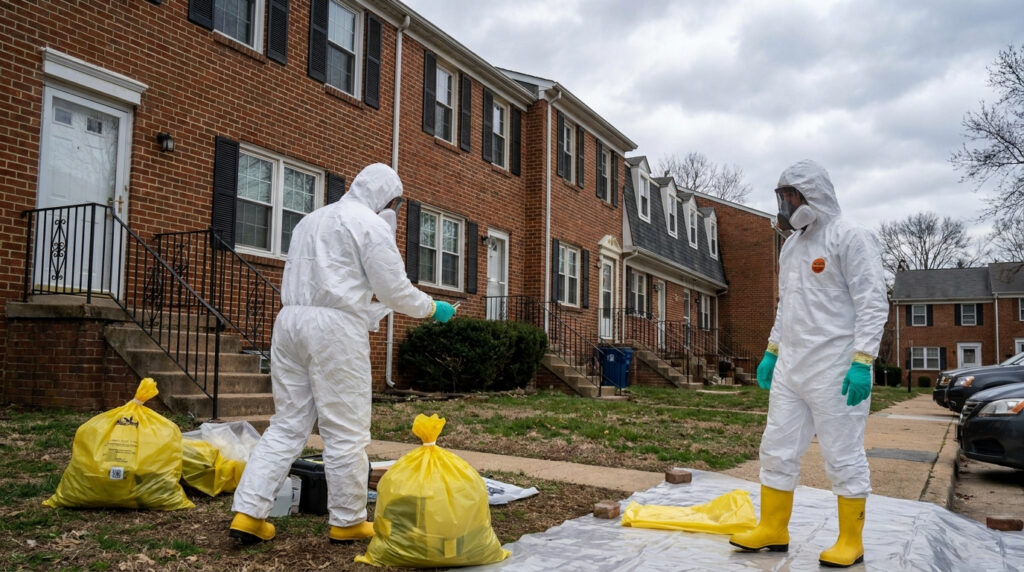
Professional cleanup teams select equipment based on the actual conditions inside the property. The size of the affected area, presence of porous materials, ventilation, visible sharps, and potential aerosol exposure all influence the gear worn. For biohazard cleanup PPE Alexandria VA jobs, certified crews use layered protection that can be removed safely without transferring contaminants to their skin, vehicle, or other areas of the building.
How Certified Crews Build A Protective Barrier
Personal protective gear works as a system, not as separate items put on at random. Each layer must overlap correctly. Gloves need to sit under or over coverall cuffs depending on the task, respirator seals must contact clean skin, and boot covers must stay secure while crews move through affected rooms.
Before entering, technicians establish clean and contaminated zones. The clean zone holds unused gear and supplies. The work zone contains the affected materials. A transition area between them gives crews space to remove contaminated PPE in a controlled order.
This layout reduces the chance that someone wearing contaminated boot covers walks into a clean hallway or touches a vehicle door with a used glove. It also allows a second team member to observe removal steps and identify errors before contamination spreads.
Respiratory Protection For Airborne Risk
Respiratory protection depends on what may be present in the air. Cleanup activities can disturb dried fluids, decomposition residue, mold, chemical vapors, dust, or small droplets created during cleaning. A disposable dust mask is not a universal solution for these conditions.
Crews may use a tight-fitting half-face or full-face respirator with approved filters or cartridges selected for the identified hazard. Full face units protect the eyes as well as the lungs. Powered air-purifying respirators can provide added comfort and airflow during extended work in hot, enclosed spaces.
A respirator only works if it seals correctly. Technicians complete fit testing and seal checks, keep facial hair away from sealing surfaces, and replace cartridges or filters according to the manufacturer’s schedule and site conditions.
Skin And Eye Coverage On Active Scenes
Bloodborne pathogens can enter through cuts, abrasions, the eyes, nose, and mouth. Even a small splash can create a meaningful exposure concern. For that reason, crews cover exposed skin and avoid touching their face, phone, or personal items while working.
Disposable coveralls protect clothing and skin from splashes and residue. Many scenes require liquid-resistant or liquid-impermeable suits with attached hoods, elastic wrists, and reinforced seams. Technicians may tape glove cuffs or suit ankles when movement could expose skin.
Eye protection may include sealed goggles, a face shield, or a full face respirator. A face shield alone does not always provide enough eye protection because droplets can travel around the sides. Equipment selection must match the splash risk and the cleaning method used.
Why PPE Changes With The Scene
A bathroom with a small, contained blood spill does not require the same equipment as an unattended death scene or a property with widespread contamination. Responsible crews do not use one fixed PPE package for every call. They assess the environment before moving materials, applying disinfectants, or starting demolition.
Porous items such as carpet, mattresses, upholstered furniture, drywall, and insulation can hold contamination below the surface. Removing these materials can release dust and debris, which may change respiratory and eye protection needs. Confined areas, including closets, crawl spaces, and poorly ventilated bedrooms, may also require stronger controls.
Chemical use matters as well. Certain disinfectants, odor control products, and cleaners can irritate the lungs or skin if used incorrectly. The crew must consider both the biological hazard and the cleaning chemicals used to address it.
PPE Types Used During Biohazard Cleanup
Professional crews combine several pieces of equipment to block likely exposure routes. The exact combination changes after the site assessment.
– Nitrile gloves create a disposable barrier against fluids and contaminated surfaces, often with a second pair added for removal tasks.
– Liquid-resistant coveralls shield work clothing, arms, legs, and torso from splashes, residue, and contact with contaminated materials.
– Chemical-resistant boots or disposable boot covers prevent tracking contamination from the work zone into clean areas.
– Sealed goggles protect the eyes from splashes, while face shields add coverage during cutting, lifting, or fluid cleanup.
– Half-face respirators protect the lungs when selected filters match the airborne hazard identified at the property.
– Full-face respirators combine respiratory and eye protection where splashes, particles, or stronger airborne concerns are present.
– Disposable sleeve covers, aprons, and head coverings provide additional protection during tasks with concentrated contamination.
Proper PPE selection gives technicians the protection needed to clean thoroughly without creating new exposure pathways.
Decontamination Before Crews Leave
Removing PPE is one of the highest-risk parts of the job. The outer surfaces of gloves, suits, boots, and respirators may carry contaminants. Pulling off a coverall too quickly or touching the front of a respirator can transfer material to bare skin or clothing.
Crews follow a removal sequence that keeps contaminated surfaces facing away from the body. Outer gloves, boot covers, coveralls, eye protection, and respirators are removed in a planned order. Hand hygiene occurs between key steps, not only at the end.
Reusable items need cleaning and disinfection before they are packed away. Respirator facepieces, goggles, and reusable boots are handled according to manufacturer instructions and site protocols. Disposable PPE is placed in appropriate waste containers rather than left in household trash bins.
A professional team also decontaminates tools, containment materials, and transport equipment. This protects the next property, the crew vehicle, and anyone who handles the equipment later.
Common PPE Mistakes That Create Exposure
Most PPE failures happen because gear is worn incorrectly or removed without a process. These errors can defeat even high-quality equipment.
– Wearing a respirator without fit testing can leave gaps that allow unfiltered air around the mask seal.
– Using latex gloves without checking for allergies or chemical compatibility can create avoidable skin problems.
– Wearing only one glove layer during heavy removal work can leave no backup barrier after a tear or puncture.
– Pulling a contaminated coverall over the head can transfer residue to the face, hair, or neck.
– Reusing disposable gloves, shoe covers, or coveralls can spread contamination beyond the original work area.
– Relying on an N95 mask for every scene can leave crews underprotected against certain vapors or splash risks.
Careful training and supervised removal procedures prevent these small mistakes from becoming larger problems.
Local Conditions In Alexandria Properties
Alexandria homes and commercial buildings can present practical cleanup challenges. Older properties may have narrow stairways, finished basements, small bathrooms, and limited ventilation. These conditions affect how crews establish containment, move waste, and choose footwear that remains secure on stairs or wet flooring.
Multiunit buildings add another concern. Technicians need a clear route from the affected unit to the disposal area without exposing shared hallways, elevators, or neighboring residents. Protective gear supports that containment plan, but it must be paired with careful movement, sealed waste packaging, and surface protection.
Warm Virginia weather can also make extended PPE use physically demanding. Crews plan breaks, hydration, and task rotation while maintaining contamination control. Removing gear for comfort inside an active work zone is not a safe option.

Conclusion
The right gear protects cleanup technicians while helping contain contamination within the affected area. Effective biohazard work depends on site assessment, properly fitted respiratory equipment, layered skin protection, and disciplined decontamination after every task.
Personal protective equipment is most effective when trained professionals select it for the hazard rather than relying on a one-size-fits-all kit. If a property needs professional biohazard cleanup, arrange an on-site assessment before anyone handles affected materials or begins cleaning.
FAQs
Q: Do biohazard cleanup crews always wear full-body suits?
A: Not always. Full coveralls are common where fluids, porous materials, or widespread contamination are present. For smaller, contained jobs, crews may use a different combination of gloves, eye protection, footwear protection, and respiratory equipment based on the risk assessment.
Q: Why do crews sometimes wear two pairs of gloves?
A: Double gloving provides a backup layer if the outer glove tears or becomes heavily contaminated. A technician can remove the outer pair during a task and continue working with a clean inner barrier until it is time to replace both pairs.
Q: Can homeowners use standard cleaning gloves for a biohazard scene?
A: Standard household gloves may not provide adequate coverage, puncture resistance, or chemical compatibility for a biohazard scene. They also do not address respiratory, eye, footwear, and clothing exposure risks that trained crews manage as part of a complete protection plan.