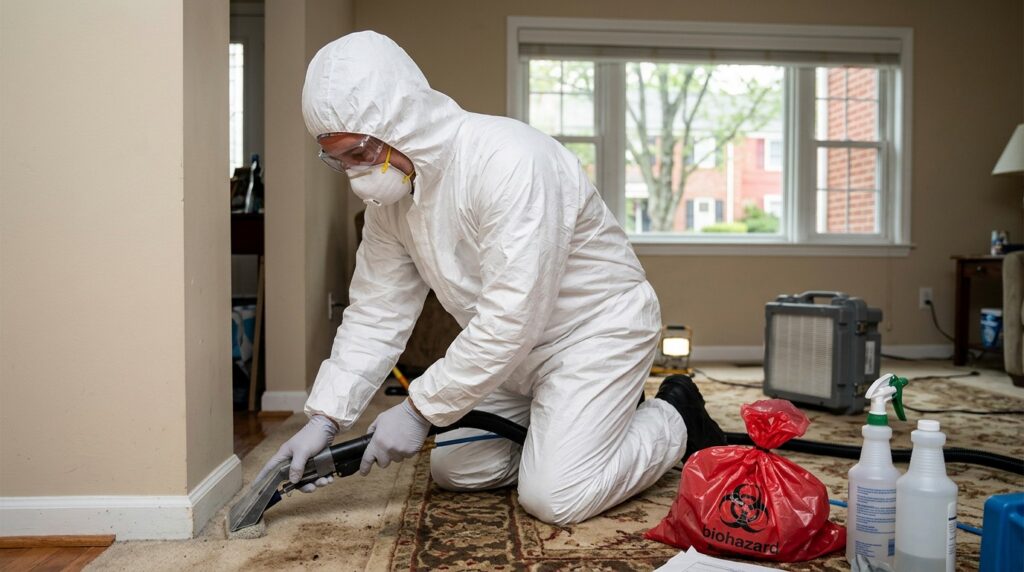
Biohazard cleanup may take several hours or continue over multiple days. The timeline depends on the extent of contamination, the materials affected, and how much of the property needs attention. A crew may have relatively little material to remove from a sealed surface but find a larger problem beneath carpet or inside furniture.
For planning purposes, separate the cleanup schedule from the date you can use the room again. Access restrictions, replacement flooring, or other repairs may keep the space unavailable after decontamination is finished. The provider should explain both timelines after assessing the property.
What Determines How Long Cleanup Takes?
People arranging cleanup for a home, rental property, workplace, or vehicle often want to know how long the process will take in Alexandria VA. An initial assessment helps establish the work involved and identify factors that could change the estimate.
Four factors deserve particular attention:
- Where contamination has spread. A single affected surface is different from several rooms, adjoining spaces, or routes people have walked through.
- What absorbed it. Upholstery, carpet padding, and unfinished materials may need removal when cleaning cannot adequately address the contamination.
- What is concealed. Lifting affected material may reveal contamination underneath, expanding the area that needs treatment.
- How the crew can access the space. Stairs, shared corridors, restricted entrances, and building arrangements can affect equipment movement and waste removal.
Personal belongings can also require individual decisions. Tell the provider about items you hope to recover before removal starts, so their assessment can be included in the plan.
What Happens During Biohazard Cleanup?
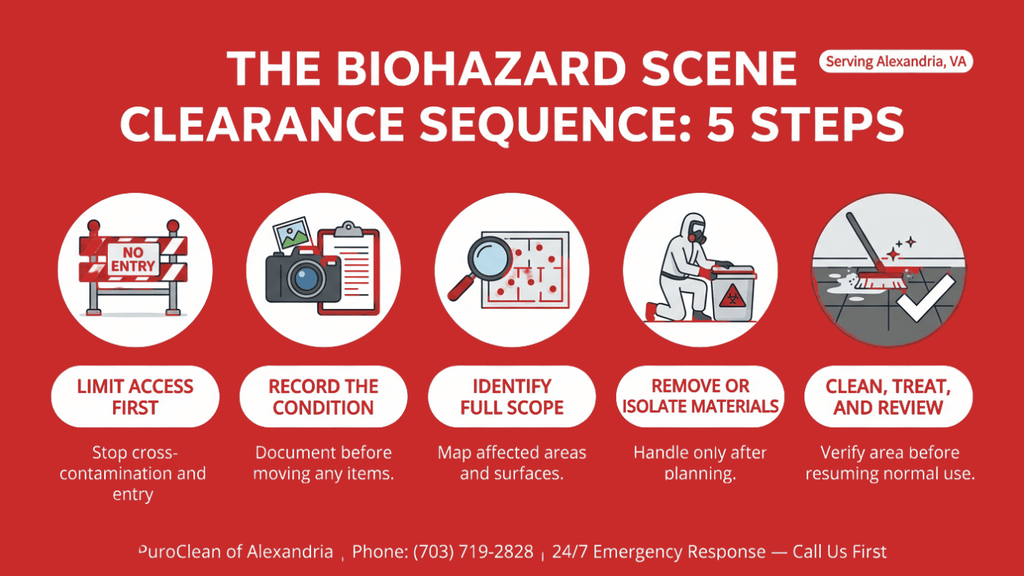
The crew first assesses the affected area and establishes precautions for the job. If authorities have restricted access, cleanup must wait until entry is authorized.
The work then generally moves through these stages:
- Prepare the work area. Set up appropriate controls to limit exposure and protect unaffected spaces.
- Remove material that cannot be restored. This may include belongings or sections of affected flooring and other building components.
- Clean and disinfect. Remove contamination and treat suitable surfaces using products and methods appropriate to the incident.
- Review and document the work. Check the agreed scope, explain any outstanding concerns, and identify restrictions or repairs that remain.
Disinfectants have specific contact times listed in their product instructions. When a product requires a surface to remain wet during treatment, that period must be observed regardless of how many technicians are working.
The schedule may change if removal exposes a problem that was not accessible during the first inspection. Ask the provider how it will explain additional work and update the estimate.
How Property Access Can Affect the Timeline
Access affects how a crew moves equipment and removed materials without crossing through unaffected parts of the property. A ground-floor room with an exterior entrance may allow a more direct workflow than an upper-level apartment reached through common corridors.
Property rules can add another layer. A landlord, building manager, or business owner may need to coordinate entry, secure a space, or decide how to handle shared areas. These arrangements are not part of the physical cleanup itself, but they can affect when work begins and how smoothly it proceeds.
When Can the Space Be Used Again?
Ask the provider to explain the condition of the area before anyone returns. A room that looks cleaner or smells better is not, by itself, evidence that every required task is finished.
The handover should make clear:
- Which areas were included in the completed work.
- Whether any access restrictions remain.
- What completion checks were performed.
- Whether repairs or further treatment are outstanding.
Ask whether testing is appropriate for the incident and included in the service. Do not assume every cleanup requires the same tests or comes with a formal clearance certificate.
How to Prepare Without Disturbing the Scene
Leave the affected space undisturbed and keep people and pets away. You do not need to move belongings or attempt an initial cleanup before calling.
Instead, prepare information the crew can use:
- Name the person who can authorize work. Clarify this early if a landlord, tenant, or several family members are involved.
- Describe what you already know. Explain the location of the incident and whether anyone carried items through other rooms.
- List important belongings. Mention photographs, documents, keepsakes, and other possessions you want assessed for possible recovery.
- Explain access and privacy concerns. Tell the provider about shared entrances, building restrictions, or sensitive personal information.
Use photographs you already have if they are helpful. Do not enter a restricted area to take more, and avoid moving affected items into another room.
Final Verdict
If you need biohazard cleanup in Alexandria VA, contact PuroClean of Alexandria to discuss the situation and arrange an assessment. We’ll evaluate the affected areas, identify the materials that need attention, and explain the cleanup steps involved.
We’ll also discuss the estimated start date, expected cleanup duration, and whether additional repairs will require a separate schedule. Contact our team to understand what the work involves and get an estimate based on your property’s condition.
FAQs
Q: Can someone stay in the home during biohazard cleanup?
A: It depends on the affected area, how well it can be separated, and whether occupants can avoid the cleanup zone. Follow the provider’s guidance and any restrictions from responding authorities.
Q: Should I remove personal belongings before a cleanup crew arrives?
A: No. Leave affected belongings in place for assessment. Tell the crew which items you hope to recover, but don’t move or clean them yourself.
Q: Does biohazard cleanup include repairs to walls or flooring?
A: Not always. Cleanup and reconstruction are separate services. Confirm whether flooring replacement, wall repairs, or other restoration work is included in your agreement.
Q: What should a landlord do after a biohazard event in a rental?
A: Secure the affected space, document its condition, arrange professional cleanup, and coordinate access and communication with tenants.