


Introduction
A biohazard scene can appear contained to one room, yet contamination may already be present on door handles, flooring, personal items, and equipment. Movement through the property can transfer biological material into areas that initially looked unaffected.
Blood and other potentially infectious materials can travel through footwear, gloves, cleaning tools, dust, and improperly handled waste. Cleanup requires controlled movement, targeted disinfection, and careful handling from the first assessment through final clearance.
Professional biohazard decontamination Alexandria VA services use defined containment procedures to prevent contaminants from spreading during cleanup. The objective is not simply to make a space look clean. It is to remove affected material, treat impacted surfaces, and keep clean areas protected throughout the project.
Why Cross-Transfer Creates More Work And Risk
Cross-transfer occurs when contamination moves from an affected surface to a previously clean surface. A worker can shift material by stepping from a bedroom into the hallway, carrying an unsecured item through the home, or touching a light switch after handling contaminated waste.
This can expand the affected area and increase the amount of cleaning required. It can also make post-cleanup verification harder because contamination may be present in locations that were not part of the original scene.
Professional teams establish a workflow before cleaning begins. They identify the source area, likely travel paths, porous materials, nearby HVAC returns, and items that may need removal or isolation.
The Controlled Work Zone
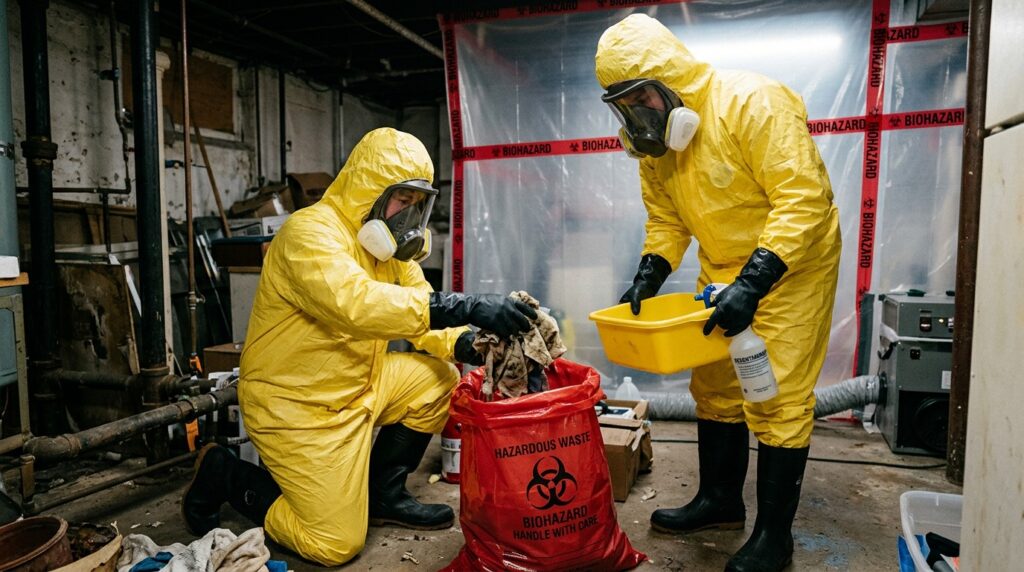
Crews separate the property into affected, transition, and clean zones before work begins. Barriers, controlled entry points, and staged supplies help prevent contaminants from moving into unaffected areas.
The setup depends on the scene, ventilation, surface types, and amount of contamination. Clear boundaries also show workers where protective equipment is required and where clean materials can be stored safely.
Personal Protective Equipment And Entry Procedures
Protective equipment helps shield workers while also limiting contamination spread. Crew members put on gloves, shoe covers, suits, and other required gear before entering the affected area.
PPE is removed in a controlled sequence at the transition point. This helps prevent material on gloves, footwear, or clothing from reaching clean areas, vehicles, or equipment.
Surface Cleaning Requires More Than Wiping
Visible material is removed first using approved methods and appropriate tools. The crew then cleans and disinfects affected nonporous surfaces according to product contact times and site conditions. Disinfectant must remain wet for the required period to work as intended.
Porous materials require a different evaluation. Carpet padding, untreated wood, fabric furniture, mattresses, and paper products can absorb biological material below the surface. Surface cleaning may not reach the full impact area. In those cases, controlled removal and disposal are often necessary.
Teams also inspect overlooked contact points. Baseboards, drawer pulls, wall edges, bed frames, appliance handles, and the underside of furniture may need treatment if they were within the affected path.
Waste Handling And Disposal Control
Contaminated materials are packaged near the designated work zone before being moved through the property. Sharps require puncture-resistant containers, while other affected materials are sealed and handled according to applicable biohazard waste requirements.
Reusable tools are cleaned and disinfected before leaving the site so equipment does not carry contamination into the next work area.
Documentation And Final Inspection
A reliable cleanup process includes a final inspection of the affected area and all exit paths. The crew checks surfaces, barriers, staging locations, and equipment before demobilizing.
Documentation can be useful for property owners, managers, insurers, and restoration contractors. It may include the scope of work, affected materials removed, disinfection methods used, and disposal records. Clear records help the next service provider understand what has been completed.
A thorough final review also confirms that temporary containment has been removed without spreading debris or residue into adjacent rooms.
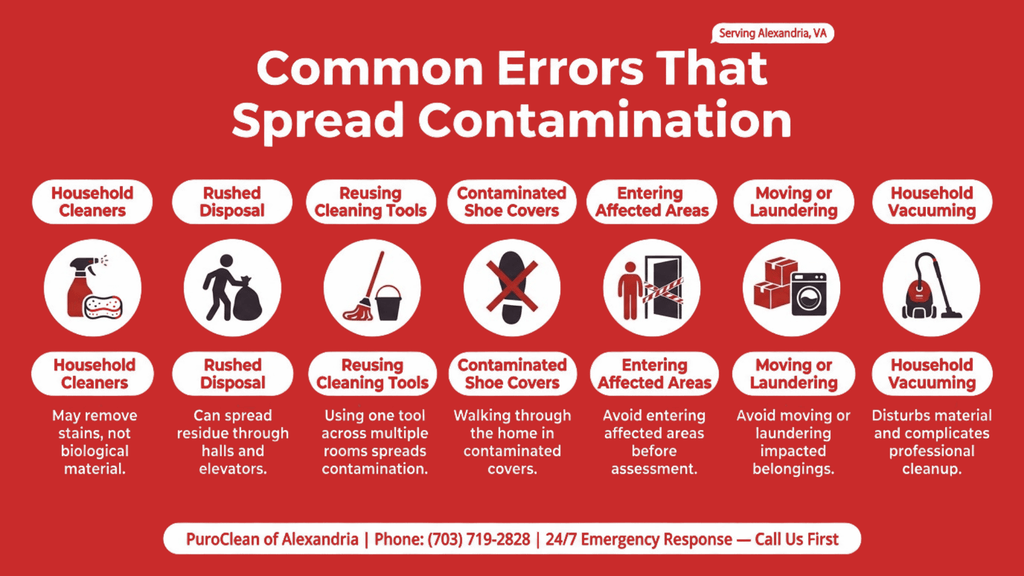
Common Errors That Spread Contamination
Untrained cleanup attempts often create new contamination points. Household cleaners may remove visible staining without properly treating biological material, while rushed disposal can spread residue through halls, elevators, or vehicles.
Using one mop, towel, or pair of gloves across multiple rooms is another frequent problem. So is walking through the home in contaminated shoe covers. These actions turn a contained incident into a wider restoration project.
Property owners should avoid entering the affected area, moving belongings, laundering impacted fabrics, or using a household vacuum before the scene has been assessed. These actions can disturb material and complicate professional cleanup.
When To Contact A Professional Team
Professional help is appropriate after unattended death, trauma, blood exposure, bodily fluid release, sewage contamination, hoarding conditions involving biological waste, or any event where infectious material may be present.
A qualified provider can assess the site, build a containment plan, remove affected materials, disinfect surfaces, and manage disposal. They can also coordinate with restoration professionals if structural materials such as drywall, flooring, insulation, or subflooring require repair.
If your Alexandria property needs discreet and controlled cleanup, contact a qualified biohazard cleanup team promptly. Fast action helps protect unaffected areas and reduces the chance that contamination spreads through the property.
Conclusion
Preventing contamination transfer depends on planning, controlled movement, proper protective equipment, and verified cleaning procedures. It is a process that begins before a crew enters the affected area and continues until equipment, waste, and barriers have been safely managed.
Effective cross-contamination prevention protects nearby rooms, personal belongings, workers, and future occupants. Professional cleanup teams use zone control and disciplined handling practices to return a property to a safe condition without expanding the affected area.
FAQs
Q: Can I clean a small blood spill myself?
A: A small, accessible spill on a nonporous surface may be cleaned with proper protective equipment and an appropriate disinfectant. Larger spills, unknown materials, porous surfaces, or incidents involving trauma should be handled by trained professionals.
Q: Why are shoe covers changed during biohazard cleanup?
A: Shoe covers can carry contaminants from the affected room into hallways, vehicles, and clean staging areas. Changing them at controlled transition points limits transfer between zones.
Q: Does visible cleanliness mean a biohazard area is fully decontaminated?
A: No. Biological material can remain in seams, cracks, porous materials, and hidden contact points. Professional cleaning includes inspection, removal of impacted materials, and disinfection procedures beyond visible stain removal.