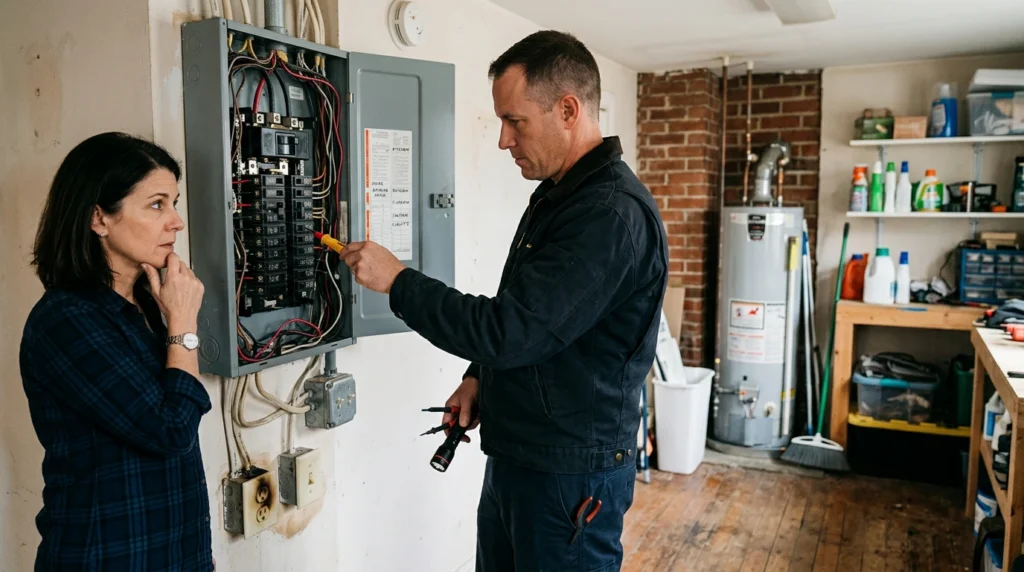
A breaker keeps tripping, an outlet feels warm, or a cord has started to look worn near the plug. Those signs do not always mean a fire will happen, but they do mean the electrical system needs attention before heat builds where you cannot see it. The practical response is to stop using the problem circuit or item, avoid home repairs that go beyond your skill level, and have a qualified electrician identify the cause. This article explains where electrical problems commonly begin, what makes them worse, and how daily habits can reduce the chance of a fire.
Treat Warning Signs as a Reason to Stop and Assess
The safest first move is to stop using anything that is producing smoke, sparks, a burning smell, or unusual heat, and leave the area if there is an active fire or immediate danger.
Do not keep resetting a breaker just to get power back, and do not try to take apart an outlet, panel, or appliance while you are unsure what caused the problem. A circuit that repeatedly shuts off is signaling that something needs to be checked, not worked around. For homeowners looking into electrical fire causes Alexandria properties can face, the useful question is not simply whether a breaker tripped. It is what created enough strain or heat for the breaker to trip in the first place.
Common warning signs are worth treating seriously because small electrical issues can stay hidden behind furniture, inside walls, or under a desk until they become more severe. Pay attention to patterns rather than one odd event that never returns.
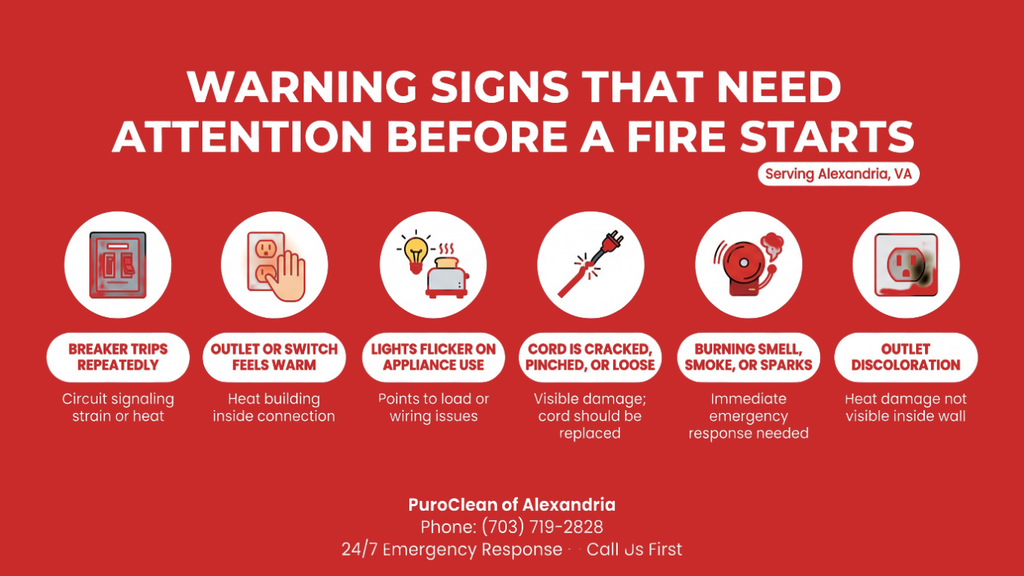
1. A breaker trips more than once during normal use.
2. An outlet, switch plate, or plug feels unusually warm.
3. Lights flicker when an appliance starts or stops.
4. A cord is cracked, pinched, loose, or discolored.
A burning odor, visible sparks, or smoke changes the situation from troubleshooting to emergency response. Get people away from the area and use emergency services rather than trying to find the source yourself. Once the immediate danger is over, an electrician can determine whether the issue began with the wiring, a circuit, an outlet, or the item connected to it.
Find the Load Problem Before Adding Another Plug
Overloaded circuits become risky when a system is asked to carry more demand than it was set up to handle.
This often starts in ordinary places: a power strip behind a television, several heaters running in different rooms, a laundry area with multiple appliances, or a garage where tools are plugged in as needed. The problem is not that every device uses power. The problem is several high-demand items sharing one circuit, extension cord, or outlet arrangement without anyone noticing how much is connected.
Extension cords and power strips are meant to solve limited access problems, not become permanent wiring. A cord routed under a rug can be damaged without anyone seeing it. A strip with too many plugs may make a room more convenient while concentrating electrical demand in one spot. Appliances that draw more power should have the outlet and circuit capacity their instructions call for.
To prevent house electrical fires, look at the rooms where your household has gradually added equipment. Kitchens, offices, bedrooms, basements, and garages often collect chargers, entertainment equipment, lamps, fans, and seasonal devices over time. The room may still look organized while the circuit behind it is carrying more than it should.
A better approach is to reduce what shares a circuit and move away from long-term extension-cord setups. If a room needs more outlets or a dedicated circuit, that is work for a licensed electrician. Moving plugs around may hide the pattern for a while, but it does not fix a circuit that no longer fits how the room is used.
Look for Heat Damage and Failing Connections
Electrical fires often begin at a point where electricity meets resistance, damage, or a loose connection.
A cord can fail after being bent at the plug, caught in a door, crushed under furniture, or pulled from the wall by the cable instead of the plug. An outlet can become loose after years of use. A switch can show wear long before the issue is visible inside the box. These are not problems to cover with a faceplate, tape over, or ignore because the room still has power.
Heat is the sign that matters most. A plug that does not sit firmly in an outlet, a wall plate that feels warm, or a device that behaves differently when the cord moves deserves attention. Stop using that item or outlet until a qualified electrician can assess it. Replacing a damaged appliance cord may be appropriate only when the manufacturer provides a proper replacement method; improvised repairs create another weak point.
Older electrical components can also create uncertainty after a renovation, an appliance upgrade, or a change in how a room is used. A finished basement that now serves as an office or media room may have more devices connected than it did when it was simply storage space. The same is true of garages that become workshops and bedrooms that gain computers, heaters, and charging stations.
Do not assume that a working outlet is a safe outlet. The issue may be inside the connection, where heat and wear are not visible from the room. An electrician can inspect the system and determine whether repair, replacement, or a larger update is needed.
Build Prevention Around the Way the House Is Used
Prevention works best when it becomes part of how you use rooms, cords, and appliances every day.
Start by walking through the house and looking for the arrangements that developed slowly: overloaded strips, cords under rugs, outlets hidden behind heavy furniture, and devices plugged in where they do not have enough space around them. The goal is not to unplug every device after each use. It is to identify the places where convenience has turned into a permanent workaround.
Keep cords visible where possible and replace them when their outer covering is damaged or the plug fits loosely. Use the correct outlet setup for major appliances instead of sharing a circuit with whatever else happens to be nearby. If you need more power in a room, treat that as an electrical planning issue rather than a reason to add another adapter.
Household routines matter too. Portable heaters, cooking equipment, laundry appliances, and workshop tools need attention while they are in use. Chargers and small devices can also create clutter when several are plugged into one strip. A clear setup makes it easier to notice a changed smell, sound, or temperature before it becomes a larger problem.
If a fire has already affected your Alexandria home, PuroClean of Alexandria can address fire and smoke damage restoration after emergency responders have cleared the property. Electrical repairs remain the work of a qualified electrician, and restoration begins after the fire source has been addressed.
Temporary Workarounds and Professional Assessment Compared
| Option | Works when | Breaks when | Trade-off |
| Rearranging low-demand plugs | One outlet is crowded | Breakers still trip | Does not add capacity |
| Replacing a damaged cord | Damage is limited | Outlet feels warm | May miss wiring issue |
| Electrician assessment | Warning signs repeat | Immediate fire remains active | Requires scheduled repair |
What Goes Wrong Most Often
The most common mistake is treating a repeated electrical warning as an inconvenience instead of a pattern.
People often reset a breaker, move one plug, or stop using an appliance for a few days without finding out what changed. That can leave the actual source in place: a loose outlet, a damaged cord, an overloaded circuit, or wiring that needs professional attention. The next use may put the same strain back on the system.
Another mistake is hiding cords to make a room look tidier. Cords under rugs, behind furniture, or through doorways are harder to inspect and easier to damage. A better setup may require fewer devices on that circuit, a different furniture arrangement, or an electrician’s help adding suitable access to power.
It is also easy to focus only on the item that stopped working. A failed appliance may be the issue, but it may also reveal a problem with the outlet or circuit serving it. If the same outlet, breaker, or room keeps showing trouble with different devices, the pattern is more important than any one plug.
Conclusion
If you see heat, smoke, sparks, or a burning smell, stop using the area and treat it as an emergency rather than a home troubleshooting job. If breakers trip repeatedly or outlets feel loose or warm, an electrician should identify the cause before the problem is used again. For many homes, electrical fire causes Alexandria residents need to watch for come down to overloaded circuits, worn cords, and connections that have started to fail.
To prevent house electrical fires, start with the rooms carrying the most devices and remove the workarounds that have become permanent. If a fire has already occurred and emergency crews have cleared the property, PuroClean of Alexandria can help address the fire and smoke damage left behind.
FAQs
Q: Can an outlet cause a fire even if it still works?
A: Yes. An outlet may still provide power even when the connection is loose, worn, or generating heat. Warning signs include a plug that will not stay firmly in place, unusual warmth, discoloration, or a repeated burning smell. Stop using the outlet and have a qualified electrician assess it rather than testing it with more devices.
Q: Should I keep resetting a breaker if it trips?
A: A breaker that trips once may be responding to a temporary demand, but repeated trips call for investigation. Resetting it without changing anything can return the same electrical strain to the circuit. Disconnect the devices involved and have an electrician assess the circuit if the problem continues or if you notice heat, odor, or damaged components.
Q: Are power strips safe for permanent use?
A: Power strips can be useful for low-demand devices, but they are not a substitute for enough outlets or the right circuit capacity. Problems develop when several high-demand items share one strip or when strips are connected to other strips. If a room depends on extension cords and adapters every day, it may need an electrician’s assessment.