


Introduction
Smoke odors after a fire don’t just linger in the air; they settle deep into walls, fabrics, and HVAC systems. Even a small kitchen fire can leave behind a persistent smell that standard cleaning methods can’t fully eliminate. That’s why many homeowners in Alexandria turn to professional restoration teams who use specialized tools and processes designed for complete odor removal.
Understanding how these experts approach the problem can help you make smarter decisions about cleanup and avoid wasting time on ineffective fixes. Whether you’re dealing with light smoke exposure or extensive fire damage, professional fire damage odor removal Alexandria services follow a structured process that targets odor at its source rather than masking it.
Why Smoke Odors Are So Difficult To Remove
Smoke particles are microscopic and highly invasive. They don’t just sit on surfaces; they penetrate porous materials like drywall, insulation, wood, and upholstery. Different types of fires also produce different residues. For example, protein fires from cooking leave nearly invisible but strong-smelling residues, while synthetic materials create thick, oily soot that clings aggressively to surfaces.
What makes the problem worse is how odor molecules bond with materials. Over time, these particles continue to release smells, especially in humid conditions. That’s why a home may seem clean initially but develop a noticeable odor days later. Professional remediation focuses on breaking this bond rather than simply cleaning the surface.
Initial Assessment And Odor Source Identification
Before any cleaning begins, professionals conduct a detailed inspection to understand the type and spread of damage. This step determines which techniques will be most effective.
• Identify the fire type and residue category to choose proper cleaning agents
• Map affected areas, including hidden spaces like wall cavities and attics
• Test materials for odor penetration depth
• Evaluate HVAC systems for smoke contamination
A precise assessment prevents wasted effort and ensures every odor source is addressed.
Air Filtration And Ventilation Setup
Cleaning without controlling the air can spread odor particles further. Professionals first stabilize the environment using specialized equipment.
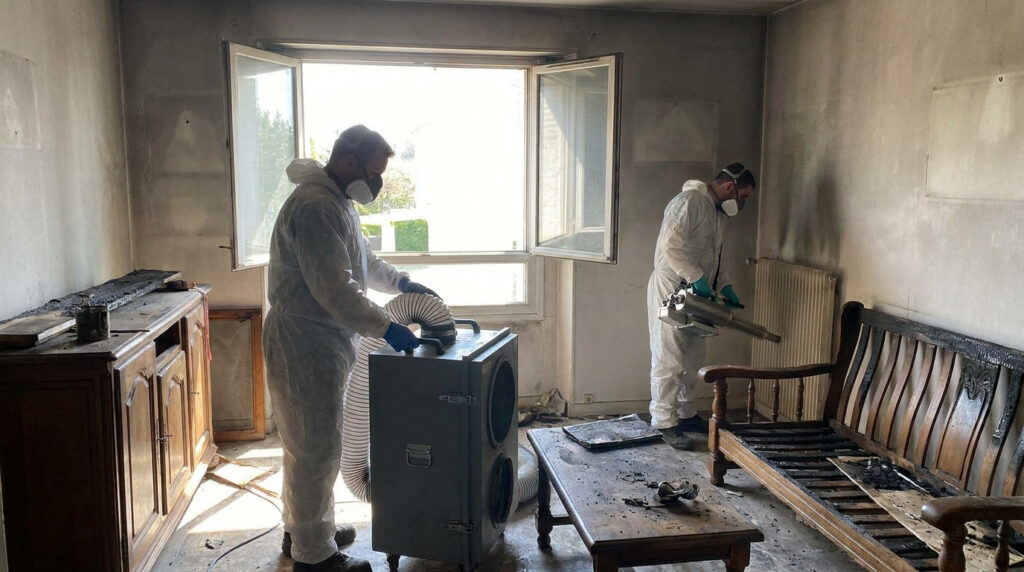
• Install HEPA air scrubbers to capture airborne particles
• Use negative air pressure machines to isolate affected zones
• Open and control ventilation paths to push contaminated air out
• Replace HVAC filters and inspect ductwork for buildup
This step reduces airborne contamination and prepares the space for deep cleaning.
Deep Cleaning And Soot Removal Techniques
Once the environment is controlled, technicians move on to physically removing soot and residue from all surfaces. This is one of the most critical phases because leftover residue will continue to produce odor.
Different materials require different cleaning approaches. Dry sponges are often used for delicate surfaces, while stronger chemical cleaners are applied to durable materials. Walls, ceilings, flooring, and personal belongings are all treated individually based on their composition.
Professional-grade cleaning agents are designed to neutralize odor-causing particles rather than just removing visible soot. This ensures that even invisible residues are addressed.
Specialized Cleaning Methods Used By Professionals
Not all cleaning methods are equal. Restoration teams use a combination of techniques tailored to the situation.
• Dry chemical sponges for lifting soot without smearing it
• Wet cleaning with alkaline or solvent-based solutions
• Ultrasonic cleaning for small items and valuables
• Abrasive cleaning for heavily damaged structural materials
Each method is selected based on the material and severity of contamination.
Odor Neutralization And Deodorization Methods
After cleaning, odor molecules can still remain embedded in materials. This is where professional deodorization techniques come into play.
Unlike air fresheners, these methods target odor at a molecular level. The goal is to neutralize the compounds responsible for the smell, not cover them up. This phase often involves advanced equipment that homeowners typically don’t have access to.
Common Deodorization Technologies
Professionals rely on several proven technologies to eliminate persistent odors effectively.
• Thermal fogging to recreate smoke penetration and neutralize odors deep inside materials
• Ozone treatments to break down odor molecules in enclosed spaces
• Hydroxyl generators for safer, continuous odor removal in occupied homes
• Vapor-phase deodorization to reach hidden areas like cracks and voids
These methods ensure that odors are eliminated throughout the home, not just on exposed surfaces.
HVAC System Cleaning And Odor Control
One of the most overlooked sources of lingering smoke odor is the HVAC system. If smoke particles enter ductwork, they can continuously circulate throughout the home.
Professionals inspect and clean the entire system to prevent recontamination. This includes removing soot buildup and replacing components that cannot be fully restored.
Steps To Restore HVAC Systems After Fire Damage
A structured approach ensures the system does not reintroduce odors after cleaning.
• Inspect ducts for soot, debris, and odor buildup
• Perform deep duct cleaning using specialized vacuum systems
• Replace air filters and, if needed, insulation within ducts
• Clean or replace coils and internal HVAC components
Proper HVAC restoration is essential for maintaining long-term indoor air quality.
Handling Porous Materials And Irreversible Damage
Not every material can be saved. Items like insulation, certain fabrics, and heavily damaged drywall may retain odor permanently if not removed.
Professionals make judgment calls based on how deeply smoke has penetrated. Removing unsalvageable materials prevents recurring odor problems and ensures the effectiveness of the overall restoration process.
Items That Often Require Removal Or Replacement
Some materials are more prone to permanent odor retention than others.
• Insulation that has absorbed smoke particles
• Carpeting and padding exposed to heavy soot
• Upholstered furniture with deep contamination
• Severely damaged drywall or ceiling materials
Removing these items is often the only way to fully eliminate persistent odors.
Final Air Testing And Quality Assurance
After cleaning and deodorization, professionals don’t just assume the job is done. They verify results using air quality testing and odor detection methods.
This step ensures that the home is safe, clean, and free of lingering smoke smells before occupants return. It also helps identify any missed areas that may need additional treatment.
How Professionals Confirm Odor Removal Success
Verification is a critical part of the restoration process and prevents future issues.
• Conduct air quality tests to detect residual particles
• Perform sensory inspections across different rooms
• Check humidity levels that could reactivate odors
• Reassess previously affected hidden spaces
This final check ensures the results are complete and long-lasting.
Can Homeowners Remove Smoke Odors Themselves?
Light smoke odors from minor incidents can sometimes be managed with DIY methods, but there are clear limits to what household cleaning can achieve. Store-bought cleaners and air fresheners often mask odors temporarily rather than eliminate them.
Professional equipment and training make a significant difference, especially for odors embedded in structural materials. Attempting to handle severe cases without proper tools can lead to incomplete results and recurring smells.
When DIY Methods Might Work
In small, contained situations, basic cleaning may be enough to improve air quality.
• Cleaning hard surfaces with vinegar or mild detergent
• Washing fabrics and curtains promptly
• Using portable air purifiers with HEPA filters
• Ventilating the area thoroughly
These steps can help with minor issues but are rarely sufficient for deeper contamination.
When To Call A Professional
Certain conditions require expert intervention to avoid long-term problems.
• Strong odor persists after thorough cleaning
• Smoke has spread beyond a single room
• HVAC system was exposed to smoke
• Soot is visible on walls or ceilings
Recognizing these signs early can save time, money, and frustration.

Conclusion
Eliminating smoke odor after a fire is a complex process that goes far beyond basic cleaning. Professionals combine inspection, advanced cleaning methods, air control, and specialized deodorization to target odor at its source. Each step is designed to ensure the smell does not return, even under changing conditions like humidity or temperature.
If you’re trying to remove smoke smell after fire damage, relying on expert fire damage odor removal Alexandria services is often the most effective path to restoring your home fully and safely.
FAQs
Q: How long does professional smoke odor removal take?
A: It depends on the severity of the damage, but most projects take anywhere from a few days to over a week for complete treatment and verification.
Q: Is smoke odor harmful to health?
A: Residual smoke particles can affect indoor air quality and may cause irritation, especially for people with respiratory sensitivities.
Q: Will the smell come back after professional cleaning?
A: If the process is done correctly, including deodorization and removal of affected materials, the odor should not return.