


Introduction
A water leak rarely ends when the visible water is gone. What remains behind walls, under flooring, or inside insulation can quietly cause structural issues, mold growth, and costly repairs. Many homeowners in Alexandria assume that drying the surface is enough, only to discover problems weeks or months later.
This guide explains how to detect what you cannot see. If you are dealing with hidden moisture after water leak Alexandria situations, understanding where to look and what tools to use can save you time, money, and major disruption.
Why Hidden Moisture Is A Serious Problem
Water moves fast and unpredictably. It seeps into porous materials like drywall, wood, and subflooring, where it becomes trapped. Even a small leak can spread far beyond the original source.
What makes hidden moisture especially risky is how quietly it develops. Structural wood can weaken, insulation can lose effectiveness, and mold can begin growing within 24 to 48 hours under the right conditions. Alexandria’s humid climate accelerates this process, making early detection even more critical.
Beyond physical damage, indoor air quality can decline as moisture feeds microbial growth. This can lead to persistent odors and respiratory irritation, especially in tightly sealed homes.
Most Common Places Hidden Moisture Hides
After a leak, water follows gravity but also travels sideways through materials. Knowing the typical hiding spots helps you inspect more effectively.
High-Risk Areas To Check First
Start with areas most likely to retain trapped moisture. Focus your attention where water tends to collect or spread.
– Behind drywall near plumbing lines, especially in kitchens and bathrooms
– Under hardwood, laminate, or vinyl flooring, where water can pool unseen
– Inside cabinets, particularly under sinks and around dishwashers
– Around baseboards where water seeps into wall cavities
– Ceiling cavities below bathrooms or roof leaks
These areas should always be your first inspection points before moving deeper into the structure.
Early Warning Signs You Should Not Ignore
Hidden moisture often reveals itself through subtle changes rather than obvious pooling water.
Key Indicators Of Hidden Water Damage
Watch for these early clues that moisture is still present behind surfaces.
– Musty or earthy odors that linger even after cleaning
– Paint bubbling, peeling, or cracking on walls or ceilings
– Warped or buckling flooring, especially near walls
– Discoloration or dark spots appearing over time
– Unexplained increase in indoor humidity levels
Catching these signs early allows you to intervene before damage spreads further.
Tools That Help Detect Hidden Moisture
Visual inspection alone is not enough. Professionals rely on specialized tools to confirm moisture presence and map its extent.
Essential Moisture Detection Tools
These tools make it possible to detect moisture without tearing into walls immediately.
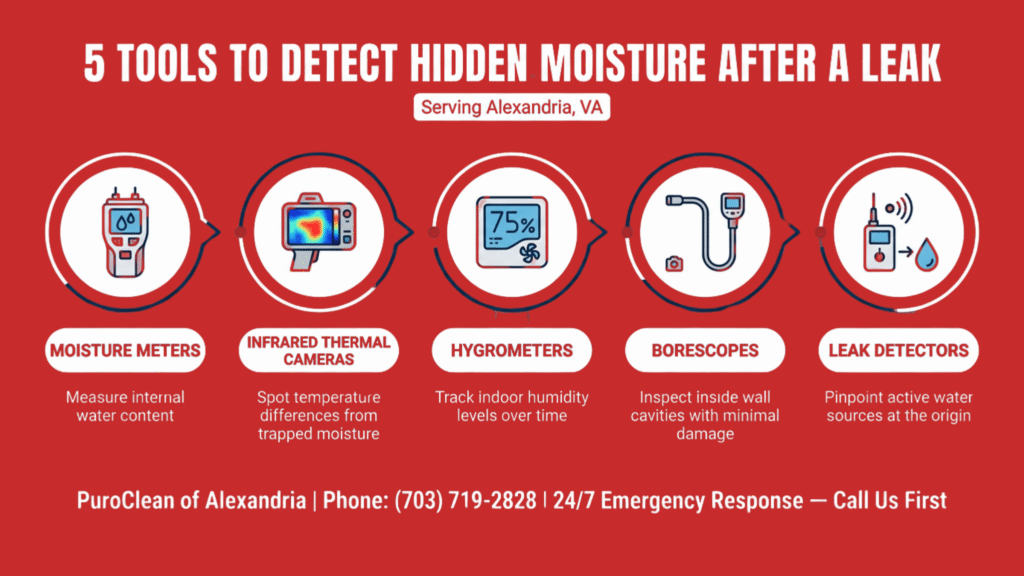
– Moisture meters to measure water content in drywall and wood
– Infrared thermal cameras to identify temperature differences caused by moisture
– Hygrometers to track indoor humidity levels
– Borescopes to inspect inside wall cavities with minimal damage
– Leak detectors to pinpoint active water sources
Using the right tools helps you move from guesswork to accurate diagnosis quickly.
Step-By-Step Process To Find Hidden Moisture
A structured approach ensures you do not miss critical areas.
Inspection Steps That Actually Work
Follow this sequence to systematically locate moisture after a leak.
– Identify the original leak source and trace its likely path
– Inspect adjacent rooms and lower levels where water may have traveled
– Use a moisture meter on walls, floors, and ceilings
– Check HVAC ducts and insulation for trapped moisture
– Monitor affected areas over several days for changes
This process reduces the risk of overlooking hidden pockets that can cause future issues.
Mistakes Homeowners Often Make After A Leak
Many problems worsen because of incorrect assumptions or rushed cleanup efforts.
Common Errors That Lead To Bigger Damage
Avoid these mistakes to prevent long-term complications.
– Drying only visible surfaces while ignoring internal moisture
– Delaying inspection, allowing mold to develop
– Using fans without proper ventilation, trapping humidity indoors
– Repainting or sealing damp materials, locking moisture inside
– Assuming no damage exists because surfaces look dry
Recognizing these pitfalls helps you take more effective action from the start.
When To Call A Professional In Alexandria
Some situations go beyond what basic tools and visual checks can handle. Professional assessment becomes necessary when moisture spreads or remains persistent. If multiple rooms are affected or if you detect recurring odors and staining, a certified water damage specialist can perform a comprehensive evaluation. They use advanced equipment to map moisture levels and identify hidden damage without unnecessary demolition.
In Alexandria, older homes with plaster walls or layered renovations can conceal moisture more deeply, making professional inspection especially valuable. Timely intervention often prevents structural repairs that cost far more later.
Preventing Hidden Moisture After Cleanup
Detection is only half the solution. Preventing moisture from returning is just as important.
Practical Prevention Steps
These actions help ensure your home stays dry after repairs.
– Use dehumidifiers to maintain indoor humidity below 50 percent
– Ensure proper ventilation in bathrooms, kitchens, and basements
– Seal cracks and gaps around windows, doors, and foundations
– Insulate pipes to prevent condensation buildup
– Schedule periodic inspections after major leaks
Consistent prevention reduces the chances of recurring moisture problems.
How Alexandria’s Climate Affects Moisture Issues
Alexandria’s proximity to the Potomac River and its humid summers create conditions where moisture lingers longer than expected. Even after a leak is repaired, the ambient humidity can slow drying times and encourage hidden dampness to persist.
Seasonal temperature swings also play a role. Warm air holds more moisture, and when it meets cooler surfaces like basement walls or air-conditioned interiors, condensation forms. This adds another layer of hidden moisture that may not be directly related to the original leak.
Understanding this local climate factor helps explain why standard drying methods sometimes fall short. It also reinforces the importance of using proper detection tools and ongoing monitoring.
Long-Term Impact Of Ignoring Hidden Moisture
Ignoring hidden moisture does not make it disappear. It gradually compromises your home’s structure and indoor environment.
Wood framing can weaken over time, drywall can crumble, and flooring can detach or warp. Electrical systems may also become vulnerable if moisture reaches wiring. Beyond structural risks, persistent dampness can create an unhealthy indoor environment.
What begins as a minor leak can evolve into a major restoration project if left unchecked. Addressing moisture early is always less disruptive and more cost-effective.
Conclusion
Hidden moisture is one of the most overlooked consequences of a water leak, yet it is often the most damaging. Detecting it requires a combination of awareness, proper tools, and a methodical inspection approach.
By understanding the signs of hidden water damage VA homeowners frequently encounter, you can act quickly and avoid costly repairs. If you suspect moisture remains after a leak, do not rely on guesswork. Inspect thoroughly, use the right tools, and bring in a professional if needed to ensure your home is truly dry.
FAQs
Q: How long does hidden moisture last after a leak?
A: It can remain for weeks or even months if not properly dried, especially in humid environments like Alexandria.
Q: Can hidden moisture go away on its own?
A: In some cases, minor moisture may evaporate, but trapped moisture inside walls or flooring typically requires intervention.
Q: Is mold guaranteed if moisture is left untreated?
A: Not guaranteed, but the risk increases significantly within 24 to 48 hours under the right conditions.