


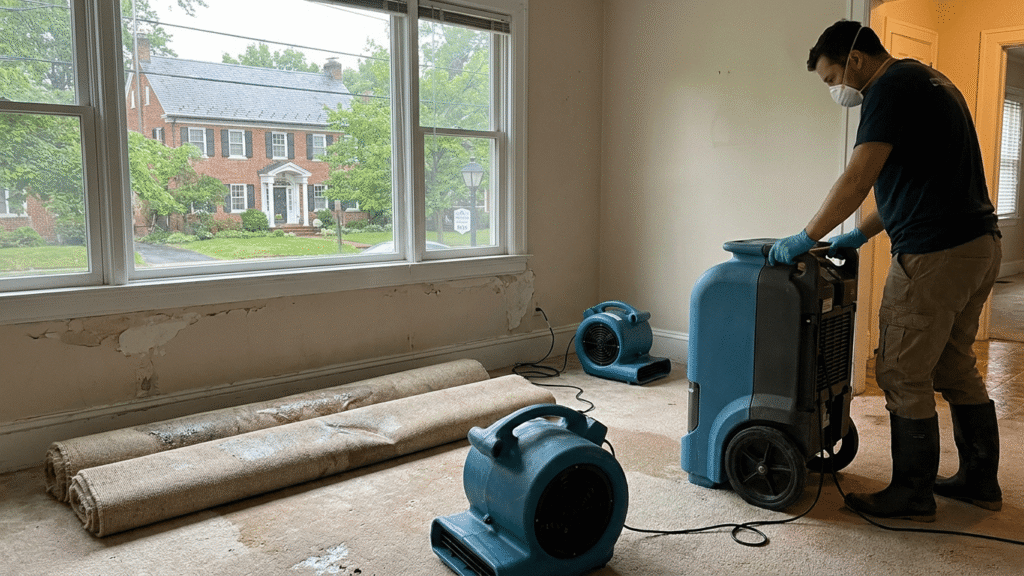
Moisture-related issues can develop rapidly, but their impact may persist if not addressed correctly. Whether triggered by a ruptured pipe or intense rainfall, excess moisture can seep into walls, flooring, and concealed areas throughout a home.
Knowing how to dry out house after water damage Alexandria situations require can make a big difference in preventing further issues. Taking the right steps early helps protect both the structure and the indoor environment.
Understanding the Importance of Proper Drying After Water Intrusion
Drying a home is not just about removing visible water. Moisture can remain trapped in materials like drywall, insulation, and flooring, which can result in long-term damage if not addressed.
Home drying after water damage VA processes focus on removing hidden moisture and restoring normal indoor conditions. Proper drying helps reduce the risk of mold growth and prevents structural weakening over time.
What Causes Water Damage in Homes?
Damages caused by excess moisture can come from many different sources and some of which may not be immediately obvious. Understanding the cause can help determine the best approach to drying and repairs.
- Ruptured pipes or leaking plumbing
- Flooding or heavy rainfall
- Appliance malfunctions such as washing machines or dishwashers
- Roof leaks or foundation cracks, which can sometimes lead to deeper structural concerns as mentioned in our blog on foundation damage
Each of these situations introduces moisture in different ways. Figuring out the source is an important first step in drying out the house after water damage Alexandria properties effectively.
Why Immediate Action Is Important Post Water Damage
Delays in addressing damage caused by water can allow moisture to spread deeper into building materials. Acting quickly can help reduce the extent of damage and simplify the drying process.
- Prevents weakening of structural components
- Reduces the risk of mold growth
- Limits moisture from spreading to unaffected areas
- Helps protect furniture and personal belongings
These benefits highlight why quick action is essential. Home drying after water damage VA efforts are most effective when started as soon as possible.
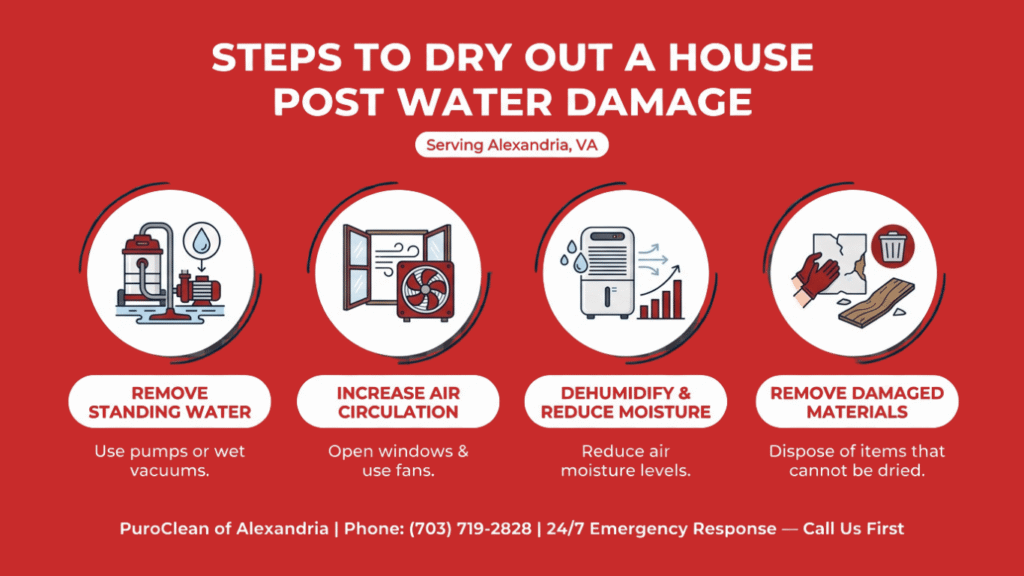
Steps to Dry Out a House Post Water Damage
Drying a home requires a step-by-step approach to ensure that moisture is fully removed from both visible and hidden areas. Each stage plays an important role in preventing long-term issues such as structural damage or indoor air concerns during dry out house after water damage Alexandria situations, and proper cleanup practices should be followed as recommended by the EPA. Taking the time to follow a clear process helps ensure that no moisture is left behind.
Remove standing water using pumps or wet vacuums
The first step is to eliminate any visible water as quickly as possible. Standing water can continue to soak into floors, walls, and furniture, increasing the extent of the damage, which makes early action critical in dry out house after water damage Alexandria recovery efforts.
Increase air circulation by opening windows and using fans
Airflow is essential for drying out damp surfaces. Opening windows and placing fans strategically helps move air across affected areas, which supports evaporation and improves efficiency during dry out house after water damage Alexandria processes.
Use dehumidifiers to reduce moisture in the air
Even after water is removed, humidity levels can remain high inside the home. Dehumidifiers help pull excess moisture from the air, making it easier for materials like wood and drywall to dry completely in dry out house after water damage Alexandria conditions.
Remove damaged materials that cannot be dried properly
Some materials may absorb too much moisture to be restored effectively. Items such as soaked drywall, insulation, or carpeting may need to be removed to prevent further issues. Taking out these materials allows the remaining structure to dry more thoroughly and safely.
Following these steps helps support effective dry out house after water damage Alexandria recovery. A structured process makes it easier to monitor progress and ensure nothing is overlooked.
Tools and Equipment Used for Home Drying
Proper equipment plays a key role in drying a home efficiently. Household tools may help in small situations, but larger issues often require more advanced solutions.
- Industrial fans to move air across surfaces
- Dehumidifiers to extract moisture from the air
- Moisture meters to detect hidden dampness
- Air movers to speed up the drying process
These tools are commonly used in home drying after water damage VA situations to ensure thorough results. Using the right equipment can significantly reduce drying time.
Signs That a Home Is Not Fully Dry Yet
Even when surfaces appear dry, moisture may still be present underneath. Recognizing these signs can help prevent future problems.
- Persistent musty or damp odors
- Warping or buckling of floors and walls
- Visible condensation on surfaces
- Elevated indoor humidity levels
These indicators suggest that additional drying may be needed. Monitoring these signs is important when working through dry out house after water damage Alexandria situations.
Ways to Prevent Future Water Damage Issues
Once a home has been dried, taking preventive steps can help reduce the risk of similar problems in the future. Regular maintenance plays a key role in long-term protection.
- Inspect plumbing systems regularly for leaks
- Maintain proper drainage around the home
- Seal cracks in walls, roofs, and foundations
- Monitor and control indoor humidity levels
These preventive measures support long-term home drying after water damage VA outcomes by reducing the chances of moisture buildup returning.
Conclusion
Drying out a home after damage caused by water requires more than quick fixes. It involves examining the source, removing moisture, and ensuring that all affected areas are properly treated.
Dry out house after water damage Alexandria situations can be managed effectively with the right approach and timely action. By following proper steps and staying proactive, homeowners can protect their property and maintain a safe indoor environment.
FAQs
Q1. How long does it take to dry out a house after moisture intrusion?
A: The drying time depends on the extent of the damage and the materials affected. It can take anywhere from a few days to several weeks.
Q2. Can I dry my home without professional help?
A: Small water issues may be handled with basic tools, but larger problems often require professional equipment to ensure thorough drying.
Q3. What happens if moisture is not fully removed?
A: Remaining moisture can lead to mold growth and structural damage over time. Proper drying is essential to avoid these complications.