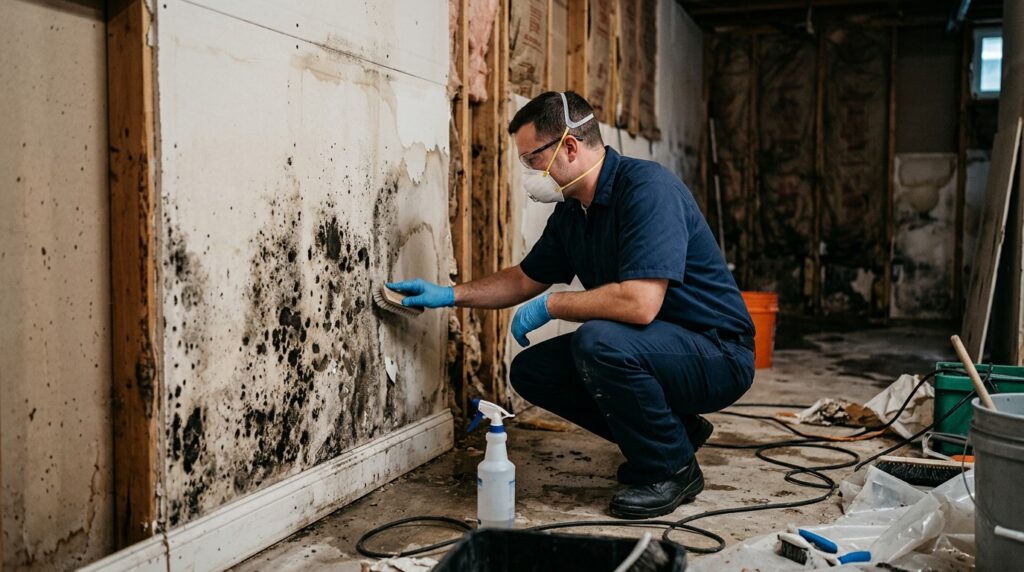
Flooding and storm damage can leave homeowners facing difficult decisions about their property and belongings. Knowing what to clean, what to save, and what may need professional attention can help prevent further damage. This guide covers the first steps to take and how to plan the cleanup.
TL;DR
– Stay out of any flooded area near electrical equipment, damaged ceilings, gas odors, or unstable materials.
– Photograph the room, damaged belongings, and water line before moving items or starting cleanup.
– Treat mold after flooding as a moisture problem first; surface cleaning alone may not solve it.
– Remove wet belongings from dry areas, but avoid disturbing materials that may spread contamination.
– Use storm damage mold cleanup when water reaches walls, flooring, insulation, or other hidden spaces.
Mold After Flooding Is a Drying Decision, Not a Cleaning Chore
Mold after flooding is not simply a matter of spraying a visible patch and moving on. The real question is whether the affected materials can be dried thoroughly enough to remain in place without holding moisture where you cannot inspect it.
A flooded room may contain several different problems at once. There may be water on the floor, damp materials behind a wall, contaminated contents, and a claim that needs clear records. Each problem calls for a different decision. Throwing everything away immediately can create unnecessary loss, but leaving wet materials in place without a plan can create a second cleanup later.
Start by separating the room into three categories: materials that are dry, materials that are visibly wet, and materials whose condition is uncertain. This helps you prioritize what can be kept, what needs drying, and what requires closer inspection.
PuroClean of Alexandria provides mold removal and remediation for Alexandria properties, but a property owner does not need to decide the full scope of work in the first hour. The immediate goal is simpler: stop additional water from entering, keep people away from hazards, and preserve the information needed to make sound decisions.
Keep the Area Safe Before You Sort Through It
Do not begin cleanup until you can enter the area without taking an unnecessary risk. A room can look manageable while still containing damaged electrical equipment, weakened materials, sharp debris, or water from an unknown source.
If water is near outlets, power cords, appliances, or a breaker panel, leave that part of the area alone until it can be assessed safely. Do not walk through standing water to unplug equipment. If a ceiling is sagging, a wall feels soft, or a heavy material has shifted, avoid the area beneath it rather than trying to stabilize it yourself.
Once the space is safe to approach, keep the cleanup zone contained. Children, pets, and people who do not need to be there should stay out. Open doors can make the room easier to access, but they can also turn a contained problem into a path through the home.
Use a simple sequence:
1. Stop the source of water if it is safe to do so.
2. Keep people away from electrical or structural hazards.
3. Take photos before removing damaged items.
4. Move unaffected belongings away from the damp area.
5. Write down what was wet, moved, or discarded.
The notes do not need to be polished. A room-by-room list is enough to help you remember what happened after a stressful day. Include belongings that were stored low to the floor, even when they do not look damaged at first glance.
Do not clean around materials you have not checked
Cleaning the floor around wet carpet, drywall, or baseboards can make the room look better while leaving the main issue untouched. Before using fans, disinfectants, or household cleaners, decide what materials need inspection and what materials should remain undisturbed.
Decide What Can Be Dried and What Needs Closer Review
Not every water-damaged item needs to be replaced. The right decision depends on the water source, how long the material stayed wet, and how deeply the moisture reached.
Start by assessing the affected materials:
- Hard, nonporous surfaces: Materials such as tile, glass, and some countertops may be cleaned and dried if the water source was not contaminated and the surfaces remain intact.
- Carpet and padding: Carpet may sometimes be salvaged, but the padding underneath can hold moisture and may require removal. Both layers need to be assessed before deciding.
- Drywall and insulation: These materials can absorb water, and moisture may remain inside wall cavities. Wet sections may need to be opened or removed, depending on the extent of the damage.
- Furniture and upholstery: Solid furniture may be recoverable, while cushions, upholstery, and other absorbent components can be harder to dry thoroughly.
- Books, boxes, and stored belongings: Paper, cardboard, and similar materials absorb water quickly. Their condition, exposure time, and the water source will help determine whether they can be saved.
Water can travel beneath flooring, behind baseboards, and inside wall cavities, even when surfaces feel dry.
If the water source is uncertain or materials cannot be thoroughly dried, seek a professional assessment before deciding what to save or remove. Photograph affected belongings before moving or discarding them for insurance documentation.
Saved belongings need a separate plan
Do not stack damp belongings in another room while deciding what to do. Separate wet items from dry ones, place them where they will not damage additional surfaces, and keep a record of what you moved. This helps prevent a single affected room from becoming a whole-house cleanup.
Document the Damage Before Repairs Change the Story
Document first, then clean what you safely can. Insurance questions are easier to answer when the condition of the property is recorded before damaged materials are removed, dried, or replaced.
Take wide photos that show the room and close photos that show damage to floors, walls, trim, furniture, and contents. Capture the water line if there is one. Photograph damaged items before placing them outside or in a disposal pile. If a contractor, restoration company, or adjuster later needs context, those photos can show where the problem started and how far it spread.
Keep receipts for emergency supplies, temporary storage, or other out-of-pocket steps related to protecting the property. Do not assume every cost will be covered. Coverage depends on your policy, the source of the water, the insurer, and the facts of the loss.
Avoid beginning reconstruction before the drying and cleanup decision is clear. New flooring, fresh paint, and replaced trim can hide the evidence of what was wet without resolving what remains behind the finished surface. The repair phase should follow a clear understanding of what needs to be removed, cleaned, or dried.
For Alexandria property owners, the useful record is not a perfect claim file. It is an honest timeline: when you found the damage, what you saw, what you moved, and what actions were taken to prevent additional loss.
Avoid the Shortcuts That Leave Moisture Behind
Rushing to restore the room’s appearance can lead to mistakes that make the cleanup more difficult or hide damage that still needs attention.
Avoid these common shortcuts:
– Covering odors with fragrance instead of checking the affected materials.
– Painting over stains before deciding whether the wall is dry.
– Reinstalling carpet or furniture before the floor area is assessed.
– Throwing away damaged belongings before photographing and listing them.
– Treating every water event as identical without considering the water source.
A careful response does not have to mean doing nothing while you wait. You can protect dry belongings, document damage, and keep the affected area separated. The point is to avoid making the cleanup harder by mixing wet and dry items or covering a problem before you understand it.
Cleaning It Yourself, Hiring a Contractor, and Using Restoration Compared
| Option | Works when | Breaks when | Main trade-off |
| Basic cleaning | Small surface issue | Hidden moisture suspected | Limited visibility |
| General contractor | Dry materials need repair | Drying remains unfinished | Repairs before assessment |
| Restoration company | Water reached building layers | Access is delayed | Professional evaluation |
| Disposal and replacement | Items cannot be saved | Damage scope is unclear | Loss of contents |
Final Verdict
Before deciding whether to clean, dry, or replace affected materials, consider the water source and the extent of the damage. If water has reached building materials or the condition of the affected area is uncertain, arrange a professional assessment before beginning repairs.
PuroClean of Alexandria can help evaluate the damage and determine the appropriate restoration steps.

FAQs
Q: How soon should I deal with mold after a flood?
A: Start protecting the area as soon as it is safe to enter. Stop additional water from reaching the property, keep people away from hazards, document the room, and separate wet belongings from dry ones. The next decision is whether materials can be inspected and dried or need professional evaluation.
Q: Can I clean mold after flooding myself?
A: You may be able to clean a small, contained issue on a hard surface when the source of moisture is resolved. Do not assume that visible growth shows the full scope of the problem. If water reached walls, flooring layers, insulation, or porous belongings, surface cleaning may not address what remains hidden.
Q: Should I throw away carpet after storm flooding?
A: Not necessarily. The decision depends on how much water reached the carpet, padding, and surrounding materials. Photograph the damage before removal and have the carpet system assessed if its condition is uncertain.
Q: Does homeowners insurance cover flood-related mold cleanup?
A: Coverage depends on the policy, the source of the water, the insurer, and the details of the loss. Keep photos, notes, and receipts before cleanup changes the condition of the room. Your insurer can explain how your policy applies, while a restoration professional can document the affected materials.
Q: What should I do with wet furniture and stored boxes?
A: Move unaffected belongings away from the damaged area first. Keep wet items separate so they do not spread moisture to other rooms. Photograph furniture, boxes, and their contents before discarding them. Avoid stacking damp items together, since that can make inspection and cleanup more difficult.