


Introduction
Professional mold remediation removes visible growth and addresses contamination, but it does not guarantee the problem won’t return. Mold spores exist everywhere, and without fixing the conditions that allow them to thrive, regrowth can happen surprisingly fast.
The real challenge starts after the remediation crew leaves. Mold regrowth prevention depends on controlling moisture, maintaining airflow, and staying vigilant about early warning signs. If you treat remediation as a one-time fix instead of an ongoing strategy, you risk repeating the same costly cycle.
This blog breaks down exactly how to prevent mold from coming back, with practical steps you can apply immediately and maintain over time.
Understand Why Mold Comes Back
Mold doesn’t need much to return. Even after a thorough cleanup, microscopic spores can remain dormant and reactivate when conditions are right again.
The key factor is moisture. Whether it’s a slow leak behind a wall, high indoor humidity, or poor ventilation, any lingering dampness creates a perfect environment for regrowth. Organic materials like drywall, wood, and carpet make it even easier for mold to take hold again.
Another common issue is incomplete remediation. If the root cause, like a plumbing issue or condensation problem, wasn’t fully resolved, mold will return, no matter how clean the space looks.
Prevention starts with understanding that mold is not just a surface issue. It’s an environmental problem tied directly to moisture and airflow.
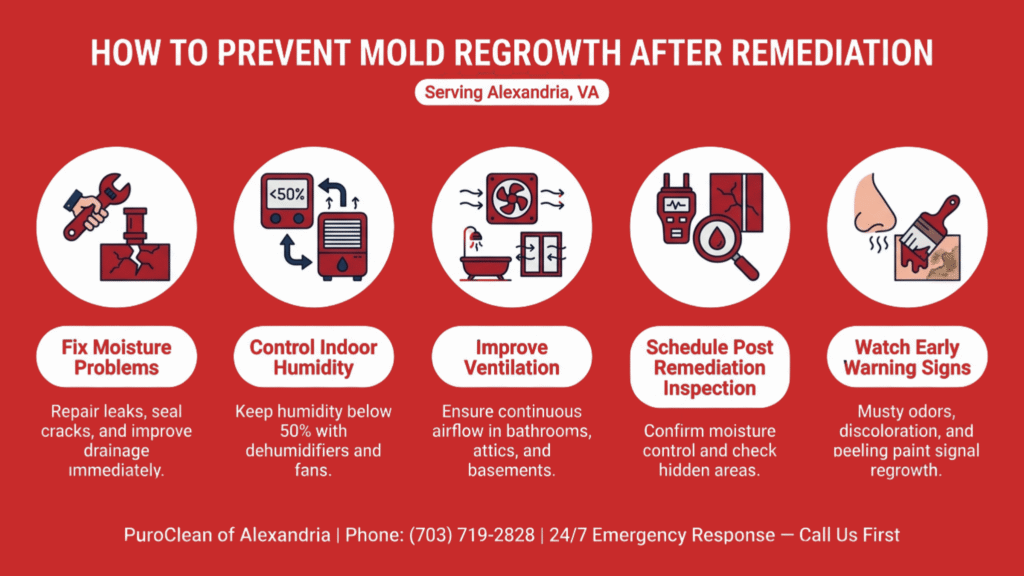
Fix Moisture Problems Immediately
If moisture control isn’t handled aggressively, everything else you do becomes less effective. Start by identifying and eliminating all possible moisture sources in your home or building. Even small, hidden issues can trigger regrowth.
– Repair leaks quickly: Check plumbing, roofs, and windows for even minor drips or seepage.
– Seal foundation cracks: Water intrusion from below is a common and overlooked source.
– Insulate cold surfaces: Prevent condensation on pipes and exterior walls.
– Improve drainage: Ensure gutters and downspouts move water away from the structure.
– Monitor appliances: HVAC units, water heaters, and washing machines can create hidden moisture.
Removing moisture at the source is the single most effective way to stop mold from returning.
Control Indoor Humidity Levels
Humidity is often the silent driver behind mold problems, especially in areas that appear dry. Maintaining consistent indoor humidity below 50 percent is critical for long-term prevention.
– Use dehumidifiers: Especially in basements, crawl spaces, and humid climates.
– Run exhaust fans: Use them during and after showers or cooking.
– Install humidity monitors: Track levels in real time instead of guessing.
– Keep HVAC systems maintained: Dirty systems can increase humidity and reduce airflow.
– Avoid air drying indoors: Wet clothes add significant moisture to the air.
Stable humidity levels create an environment where mold struggles to survive.
Improve Ventilation Throughout the Space
Airflow helps regulate both moisture and temperature, making it harder for mold to settle and grow.
Poor ventilation is common in bathrooms, attics, and basements, areas already prone to moisture buildup. Simply opening windows occasionally is not enough if airflow is inconsistent or blocked.
Mechanical ventilation systems, such as exhaust fans and properly designed HVAC setups, ensure continuous air exchange. Attics should have balanced intake and exhaust vents, while crawl spaces may need encapsulation combined with controlled ventilation.
Even furniture placement matters. Large items pushed tightly against walls can trap moisture and reduce airflow, creating hidden mold-friendly zones.
Ventilation is not just about fresh air; it’s about preventing stagnant, damp conditions from forming in the first place.
Schedule a Post Remediation Inspection
A post-remediation inspection helps confirm that mold has been removed and moisture issues have been resolved. It also identifies hidden problems before they lead to regrowth.
- Confirm moisture levels are fully under control
- Check hidden areas for remaining contamination
- Test the air quality if needed
- Verify all affected areas were treated
- Keep inspection records for future reference
A final inspection provides peace of mind and helps prevent mold from returning.
Clean and Maintain Vulnerable Areas Regularly
Certain areas remain more vulnerable to mold because they are exposed to moisture more often. Regular maintenance can help catch problems early.
- Clean and dry bathrooms regularly
- Check under sinks and behind appliances
- Inspect basements for dampness or odors
- Remove condensation from windowsills
- Ensure HVAC drip pans drain properly
Routine upkeep in these high-risk areas can significantly reduce the chances of mold regrowth.
Use Mold-Resistant Materials Where Possible
If you’re repairing or renovating after remediation, material choices can make a big difference.
Standard drywall and insulation absorb moisture easily, making them ideal environments for mold. Mold-resistant drywall, antimicrobial paints, and moisture-resistant flooring provide an added layer of protection. These materials don’t eliminate the need for moisture control, but they slow down mold growth and make surfaces easier to clean and maintain.
This is especially important in bathrooms, basements, and laundry rooms where exposure to moisture is unavoidable.
Think of these upgrades as a long-term investment in prevention rather than a quick fix.
Watch for Early Warning Signs of Regrowth
Catching mold early can save you from another full remediation process. Mold rarely appears overnight. It usually gives subtle signs before becoming visible.
– Musty odors: Often the first indicator of hidden mold growth.
– Discoloration: Small dark or fuzzy spots on walls or ceilings.
– Peeling paint: Moisture buildup behind surfaces can cause bubbling.
– Increased humidity: A sudden rise without explanation can signal a problem.
– Allergy symptoms: Sneezing or irritation that worsens indoors.
Responding quickly to these signs can stop mold before it spreads.
Avoid Common Mistakes That Lead to Regrowth
Even well-intentioned efforts can backfire if key mistakes are overlooked. Understanding what not to do is just as important as knowing the right steps.
– Ignoring small leaks: Minor issues often grow into major moisture problems.
– Over-relying on bleach: It doesn’t penetrate porous materials effectively.
– Skipping inspections: Hidden mold can persist even after cleanup.
– Blocking airflow: Sealed spaces without ventilation trap moisture.
– Delaying repairs: Time allows mold spores to reactivate and spread.
Avoiding these mistakes helps protect the investment you made in remediation.
Build a Long-Term Mold Prevention Plan
Mold regrowth prevention is not a one-time checklist; it’s an ongoing system. Start by creating a simple routine: monthly moisture checks, seasonal inspections, and regular HVAC maintenance. Keep a log of any past issues so you can spot patterns early.
If your property has a history of mold, consider annual professional inspections. This is especially important in humid climates or older buildings where hidden moisture problems are more common.
Technology can help. Smart humidity sensors and leak detectors provide real-time alerts, allowing you to act before damage spreads.
A proactive approach costs far less than repeated remediation and protects both your property and indoor air quality.
Conclusion
Preventing mold from coming back requires more than a clean surface; it demands control over the conditions that allow mold to grow. Moisture management, airflow, and consistent monitoring form the foundation of a mold-resistant environment.
A post remediation inspection plays a critical role in confirming that your space is truly safe and stable after cleanup. Skipping this step can leave hidden risks unresolved.
If you want lasting results, treat mold prevention as an ongoing process. Stay proactive, fix issues quickly, and invest in regular checks to avoid repeating the same problem.
FAQs
Q: How soon can mold return after remediation?
A: Mold can return within 24 to 48 hours if moisture conditions are not properly controlled, especially in humid environments.
Q: Do I always need a dehumidifier after mold remediation?
A: Not always, but in areas with high humidity or poor ventilation, a dehumidifier is one of the most effective tools for prevention.
Q: Is a post remediation inspection necessary if everything looks clean?
A: Yes, because mold can remain hidden behind walls or in the air, and visual cleanliness does not guarantee that the issue is fully resolved.