


Introduction
A house fire can leave rooms coated in soot with strong odors and water damage affecting belongings far from the flames
Many homeowners assume that smoke-exposed property must be thrown away, but the condition of each item depends on its material, heat exposure, moisture level, and how quickly it is handled
Professional assessment helps identify salvageable items after house fire events before soot becomes embedded or mold develops from firefighting water
In Alexandria VA older homes may contain hardwood furniture, plaster walls, family photographs, and documents that need specialized restoration methods rather than standard household cleaning
First Actions That Protect Recoverable Belongings
Do not begin wiping soot from furniture, walls, or electronics with household towels. Soot particles are abrasive, and dry rubbing can push them deeper into surfaces
Keep people and pets out of affected rooms until the property has been evaluated. Open windows only if the fire department or restoration crew confirms that ventilation will not spread soot to clean areas
Take clear photos of rooms and individual belongings before moving anything. These records support insurance claims and help restoration teams document the original condition of each item
Avoid turning on computers, televisions, appliances, or HVAC equipment. Smoke residue can create electrical hazards, and operating damaged equipment may cause further loss
Types Of Items Often Saved After A Fire
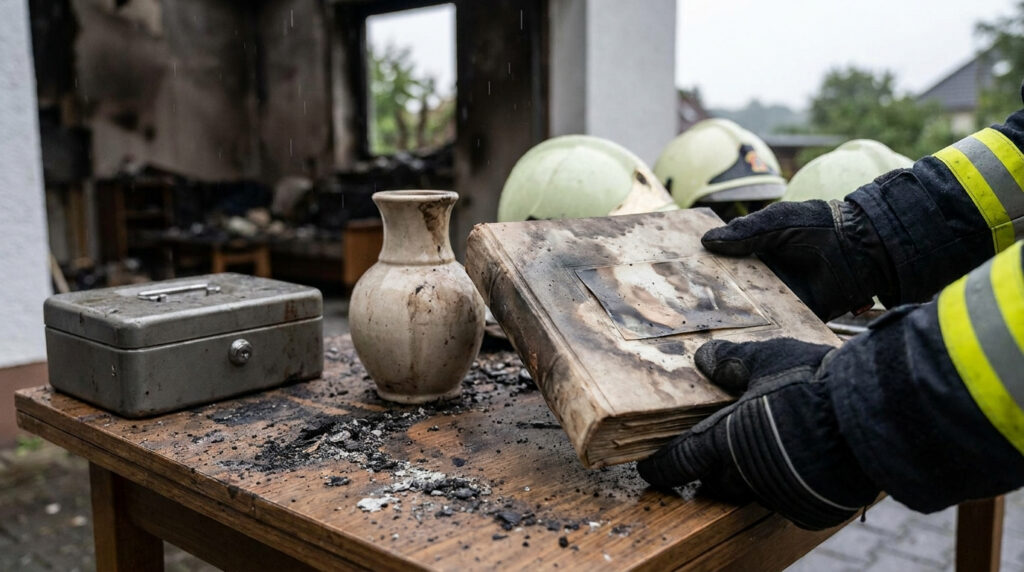
Many belongings can be restored if they were not directly burned or structurally weakened. Early removal from smoke and humidity improves the likelihood of recovery
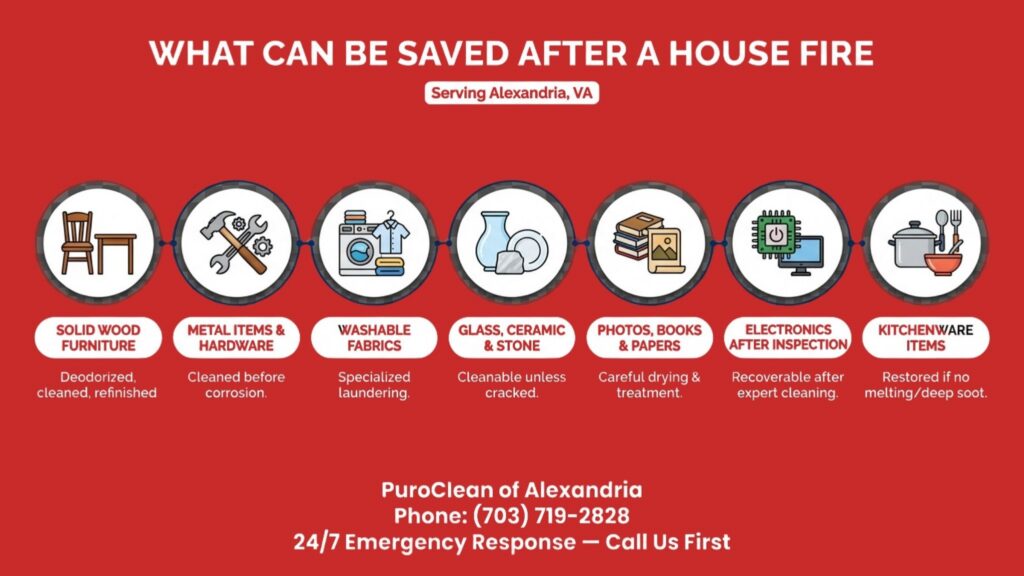
– Solid wood furniture can often be deodorized, cleaned, and refinished after soot removal
– Metal furniture, tools, and hardware may be cleaned before corrosion develops
– Washable clothing, linens, and curtains can respond well to specialized laundering methods
– Glass, ceramic, and stone items can usually be cleaned unless heat caused cracking
– Photographs, books, and paper records may be stabilized through careful drying and smoke treatment
– Electronics may be recoverable when a qualified technician cleans residue before power is restored
– Kitchenware can sometimes be restored if it has no melted parts, deep soot residue, or chemical contamination
A restoration professional can sort items into cleanable, repairable, and nonrecoverable groups for a clear recovery plan
Factors That Determine Whether An Item Can Be Restored
The visible amount of soot does not always show the full extent of fire-related damage. Material type, contamination, and time all affect the outcome
– Direct flame contact often makes fabrics, plastics, and laminated materials difficult to restore
– Heavy oily soot requires more intensive cleaning than dry powdery soot from a fast-burning fire
– Water exposure can warp wood, damage paper, and create mold growth within a short time
– Porous items such as mattresses, upholstered furniture, and insulation can retain odor and contaminants
– Heat can weaken plastics’ wiring, adhesives, and finishes even when an item looks intact
– Fast professional packing and cleaning limits odor absorption and permanent staining
– Insurance policy terms may influence whether cleaning or replacement is the practical option
A careful inspection prevents money from being spent on items that cannot be safely or effectively restored
Content Cleaning After Fire Damage
Content cleaning after fire damage involves more than removing visible black residue. Technicians use material-specific methods to address soot, odor, moisture, and corrosion without causing avoidable damage
Hard surfaces may be cleaned with dry soot sponges followed by controlled wet cleaning. Wood furniture may need detailed cleaning before deodorization and refinishing. Electronics require specialized handling because moisture or incorrect products can damage circuits
Textiles often need off-site cleaning through restoration laundry methods that remove odor from fibers. Books, documents, and photographs may need freeze-drying or humidity-controlled treatment to prevent pages from sticking together
Items with food contact surfaces need extra attention. Discard food, medicine, cosmetics, and exposed pantry items because smoke particles and firefighting chemicals can enter packaging
Steps For Sorting Belongings After A Fire
Sorting should begin only after the property is safe to enter and the affected areas have been documented. Work methodically so important possessions are not discarded by mistake
– Create separate areas for items that appear clean, damaged, and uncertain
– Photograph high-value belongings before cleaning, packing, or disposal
– Keep receipts, appraisals, and serial numbers with the related items when possible
– Place wet papers, photos, and books in clean containers without stacking them tightly
– Remove metal tools and hardware from humid areas to reduce corrosion
– Label boxes by room and item category for insurance and restoration tracking
– Ask a restoration specialist to inspect electronics, artwork, antiques, and documents before handling them
A documented sorting system makes insurance communication and restoration decisions easier to manage
Mistakes That Can Reduce Recovery Options
Well-meaning cleanup efforts can permanently damage belongings that could have been restored. Professional guidance is especially useful during the first few days after a fire
– Do not vacuum soot with a standard household vacuum because it can spread fine particles
– Do not wash walls or furniture with water before the soot type has been identified
– Do not use scented sprays to cover odors because they do not remove smoke residue
– Do not dry wet photographs with heat or direct sunlight because they can curl or stick together
– Do not place smoke-damaged electronics in rice or attempt to power them on
– Do not throw away damaged items before taking photos and checking insurance requirements
– Do not move heavily soiled belongings through clean rooms without protective wrapping
Careful handling preserves more options for cleaning, repair, and reimbursement
Conclusion
A house fire does not automatically mean every smoke-exposed possession is lost. The right response depends on the item material, its exposure to heat, soot, and water, and the speed of professional assessment
Content cleaning after fire damage can restore many furnishings, documents, textiles, and household items that appear beyond repair at first glance
If your Alexandria VA home has experienced a fire, arrange a prompt inspection so recoverable belongings can be stabilized, cleaned, and documented before secondary damage increases
FAQs
Q: Can smoke-damaged clothing be saved
A: Many washable garments can be restored through specialized restoration laundry, but heavily burned or chemically contaminated clothing may need replacement
Q: Are electronics safe to use after a house fire
A: Electronics should not be powered on until a qualified technician checks for soot, moisture, corrosion, and damaged wiring
Q: Can family photos be restored after smoke damage
A: Photos may be recoverable if they are handled gently, kept dry, and evaluated quickly by a document or contents restoration professional
Report: