


Introduction
Water damage is one of those problems that escalates quickly and quietly. A small leak under a sink can turn into structural damage, mold growth, and costly repairs in a matter of days. For homeowners in Alexandria, understanding how water damage is classified is not just helpful; it directly affects how you respond, how insurance treats your claim, and how restoration professionals approach cleanup.
Not all water damage is equal. The difference between a broken supply line and a sewage backup isn’t just about appearance or smell; it’s about health risk, contamination level, and required remediation methods. This is where water damage categories come into play. Once you understand how these categories work, you’ll be able to make faster, smarter decisions when something goes wrong.
Why Water Damage Categories Matter More Than You Think
The classification system used by restoration professionals divides water damage into three categories based on contamination levels. This system isn’t arbitrary; it determines everything from safety precautions to whether materials like drywall or flooring can be salvaged.
If you misjudge the category, you risk underestimating the hazard. For example, what looks like relatively clean water can degrade into a much more dangerous situation within 24 to 48 hours. This is particularly relevant for category 3 water damage Alexandria cases, where delays often lead to severe contamination and higher restoration costs.
Insurance companies also rely on these classifications. Claims may be approved or denied based on whether the damage was sudden, preventable, or improperly handled after the initial incident. Knowing the category helps you document the situation accurately from the start.
Category 1 Water Damage: Clean Water With Low Immediate Risk
Although category 1 water originates from a clean source, it can still cause significant property damage if not addressed promptly.
What Qualifies as Category 1 Water Damage
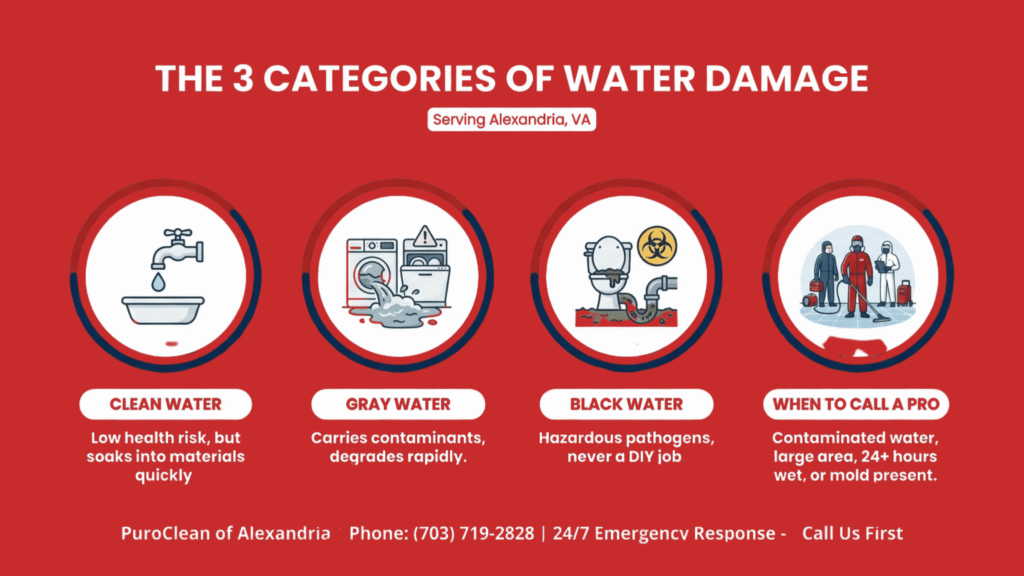
Category 1 water originates from a clean and sanitary source. Common examples include broken supply lines, overflowing sinks without contaminants, or appliance malfunctions involving clean water. At this stage, the water poses minimal health risk.
However, “clean” doesn’t mean harmless. If left untreated, category 1 water can quickly degrade into category 2 due to contact with building materials, dust, or bacteria.
How It Affects Your Home
The primary concern with category 1 damage is structural absorption. Materials like drywall, hardwood flooring, and insulation begin to soak up moisture almost immediately. Even a few hours of exposure can lead to swelling, warping, and weakening of structural components.
In Alexandria’s humid climate, drying times are longer, which increases the risk of secondary damage. What starts as a simple cleanup can evolve into mold remediation if not handled quickly.
Best Response Strategy
Speed is everything with category 1 water. Immediate extraction and drying can often prevent long-term damage. Homeowners can handle minor incidents themselves if the affected area is small, but professional drying equipment significantly improves outcomes.
A common mistake is assuming that visible dryness means the job is done. Moisture often lingers behind walls and under flooring, which can lead to hidden damage over time.
Category 2 Water Damage: Contaminated Water That Requires Caution
Category 2 water carries contaminants that increase health risks and often requires more careful cleanup than clean water incidents.
What Makes Water “Gray”
Category 2 water, often referred to as gray water, contains contaminants that can cause discomfort or illness. Sources include washing machine overflows, dishwasher leaks, and sump pump failures. This water may carry detergents, chemicals, or microorganisms.
Unlike category 1, this type of water requires protective measures during cleanup.
Why Category 2 Damage Escalates Quickly
One of the biggest risks with category 2 water is how rapidly it deteriorates. Within a short period, especially in warm environments, it can become category 3. Bacterial growth accelerates, and the water becomes unsafe to handle without proper equipment.
Porous materials exposed to category 2 water are often more difficult to salvage. Carpets, padding, and upholstered furniture may need to be removed rather than cleaned.
Professional vs DIY Cleanup
While some homeowners attempt to clean up gray water themselves, this approach often misses deeper contamination. Professional restoration teams use antimicrobial treatments, industrial drying systems, and moisture detection tools to ensure thorough cleanup.
Skipping these steps can leave behind contaminants that affect indoor air quality and lead to long-term health concerns.
Category 3 Water Damage: Highly Contaminated and Hazardous
Category 3 water poses serious health hazards due to the presence of harmful pathogens, chemicals, and other contaminants.
What Defines Category 3 Water
Category 3 water represents the highest level of contamination. It originates from sources such as sewage overflows, floodwater intrusion, or other water containing dangerous bacteria, chemicals, and toxins. Because of its severe health risks, it is commonly known as black water.
In Alexandria, heavy rains and aging infrastructure can contribute to category 3 water damage incidents, particularly in basements and lower-level living spaces.
Health Risks You Should Not Ignore
Exposure to category 3 water can lead to serious health issues. Bacteria, viruses, and parasites are commonly present, along with potential chemical contaminants. Direct contact or inhalation of airborne particles can pose risks even after the water is removed.
This is not a situation where DIY cleanup is appropriate. Specialized protective gear and containment procedures are necessary to prevent cross-contamination.
Why Restoration Is More Extensive
Restoring a home after category 3 damage involves more than drying and cleaning. Affected materials are often removed entirely, including drywall, insulation, and flooring. The area must then be disinfected and sanitized before reconstruction begins.
This level of restoration is more time-consuming and costly, which is why early intervention is critical whenever water intrusion occurs.
How Water Damage Categories Change Over Time
One of the most misunderstood aspects of water damage is how quickly categories can shift. A clean water leak that sits for 48 hours is no longer considered category 1. Environmental exposure introduces contaminants, raising the risk level.
Temperature, humidity, and building materials all influence this progression. Alexandria’s seasonal humidity can accelerate the transition, especially during warmer months.
This means that delaying action doesn’t just worsen the physical damage; it can change the classification entirely, leading to more complex and expensive restoration requirements.
Common Mistakes Alexandria Homeowners Make
Many water damage situations become more severe because of delayed action, incorrect assumptions, or incomplete remediation efforts.
Waiting Too Long to Act
Many homeowners delay cleanup, hoping the issue will resolve on its own or appear less severe. This often results in higher repair costs and increased health risks.
Misidentifying the Water Source
Assuming water is clean without verifying the source can lead to improper handling. For example, water from a toilet overflow may already qualify as category 2 or 3, depending on contamination.
Incomplete Drying
Surface-level drying is not enough. Moisture trapped in subfloors, wall cavities, and insulation can lead to mold growth weeks later.
Skipping Professional Assessment
Even if the damage seems minor, a professional inspection can reveal hidden issues. Moisture meters and thermal imaging tools detect problems that are not visible to the naked eye.
When to Call a Professional Restoration Company
Some water damage situations require specialized equipment and expertise to ensure safe and effective restoration.
Call a professional when:
- Water is contaminated (Category 2 or 3)
- The affected area is large
- Water has been present for more than 24 hours
- There are signs of mold growth
- Moisture has spread into walls, flooring, or insulation
- The source of the damage is unclear
Early professional intervention can minimize damage, reduce repair costs, and help restore your home safely.
Conclusion
Water damage isn’t just about how much water entered your home, it’s about what that water contains and how long it has been there. Understanding the differences between categories helps you respond appropriately and avoid costly mistakes.
For homeowners in Alexandria, recognizing the risks associated with each classification can make a significant difference in both safety and recovery time. Having a clear grasp of water damage categories explained VA standards ensures you’re not guessing when quick decisions matter most. If you’re facing any level of water intrusion, taking immediate, informed action is the best way to protect your home and your health.
FAQs
Q: How quickly does water damage change categories?
A: Water can shift from category 1 to category 2 within 24 to 48 hours, depending on environmental conditions. Warm temperatures and humidity speed up contamination.
Q: Is all floodwater considered category 3?
A: Yes, floodwater is typically classified as category 3 because it often contains sewage, chemicals, and harmful microorganisms.
Q: Can category 2 water damage be cleaned without removing materials?
A: In some cases, non-porous materials can be cleaned and restored. However, porous materials like carpet padding and insulation are often removed to prevent contamination.