


Introduction
A burst supply line, overflowing appliance, roof leak, or flooded basement can affect far more than the visible wet spot. Water travels through wall cavities, under floor coverings, and into materials that appear dry from the surface. In Alexandria homes, older construction, humid summers, and seasonal storms can make moisture control especially challenging.
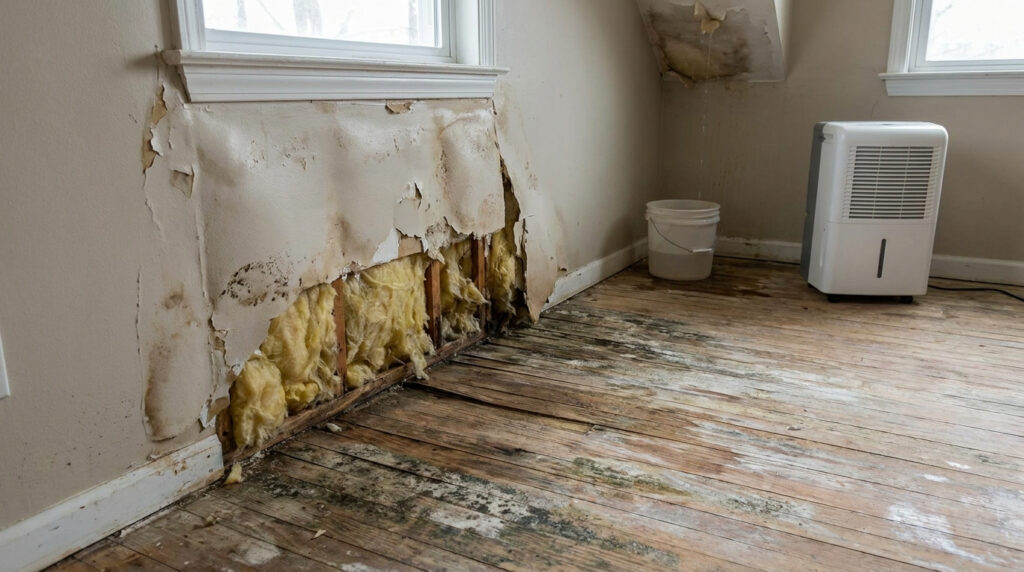
The first few hours after a leak often determine whether materials can be dried and saved or must be removed. Water damage drywall insulation flooring Alexandria issues require a careful inspection because each material absorbs, holds, and releases moisture differently. Surface drying alone may leave moisture behind walls or below floors, where it can weaken materials over time.
How Water Travels Through A Building
Water follows gravity, but it also moves sideways through porous materials. A leak on an upper floor can reach ceilings, wall plates, insulation, baseboards, and subflooring below the original source. The visible damage may be several feet away from the actual leak.
Drywall paper wicks water upward from the floor. Insulation can trap moisture inside wall cavities. Water beneath vinyl planks or hardwood may spread across a wide section of subfloor before appearing at seams or edges. This is why a small stain does not always indicate a small repair.
The water source also changes the repair approach. Clean water from a recently broken supply line may allow more materials to be dried. Water from a backed-up drain, toilet overflow, or outside flooding can introduce contaminants that make removal safer than restoration.
What Happens To Wet Drywall
Drywall is made from gypsum pressed between paper layers. The gypsum core can absorb water, while the paper facing holds moisture and loses strength. Even if a wall feels dry, moisture may remain behind the painted surface or along the bottom edge near the baseboard.
Early water exposure may cause discoloration, bubbling paint, soft spots, or swollen seams. As saturation increases, drywall can sag, crumble, or pull away from fasteners. Ceiling drywall is particularly vulnerable because the added water weight can cause bowing and collapse.
Restoration teams often remove baseboards and use moisture meters to check the wall from the floor upward. If only the lower portion is wet and the water is clean, technicians may use controlled wall drying methods. If the drywall has lost structural strength, contains extensive moisture, or was exposed to contaminated water, affected sections are typically cut out and replaced.
Why Insulation Creates Hidden Moisture Problems
Insulation inside exterior walls and ceilings can hide water long after visible surfaces look normal. Fiberglass insulation does not absorb water in the same way as cellulose, but it can hold water between fibers and lose its ability to insulate properly. Wet insulation also slows the drying of wood framing behind it.
Cellulose insulation is more absorbent. It can clump, settle, and retain moisture against framing members. Once wet, it often requires removal because drying it evenly inside a closed wall cavity is difficult. Spray foam may resist water better, but surrounding drywall, wood, and floor assemblies can still hold moisture.
Insulation removal is not always obvious from a room inspection. Technicians may use thermal imaging, pin moisture meters, and small exploratory openings to identify wet cavities. Removing a limited section of insulation early can prevent a larger wall reconstruction later.
How Flooring Responds To Moisture
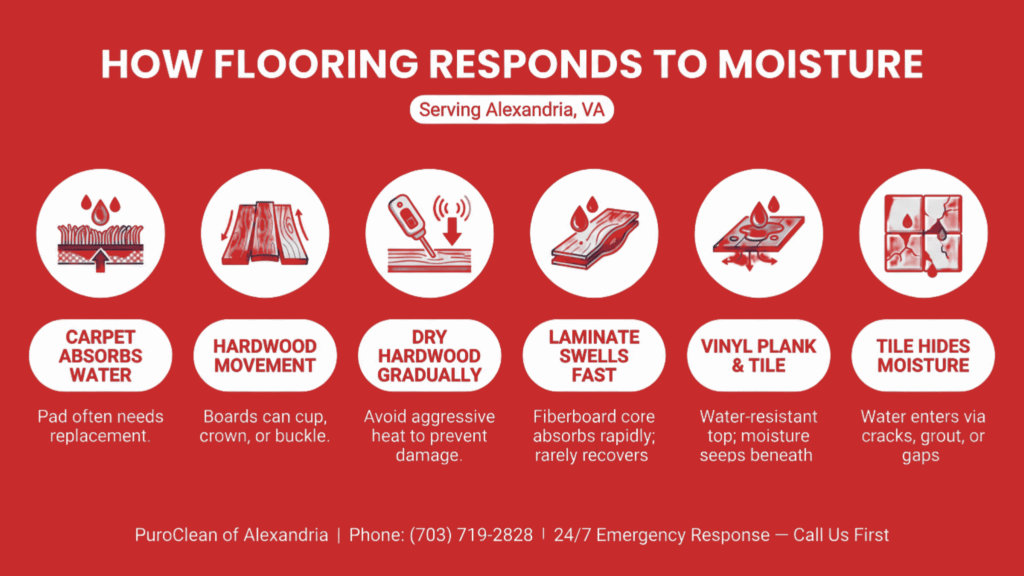
Flooring damage depends on the material, the amount of water, and how long moisture remains underneath. Carpet can absorb a large volume of water, including the pad below it. A wet carpet pad often needs replacement because it holds moisture against the subfloor and cannot be reliably cleaned or dried in place.
Hardwood flooring may cup, crown, buckle, or develop gaps as wood fibers expand and contract. Quick extraction and controlled drying can sometimes save hardwood, but aggressive heat can cause additional movement. Floors should be dried gradually while moisture levels are monitored in both the boards and the subfloor.
Laminate flooring frequently swells at seams because its fiberboard core absorbs water rapidly. Once planks expand, they rarely return to their original shape. Luxury vinyl plank and tile are more water-resistant, but water can still seep beneath the material, weaken adhesive, and remain trapped against the subfloor.
Tile may appear unaffected after a leak, yet moisture can enter through cracked grout, loose tiles, or gaps at walls. The subfloor beneath tile deserves inspection, especially in bathrooms, kitchens, and laundry rooms where slow leaks can continue unnoticed.
Alexandria Homes Need Fast Moisture Control
Many Alexandria properties combine older building materials with modern renovations. A leak may affect original wood framing, newer drywall, layered flooring, and concealed plumbing connections within the same area. These mixed assemblies can dry at different rates.
Basements also deserve close attention. Below-grade walls, concrete slabs, and limited airflow can extend drying time after a plumbing leak or storm event. Moisture that migrates behind finished basement walls may affect insulation and framing before it becomes visible.
Humidity adds another factor. During warm, damp weather, opening windows may not help wet materials dry. Professional dehumidification removes moisture from the air so trapped water can evaporate from drywall, wood, and flooring without adding more humidity to the space.
What A Proper Inspection Reveals
A reliable assessment starts by stopping the water source and documenting the affected area. The inspection should identify moisture in materials, not just visible stains. Moisture readings establish where drying equipment is needed and help confirm when materials have returned to an acceptable level.
Inspectors should check behind baseboards, beneath floor transitions, around cabinets, inside adjacent rooms, and below the affected level. A kitchen leak, for example, can wet cabinet toe kicks, wall insulation, and flooring in a nearby dining area.
Photographs and moisture records are useful for repair planning and insurance documentation. They also help distinguish between a recent event and an older moisture issue that may need a broader investigation.
Repair Decisions Depend On Material Condition
The goal is not to remove every wet material automatically. The goal is to remove only materials that cannot be safely and effectively dried, then restore the area to a stable condition. Fast extraction, air movement, dehumidification, and regular moisture checks support that decision.
Drywall may be salvageable after minor clean-water exposure if it remains firm and dries quickly. Insulation and carpet padding are less likely to be retained once saturated. Hardwood may need time to stabilize before replacement is considered, while swollen laminate usually requires new planks.
Avoid painting over stains, reinstalling baseboards before moisture testing, or replacing flooring over a damp subfloor. Those shortcuts can conceal the original issue and create more costly repairs later.
Conclusion
Water damage is rarely limited to the material that looks wet first. A focused inspection can reveal whether moisture has entered drywall, insulation, subflooring, or nearby rooms before repairs begin.
For property owners dealing with building materials water damage VA concerns, quick extraction and documented drying protect both the structure and the repair budget. If you notice staining, warped flooring, soft drywall, or a musty indoor smell after a leak, contact a qualified Alexandria water restoration professional promptly to assess the affected materials.
FAQs
Q: Can wet drywall be dried instead of replaced?
A: Minor clean-water exposure may be dried if the drywall remains firm, moisture readings return to normal, and the wall cavity is addressed. Soft, swollen, sagging, or contaminated drywall usually needs removal.
Q: Does wet insulation always need to be removed?
A: Not always, but saturated fiberglass and wet cellulose often require removal because they retain moisture and lose performance. The decision depends on insulation type, water source, and measured moisture inside the wall.
Q: How long does it take to dry water-damaged flooring?
A: Drying often takes several days, but the timeline depends on the flooring material, subfloor condition, humidity, and extent of water migration. Moisture testing, not appearance alone, confirms whether drying is complete.