


Introduction
Water can enter a home slowly enough that the problem stays out of sight for months or years. A pinhole pipe leak, loose roof flashing, failed window seal, or damp crawlspace may not create a dramatic flood. Instead, moisture moves into framing, insulation, flooring, and wall cavities.
Alexandria homes face several local moisture pressures. Older plumbing systems, humid summers, heavy rain, and homes with basements or crawlspaces can all create conditions for concealed leaks. Knowing the long term water damage signs Alexandria homeowners often miss helps you act before repairs spread beyond one room.
A stain or odor may be the first visible clue, even when the moisture has traveled from another part of the home. Recognizing these early signs can help narrow down where the problem began.
Why Alexandria Homes Develop Persistent Moisture Problems
Many Alexandria properties combine older construction with modern renovations. A remodeled kitchen may have new cabinets over an aging supply line. A finished basement may conceal foundation seepage behind drywall. These conditions can delay detection.
Seasonal humidity also affects how materials behave. Wood expands and contracts, condensation forms on cold pipes, and poorly ventilated attics retain humid air. Water may enter during a storm, then remain trapped where air circulation is limited.
Exterior drainage deserves attention as well. Gutters that overflow near the foundation, downspouts that discharge too close to the house, and grading that slopes toward the structure can repeatedly wet basement walls or crawlspace soil.
Signs Of Water Damage Behind Walls And Under Floors
Hidden moisture often leaves small clues before major damage appears.
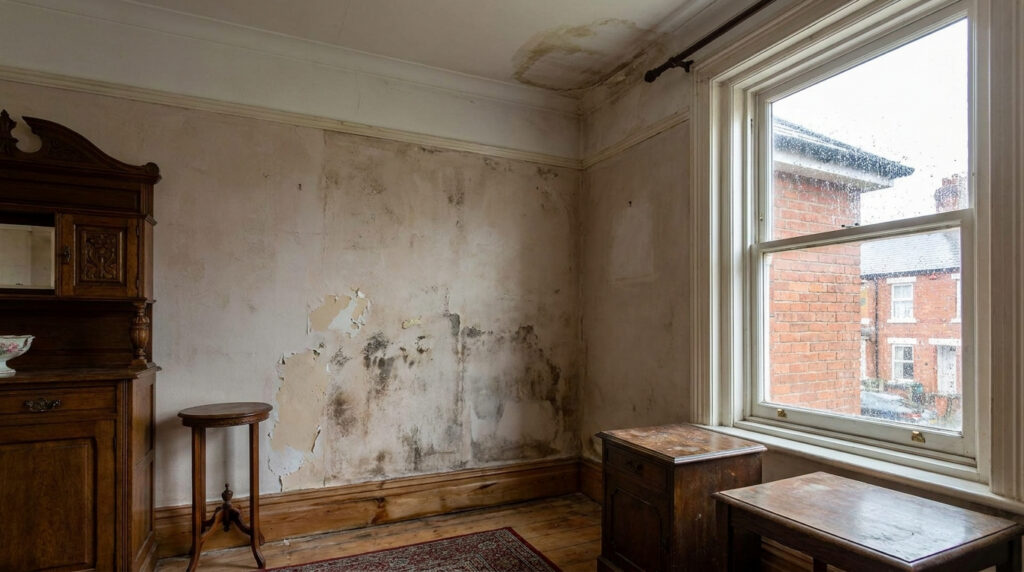
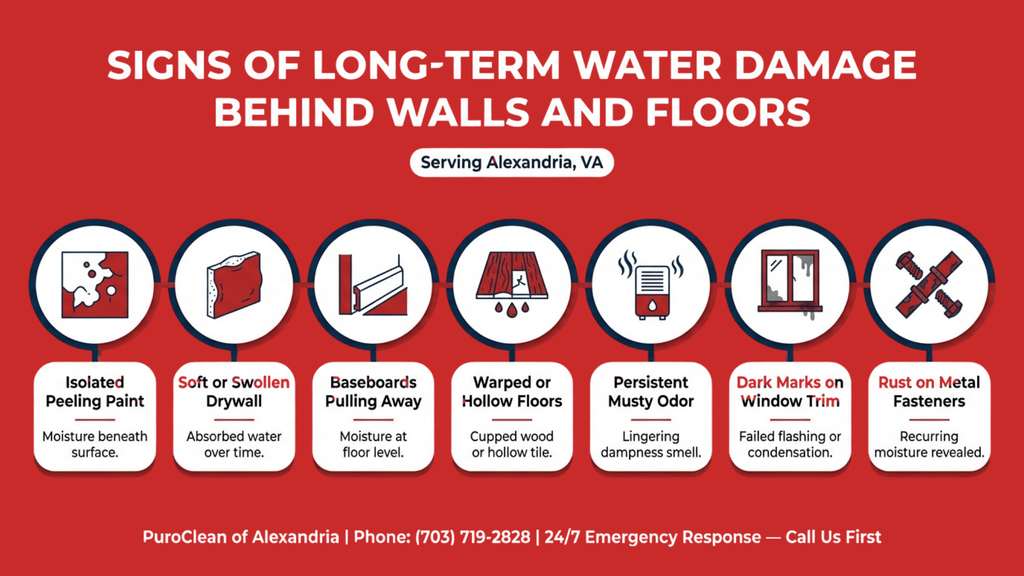
– Bubbling or peeling paint can indicate moisture behind the surface.
– Soft drywall or separating baseboards may point to water at wall or floor level.
– Warped wood, loose grout, or hollow-sounding tile can signal moisture beneath flooring.
– Musty odors near closets, exterior walls, or lower levels may indicate damp materials.
– Staining around windows or rust on nearby metal components can suggest recurring water entry.
These signs do not confirm the source, but they show where further inspection should begin.
Checks For Attics Basements And Crawlspaces
These areas often reveal water problems before finished rooms do. Use a flashlight and inspect during dry weather as well as after heavy rain.
– Check attic sheathing for dark streaks, damp insulation, rusted nails, or daylight near roof penetrations.
– Look for condensation on HVAC ducts, pipes, and roof framing in poorly ventilated attic spaces.
– Inspect basement corners for white mineral deposits, peeling paint, or a damp line along the wall.
– Check around water heaters, washing machines, sump pumps, and utility sinks for slow drips or corrosion.
– In crawlspaces, look for wet soil, standing water, fallen insulation, or damp wood framing.
– Examine floor joists for darkened wood, surface growth, or areas that feel softer than nearby framing.
– Confirm that vapor barriers are intact and not covered by pooled water or debris.
A repeat inspection after rainfall can help separate plumbing leaks from exterior water entry.
How Persistent Moisture Changes Building Materials
Different materials show damage in different ways. Drywall absorbs water quickly and can lose strength even after the surface feels dry. Insulation may compress or retain moisture, reducing its ability to control indoor temperature.
Wood framing can remain wet inside enclosed wall cavities. Over time, it may discolor, warp, or lose strength. Subflooring is especially vulnerable because it supports flooring finishes while receiving little airflow from above.
Masonry and concrete do not rot, but they can transmit moisture. White residue on basement walls forms when water carries minerals through concrete and evaporates at the surface. That evidence suggests water movement, even if no puddle is present.
Cabinets and trim can also provide useful clues. Swollen particleboard, lifted veneer, and doors that no longer close evenly may indicate a slow plumbing leak under a sink or behind an appliance.
Steps To Confirm The Moisture Source
A visible stain is a symptom, not a diagnosis. Narrowing down the water source prevents repeated repairs to the same area.
– Photograph stains, warped materials, and damp areas before cleaning or repainting them.
– Note whether the issue worsens after rain, after using plumbing fixtures, or during humid weather.
– Check the water meter with all fixtures off to see whether unexplained water use continues.
– Open sink cabinets and inspect supply valves, drain lines, and shutoff connections for moisture.
– Review areas directly above a ceiling stain, including bathrooms, roof penetrations, and HVAC equipment.
– Test suspicious surfaces with a moisture meter to compare readings with nearby dry materials.
– Have a professional inspect wall cavities or flooring when moisture is present but the source is unclear.
The goal is to identify whether the moisture comes from plumbing, rainfall, condensation, or groundwater before deciding what needs to be repaired.
Mistakes That Allow Water Damage To Spread
Small repairs can become larger problems when moisture is covered instead of corrected.
- Painting over stains without fixing the leak can hide ongoing damage.
- Surface drying may leave insulation, framing, or subflooring wet.
- Replacing flooring before checking the subfloor can trap moisture underneath.
- Ignoring slow leaks, odors, or recurring dampness gives damage more time to spread.
- Sealing basement walls without correcting drainage may simply redirect the water.
Fix the moisture source first, then dry and repair the affected materials.
When A Small Leak Becomes A Larger Repair
The repair scope depends on how long water has been present, how far it traveled, and which materials absorbed it. A supply line leak behind a refrigerator may affect only a small section of drywall. The same leak left undetected can reach adjacent cabinets, flooring, and the level below.
Watch for changes in texture and structure, not just color. A ceiling stain that expands, a floor that feels spongy, or a wall that becomes soft requires faster action than a dry, stable stain from an old repaired issue.
If the source involves a roof, plumbing line, appliance connection, or foundation water entry, fix that source first. Drying and material replacement should follow only after the water path has been stopped.
Conclusion
Long-lasting moisture problems rarely resolve on their own. Early inspection can limit damage to a small repair rather than a major reconstruction project.
Pay attention to recurring stains, odors, warped finishes, and damp areas near plumbing or exterior walls. If you notice hidden water damage symptoms VA homeowners often overlook, arrange a moisture inspection and identify the source before repairing visible surfaces.
FAQs
Q: Can water damage exist without a visible stain?
A: Yes. Water can remain inside walls, under flooring, in insulation, or in crawlspaces without creating a visible stain. Musty odors, warped materials, high moisture meter readings, and unexplained peeling paint can indicate concealed moisture.
Q: How can I tell if a ceiling stain is old or active?
A: Check whether the stain feels dry, changes size, darkens after rain, or appears near plumbing fixtures. A moisture meter can provide useful evidence, but a professional inspection may be needed if the source is not obvious.
Q: Are warped wood floors always caused by a leak?
A: Not always. High indoor humidity, wet mopping, and changes in moisture below the floor can also affect wood. However, localized warping near a dishwasher, refrigerator, bathroom, or exterior wall should be investigated for water entry.