


Introduction
A house fire disrupts more than just the structure of a home. It leaves behind smoke damage, water from firefighting efforts, and often a long list of unknowns. One of the first questions homeowners ask is simple but urgent: how long will it take to get everything back to normal?
The answer depends on more than just the size of the fire. Restoration involves multiple stages, each with its own timeline and potential delays. Understanding how the process unfolds in Alexandria homes can help you plan realistically, avoid surprises, and make better decisions during recovery.
What Affects The Fire Damage Restoration Timeline In Alexandria
The fire damage restoration timeline Alexandria homeowners experience varies based on several practical factors, not just the visible damage. The type of property, the extent of smoke spread, and even local permitting requirements all play a role.
A small kitchen fire that is quickly contained may only require surface cleaning and minor repairs. In contrast, a structural fire affecting multiple rooms introduces complexities like electrical rewiring, framing repairs, and potential rebuilding. Alexandria’s mix of historic and modern homes can also influence timelines. Older properties often require specialized restoration methods and inspections, especially if materials like plaster or original woodwork are involved. Water damage from firefighting efforts is another hidden variable. The longer water sits, the greater the risk of mold, which adds extra remediation steps.
Insurance approvals can also slow things down, particularly if documentation or adjuster inspections take longer than expected.
Step-By-Step Breakdown Of The Restoration Process
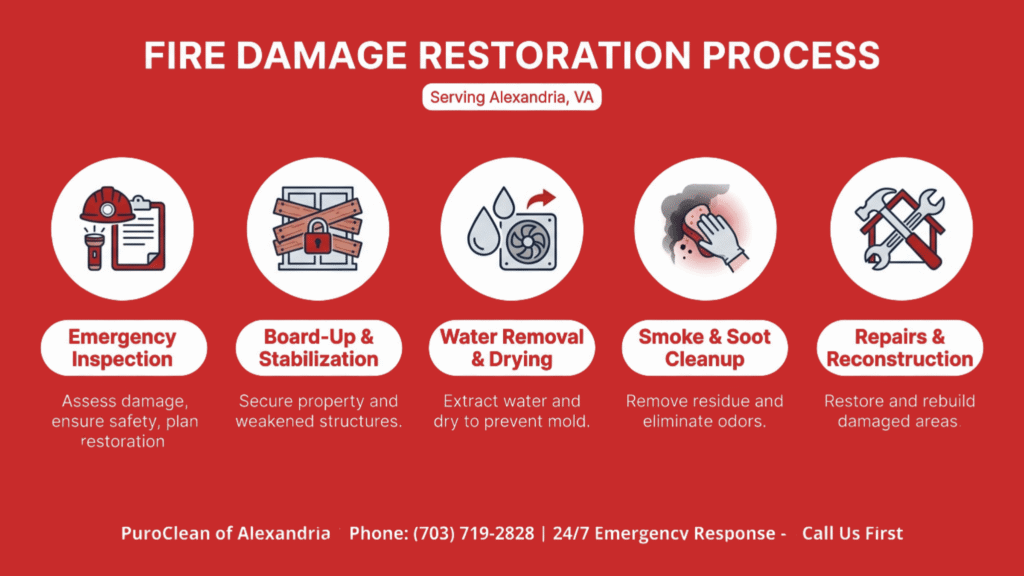
Emergency Response And Inspection
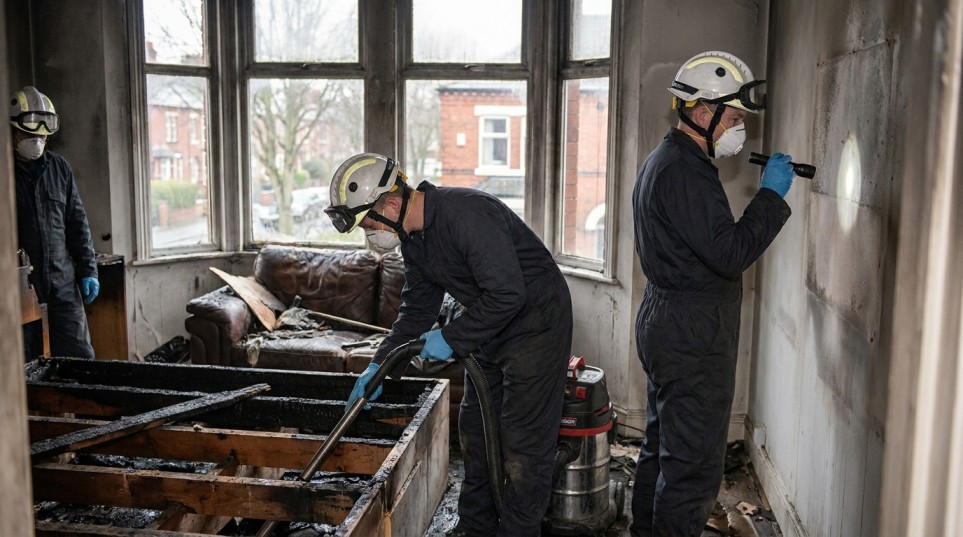
The process usually begins within hours of the fire. Restoration teams assess the damage, secure the property, and create a recovery plan. This stage typically takes one to two days, depending on how quickly professionals are contacted.
During this phase, contractors evaluate structural safety, identify hazardous materials, and determine the scope of work. Quick response matters here. Delays can allow smoke residues to settle deeper into surfaces, making cleanup more difficult.
Board-Up And Structural Stabilization
If windows, doors, or roofing are compromised, crews secure the property to prevent weather damage or unauthorized entry. This step can take anywhere from a few hours to several days.
In Alexandria neighborhoods where homes are close together, this step is especially important to prevent secondary damage from rain or humidity. Stabilization may also involve temporary supports if load-bearing elements were weakened.
Water Removal And Drying
Water extraction and drying often overlap with early cleanup efforts. This stage usually takes three to seven days, depending on how much water was used to extinguish the fire.
Industrial dehumidifiers and air movers are used to remove moisture from walls, flooring, and structural components. Skipping thorough drying can lead to mold growth, which adds weeks to the restoration timeline and increases costs.
Smoke And Soot Cleanup
Smoke damage is often more extensive than the fire itself. Soot can travel through HVAC systems, settling in areas untouched by flames. Cleaning this residue typically takes several days to a couple of weeks.
Different materials require different cleaning techniques. Porous materials like drywall and insulation may need replacement, while non-porous surfaces can often be restored. Odor removal is part of this stage and may involve ozone treatments or thermal fogging.
Repairs And Reconstruction
This is usually the longest phase. Minor repairs might take one to two weeks, while major reconstruction can stretch from several weeks to several months.
In Alexandria, permitting and inspections can influence how quickly reconstruction progresses. If structural changes are required, approvals may add time. Homes with custom finishes or historic details often take longer because materials and craftsmanship must match the original design.
Typical Timeline Based On Damage Severity
Minor Fire Damage
For limited damage, such as a contained kitchen fire, restoration may take one to two weeks. Cleanup is straightforward, and repairs are minimal. Most of the time is spent addressing smoke and odor.
Moderate Fire Damage
When multiple rooms are affected but the structure remains intact, expect a timeline of three to six weeks. This includes cleaning, partial demolition, and rebuilding sections of the home.
Severe Fire Damage
Extensive structural damage can push the timeline to three to six months or longer. Full reconstruction, inspections, and potential redesign all contribute to the extended timeframe.
Common Delays Homeowners Should Expect
Delays are common during fire restoration, even with a clear plan in place. Some issues appear during inspections, while others happen due to approvals or material shortages.
Common delays include:
- Insurance approval and paperwork reviews
- Delays in material or fixture availability
- Historic district repair requirements
- Hidden electrical or structural damage
- Mold discovered during repairs
- Permit and inspection scheduling delays
While delays can extend the timeline, they help ensure the restoration is completed safely and properly. Clear communication with the restoration team can help homeowners stay prepared throughout the process.
How To Speed Up The Restoration Process
While some delays cannot be avoided, homeowners can take simple steps to keep the restoration process moving smoothly. Quick action and clear communication often make a major difference.
Ways to help speed up the process:
- Contact a restoration company immediately after the fire
- Share photos and documents with your insurance provider quickly
- Allow easy access for inspections and assessments
- Choose a restoration company with local experience
- Respond to approvals and decisions without delay
- Stay involved through regular project updates
Staying proactive throughout the process can help reduce unnecessary delays and keep restoration work on schedule.
Why Alexandria Homes Can Have Unique Restoration Timelines
Alexandria’s housing landscape introduces specific challenges that can extend or complicate restoration timelines. Many homes feature older construction methods and materials that require specialized handling.
Historic preservation rules may limit what can be replaced or altered. This means restoration teams often need to repair rather than replace, which takes more time and skill.
The weather is another factor. Humidity levels can affect drying times, particularly in older homes without modern insulation. Seasonal conditions may also influence how quickly exterior repairs can be completed.
Local permitting processes can vary depending on the scope of work. Structural changes, electrical updates, and plumbing repairs may require multiple inspections before work can continue.
When You Can Safely Move Back In
The timeline for moving back into your home depends on safety rather than just visual progress. Even if repairs appear complete, the home must be free of smoke odors, structural risks, and moisture issues.
For minor damage, homeowners may return within days. For larger projects, it could take weeks or months. Air quality testing and final inspections often determine when the home is ready for occupancy.
It is tempting to rush this step, but moving back too early can expose you to lingering contaminants or unfinished repairs. A thorough final check ensures the home is truly safe and livable.
Conclusion
Fire damage restoration is a multi-stage process that rarely follows a fixed schedule. Each home presents its own challenges, from structural repairs to smoke removal and regulatory requirements. Understanding how long fire restoration takes helps set realistic expectations and reduces stress during recovery.
If you are dealing with fire damage in Alexandria, working with an experienced restoration team can make the process smoother and more predictable. Getting a professional assessment early is the best way to understand your specific timeline and next steps.
FAQs
Q: How soon should restoration begin after a fire?
A: Restoration should begin as soon as the property is deemed safe, ideally within 24 to 48 hours. Quick action prevents further damage from smoke, soot, and moisture.
Q: Can I stay in my home during fire damage restoration?
A: It depends on the severity of the damage. Minor cases may allow partial occupancy, but significant damage usually requires temporary relocation for safety and efficiency.
Q: Does insurance cover the full restoration timeline?
A: Most policies cover necessary restoration work, but delays can occur during approval processes. Coverage depends on your policy details and the extent of the damage.