


Introduction
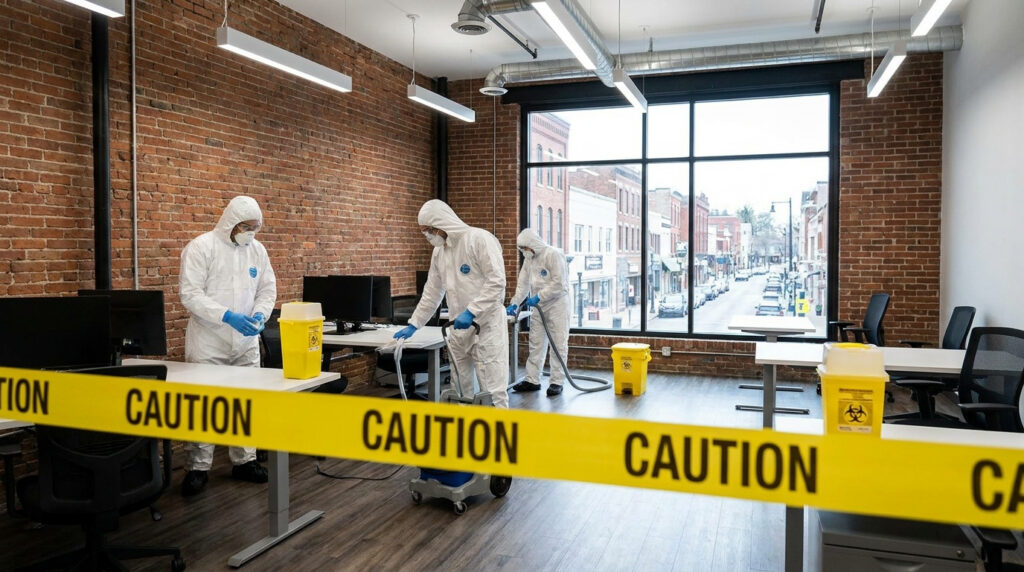
A workplace incident involving blood, bodily fluids, or hazardous waste can disrupt operations instantly. Beyond the immediate shock, there is a critical responsibility: making the environment safe again for employees. This is not a standard janitorial task. It requires specialized handling, strict protocols, and legal awareness.
Workplace biohazard cleanup Alexandria VA services exist to manage exactly these situations. They combine technical cleaning expertise with regulatory compliance to ensure that no hidden risks remain. For employers, understanding how this process works is key to protecting staff, avoiding liability, and restoring normal operations with confidence.
What Qualifies As A Workplace Biohazard Incident
Not every workplace spill requires a specialist, but certain events immediately fall into the biohazard category due to health risks and legal implications.
These incidents involve biological contaminants that can carry pathogens or cause harm through exposure. Common examples include accidents, medical emergencies, or contamination from improper waste handling.
Employers often underestimate how broad this category is. Even a small incident can require professional intervention if it involves bloodborne pathogens or regulated waste. Misjudging this can expose employees to unseen dangers and lead to compliance violations.
Common Biohazard Scenarios In The Workplace
Understanding what counts as a biohazard helps decision-makers act quickly and correctly.
– Blood spills from workplace injuries or accidents
– Bodily fluids after a medical emergency
– Needle or sharps contamination in facilities
– Chemical and biological cross-contamination in labs
– Sewage backups affecting occupied areas
Recognizing these scenarios early ensures the right cleanup response is triggered without delay.
Why Standard Cleaning Methods Are Not Enough
A typical cleaning crew is not equipped to handle biohazards safely. The difference lies in both the risk level and the required protocols.
Biohazard cleanup involves pathogens that are invisible and potentially dangerous even in trace amounts. Standard disinfectants and surface cleaning methods do not guarantee full decontamination. In many cases, improper cleaning can spread contamination rather than eliminate it.
Professional teams use hospital-grade disinfectants, personal protective equipment, and containment strategies. They also follow disposal regulations for hazardous waste, which standard cleaning services are neither trained nor licensed to handle.
This gap is where risk multiplies. Without proper cleanup, employees may return to a space that appears clean but still carries biological hazards.
How OSHA Regulations Apply To Biohazard Cleanup
OSHA sets clear standards for handling biohazards in the workplace, particularly through the Bloodborne Pathogens Standard. These regulations are not optional. They define how employers must protect workers from exposure.
Compliance is not just about cleaning thoroughly. It includes training, documentation, proper disposal, and the use of approved protective measures.
Failure to follow OSHA requirements can result in penalties, but more importantly, it increases the chance of employee exposure and long-term health risks.
Key OSHA Requirements Employers Must Follow
These requirements guide how incidents should be handled from start to finish.
– Identify and control exposure risks immediately
– Use approved personal protective equipment for responders
– Ensure proper containment of contaminated areas
– Dispose of biohazard waste through licensed channels
– Maintain records of incident response and cleanup procedures
Following these steps reduces liability and creates a safer return-to-work environment.
The Step By Step Biohazard Cleanup Process
A structured process ensures nothing is missed during cleanup. Each step is designed to eliminate risk and restore safety.
Professional cleanup teams follow a systematic approach that aligns with regulatory standards and real-world conditions.
Breakdown Of A Professional Cleanup Response
This process moves from assessment to full decontamination and verification.
– Initial assessment to identify contamination scope
– Isolation of affected areas to prevent spread
– Application of protective equipment and safety protocols
– Removal of contaminated materials and waste
– Deep cleaning with medical-grade disinfectants
– Final inspection to confirm safety standards are met
Each stage builds on the previous one to ensure complete remediation.
How OSHA Compliance Cleaning Protects Employees
Employee safety is the central goal of OSHA compliance cleaning. It goes beyond surface-level cleanliness and focuses on eliminating exposure risks.
After an incident, employees may feel uneasy returning to the workplace. Proper cleanup, backed by compliance standards, provides both physical safety and reassurance.
OSHA compliance cleaning ensures that pathogens are neutralized, contaminated materials are removed, and the environment meets strict safety thresholds. This reduces the likelihood of infection, cross-contamination, and long-term health concerns.
It also establishes a clear process for incident handling, which prevents confusion and delays during critical moments. Employees benefit from a workplace that prioritizes structured, safe responses rather than improvised solutions.
Key Ways Compliance Cleaning Reduces Risk
These protections directly impact employee health and workplace stability.
– Eliminates invisible pathogens through verified disinfection
– Prevents cross-contamination across shared spaces
– Ensures safe disposal of hazardous materials
– Provides documented proof of proper cleanup
– Reinforces employee trust in workplace safety measures
These measures create a controlled and safe environment after any incident.
Mistakes Employers Make After A Biohazard Incident
Even well-intentioned employers can make critical errors when responding to biohazard situations. These mistakes often come from underestimating the risks or trying to resolve the issue too quickly.
Common Post-Incident Errors To Avoid
Knowing what not to do is just as important as knowing the correct process.
– Assigning untrained staff to handle cleanup
– Using household or standard cleaning products
– Failing to isolate contaminated areas
– Delaying professional cleanup services
– Improper disposal of biohazard waste
Avoiding these mistakes prevents further contamination and legal complications.
Choosing The Right Biohazard Cleanup Service In Alexandria VA
Not all cleanup providers offer the same level of expertise. Selecting the right service directly affects safety outcomes and compliance.
Look for companies with documented training, proper certifications, and experience handling workplace incidents. Local knowledge also matters, as regulations and disposal requirements can vary.
A reliable provider will walk you through the process, explain safety measures, and provide documentation after the job is complete. Transparency is a strong indicator of professionalism.
What To Look For In A Qualified Provider
Use these criteria to evaluate potential cleanup services.
– Certification in biohazard and hazardous waste handling
– Experience with workplace and commercial incidents
– Compliance with OSHA and local regulations
– Availability for rapid emergency response
– Clear documentation and reporting after cleanup
Choosing carefully ensures the job is done safely the first time.
Long Term Benefits Of Professional Biohazard Cleanup
The impact of proper cleanup extends beyond immediate safety. It influences workplace culture, legal protection, and operational continuity.
Employees are more likely to feel secure returning to a properly cleaned environment. This reduces downtime and helps restore normal productivity faster.
From a legal perspective, documented compliance protects employers from claims related to unsafe conditions. It shows that appropriate steps were taken to address the incident thoroughly.
There is also a reputational benefit. Companies that respond responsibly to incidents demonstrate professionalism and accountability, which matters to both employees and clients.
When To Call A Professional Cleanup Team
Timing matters in biohazard situations. Waiting too long can increase risk and complicate the cleanup process.
Signs You Need Immediate Professional Help
These indicators signal that the situation requires expert intervention.
– Presence of blood or bodily fluids beyond minor spills
– Strong odors indicating contamination or decomposition
– Exposure to sharps or medical waste
– Large affected areas or porous materials involved
– Uncertainty about proper cleanup procedures
Acting quickly limits exposure and ensures a safer recovery process.

Conclusion
Workplace incidents involving biohazards demand more than quick fixes. They require structured, compliant, and thorough cleanup to protect everyone involved. Professional services ensure that no hidden risks remain and that the environment is safe for employees to return.
By investing in workplace biohazard cleanup Alexandria VA, employers take a proactive step toward safety, compliance, and operational stability. The role of OSHA compliance cleaning becomes clear in this context, as it provides the framework that ensures every cleanup meets strict health and safety standards.
If your workplace faces a biohazard incident, do not rely on guesswork. Contact a qualified cleanup provider immediately to restore safety and maintain compliance with confidence.
FAQs
Q: How quickly should biohazard cleanup begin after an incident?
A: Cleanup should start as soon as the area is secured. Delays increase contamination risk and make remediation more complex.
Q: Can regular janitorial staff handle biohazard situations?
A: No. Biohazard cleanup requires specialized training, equipment, and compliance with safety regulations that standard cleaning staff are not equipped for.
Q: What documentation should I receive after cleanup?
A: You should receive detailed reports outlining the cleanup process, waste disposal records, and confirmation that the area meets safety and compliance standards.