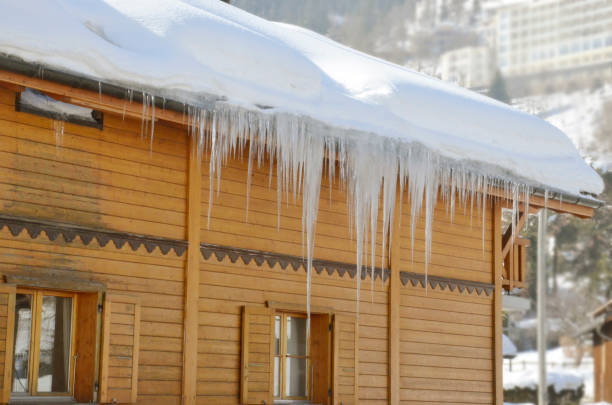
Winter in brings snow, deep cold, and quick thaws that set the stage for ice dam water damage. An ice dam is a ridge of ice at the roof edge that traps melting snow behind it. That water backs up under shingles and drips into attics, ceilings, and walls. Mopping up drips and running a household fan only treats what you can see, not the soaked insulation above.
Early signs of ice dam water damage are easy to miss. Look for faint ceiling stains, peeling paint, or damp spots near outside walls. This guide explains seven common causes, the warning signs, and what to do when water gets inside. If a leak has already reached your living space, PuroClean of Bloomington offers 24/7 water damage restoration.
Ice dams form when heat escapes into the attic and warms the roof deck. Snow melts on the warm upper roof, runs down, and refreezes over the colder eaves. ENERGY STAR notes that good insulation, air sealing, and ventilation reduce the potential for ice damming. Once ice dam water damage starts, act fast, because the EPA advises drying wet materials within 24 to 48 hours.
Ice Dam Water Damage at a Glance
Here are the seven causes this guide covers:
- Attic heat loss
- Air leaks into the attic
- Blocked soffit vents
- Clogged gutters
- Heavy snow and freeze-thaw swings
- Worn roofing at the eaves
- Hidden heat sources in the attic
The rest of this guide covers:
- Warning signs you should never ignore
- What to do if an ice dam starts leaking
- A quick prevention checklist
- How ice dams damage your home
- When to call a restoration professional
- How PuroClean of Bloomington can help
- Frequently asked questions
7 Common Causes of Ice Dams
1. Attic Heat Loss Is the Top Cause of Ice Dam Water Damage
Warm air from your living space rises into the attic. If the attic floor lacks enough insulation, that heat warms the roof from below. Snow then melts on the upper roof even when it is freezing outside.
Watch for:
- Thin or uneven insulation on the attic floor
- Snow melting on your roof faster than on your neighbors’ roofs
- Large icicles hanging from gutters
- Rooms below the attic that feel drafty
How to prevent it: Have the attic insulation checked and topped up before deep winter. Many older homes around Bloomington have far less insulation than newer houses. A quick look with a tape measure can tell you a lot.
2. Air Leaks Into the Attic
Small gaps let warm, moist air slip into the attic. Common leak points include recessed lights, the attic hatch, plumbing vents, and wiring holes. Each leak adds heat right where you do not want it and raises the risk of ice dam water damage.
Watch for:
- Dark, dusty streaks on attic insulation
- Frost on nails or roof boards in the attic
- A warm attic hatch on cold days
- Recessed lights that are not rated for insulation contact
How to prevent it: Seal gaps around pipes, wires, and the attic hatch with caulk or foam. Bloomington-based State Farm also suggests replacing old recessed lights with sealed fixtures. Seal before adding insulation, so the new layer works well.
3. Blocked Soffit Vents
Soffit vents under the eaves bring cold outside air into the attic. That airflow keeps the roof deck cool and even. When insulation covers those vents, the attic warms up and moisture builds.
Watch for:
- Insulation pushed tight against the roof edge
- Little or no daylight at the eaves inside the attic
- Musty smells or damp spots in the attic
- Ice forming mostly along the lower roof edge
How to prevent it: Keep insulation pulled back from soffit vents, or install baffles to hold it in place. ENERGY STAR warns never to cover soffit vents with insulation. Ask your roofer to check the vents during a fall inspection.
4. Clogged Gutters
Leaves and debris hold water at the roof edge. When that water freezes, it gives an ice dam a head start and invites ice dam water damage. Heavy ice can also pull gutters loose and damage fascia boards.
Watch for:
- Gutters overflowing during rain
- Sagging gutters or loose brackets
- Downspouts that drip instead of flow
- Ice filling the gutters early in the season
How to prevent it: Clean gutters after the last leaves fall in late November. Make sure downspouts carry water well away from the foundation. Gutter guards can help in neighborhoods with lots of mature trees.
5. Heavy Snow and Freeze-Thaw Swings
Central Illinois weather often swings between thaw and hard freeze in the same week. Each cycle adds another layer of ice at the eaves. A deep snowpack also insulates the roof and speeds up melting from below.
Common risk factors include:
- Several inches of snow followed by a sunny thaw
- Nighttime temperatures well below freezing
- Snow left on the roof for weeks
- North-facing roof sections that stay shaded
How to prevent it: After a heavy snowfall, clear the lower few feet of the roof with a roof rake. Always work from the ground and never climb onto an icy roof. Watch Bloomington forecasts for thaw days, when ice dams often start leaking.
6. Worn Roofing at the Eaves Invites Ice Dam Water Damage
Shingles shed water downhill, but they are not built to hold back standing water. Older roofs may also lack an ice-and-water barrier along the eaves. Once trapped water finds a gap, it seeps straight into the roof deck.
Watch for:
- Curled, cracked, or missing shingles near the edge
- Rotted or stained fascia boards
- Damaged flashing around chimneys and valleys
- Water stains on the underside of the roof deck
How to prevent it: Schedule a roof inspection before winter. If you reroof, ask for a self-adhering ice-and-water barrier at the eaves. It will not stop ice dams, but it limits leaks when they form.
7. Hidden Heat Sources in the Attic
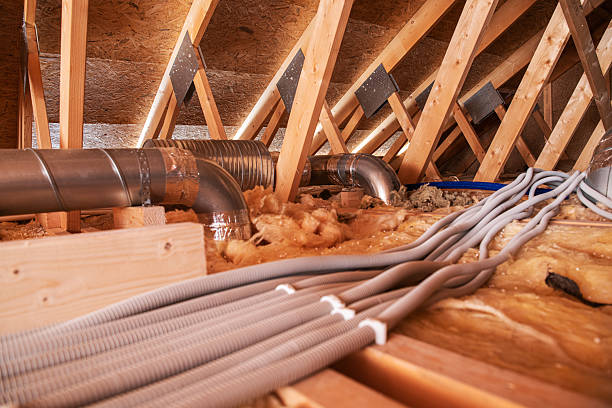
Some attics have extra heat sources that melt snow in patches. Bathroom fans, dryer vents, and furnace ducts can all release warm air into the space. Leaky ducts are a common problem in homes with attic furnaces.
Watch for:
- Bathroom fans that vent into the attic, not outdoors
- Bare or loose duct joints
- Melted patches of snow over one part of the roof
- Moisture or mold near fan outlets
How to prevent it: Route all bathroom and dryer vents outside the house. Seal and insulate any ductwork in the attic. A heating contractor in the Bloomington-Normal area can test ducts for leaks.
Warning Signs You Should Never Ignore
Ice dam water damage often shows up indoors days before you spot a drip. Check for these early clues after every big snow:
- Thick ridges of ice and long icicles along the gutters
- Brown or yellow stains on ceilings near outside walls
- Peeling paint or bubbling drywall under the roofline
- Damp or matted insulation in the attic
- Frost on attic nails and roof boards
- A musty smell in upstairs rooms or closets
What to Do If an Ice Dam Starts Leaking
Act quickly to limit the damage:
- Protect your belongings. Move furniture and electronics, and catch drips with buckets or towels.
- Stay away from wet fixtures. Turn off power to any light or ceiling fan near the leak.
- Clear the roof edge from the ground. Use a roof rake on the lower roof, and never climb up.
- Document everything. Take photos of stains, drips, and wet items for your insurance company.
- Call for help fast. A pro can dry the attic and walls and arrange emergency roof tarping if needed.
How to Prevent Ice Dam Water Damage at Home: Quick Checklist
Work through this list before the deep cold arrives:
- Seal air leaks around lights, pipes, wires, and the attic hatch.
- Add attic insulation where it looks thin.
- Keep soffit vents clear of insulation.
- Clean gutters and downspouts in late fall.
- Keep a roof rake ready for big snowfalls.
- Vent bathroom fans and dryers outdoors.
- Swap old recessed lights for sealed, insulation-rated fixtures.
- Turn on heat cables before snow falls, as IBHS recommends.
- Check the attic for frost or damp insulation after storms.
- Save PuroClean of Bloomington’s number: (309) 433-0900.
For a year-round plan, see our seasonal home maintenance checklist.
How Ice Dams Lead to Severe Property Damage
Left alone, ice dam water damage spreads well beyond one ceiling stain:
- Structural: Wet roof decking, rafters, and wall framing can weaken and rot.
- Flooring: Drips from above soak carpet, pads, and hardwood below.
- Electrical: Water can reach ceiling fixtures, junction boxes, and wiring.
- Odor: Soaked insulation and drywall give off a musty smell.
- Secondary mold: Damp attic boards and wall cavities can grow mold quickly.
When to Call a Restoration Professional
Ice dam leaks are tricky because water travels before it shows. It can soak insulation and run down inside walls far from the drip. Fans and towels cannot dry those hidden spaces.
- Commercial extraction removes water from carpet, pads, and subfloors.
- Thermal imaging tracks moisture inside ceilings and walls without tearing them open.
- Industrial dehumidifiers pull water out of framing, drywall, and insulation.
- Hospital-grade antimicrobials treat damp materials to help prevent mold.
Fast professional drying keeps ice dam water damage from turning into a mold problem. It also creates the moisture records your insurer may ask for.
PuroClean of Bloomington Can Help After an Ice Dam Leak
PuroClean of Bloomington responds 24/7 across Bloomington, Normal, Hudson, Le Roy, Lexington, Chenoa, and Gridley. We extract water, dry hidden spaces, and repair ceilings after ice dam water damage. Our team documents photos and moisture readings to support your insurance claim. Call (309) 433-0900 day or night.
Frequently Asked Questions About Ice Dam Water Damage
Does homeowners insurance cover ice dam water damage?
Many policies cover sudden interior water damage from ice dams. Coverage varies, so check your policy and document everything.
Should I chip ice off my roof?
No. Chipping ice can damage shingles and is dangerous, so use a roof rake from the ground instead.
Do heat cables stop ice dams?
They can keep channels open for melting snow. They do not fix the attic heat loss that causes ice dams.
How fast should I dry a leak?
The EPA advises drying wet materials within 24 to 48 hours. After that, mold becomes much more likely.