


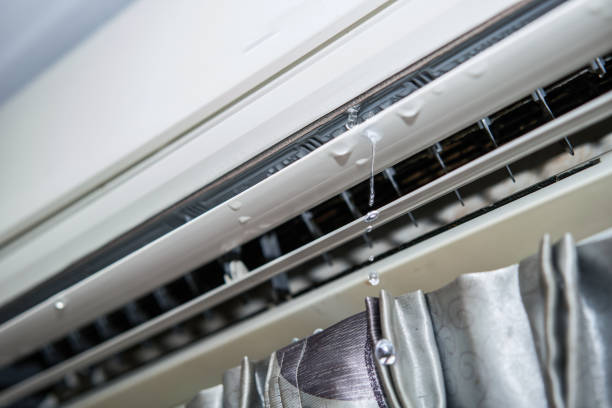
Why Your AC Is Leaking Water
AC leaking water occurs due to seven critical issues: (1) clogged condensate drain lines from algae, mold, or debris blocking water flow, (2) frozen evaporator coils from dirty filters or refrigerant problems causing ice buildup that melts flooding systems, (3) cracked or overflowing drain pans unable to contain condensate, (4) failed condensate pumps preventing water removal from basements or attics, (5) disconnected drain lines allowing water to escape into living spaces, (6) extremely dirty air filters restricting airflow causing coil freezing, and (7) improper installation creating drainage slope problems, with immediate professional response required preventing extensive water damage throughout Wisconsin and Illinois homes in Burlington, Kenosha, Racine, Milwaukee, and surrounding communities.
You walk into your closet and step into a puddle.
Water pools on the floor beneath your HVAC air handler. Your belongings are soaked. The drywall shows water stains spreading upward.
Your air conditioner is leaking water, and the damage is happening right now, getting worse every minute the AC runs.
For immediate emergency water damage response and AC leak repair serving all southeastern Wisconsin, including Kenosha County, Racine County, Walworth County, Milwaukee County, Waukesha County, and northern Illinois, including Lake County, call PuroClean of Burlington at (262) 342-2226 for 24/7 professional service.
I have responded to countless AC leaking water emergencies throughout Burlington, Lake Geneva, Kenosha, Racine, Milwaukee, Antioch, Gurnee, and surrounding communities. The water damage from AC leaks proves surprisingly extensive, often affecting multiple rooms, damaging belongings, and creating immediate mold growth risks within 24-48 hours.
This comprehensive guide reveals seven critical reasons AC leaks occur, immediate steps to minimize damage, and how professional services restore properties while preventing recurrence, protecting homes throughout Wisconsin and Illinois.
Because understanding why AC leaks happen enables a quick, appropriate response, preventing minor leaks from becoming major water damage disasters requiring extensive restoration.
Reason 1: Clogged Condensate Drain Line
Why do AC condensate drains clog, causing water leaks?
Answer: AC leaking water most commonly results from clogged condensate drain lines when algae, mold, dirt, and debris accumulate inside drain pipes, blocking water flow, with warm humid conditions inside drain lines creating perfect growth environments for biological blockages, causing water to back up into drain pans, then overflow into homes, requiring professional drain cleaning and algae treatment, preventing recurrence throughout Wisconsin and Illinois properties where AC systems run heavily during humid summers.
Drain line clogs cause the majority of AC water leaks.
How condensate drains work:
Air conditioners remove humidity from indoor air by condensing it on cold evaporator coils. This condensate (water) drips into drain pans connected to drain lines that carry water outside or to floor drains.
A typical residential AC system removes 5-20 gallons of water daily during summer operation. This continuous flow of moisture through drain lines creates ideal conditions for biological growth, leading to clogs.
Algae and mold buildup:
Dark, warm drain lines provide perfect algae and mold growth conditions. These organisms form slimy biofilms coating pipe interiors, progressively restricting water flow until complete blockage occurs.
According to the Environmental Protection Agency, mold grows within 24-48 hours in moist environments, making AC drain lines prime colonization sites requiring regular maintenance.
Debris accumulation:
Dust, dirt, insulation fibers, and other debris enter drain pans, accumulating in drain lines. This debris combines with biological growth, creating solid blockages preventing water drainage.
Properties throughout Pleasant Prairie, Somers, Mount Pleasant, Caledonia, or Kenosha County experience frequent drain clogs during heavy summer AC usage, requiring professional cleaning.
Blockage progression:
Drain clogs start small, causing slow drainage. As blockages worsen, water backs up faster, eventually overflowing drain pans when systems cannot remove water quickly enough during operation.
Emergency response:
When AC leaking water results from clogged drains, immediate drain cleaning restores functionality. However, water damage restoration addresses existing flooding, preventing mold growth and structural damage.
Prevention strategies:
Regular drain line flushing with vinegar or bleach solutions prevents biological growth. Professional HVAC maintenance includes drain cleaning. Installing drain line clean-out ports enables easier maintenance.
Clogged condensate drains represent the primary cause of AC leaking water, requiring immediate professional drain cleaning and water damage restoration throughout southeastern Wisconsin and northern Illinois communities.
Reason 2: Frozen Evaporator Coil
How does a frozen AC coil cause water leaks?
Answer: AC leaking water occurs when frozen evaporator coils develop ice buildup from restricted airflow or low refrigerant levels, with ice accumulating on coils during operation, then melting when systems shut off, releasing large water volumes overwhelming drain pans, causing overflow into living spaces, particularly affecting closet-mounted air handlers in Wisconsin and Illinois homes, requiring immediate professional HVAC diagnosis addressing root causes preventing repeated freeze-thaw leak cycles.
Frozen coils create sudden, massive water releases.
Why evaporator coils freeze:
Evaporator coils freeze when the airflow across coils becomes insufficient, preventing heat absorption. This causes coil temperatures to drop below freezing despite refrigerant flowing normally.
Low refrigerant levels also cause freezing by reducing pressure and temperature in evaporator coils beyond normal operating ranges, creating ice buildup.
Ice buildup patterns:
Ice forms on coil surfaces, progressively covering entire coil assemblies. This ice continues building during AC operation, potentially accumulating several gallons of frozen water on coil surfaces.
The melt flood:
When AC systems shut off or frozen coils completely block airflow, forcing systems to stop, accumulated ice melts rapidly. This sudden water volume often exceeds the drain pan capacity, causing immediate overflow and AC leaking water emergencies.
Properties throughout West Allis, Wauwatosa, Oak Creek, Franklin, and Milwaukee County commonly experience frozen coil floods during summer when AC systems run continuously, creating conditions for ice accumulation.
Dirty filter connection:
Dirty, clogged air filters represent the most common cause of restricted airflow and freezing coils. Homeowners unknowingly neglecting filter changes unknowingly create conditions for frozen coil AC and leaking water disasters.
Refrigerant leak indicators:
Low refrigerant from leaks causes coil freezing alongside reduced cooling performance. Hissing sounds, ice on refrigerant lines, or warm air from vents indicate potential refrigerant problems requiring professional HVAC service.
Preventing frozen coil leaks:
Monthly air filter changes ensure proper airflow. Annual professional HVAC maintenance checks refrigerant levels. Addressing cooling performance problems promptly prevents freeze conditions from developing.
Frozen evaporator coils create some of the most sudden, severe AC leaking water events requiring immediate professional HVAC repair and water damage restoration throughout Wisconsin and Illinois homes.
Reason 3: Cracked or Rusted Drain Pan
Can damaged drain pans cause AC water leaks?
Answer: AC leaking water results from cracked, rusted, or damaged drain pans unable to contain condensate, with older AC systems using metal drain pans corroding over time, developing holes or cracks, while impact damage or improper installation creates gaps allowing water to escape, requiring drain pan inspection, repair, or replacement, preventing continued leakage, particularly affecting aging HVAC systems throughout Wisconsin and Illinois properties needing professional assessment and solutions.
Drain pan failure allows direct water escape into homes.
Two drain pan types:
Primary drain pans sit directly beneath evaporator coils, collecting condensate. These integrated pans prove difficult to access or replace without extensive HVAC disassembly.
Secondary or overflow pans are installed beneath primary pans, providing backup protection. These accessible pans are more easily inspected and replaced when damaged.
Metal pan corrosion:
Older AC systems use galvanized steel or aluminum drain pans. Constant moisture exposure causes corrosion, developing rust holes, and allowing water leakage.
Properties throughout Waukesha, Brookfield, New Berlin, Muskego, and Waukesha County with aging HVAC systems frequently experience drain pan corrosion, creating AC leaking water situations requiring professional evaluation.
Plastic pan cracking:
Modern systems use plastic drain pans that resist corrosion. However, plastic becomes brittle with age, temperature cycling, or UV exposure, developing cracks and allowing leakage.
Impact damage during maintenance or installation also cracks plastic pans, creating immediate leak paths.
Overflow pan absence:
Many older AC installations lack secondary overflow pans. When primary pans fail or drain lines clog, nothing prevents water from flooding into living spaces, creating extensive damage.
Inspection challenges:
Drain pans are often installed in tight spaces, making visual inspection difficult. Professional HVAC technicians use mirrors, cameras, and experience to identify pain problems causing the AC to leak water.
Pan replacement:
Replacing integrated primary drain pans requires substantial HVAC disassembly. Secondary pan replacement proves simpler, though proper sizing and installation remain critical for effective protection.
Damaged drain pans create continuous AC-leaking water problems requiring professional inspection and replacement, protecting homes from ongoing moisture damage throughout all service areas.
Reason 4: Failed Condensate Pump
Why do condensate pumps fail, causing AC leaks?
Answer: AC leaking water in basements and attics results from failed condensate pumps unable to remove water from drain pans when gravity drainage proves impossible, with pump failures from clogged intake screens, electrical problems, worn impellers, or switch malfunctions preventing water removal, causing immediate overflow, particularly affecting Wisconsin and Illinois properties with air handlers in basements or attic installations requiring pump water removal systems demanding immediate professional pump repair or replacement.
Pump failures create instant overflow conditions.
When condensate pumps become necessary:
Basement air handlers sit below grade, where gravity drainage proves impossible. Attic installations cannot drain to the exterior without pumps. These situations require condensate pumps to lift water from drain pans to suitable drainage points.
Properties throughout Lake Geneva, Elkhorn, Delavan, Whitewater, or Walworth County with basement or attic HVAC installations depend entirely on condensate pump reliability, preventing AC leaking water disasters.
Common pump failure causes:
Clogged intake screens from debris prevent water entry into pumps. Algae growth inside pump reservoirs fouls impellers. Electrical failures prevent pump motors from running. Float switches stick, preventing pump activation. Motor wear reduces pumping capacity.
Failure symptoms:
Gurgling sounds from pumps indicate struggles removing water. Pumps running continuously suggest blockages or capacity problems. Complete silence when the drain pans fill indicates total pump failure.
Emergency pump failure response:
Pump failures create immediate AC water emergencies. Shutting off AC systems prevents additional water production. Manual water removal from drain pans provides temporary relief. Emergency pump replacement restores function, preventing continued flooding.
Maintenance requirements:
Condensate pumps require regular cleaning to prevent algae and debris accumulation. Annual inspection ensures proper operation. Testing pumps during HVAC maintenance identifies developing problems before failures occur.
Backup pump systems:
Critical installations benefit from backup condensate pumps automatically activating when primary pumps fail. These redundant systems prevent AC leaking water emergencies from single-point pump failures.
Failed condensate pumps create immediate, severe AC-leaking water situations requiring emergency professional response, preventing extensive water damage in basement and attic HVAC installations.
Reason 5: Disconnected or Damaged Drain Lines
How do drain line problems cause AC water leaks?
Answer: AC leaking water occurs when condensate drain lines disconnect from drain pans or develop cracks and holes allowing water to escape before reaching proper drainage points, with vibration, improper installation, rodent damage, or freeze damage causing line failures, requiring professional drain line inspection, repair, and secure reconnection preventing water discharge into living spaces throughout Wisconsin and Illinois homes, particularly affecting PVC drain line installations common in modern HVAC systems.
Physical drain line damage creates direct leak paths.
Disconnection causes:
Vibration from AC operation gradually loosens drain line connections to pans. Improper initial installation without secure fittings allows lines to separate. Maintenance work on bumping lines causes disconnections.
When drain lines disconnect, all condensate flows directly onto floors, ceilings, or into walls, creating immediate, severe AC-leaking water damage.
PVC line cracking:
PVC condensate drain lines crack from freeze damage, impact, or age-related brittleness. Even small cracks allow significant water escape during continuous AC operation.
Properties throughout Milwaukee, Glendale, Greenfield, Cudahy, and surrounding Milwaukee County areas experience PVC drain line failures, creating hidden leaks inside walls requiring professional detection and repair.
Rodent damage:
Mice and rats chew through PVC drain lines, creating holes allowing water to escape. Attic and basement installations prove particularly vulnerable to rodent damage.
Poor installation practices:
Improper drain line slope prevents proper drainage, causing water backup. Inadequate support allows sagging, creating low spots where water pools and debris collects. Missing drain line traps allow sewer gases to enter homes.
Hidden leak detection:
Drain line leaks inside walls or ceilings create water damage before becoming visible. Professional moisture detection using thermal imaging and moisture meters locates hidden AC leaking water sources.
Professional repair:
Drain line repair requires proper PVC techniques, ensuring watertight connections. Rerouting lines corrects improper slopes. Installing proper hangers prevents future sagging and disconnection.
Disconnected or damaged drain lines create direct water discharge into homes, requiring immediate professional repair and water damage restoration preventing ongoing AC leaking water problems.
Reason 6: Extremely Dirty Air Filters
Can dirty air filters cause AC water leaks?
Answer: AC leaking water results from extremely dirty air filters restricting airflow across evaporator coils, causing coil temperatures to drop below freezing, developing ice buildup that subsequently melts, flooding systems, with neglected filters representing the single most common maintenance failure, creating frozen coil conditions, requiring immediate filter replacement, and professional HVAC service addressing existing water damage while preventing recurrence through proper filter maintenance schedules throughout Wisconsin and Illinois homes.
Dirty filters create the conditions for frozen coil floods.
How dirty filters cause freezing:
Air filters remove dust, dirt, and debris from the air before reaching evaporator coils. As filters accumulate debris, airflow restriction increases.
Severely restricted airflow prevents adequate heat transfer to coils. Coil temperatures drop below freezing despite normal refrigerant operation, creating ice buildup conditions.
Filter neglect patterns:
Homeowners often forget filter changes or ignore reminders. Filters rated for 30-90 days remain in place for 6-12 months, accumulating extreme debris loads.
Properties throughout Janesville, Beloit, Edgerton, and Rock County with neglected HVAC maintenance commonly experience dirty filter-related AC leaking water from frozen coils.
Visible filter indicators:
Heavily soiled filters appear dark gray or black. Holding filters toward the light shows no light transmission through the media. Debris visible on filter surfaces indicates replacement necessity.
Airflow reduction effects:
Dirty filters reduce airflow by 50-75% from design specifications. This severe restriction creates multiple problems, including frozen coils, reduced cooling efficiency, and increased energy consumption.
Secondary damage:
Restricted airflow causes compressor overwork, potentially damaging expensive AC components. Indoor humidity increases as systems run longer cycles with reduced effectiveness.
Prevention simplicity:
Monthly filter checks and changes represent the simplest, most effective AC maintenance, preventing frozen coil AC leaking water disasters. Setting phone calendar reminders ensures consistent maintenance.
Professional filter assessment:
HVAC professionals assess filter types, sizes, and appropriate change intervals for specific systems and home conditions, providing customized maintenance schedules.
Dirty air filters represent the most preventable cause of AC leaking water, requiring simple, consistent maintenance, protecting expensive HVAC equipment, and preventing water damage emergencies.
Reason 7: Improper AC Installation
How does poor installation cause AC water leaks?
Answer: AC leaking water results from improper installation including drain lines without adequate slope preventing gravity drainage, missing overflow pans eliminating backup protection, undersized drain lines restricting water flow, incorrectly positioned air handlers creating drainage problems, and inadequate condensate pump sizing, with installation defects often remaining hidden until first heavy cooling season revealing problems requiring professional HVAC evaluation and correction protecting properties throughout Wisconsin and Illinois from recurring AC leaking water issues.
Installation quality determines long-term leak prevention.
Drain line slope requirements:
Condensate drain lines require a minimum slope (typically 1/4 inch per foot), ensuring gravity drainage. Insufficient slope allows water pooling and debris accumulation, causing blockages and AC leaking water.
New construction and AC replacements throughout Madison, Middleton, Sun Prairie, and Dane County sometimes feature inadequate drain slopes requiring professional correction.
Missing secondary protection:
Quality installations include secondary drain pans and safety switches shutting off systems when water accumulates. Missing these safeguards allows catastrophic flooding from primary drain failures.
Drain line sizing:
Undersized drain lines cannot handle peak condensate volumes during maximum cooling loads. This causes backup and overflow during the hottest weather, when AC leaking water damage proves most devastating.
Air handler positioning:
Improperly leveled air handlers prevent condensate from flowing toward drains. Tilted or twisted units create high spots where water pools before overflowing.
Inadequate pump capacity:
Undersized condensate pumps cannot remove water fast enough during peak production. Pumps constantly running or cycling frequently indicate capacity problems requiring upgrades.
Professional installation audits:
HVAC professionals audit existing installations, identifying defects causing AC to leak water. Correcting installation defects provides permanent solutions rather than temporary fixes, addressing symptoms.
Improper installation creates recurring AC leaking water problems requiring professional evaluation and correction, ensuring proper operation and protecting homes from repeated water damage throughout all service areas.
Emergency Response to AC Leaking Water
What should you do immediately when the AC leaks water?
Answer: Emergency AC leaking water response includes shutting off AC systems at the thermostat and potentially circuit breakers preventing additional water production, removing standing water using wet/dry vacuums or towels minimizing damage spread, moving belongings from affected areas protecting possessions, documenting damage with photos for insurance claims, and contacting professional emergency water damage restoration services providing 24/7 response extracting water, drying structures, and preventing mold growth throughout Wisconsin and Illinois properties.
Quick response minimizes AC water damage severity.
Immediate system shutdown:
Turn the thermostats to the OFF position, stopping AC operation and water production. For severe leaks, shut off AC breakers, ensuring a complete system shutdown.
This immediate action prevents thousands of additional gallons of water from flooding homes while arranging professional repairs.
Water extraction:
Remove standing water quickly using wet/dry vacuums, mops, or towels. Speed proves critical as water continues spreading and penetrating materials every minute.
Belongings protection:
Move furniture, boxes, clothing, and valuables from affected areas. Elevate items on blocks or move to dry areas, preventing additional damage.
Damage documentation:
Photograph and video all water damage, standing water, affected areas, and damaged belongings. This documentation supports insurance claims and professional assessment.
Properties throughout Fort Atkinson, Watertown, Lake Mills, or Jefferson County experiencing AC leaking water should document damage immediately, facilitating insurance processes.
Professional emergency response:
Contact professional water damage restoration services providing 24/7 emergency response. These specialists extract water, dry structures, and prevent mold growth using commercial equipment beyond homeowner capabilities.
Call PuroClean of Burlington at (262) 342-2226 for immediate emergency water damage response throughout all southeastern Wisconsin and northern Illinois service areas.
HVAC professional coordination:
Arrange immediate HVAC service, diagnosing and repairing the causes of AC leaking water. Coordinating restoration and repair ensures comprehensive solutions addressing both damage and root causes.
Emergency response to AC leaking water prevents minor incidents from becoming major disasters requiring quick, decisive action, protecting properties throughout Wisconsin and Illinois communities.
Frequently Asked Questions: AC Leaking Water
Is an AC leaking water an emergency?
Yes, an AC leaking water constitutes an emergency requiring an immediate response to prevent extensive water damage, mold growth within 24-48 hours, and potential electrical hazards from water near HVAC components. Shut off AC systems immediately and contact professional water damage restoration services. Properties throughout Antioch, Gurnee, Grayslake, Waukegan, or Lake County, IL should treat AC leaks as emergencies demanding immediate professional attention, preventing catastrophic damage from delayed response. Call PuroClean of Burlington at (262) 342-2226 for 24/7 emergency AC leak water damage response.
Can I run my AC if it’s leaking water?
No, never run AC systems leaking water, as continued operation produces additional water, worsening damage exponentially, risking electrical hazards, and potentially damaging expensive AC components. Shut off systems immediately at the thermostats or circuit breakers. Contact HVAC professionals for diagnosis and repair before resuming operation. Running an AC leaking water risks thousands in additional damage beyond the initial leak problems. Properties throughout all service areas must prioritize immediate shutdown, protecting homes from escalating water damage and expensive HVAC repairs.
How much does AC leak water damage repair typically involve?
AC leaking water damage repair varies dramatically depending on leak duration, water volume, and affected materials. Minor leaks caught immediately might require simple drying and cleaning, while extensive leaks may necessitate drywall replacement, flooring removal, structural drying, mold remediation, and content restoration. Professional water damage restoration provides assessment and transparent expectations, enabling informed decisions. Prevention through proper HVAC maintenance proves far less expensive than repairing extensive water damage throughout Wisconsin and Illinois homes.
Does homeowners insurance cover AC water leak damage?
Homeowners’ insurance coverage for AC water leakage damage depends on policy specifics and damage causes. Sudden accidental leaks often receive coverage, while damage from neglected maintenance may face exclusions. Review policy details and contact insurance agents promptly when damage occurs. Professional water damage restoration companies work with insurance carriers, providing documentation supporting claims. Properties throughout Rockford, Loves Park, or Winnebago County, IL, should understand coverage limitations before damage occurs, enabling a quick, appropriate response.
How do I prevent AC from leaking water?
Prevent AC leaking water through monthly air filter changes, ensuring proper airflow, annual professional HVAC maintenance, including drain line cleaning, installing secondary drain pans and safety switches providing backup protection, regular condensate pump inspection and cleaning, ensuring proper drain line slope and connections, and promptly addressing cooling performance problems before failures occur. Consistent maintenance prevents most AC water leaks, protecting homes throughout southeastern Wisconsin and northern Illinois from expensive water damage requiring emergency restoration.
Can mold grow from AC water leaks?
Yes, mold begins growing within 24-48 hours after AC leaks water, creating moisture conditions on organic materials, including drywall, wood, carpet, and insulation. Professional water damage restoration includes rapid drying and antimicrobial treatment, preventing mold establishment. Delayed response to AC leaks creates serious mold problems requiring expensive remediation beyond initial water damage repair. Properties throughout all service areas must prioritize immediate professional response to AC water leaks, preventing mold growth that threatens health and property values.
Should I call HVAC or water damage professionals for AC leaks?
Call both HVAC professionals, diagnosing and repairing AC leaking water causes, and water damage restoration specialists, addressing existing damage. Coordinated professional services ensure comprehensive solutions. For after-hours emergencies, contact water damage restoration companies providing 24/7 emergency response, like PuroClean of Burlington, then arrange HVAC service during business hours. This dual approach addresses immediate damage while ensuring permanent repairs, preventing recurrence, and protecting homes throughout Wisconsin and Illinois from repeated AC water leak disasters.
Professional AC Water Damage Restoration Throughout Wisconsin & Illinois
When AC leaks water and damages your home, an immediate professional response minimizes destruction and prevents mold growth.
PuroClean of Burlington provides comprehensive water damage services, including:
✓ 24/7 emergency response available any time, day or night. ✓ Rapid Water Extraction removing standing water immediately ✓ Professional Structural Drying using commercial dehumidifiers ✓ Mold Prevention through antimicrobial treatment ✓ Content protection: salvaging belongings when possible ✓ Insurance Coordination maximizing coverage ✓ Complete Restoration returning properties to pre-damage condition ✓ HVAC Coordination working with AC professionals
Serving all southeastern Wisconsin and northern Illinois, including:
Wisconsin: Kenosha County (Kenosha, Pleasant Prairie, Bristol, Somers, Twin Lakes, Salem Lakes), Racine County (Racine, Burlington, Caledonia, Mount Pleasant, Sturtevant, Union Grove, Waterford), Walworth County (Lake Geneva, Elkhorn, Delavan, Whitewater, East Troy, Williams Bay), Milwaukee County (Milwaukee, West Allis, Wauwatosa, Oak Creek, Franklin, Greenfield), Waukesha County (Waukesha, Brookfield, New Berlin, Muskego, Menomonee Falls), Ozaukee County (Mequon, Cedarburg, Port Washington), Washington County (West Bend, Hartford, Germantown), Rock County (Janesville, Beloit, Edgerton), Dane County (Madison, Middleton, Sun Prairie), Jefferson County (Fort Atkinson, Watertown, Lake Mills)
Illinois: Lake County (Antioch, Gurnee, Grayslake, Waukegan, Libertyville, Mundelein), McHenry County (Crystal Lake, Algonquin, McHenry), Boone County (Belvidere, Poplar Grove), Winnebago County (Rockford, Loves Park, Machesney Park)
Why choose our services:
💧 Immediate Response typically within 1-2 hours 💧 Advanced Equipment for rapid drying 💧 IICRC Certified water damage specialists 💧 Insurance Expertise maximizing coverage 💧 Complete Solutions from emergency through reconstruction
AC Leaking Water Emergency? Get Help Now.
PuroClean of Burlington: 24/7 Emergency Water Damage Response
☎️ CALL: (262) 342-2226
Rapid Response | Professional Drying | Mold Prevention
Serving All Southeastern Wisconsin & Northern Illinois
Summary: AC Leaking Water Causes and Solutions
AC leaking water occurs through seven critical causes: clogged condensate drain lines from biological growth, frozen evaporator coils from restricted airflow, melting and flooding systems, cracked or corroded drain pans unable to contain water, failed condensate pumps preventing water removal, disconnected or damaged drain lines allowing water escape, extremely dirty air filters causing coil freezing, and improper installation creating drainage problems.
Immediate emergency response, including system shutdown, water extraction, and professional restoration prevents extensive damage and mold growth. Coordinated HVAC repair and water damage restoration addressed both causes and consequences, providing comprehensive solutions.
Prevention through regular filter changes, annual HVAC maintenance, drain line cleaning, and prompt problem resolution protects homes from AC leaking water disasters throughout Wisconsin and Illinois communities.
When AC leaks, water damages your property. Call PuroClean of Burlington at (262) 342-2226 for immediate 24/7 emergency water damage restoration protecting homes throughout southeastern Wisconsin and northern Illinois.