


Table of Contents
If you notice your dishes coming out cloudy or smelling like old leftovers, you likely have a grease buildup in dishwasher filter. This common kitchen disaster occurs when fats, oils, and food particles accumulate, choking your appliance’s drainage and circulation. To fix it, you must follow seven professional steps: clearing the unit, locating the manual filter, soaking in degreasing agents, scrubbing the mesh, sanitizing the housing, running a hot vinegar cycle, and performing monthly maintenance. For homeowners in Burlington, WI, acting quickly keeps your kitchen sanitary and prevents expensive plumbing repairs.
We’ve all been there: you open your dishwasher expecting a steaming-hot load of sparkling plates, but instead, you’re met with a cloudy film and a funky, stagnant smell. The culprit? A hidden layer of grease buildup in dishwasher filter. While we rely on our dishwashers to be the ultimate cleaning machines, they aren’t invincible. Without proper maintenance, the very grease they wash away can come back to haunt your kitchen.
In Wisconsin, where hearty home-cooked meals are a staple, our appliances work overtime. From Sunday roasts to buttery holiday bakes, the fats and oils from our favorite dishes eventually find their way into the filter. If left untreated, this “gunk” doesn’t just make your dishes dirty—it can lead to standing water and even mold growth. Understanding how to manage grease buildup in dishwasher filter is essential for any Burlington homeowner.
Why Grease is the Silent Killer of Dishwashers
When you wash dishes, the detergent breaks down grease, but not all of it makes it out the drain. Over time, these fatty residues cool down and solidify, clinging to the fine mesh of your filter.
What happens if I don’t clean the grease buildup in my dishwasher filter? Neglecting your filter leads to “redeposit,” where food particles are sprayed back onto “clean” dishes. More seriously, a clogged filter forces the pump to work harder, which can lead to motor burnout, drainage failures, and localized water damage in your kitchen.
According to appliance experts, nearly 30% of dishwasher “breakdowns” are actually just severe clogs that could have been prevented with a simple cleaning. In the Burlington area, where hard water is common, this grease often bonds with mineral deposits, creating a concrete-like substance that is difficult to remove without professional-grade tips.
Step 1: The Initial Clear-Out
Before you can tackle the grease buildup in dishwasher filter, you need a clear workspace.
How do I prepare my dishwasher for filter cleaning? Remove the bottom rack completely to access the floor of the tub. Check the drain area for large debris like bone fragments, glass shards, or plastic labels that may have fallen during a cycle. This ensures you don’t push more grime into the system as you work.
Step 2: Locating and Removing the Filter
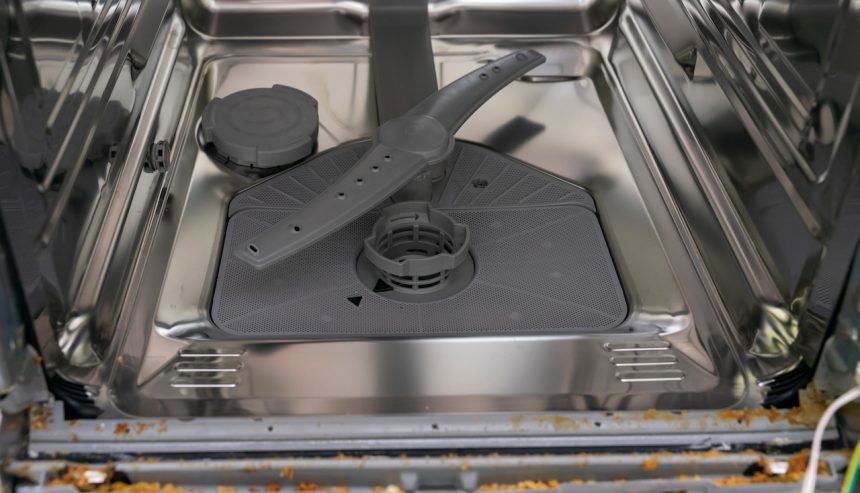
Most modern dishwashers (post-2010) have manual-clean filters rather than self-cleaning ones because they are quieter.
Where is the dishwasher filter located? You will typically find a cylindrical plastic part at the bottom of the tub. Most filters require a simple quarter-turn counterclockwise to unlock. Some models have a two-part system: a cylindrical upper filter and a flat lower “mesh” screen. Remove both to ensure a thorough clean.
Step 3: The Degreasing Soak
Water alone won’t cut through years of solidified oils. You need a chemical reaction to lift the grease buildup in dishwasher filter.
What is the best way to dissolve grease in a dishwasher filter? Fill your sink with hot, soapy water using a detergent that specifically mentions “grease-cutting” properties (like Dawn). Soak the filter for at least 15–20 minutes. For extreme cases, adding a cup of white vinegar to the soak can help break down the oily bonds.
Step 4: Precision Scrubbing
Once the grease is softened, it’s time for manual removal. The mesh on these filters is extremely fine, and even a small amount of residue can block water flow.
What tools should I use to clean a dishwasher filter? Never use a wire brush, as it can tear the delicate mesh. Instead, use an old toothbrush or a soft-bristled nylon brush. Scrub gently in a circular motion, paying close attention to the crevices where the plastic frame meets the mesh.
Step 5: Sanitizing the Filter Housing
A common mistake is putting a clean filter back into a dirty hole. The “sump” (the area where the filter sits) often hides its own collection of slime.
How do I clean the area under the dishwasher filter? Use a damp microfiber cloth dipped in hot soapy water to wipe out the housing. If there is standing water that looks “milky” or greasy, use a small sponge to soak it up and remove it before reinstalling your clean components.
Step 6: The High-Heat Recovery Cycle
After reinstalling the filter, you need to flush the internal lines where the grease buildup in dishwasher filter might still be lurking.
Can vinegar and baking soda help with dishwasher grease? Yes, but not at the same time! Place a bowl with one cup of white vinegar on the top rack and run a “Heavy” or “High Temp” cycle. The acid in the vinegar strips away remaining oils. If odors persist, sprinkle a cup of baking soda on the floor of the tub and run a second short, hot cycle.
Step 7: Proactive Monthly Maintenance
The best way to handle grease buildup in dishwasher filter is to never let it get out of control in the first place.
How often should I clean my dishwasher filter? If you don’t pre-rinse your dishes, you should clean the filter once a month. If you are a “pre-rinser,” you can likely go 3-6 months. However, in Burlington, WI, where hard water is prevalent, a monthly check is recommended to prevent mineral-grease bonding.
Frequently Asked Questions (FAQs)
Q: Why does my dishwasher smell like rotten eggs? A: This is usually caused by trapped food particles and grease buildup in dishwasher filter that has begun to rot. A deep clean and a vinegar cycle usually solve the issue.
Q: Is it better to scrape or rinse dishes before loading? A: Modern detergents actually need a little bit of food residue to work properly (the enzymes “latch” onto the proteins). You should scrape off large chunks but avoid a full pre-rinse; just be sure to clean your filter more often!
Q: Can grease buildup cause my dishwasher to leak? A: Yes. If the filter is severely clogged, water cannot drain fast enough. This can cause the tub to overfill or “suds lock,” leading to water leaking out of the door seals and onto your kitchen floor.
Conclusion
In summary, grease buildup in dishwasher filter is a primary cause of poor appliance performance and foul kitchen odors. By following the 7-step process of clearing, removing, soaking, scrubbing, wiping the housing, running a hot cycle, and maintaining a schedule, you can extend the life of your dishwasher. If you ever find that a dishwasher clog has led to a flood in your kitchen, don’t wait—professional help is necessary to prevent floor and cabinetry damage.
Trust PuroClean of Burlington for Kitchen Water Damage
Sometimes, a simple clog leads to a major headache. If grease buildup in dishwasher filter has caused a backup that flooded your kitchen, PuroClean of Burlington is here to help. We are the experts in Water Damage Restoration Services in WI, and we know how to dry out saturated cabinets and subfloors before mold takes hold. We serve Burlington, Lake Geneva, and surrounding areas with 24/7 emergency response.
PuroClean of Burlington 📞 Call Now: (262) 342-2226 🕒 Available 24/7 — Because disasters don’t wait.
🔗 Quick Links: Instagram | Google Reviews & Directions | Facebook