


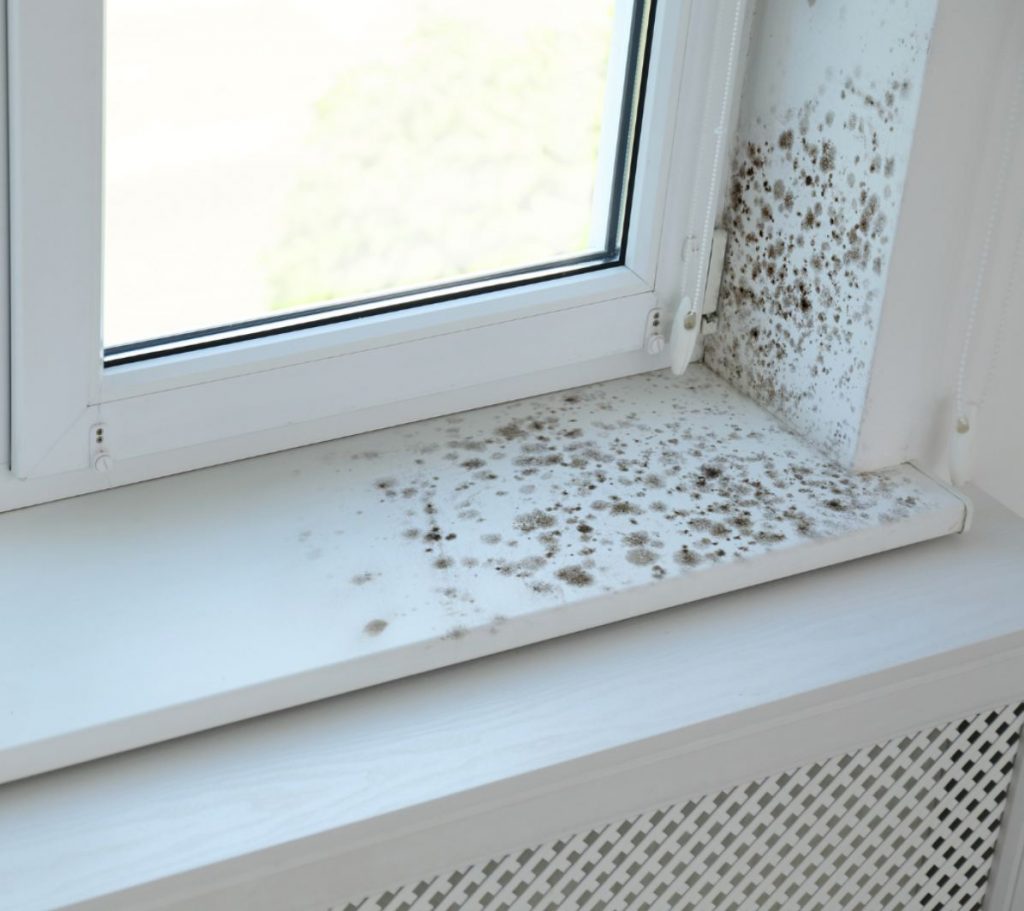
To test for mold in Burlington homes, DIY mold test kits provide basic yes/no results but cannot identify mold species, determine health risks, or locate hidden sources. Professional mold testing includes visual inspection, air sampling, surface sampling, moisture mapping with thermal imaging, species identification, spore concentration analysis, and detailed remediation recommendations. DIY testing works only for confirming visible mold before cleaning small areas under 10 square feet.
Professional testing is necessary when a mold smell exists without visible growth, testing for hidden mold after water damage, health symptoms suggest mold exposure, buying/selling Burlington homes, or insurance/legal documentation is needed. Burlington’s clay soil moisture and Lake Michigan humidity create chronic mold conditions where professional assessment identifies root causes DIY tests miss, preventing recurring mold problems.
You smell something musty in your Burlington basement. Or maybe you have seen dark spots in your bathroom. Or perhaps you just want peace of mind after that pipe leak last month.
The question everyone asks: “Should I buy a DIY mold test kit from the hardware store, or do I need to hire a professional?”
I have watched hundreds of Burlington homeowners wrestle with this decision, and here is what I have learned: the answer depends entirely on what you are trying to accomplish.
If you just want to confirm “yes, that is mold” on a visible spot before cleaning it yourself, a DIY kit might work.
But if you want to know whether your home has a mold problem, what species of mold you are dealing with, where it is coming from, whether it is dangerous, and how to fix it permanently, DIY testing will waste your money and time.
Let me break down exactly what DIY mold testing can and cannot do, what professional mold testing actually provides, what each costs, and how to decide which approach makes sense for your Burlington home.
Understanding What Mold Testing Actually Means
Before comparing DIY versus professional, understand that “mold testing” can mean several different things:
Types of Mold Testing
Visual inspection:
- Looking for visible mold growth
- Identifying moisture problems
- Finding conditions promoting mold
- No samples or lab work
Air sampling:
- Collecting air samples measuring airborne mold spores
- Compares indoor vs. outdoor spore levels
- Identifies mold species in the air
- Requires lab analysis
Surface sampling:
- Collecting samples from suspected mold growth
- Swab, tape lift, or bulk sample methods
- Identifies specific mold species
- Requires lab analysis
Moisture testing:
- Using meters to detect moisture in materials
- Thermal imaging showing hidden moisture
- Identifies conditions supporting mold growth
- No lab work required
The most effective mold assessment combines all these methods. DIY kits typically only do basic air or surface sampling. Professional testing does everything.
DIY Mold Test Kits: What They Actually Do
Let’s be honest about what you are getting with DIY mold test kits from hardware stores or Amazon.
Types of DIY Mold Test Kits
Petri dish kits :
- Expose the sterile dish to air or the surface
- Incubate for 48 hours
- Mold colonies grow on a dish
- You count colonies
Air pump kits :
- The battery-powered pump pulls air through the collection device
- More controlled than a petri dish
- Send to the lab for analysis
- Get species identification
Surface swab kits :
- Swab suspected mold spot
- Send the swab to the lab
- Get species identification
- Confirms whether surface growth is mold
Instant test strips :
- A chemical reaction indicates mold presence
- Results in minutes
- No species identification
- Least accurate method
What DIY Mold Tests Can Tell You
At best, DIY tests tell you:
✓ Whether mold spores are present (they always are—mold spores exist everywhere) ✓ Whether that specific spot you tested has mold ✓ What species of mold (if you pay for lab analysis)
That’s it. Nothing more.
What DIY Mold Tests CANNOT Tell You
✗ Where mold is actually growing (only tests one spot you selected) ✗ , how extensive the mold problem is ✗ , what is causing the mold (moisture source) ✗ , whether spore levels are dangerous (no baseline comparison) ✗ , whether remediation is necessary ✗ , and how to fix the problem ✗ . Hidden mold locations behind walls, in HVAC, under floors
The Fundamental Problem with DIY Mold Testing
Here is why DIY mold testing is nearly useless:
Mold spores are everywhere. Every home in Burlington has mold spores in the air. Testing “positive” for mold means nothing; the question is whether you have active mold growth and elevated spore levels indicating a problem.
You are testing blind. You are choosing where to test based on guesses. Professional testing uses systematic methods covering all potential problem areas.
No context for results. Without comparing indoor to outdoor spore levels, you cannot know if your results indicate a problem.
No expertise in interpreting results. Lab reports showing “Aspergillus detected” mean nothing without understanding whether that level is concerning.
When DIY Mold Testing Makes Sense
DIY testing is appropriate ONLY for:
✓ Confirming visible growth is mold before cleaning a small area (under 10 square feet) ✓ Satisfying curiosity about whether mold spores are present (they are) ✓ Practice/education understanding what mold looks like
Professional Mold Testing: What You Actually Get
Professional mold testing provides a comprehensive assessment impossible with DIY kits.
Professional Mold Testing Process
Step 1: Visual Inspection (30-60 minutes)
IICRC-certified inspector examines entire home:
✓ All rooms, closets, storage areas ✓ Attics and crawl spaces ✓ HVAC systems and ductwork ✓ Plumbing areas and bathrooms ✓ Foundation and basement ✓ Exterior drainage and grading
Looking for:
- Visible mold growth
- Water stains and moisture damage
- Condensation problems
- Ventilation inadequacies
- Structural moisture issues
Step 2: Moisture Mapping (15-30 minutes)
Professional equipment detects hidden moisture:
Moisture meters:
- Non-invasive sensors detect moisture in walls, floors, and ceilings
- Identify wet materials invisible to the eye
- Map the extent of moisture intrusion
Thermal imaging cameras:
- Show temperature differences indicating moisture
- Identify hidden leaks behind walls
- Locate areas where mold likely grows unseen
Hygrometers:
- Measure relative humidity in different areas
- Identify rooms with chronic humidity problems
Step 3: Air Sampling (30-45 minutes)
Professional air sampling provides meaningful data:
Outdoor control sample:
- Establishes baseline mold levels in your environment
- Essential for comparison
Indoor samples from multiple locations:
- Living areas
- Bedrooms
- Basement
- Problem areas identified during inspection
Measured factors:
- Total spore count (spores per cubic meter)
- Specific mold species present
- Comparison to outdoor levels
- Comparison to established health guidelines
Step 4: Surface Sampling (as needed)
Samples collected from suspected mold growth:
Tape lift samples:
- Clear tape pressed against the mold
- Preserves spore structure for identification
Swab samples:
- Direct sampling of mold growth
- Identifies specific species
Bulk samples:
- Pieces of contaminated material
- Most accurate species identification
Step 5: Lab Analysis (3-5 days)
Certified laboratories analyze samples:
✓ Species identification ✓ Spore concentration analysis ✓ Health risk assessment based on species ✓ Comparison to outdoor levels ✓ Comparison to industry standards
Step 6: Detailed Report
The professional report includes:
✓ Visual inspection findings with photos ✓ Moisture map showing problem areas ✓ Air sample results with interpretation ✓ Surface sample results with species ID ✓ Health risk assessment ✓ Moisture source identification ✓ Specific remediation recommendations ✓ Prevention strategies
Many mold remediation companies, including PuroClean of Burlington, provide free mold assessments if you proceed with remediation.
Call (262) 342-2226 for a free Burlington mold assessment.
DIY vs. Professional: Side-by-Side Comparison
| Factor | DIY Mold Test Kit | Professional Testing |
|---|---|---|
| Visual Inspection | You do it (no training) | IICRC-certified inspector |
| Moisture Detection | None | Thermal imaging, meters |
| Air Sampling | 1 location, no context | Multiple locations + outdoor baseline |
| Surface Sampling | 1 spot you chose | All suspected growth areas |
| Lab Analysis | Basic (if included) | Comprehensive species ID |
| Result Interpretation | You guess meaning | Expert analysis with context |
| Hidden Mold Detection | No | Yes (thermal imaging, meters) |
| Moisture Source ID | No | Yes |
| Health Risk Assessment | No | Yes |
| Remediation Plan | No | Detailed recommendations |
| Insurance/Legal Documentation | Not accepted | Court/insurance approved |
| Time to Results | 1-2 weeks | 3-5 days (faster when needed) |
| Accuracy | Low | High |
| Value for Money | Poor | Excellent |
When You NEED Professional Mold Testing in Burlington
Certain situations require professional testing—DIY is not just inadequate but potentially dangerous.
Scenario 1: You Smell Mold But Cannot Find It
The situation: A persistent musty smell in your Burlington home, but no visible mold.
Why professional testing is essential:
Mold smell means mold is growing somewhere—probably hidden:
- Behind drywall
- Under flooring
- In HVAC ductwork
- Inside wall cavities
- In the crawl space or attic
Thermal imaging and moisture meters locate hidden mold. DIY testing cannot find what you cannot see.
Learn more about identifying different mold odors in Burlington homes.
Scenario 2: After Water Damage or Flooding
The situation: Your Burlington basement flooded, burst pipe, roof leak, or appliance failure caused water damage.
Why professional testing is essential:
Water damage creates perfect mold conditions. Mold begins growing within 24-48 hours in Wisconsin’s humid climate.
Professional testing:
- Identifies whether drying was complete
- Detects mold growth before it becomes visible
- Locates hidden moisture in materials
- Prevents extensive remediation later
Understand why basement mold smell develops after water damage in Burlington.
Scenario 3: Health Symptoms Suggest Mold Exposure
The situation: Family members experiencing unexplained symptoms:
- Respiratory problems
- Persistent allergies
- Asthma attacks
- Chronic coughing
- Headaches
- Fatigue
Why professional testing is essential:
Health symptoms may indicate dangerous mold species or high spore concentrations.
Professional testing:
- Identifies specific mold species
- Assesses health risk levels
- Provides documentation for medical professionals
- Ensures complete remediation, protecting health
DIY testing cannot determine health risks.
Scenario 4: Buying or Selling a Burlington Home
The situation: Pre-purchase inspection or home sale.
Why professional testing is essential:
Real estate transactions require:
- Legally defensible documentation
- Comprehensive assessment of the entire property
- Professional liability coverage
- The insurance company accepted the reports
DIY tests are not accepted by insurance, courts, or real estate transactions.
Scenario 5: Mold Covers More Than 10 Square Feet
The situation: Visible mold growth larger than 10 square feet.
Why professional testing is essential:
EPA guidelines recommend professional remediation for mold exceeding 10 square feet.
Professional testing before remediation:
- Identifies all affected areas (visible and hidden)
- Determines mold species (some require specialized protocols)
- Maps the extent of contamination
- Ensures complete remediation
- Provides post-remediation verification
Scenario 6: Previous Mold Remediation Failed
The situation: Mold was cleaned or remediated, but returned.
Why professional testing is essential:
Recurring mold means the moisture source was not addressed.
Professional testing:
- Identifies why previous remediation failed
- Locates moisture sources, DIY/cheap remediation missed
- Ensures this time is the last
Scenario 7: Burlington-Specific Mold Concerns
The situation: Burlington homes face unique mold challenges:
Clay soil moisture:
- Chronic foundation moisture from poor-draining clay
- Hydrostatic pressure forces water through the foundations
- Basement moisture year-round
Lake Michigan humidity:
- Summer humidity 70-90%
- Condensation on windows and walls
- HVAC systems unable to control humidity
Older housing stock:
- Many Burlington homes were built 1950-1980
- No vapor barriers
- Inadequate ventilation
- Foundation deterioration
Why professional testing is essential:
Burlington’s conditions create chronic mold environments requiring a comprehensive assessment, identifying all moisture sources.
DIY testing misses the complexity of Burlington mold problems.
How to Choose Professional Mold Testing in Burlington
Not all mold inspectors are equal. Here is what to look for:
Required Qualifications
✓ IICRC-certified (Institute of Inspection, Cleaning and Restoration Certification) ✓ Wisconsin licensed (if required for specific services) ✓ Liability insurance protecting you from errors ✓ Independent testing (not trying to sell you remediation) ✓ Certified laboratory partnerships for sample analysis
Red Flags to Avoid
✗ Offers testing + remediation (conflict of interest) ✗ . Pushes testing before visual inspection ✗ . Guarantees finding mold before testing ✗ . Prices significantly below market (for “complete testing”) ✗ . No written report provided ✗ . Uses only DIY-level test kits
Questions to Ask
Before hiring a Burlington mold inspector:
- “What certifications do you hold?”
- “What equipment do you use?” (should include moisture meters, thermal imaging)
- “How many samples will you collect?”
- “Which lab analyzes samples?”
- “What does your report include?”
- “Do you provide remediation recommendations?”
- “Can I see a sample report?”
- “What is your fee structure?”
PuroClean of Burlington Mold Testing
We provide:
✓ Free initial mold assessments ✓ IICRC-certified inspectors ✓ Thermal imaging and moisture mapping ✓ Professional air and surface sampling ✓ Certified laboratory analysis ✓ Comprehensive written reports ✓ Remediation recommendations (independent assessment) ✓ Post-remediation verification testing
Call (262) 342-2226 for a free Burlington mold assessment.
The Bottom Line: Is DIY Mold Testing Worth It?
For 95% of homeowners: No.
DIY mold testing makes sense only if:
- You have small visible mold (under 10 sq ft)
- You want to confirm it is mold before DIY cleaning
- You have $20 to waste satisfying curiosity
- You understand results will be meaningless
Professional mold testing is necessary if:
- You smell mold, but cannot find the source
- You experienced water damage
- Health symptoms suggest mold exposure
- Buying or selling a home
- Mold exceeds 10 square feet
- Previous remediation failed
- You want to actually fix the problem
What to Do Right Now About Mold in Your Burlington Home
If you suspect mold in your Burlington home:
Step 1: Visual inspection yourself (free)
- Look for visible mold in bathrooms, basements, and around windows
- Smell for musty odors
- Check for moisture problems
Step 2: Call for a free professional assessment
- PuroClean of Burlington: (262) 342-2226
- Free visual inspection
- Honest assessment of whether testing is needed
- No obligation estimate if remediation is required
Step 3: Professional testing is recommended
- Comprehensive inspection and sampling
- Lab analysis and detailed report
- Remediation recommendations
Step 4: Proper remediation
- Address moisture sources
- Professional mold removal
- Prevention strategies
- Post-remediation verification
Skip the DIY test kit. Start with professionals who can actually help.
Get a Free Mold Assessment in Burlington
Stop wasting money on DIY mold test kits that provide useless information. Get real answers from professionals who can actually solve mold problems.
PuroClean of Burlington provides:
- Free mold assessments for Burlington homeowners
- IICRC-certified mold inspectors
- Professional testing when necessary
- Complete mold removal services
- Moisture source identification and correction
- Post-remediation verification
- Prevention planning
Serving Burlington and all surrounding Walworth County communities.
Suspect Mold in Your Burlington Home? Get Free Professional Assessment.
PuroClean of Burlington: IICRC-Certified Mold Testing
(262) 342-2226
Free Assessments | Professional Testing | Honest Recommendations
Stop Guessing. Get Answers from Experts.
Summary: How to Test for Mold in Burlington Homes
DIY mold test kits provide limited yes/no results about mold presence, but cannot identify species, determine health risks, locate hidden mold, or provide remediation guidance. Professional mold testing includes comprehensive visual inspection, thermal imaging, moisture mapping, air and surface sampling from multiple locations, certified laboratory analysis, health risk assessment, and detailed remediation recommendations.
DIY testing is appropriate only for confirming small visible mold before DIY cleaning. Professional testing is necessary when a mold smell exists without a visible source, after water damage, when health symptoms suggest exposure, for real estate transactions, when mold exceeds 10 square feet, or when previous remediation failed.
Burlington’s clay soil, creating chronic foundation moisture, Lake Michigan humidity promoting condensation, and older housing stock lacking proper vapor barriers, create complex mold conditions requiring professional assessment, identifying all moisture sources and contamination.
For a free mold assessment in your Burlington home, call PuroClean of Burlington at (262) 342-2226. Professional testing provides real answers DIY kits cannot, ultimately saving money by ensuring proper remediation the first time.
PuroClean of Burlington 📞 Call Now: (262) 342-2226 🕒 Available 24/7 — Because disasters don’t wait.
🔗 Quick Links: Instagram | Google Reviews & Directions | Facebook | Pinterest