


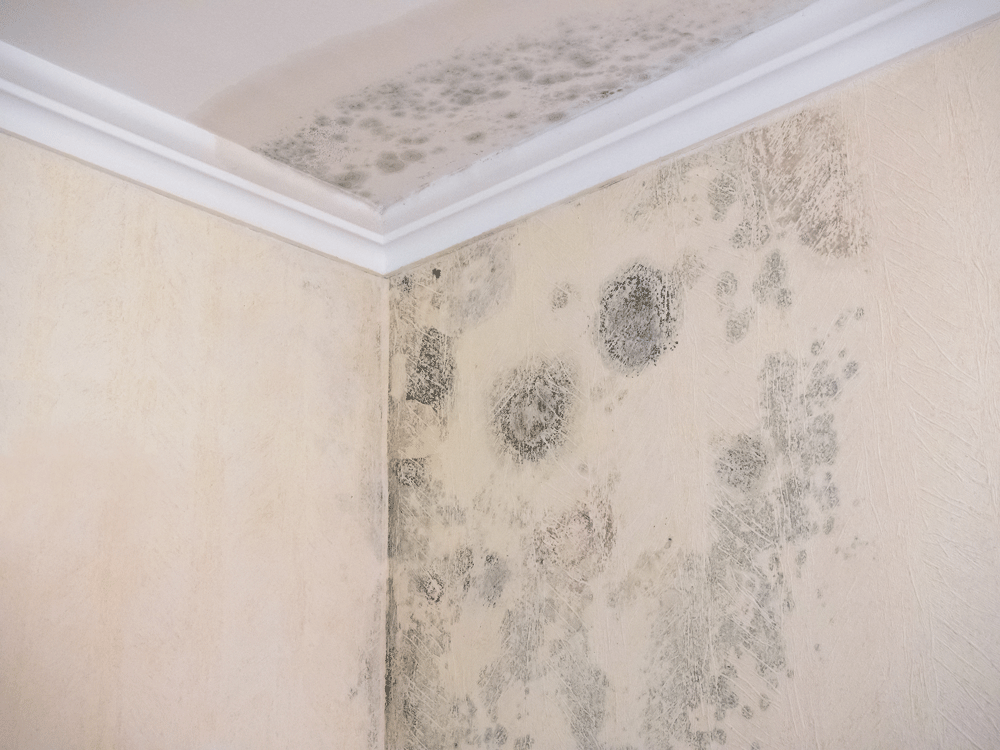
QUICK ANSWER: Living in a House with Mold During Remediation
Living in a house with mold during remediation depends on seven critical factors: (1) contamination extent, with small isolated areas allowing occupancy while extensive growth requires evacuation; (2) mold species, as toxic types like Stachybotrys mandate temporary relocation; (3) containment quality, where professional barriers prevent spore spread to occupied areas; (4) HVAC involvement, requiring full evacuation if contamination exists in air handling systems; (5) vulnerable occupants, including children, the elderly, or immunocompromised individuals needing protection; (6) remediation scope, with minor work allowing occupancy versus major projects requiring departure; and (7) professional recommendations from certified specialists assessing specific situations, protecting families throughout Burlington, Kenosha, Racine, Milwaukee, and southeastern Wisconsin communities.
Mold contamination has been discovered in your Wisconsin or Illinois home. Professional remediation must begin immediately.
But can you stay in your house while the work happens? Or must you temporarily relocate?
For professional mold assessment and certified remediation serving all of southeastern Wisconsin, including Kenosha County, Racine County, Walworth County, Milwaukee County, and Waukesha County, and northern Illinois, including Lake County, call PuroClean of Burlington at (262) 342-2226 for expert guidance on safe living arrangements during mold removal.
I have managed countless mold remediation projects throughout Burlington, Lake Geneva, Kenosha, Racine, Milwaukee, Antioch, Gurnee, and surrounding communities. The question of whether families can safely remain living in a house with mold during remediation has no universal answer. Instead, seven critical factors determine appropriate arrangements protecting health while minimizing disruption.
This comprehensive guide reveals those seven factors when evacuation becomes necessary and how professional mold removal services protect occupants through proper protocols, ensuring safe remediation regardless of living arrangements.
Understanding safety requirements for living in a house with mold during remediation enables informed decisions, protecting family well-being while restoring property health.
Factor 1: Mold Contamination Extent and Severity
Does contamination size determine if you can stay home?
Answer: Contamination extent critically affects whether living in a house with mold during remediation proves safe, with small isolated areas under 10 square feet in single rooms typically allowing occupancy in other areas through proper containment, while extensive multi-room contamination or whole-house involvement generally requires temporary relocation, preventing dangerous exposure, with professional assessment determining specific safety arrangements protecting occupants throughout remediation processes.
Size and scope directly impact safety decisions.
Small localized contamination:
According to the Environmental Protection Agency, mold areas under 10 square feet (roughly 3×3 feet) can sometimes be addressed while occupants remain in unaffected areas. This assumes proper containment, isolating work zones from living spaces.
Small bathroom mold, isolated basement patches, or single-room contamination might allow continued occupancy when professional containment prevents cross-contamination of occupied areas throughout Burlington, Racine, or Kenosha properties.
Extensive multi-room growth:
When mold affects multiple rooms, entire floors, or extensive areas throughout properties, living in a house with mold during remediation becomes unsafe. The scope of work creates prolonged exposure risks even with excellent containment.
Properties in Pleasant Prairie, Somers, Mount Pleasant, Caledonia, or surrounding communities with extensive contamination typically require temporary relocation during professional remediation, protecting family health.
Hidden versus visible mold:
Visible mold represents only partial contamination. Hidden growth behind walls, under flooring, or in ceilings often exceeds visible areas. Professional inspection determines the total extent, guiding occupancy decisions.
Extensive hidden mold discovered during remediation might necessitate evacuation even when initial visible growth seemed limited, warranting flexible relocation plans.
Vulnerable populations:
Even with small contamination, vulnerable individuals, including children, the elderly, pregnant women, or immunocompromised family members, may require relocation regardless of the extent of mold. Their heightened sensitivity makes any exposure risky.
Families throughout West Allis, Wauwatosa, Oak Creek, Franklin, or nearby areas with vulnerable members should prioritize temporary relocation, even for minor remediation, protecting those at greatest health risk.
Contamination extent provides the foundation for determining whether living in a house with mold during remediation proves feasible or necessitates temporary departure.
Factor 2: Mold Species and Toxicity Levels
Do certain mold types require evacuation?
Answer: Toxic mold species, including Stachybotrys (black mold), producing dangerous mycotoxins typically require complete evacuation during remediation regardless of contamination extent, while less toxic species like Cladosporium or Penicillium may allow occupancy in unaffected areas with proper containment, making professional species identification through laboratory testing essential for determining appropriate safety measures protecting families from serious health risks.
Some mold types prove too dangerous for cohabitation.
Stachybotrys (toxic black mold):
Stachybotrys produces trichothecene mycotoxins, causing severe health effects, including respiratory distress, neurological symptoms, and immune suppression. Living in a house with mold during Stachybotrys remediation creates unacceptable health risks.
Properties in Lake Geneva, Elkhorn, Delavan, Whitewater, or surrounding Walworth County communities with confirmed Stachybotrys require complete evacuation during professional removal, protecting occupants from dangerous exposure.
Aspergillus concerns:
Some Aspergillus species produce aflatoxins, among the most carcinogenic substances known. While not all Aspergillus proves toxic, professional testing determines species-specific risks, guiding occupancy decisions.
Aspergillus contamination throughout Milwaukee, Waukesha, Brookfield, New Berlin, or nearby properties warrants professional assessment to determine whether evacuation becomes necessary based on specific species identification.
Common, less toxic species:
Cladosporium, Penicillium, and Alternaria create allergic reactions and respiratory symptoms but generally produce less dangerous mycotoxins. With proper containment, occupants might safely remain in unaffected areas during remediation.
However, sensitive individuals still face risks from these “less toxic” species, potentially requiring temporary relocation despite lower general danger levels.
Professional testing importance:
Visual identification cannot determine mold toxicity. Laboratory testing of samples provides definitive species identification and toxicity assessment, guiding appropriate safety protocols.
Professional mold inspection services include sampling and testing, ensuring accurate identification and protecting families through appropriate recommendations for living in a house with mold during remediation.
Species identification proves critical in determining whether continued occupancy proves safe or evacuation becomes necessary to protect health.
Factor 3: Containment Effectiveness and Professional Protocols
Can proper containment allow safe occupancy?
Answer: Professional containment using sealed plastic barriers, negative air pressure systems, and HEPA filtration can enable living in a house with mold during remediation by preventing spore spread from work areas to occupied spaces, though effectiveness depends on proper installation, continuous monitoring, and containment integrity throughout projects, with certified IICRC professionals implementing protocols meeting industry standards protecting occupants when remaining in homes proves necessary.
Containment quality determines cohabitation safety.
Professional containment components:
Sealed plastic barriers create complete isolation between work and living areas. Negative air pressure systems ensure airflow from occupied spaces toward contaminated areas, preventing spore escape. HEPA air scrubbers capture airborne particles. Sealed doorways with zipper entries controlling access.
These professional containment measures, when properly implemented, can protect occupants, allowing continued residence during remediation throughout Muskego, Menomonee Falls, Oconomowoc, or surrounding communities.
Continuous monitoring requirements:
Containment requires constant monitoring, ensuring integrity throughout projects. Any barrier breaches, pressure failures, or system malfunctions compromise protection, requiring immediate correction or occupant evacuation.
Professional mold remediation companies maintain technicians monitoring containment, ensuring continuous protection when families remain living in a house with mold during active work.
HVAC system isolation:
Forced air systems must be shut down in containment areas, preventing air movement that could transport spores. This creates temperature control challenges, making some seasons more difficult for continued occupancy.
Winter heating or summer cooling limitations might necessitate evacuation even when containment proves otherwise adequate, protecting comfort alongside safety.
Residential versus commercial containment:
Commercial containment in large buildings more easily isolates work areas. Residential containment in smaller homes provides less separation, making protection more challenging.
Single-family homes throughout Antioch, Gurnee, Grayslake, Waukegan, and Lake County, IL, often present containment difficulties, making evacuation more frequently necessary than in larger commercial spaces.
Professional containment enables safe occupancy in many situations, though limitations exist requiring flexibility and professional guidance to determine appropriateness.
Factor 4: HVAC System Contamination and Air Quality
Does mold in ductwork require evacuation?
Answer: Mold contamination in HVAC systems, including ductwork, air handlers, or cooling coils, typically requires complete evacuation during remediation because forced air distribution spreads spores throughout the entire property, creating dangerous exposure in all areas, regardless of containment, with professional HVAC mold removal requiring system shutdown and comprehensive decontamination, making living in a house with mold impossible until completion and protecting families from whole-home contamination.
HVAC mold creates unique evacuation requirements.
Whole-home contamination risk:
HVAC systems circulate air throughout properties. Mold in ductwork gets blown into every room, creating exposure in all living spaces. Containment cannot protect against systemwide distribution.
Properties throughout Janesville, Beloit, Madison, or Dane County with HVAC mold require evacuation during professional cleaning, preventing dangerous, widespread exposure.
System shutdown necessity:
HVAC mold removal requires a complete system shutdown, preventing continued spore distribution. However, a shutdown eliminates heating and cooling, making properties uncomfortable or uninhabitable depending on the season.
Winter HVAC shutdown in Wisconsin or summer shutdown without air conditioning creates conditions potentially requiring evacuation, even beyond mold exposure concerns.
Extended remediation timelines:
HVAC system mold removal proves time-intensive, requiring comprehensive ductwork cleaning, air handler decontamination, and coil treatment. Extended timelines make temporary relocation more practical than enduring a prolonged system shutdown.
Properties in Jefferson County communities like Fort Atkinson, Watertown, Lake Mills, or Whitewater with HVAC contamination typically require several days of evacuation during professional remediation.
Post-remediation verification:
After HVAC cleaning, verification testing ensures complete decontamination before system restart and occupant return. This additional time extends evacuation periods, protecting health through confirmed elimination.
HVAC system mold represents the most common situation absolutely requiring evacuation, making living in a house with mold during remediation impossible until completion.
Factor 5: Vulnerable Occupant Health Conditions
Should certain people always evacuate during mold work?
Answer: Vulnerable populations, including infants, young children, elderly individuals, pregnant women, people with asthma or allergies, immunocompromised individuals, and those with respiratory conditions, should evacuate during mold remediation regardless of contamination extent or containment quality, as their heightened sensitivity creates serious health risks from even minimal exposure, making temporary relocation essential to protect those most susceptible to mold health impacts.
Some individuals cannot safely remain during any mold work.
Children and infant vulnerability:
Developing immune and respiratory systems make children particularly susceptible to mold’s health effects. Even low exposure levels can trigger serious reactions or create long-term sensitization.
Families in Kenosha, Pleasant Prairie, Bristol, Twin Lakes, or surrounding Kenosha County with young children should prioritize temporary relocation during any mold remediation, protecting developmental health.
Elderly health risks:
Weakened immune systems and existing health conditions make elderly individuals vulnerable to mold exposure. Respiratory complications prove particularly dangerous for this population.
Senior occupants in Racine, Burlington, Sturtevant, Union Grove, or Racine County properties should evacuate during mold work to prevent health complications in vulnerable elderly family members.
Immunocompromised individuals:
Cancer patients, organ transplant recipients, HIV/AIDS patients, or individuals with autoimmune disorders face life-threatening risks from mold exposure. Fungal infections prove extremely dangerous for immunocompromised individuals.
Any household member with compromised immunity must evacuate during mold remediation, regardless of project scope or containment quality, protecting against life-threatening health risks.
Asthma and respiratory conditions:
Mold triggers severe asthma attacks and respiratory distress in sensitive individuals. Living in a house with mold during remediation creates continuous trigger exposure, worsening chronic conditions.
Occupants with respiratory conditions throughout Milwaukee County, Waukesha County, or surrounding areas should relocate during mold work to prevent dangerous symptom exacerbation.
Pregnancy considerations:
Pregnant women should avoid mold exposure, protecting developing babies from potential developmental impacts. Temporary relocation during remediation proves the safest approach.
Vulnerable population presence typically mandates evacuation regardless of other factors, making family composition crucial in occupancy decisions during mold work.
Factor 6: Remediation Scope, Timeline, and Disruption
Does project duration determine relocation needs?
Answer: Extended remediation timelines exceeding several days generally necessitate temporary relocation, as prolonged disruption, continuous noise, restricted access to areas, and sustained containment prove impractical for normal living, while brief single-day projects might allow occupancy in distant areas, with professional timeline estimates helping families plan appropriate temporary housing protecting comfort and normalcy during mold removal processes.
Duration and disruption levels affect livability.
Minor versus major projects:
Single-room mold removal, completed within one day, might allow occupancy in other areas. However, multi-room remediation extending over days or weeks creates living conditions incompatible with normal family life.
Extensive projects throughout properties in Pewaukee, Hartland, Sussex, Mukwonago, or Waukesha County typically require evacuation due to scope and duration rather than safety alone.
Access restrictions:
Remediation requires extensive access, restricting occupant movement. Sealed containment areas block hallways, bathrooms, or other essential spaces, making properties difficult to inhabit.
These access challenges often prove deciding factors, making living in a house with mold during remediation impractical, even when technically safe from an exposure perspective.
Noise and activity levels:
Mold removal involves loud equipment, including air scrubbers, dehumidifiers, and demolition tools. Continuous noise proves incompatible with sleep, work-from-home, or normal daily activities.
Families throughout Rockford, Loves Park, Belvidere, and Winnebago County, IL, find noise disruption alone often necessitates temporary relocation during professional remediation.
Sequential versus simultaneous work:
Some remediation proceeds in phases, allowing temporary occupancy between stages. However, most professional work proceeds continuously, maintaining containment and momentum, making departure more practical.
Temporary housing coordination:
Extended projects require coordinating temporary housing through hotels, family stays, or short-term rentals. Professional remediation companies provide timeline estimates enabling appropriate planning.
PuroClean of Burlington works with families throughout all service areas, coordinating timelines with temporary housing arrangements and minimizing disruption during necessary remediation.
Project scope and duration often determine whether living in a house with mold during remediation proves practical, regardless of technical safety considerations.
Factor 7: Professional Assessment and Recommendations
Should you trust professional occupancy recommendations?
Answer: Certified mold remediation professionals provide essential occupancy recommendations based on contamination assessment, species identification, vulnerable occupant presence, containment capabilities, and project scope, with IICRC-certified specialists trained in health protection protocols offering expert guidance determining whether living in a house with mold during remediation is safe or evacuation becomes necessary, making professional consultation essential to protect family health through appropriate decisions.
Expert assessment guides safe decisions.
IICRC certification importance:
The Institute of Inspection, Cleaning, and Restoration Certification establishes industry standards for mold remediation. IICRC-certified professionals receive training in health protection, containment, and occupant safety.
Certified specialists throughout southeastern Wisconsin and northern Illinois provide reliable recommendations based on professional standards rather than convenience or preference.
Comprehensive assessment factors:
Professional assessment considers all seven factors discussed: contamination extent, species toxicity, containment feasibility, HVAC involvement, vulnerable occupants, project scope, and specific property conditions.
This comprehensive evaluation provides individualized recommendations rather than generic advice, recognizing each situation’s unique circumstances.
Legal and liability considerations:
Professional companies assume liability for occupant safety recommendations. This motivates conservative approaches prioritizing health over convenience, ensuring appropriate protection.
Recommendations to evacuate reflect serious concerns warranting family compliance, protecting health even when inconvenient or expensive.
Insurance coordination:
Professional assessments provide documentation supporting insurance claims for temporary living expenses during necessary evacuation. This documentation proves essential for reimbursement.
Companies like PuroClean of Burlington work with insurance carriers throughout all service areas, ensuring proper documentation supporting coverage for relocation when required.
Ongoing situation monitoring:
Professionals monitor situations throughout remediation, adjusting recommendations if conditions change. Unexpected contamination discovery or containment challenges might necessitate evacuation even when initially deemed unnecessary.
Trusting professional guidance and remaining flexible ensures appropriate protection, adapting to evolving circumstances during mold remediation processes.
Professional recommendations from certified specialists provide essential guidance in determining whether living in a house with mold during remediation proves safe, protecting families through expert assessment.
Frequently Asked Questions: Living in a House with Mold
How long can you safely live in a house with mold?
The duration of safe living in a house with mold depends on the extent of mold, species toxicity, and occupant health. A small isolated mold might allow months of safe occupancy, while extensive toxic mold requires immediate evacuation. However, any mold presence warrants prompt professional removal rather than extended cohabitation. Health symptoms, including respiratory problems, allergic reactions, or chronic illness, indicate unsafe exposure requiring immediate departure and professional remediation. Call PuroClean of Burlington at (262) 342-2226 for immediate assessment, determining the safety timeline for your specific situation.
What are the signs that mold exposure is making you sick?
Mold exposure symptoms include persistent coughing, wheezing, nasal congestion, throat irritation, skin rashes, eye irritation, headaches, fatigue, and difficulty concentrating. Symptoms worsening at home and improving when away strongly suggest mold exposure. Vulnerable individuals experience more severe reactions, including asthma attacks or respiratory distress. Any health symptoms accompanying living in a house with mold require medical evaluation and immediate professional mold removal, protecting health through complete contamination elimination. Prolonged exposure creates sensitization, causing permanent mold allergies, affecting long-term quality of life.
Can sleeping in a house with mold kill you?
While rare, severe mold exposure can prove fatal in immunocompromised individuals through fungal infections or toxic shock from mycotoxin exposure. Most healthy individuals will not die from residential mold exposure, though serious health complications, including permanent respiratory damage, chronic illness, and severely diminished quality of life, can result. Toxic mold species like Stachybotrys create the greatest risks. Any situation involving living in a house with mold requires immediate professional assessment and removal, preventing escalating health impacts that, while rarely fatal, prove seriously debilitating.
Does insurance cover temporary housing during mold removal?
Homeowners insurance coverage for temporary housing during mold remediation varies by policy and the cause of the mold. Mold from covered sudden water damage, like burst pipes, typically includes additional living expenses coverage. However, mold from gradual issues or maintenance neglect often faces exclusions. Professional documentation from certified remediation companies supports insurance claims. Contact your insurance agent to discuss specific coverage before remediation begins. PuroClean Burlington works with insurance carriers, providing necessary documentation and maximizing coverage for temporary relocation when living in a house with mold during remediation proves unsafe.
How do you know when mold remediation is complete?
Mold remediation completion requires professional verification, including visual inspection confirming no visible mold; moisture readings showing dry conditions; air quality testing demonstrating acceptable spore levels; and clearance documentation from independent inspectors. Occupants should not return to living in a house with mold until professional clearance confirms safe conditions. Post-remediation verification typically requires 24-48 hours after work completion, allowing air quality stabilization. Certified companies provide detailed completion reports documenting elimination, protecting health, and supporting insurance claims.
Can air purifiers protect you from mold during remediation?
Air purifiers with HEPA filters help reduce airborne mold spores but cannot eliminate exposure risks from living in a house with mold during remediation. While beneficial for general air quality, purifiers cannot substitute for proper containment or evacuation when necessary. Relying on air purifiers instead of professional recommendations creates false security, risking health through inadequate protection. Air purifiers supplement but never replace appropriate containment, evacuation, or professional removal, ensuring complete, safe mold elimination. Professional guidance determines necessary protection measures beyond simple air filtration.
What should you pack when evacuating for mold remediation?
When temporarily relocating during mold remediation, pack essential clothing, medications, important documents, electronics, valuables, pet supplies, and comfort items for the anticipated duration. Leave contaminated items behind for professional cleaning or disposal. Avoid transporting mold-exposed belongings to temporary housing, preventing the spread of contamination. Pack more than needed, as remediation timelines sometimes extend beyond initial estimates. Coordinate with professional remediation companies regarding access to retrieve additional items if necessary. Proper packing prevents recontamination of clean temporary housing during the period away from living in a house with mold undergoing professional remediation.
Professional Mold Remediation Throughout Southeastern Wisconsin & Northern Illinois
When living in a house with mold requires professional remediation, certified specialists ensure safe and complete elimination, protecting your family.
PuroClean of Burlington provides comprehensive mold services, including:
✓ Professional safety assessment determining occupancy feasibility ✓ Complete mold inspection identifying all contamination ✓ Laboratory Species Testing confirming toxicity levels ✓ Proper Containment Installation isolating work areas ✓ IICRC-certified remediation following industry standards ✓ HEPA air filtration protecting air quality ✓ Post-remediation verification confirming safe completion ✓ Insurance Documentation supporting coverage claims
Serving all of southeastern Wisconsin and northern Illinois, including the following:
Wisconsin: Kenosha County (Kenosha, Pleasant Prairie, Bristol, Somers, Twin Lakes, Salem Lakes), Racine County (Racine, Burlington, Caledonia, Mount Pleasant, Sturtevant, Union Grove, Waterford), Walworth County (Lake Geneva, Elkhorn, Delavan, Whitewater, East Troy, Williams Bay), Milwaukee County (Milwaukee, West Allis, Wauwatosa, Oak Creek, Franklin, Greenfield), Waukesha County (Waukesha, Brookfield, New Berlin, Muskego, Menomonee Falls, Oconomowoc, Pewaukee), Ozaukee County (Mequon, Cedarburg, Port Washington, Grafton), Washington County (West Bend, Hartford, Germantown), Rock County (Janesville, Beloit, Edgerton), Dane County (Madison, Middleton, Fitchburg, Sun Prairie), Jefferson County (Fort Atkinson, Watertown, Lake Mills)
Illinois: Lake County (Antioch, Gurnee, Grayslake, Waukegan, Libertyville, Mundelein, Vernon Hills), McHenry County (Crystal Lake, Algonquin, Cary, McHenry, Woodstock), Boone County (Belvidere, Poplar Grove), Winnebago County (Rockford, Loves Park, Machesney Park)
Why choose our services:
🏠 Health-First Approach prioritizing occupant safety 🏠 IICRC Certified mold remediation specialists 🏠 Transparent Communication about Occupancy Recommendations 🏠 Flexible scheduling accommodating relocation needs 🏠 Complete solutions from assessment through verification 🏠 Insurance Coordination: Maximizing Coverage
Need Professional Guidance on Living Arrangements During Mold Removal?
PuroClean of Burlington: Certified Mold Safety Specialists
☎️ CALL: (262) 342-2226
Expert Assessment | Safe Remediation | Health Protection
Serving All of Southeastern Wisconsin & Northern Illinois
Summary: Living in a House with Mold During Remediation
Living in a house with mold during remediation depends on seven critical factors: contamination extent determining project scope; mold species toxicity requiring evacuation for dangerous types; professional containment effectiveness isolating work areas; HVAC system involvement creating whole-home exposure; vulnerable occupant health conditions mandating protection; remediation timeline and disruption affecting livability; and professional recommendations from certified specialists.
Small isolated contamination with proper containment might allow occupancy in unaffected areas. However, extensive growth, toxic species, HVAC contamination, vulnerable family members, or extended timelines typically require temporary relocation to protect health during professional remediation.
Professional assessment from IICRC-certified specialists provides essential guidance in determining safe arrangements for specific situations. PuroClean of Burlington serves all southeastern Wisconsin and northern Illinois communities, providing expert mold removal and protecting families through appropriate safety protocols.
When living in a house with mold that requires professional remediation, call PuroClean of Burlington at (262) 342-2226 for a certified assessment and safe complete elimination, protecting your family’s health throughout remediation processes.
PuroClean of Burlington 📞 Call Now: (262) 342-2226 🕒 Available 24/7 — Because disasters don’t wait.
🔗 Quick Links: Instagram | Google Reviews & Directions | Facebook | Pinterest