


Table of Contents
Shower door mold isn’t just a cleaning nuisance — it’s a persistent problem that can impact your bathroom’s appearance, air quality, and even your health. The humid conditions inside a shower make it the perfect environment for mold to thrive, especially on glass doors, metal frames, and rubber seals.
If you’re wondering how to remove shower door mold and prevent it from coming back, this guide will walk you through expert cleaning tips, long-term prevention strategies, and when to call professionals like PuroClean of Burlington for safe, lasting results.
Understanding the Basics of Shower Door Mold
What Causes Shower Door Mold?
Mold thrives anywhere moisture, warmth, and organic residue (like soap scum) combine. Bathrooms — particularly shower doors — meet all three conditions. Common causes of mold on shower doors include:
- High humidity: Without proper ventilation, moisture lingers after showers.
- Standing water: Droplets left on the glass or frame feed mold spores.
- Poor cleaning habits: Soap buildup and body oils provide nutrients for mold growth.
- Leaky seals or fixtures: Constant dampness behind caulking or in door tracks promotes hidden mold.
In Burlington’s humid summers and cold winters, condensation buildup can worsen the problem, making consistent maintenance crucial for local homeowners.
Why Shower Door Mold Shouldn’t Be Ignored
Many homeowners underestimate the risks of shower mold, assuming it’s only a cosmetic issue. However, leaving mold untreated can lead to:
- Health problems: Mold spores can aggravate allergies, asthma, or respiratory issues.
- Unpleasant odors: A musty smell often lingers even after routine cleaning.
- Damage to fixtures: Mold eats away at metal frames, caulking, and grout.
- Reduced property value: Persistent mold problems can raise concerns during inspections or sales.
According to the Centers for Disease Control and Prevention (CDC), mold exposure can cause eye irritation, coughing, or skin reactions. That’s why early action — and proper cleanup — is essential.
Effective Cleaning Solutions for Mold and Mildew Removal
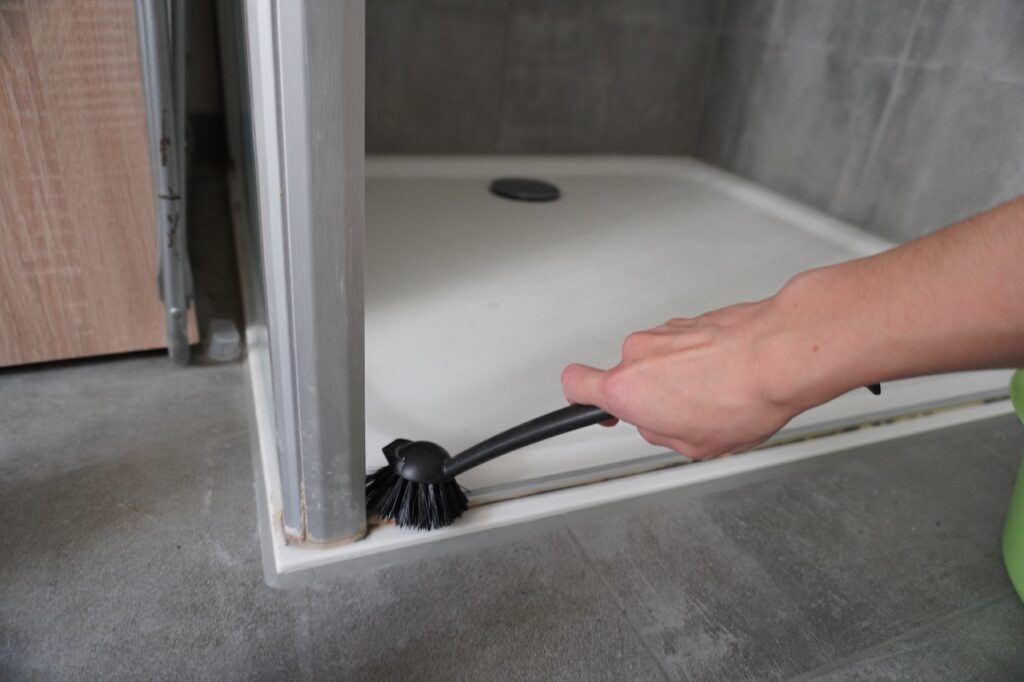
You can clean mold off your shower doors with just a few cleaning materials you may already have at home.
Removing shower door mold effectively requires the right combination of cleaning products, technique, and consistency. Below are proven methods used by both homeowners and professional cleaning experts.
1. Start With a Thorough Inspection
Look closely at the glass, tracks, and frame edges. Mold often hides in:
- The bottom seal of the shower door
- Metal tracks where water pools
- Corners and edges near caulking
If you spot dark or pinkish stains that don’t wash off easily, you’re likely dealing with mold, not just soap scum.
2. Use a Vinegar and Baking Soda Solution
White vinegar is a natural antifungal that kills mold spores on contact. Mix equal parts vinegar and water in a spray bottle, apply to the affected area, and let it sit for 30 minutes. Then, scrub gently with a sponge and rinse.
For tougher stains, sprinkle baking soda on the mold before spraying vinegar. The fizzing reaction helps lift grime and loosen buildup from glass and metal surfaces.
3. Try Lemon Juice or Hydrogen Peroxide for Light Mold
Lemon juice and hydrogen peroxide are mild natural cleaners that work well for small patches of shower door mold on glass. Spray the affected area, let it sit for about 10 minutes, then rinse and wipe clean with a soft cloth.
These natural options are ideal for households that prefer gentle, chemical-free cleaning. Lemon juice helps dissolve light buildup while leaving a fresh scent, and hydrogen peroxide’s natural disinfecting power helps prevent mold from returning.
4. Use Commercial Mold Cleaners for Stubborn Growth
If natural cleaners don’t remove all the mold on shower doors, it’s time to use a stronger, mold-specific bathroom cleaner. Choose a non-toxic, bleach-free product formulated for glass and tile to avoid damaging metal frames or caulking.
Apply the cleaner evenly, allow it to sit for a few minutes, and scrub gently with a soft brush. Make sure the bathroom is well-ventilated during cleaning to reduce fumes and help moisture dry faster, minimizing future mold growth.
5. Deep Clean Shower Door Tracks and Frames
Mold often hides in the narrow crevices of door tracks and aluminum frames. Use a toothbrush dipped in warm soapy water or a baking soda paste to scrub those areas. Rinse and dry completely afterward.
If the mold reappears quickly, it may be growing beneath caulking or seals — a sign you need professional mold remediation.
Preventive Measures to Control Moisture

Proper airflow discourages mold growth. Use your exhaust fan after every shower if you have one.
The best way to handle shower door mold is to stop it from forming in the first place. Mold prevention is all about moisture control, cleanliness, and airflow.
Improve Bathroom Ventilation
Ventilation is the foundation of mold prevention. Without it, steam lingers and condensation forms on glass, tiles, and metal frames — the perfect environment for shower mold. Run an exhaust fan during and for at least 20 minutes after every shower to help remove humid air. If your bathroom has a window, crack it open slightly or leave the door ajar to improve air circulation.
For homes in Burlington, WI, where bathrooms are often sealed tight during cold months, consider installing a modern exhaust fan with a built-in humidity sensor. It automatically activates when moisture levels rise, maintaining ideal airflow even when you forget to turn it on manually.
Wipe Down Doors After Each Use
A quick wipe-down goes a long way in preventing shower door mold. Use a squeegee or a microfiber towel to remove water droplets from the glass and frames immediately after each shower. This simple, 30-second habit keeps moisture from sitting on the surface and feeding mold spores.
It’s especially useful for homes with hard water, which can leave mineral residue that traps bacteria. In Burlington’s cooler climate, where drying can take longer, wiping down your shower doors helps minimize both water spots and the potential for mold growth in door tracks and corners.
Apply a Water-Repellent Spray
Adding a water-repellent coating provides an extra layer of defense against mold and grime. Products like Rain-X or professional-grade glass sealants cause water to bead and roll off instead of clinging to the surface. This reduces soap scum buildup and moisture retention — both key contributors to shower door mold.
Apply a thin, even layer every few weeks for lasting protection. Over time, you’ll notice not only fewer mold spots but also easier cleaning sessions, as dirt and residue won’t stick as firmly to treated glass. For Burlington homeowners, this small maintenance step can make a noticeable difference in preventing humidity-related mold issues.
Check for Leaks or Damaged Seals
Even small leaks can lead to big problems if left unnoticed. Water that seeps behind door frames or caulking provides a hidden breeding ground for shower mold and mildew. Inspect your shower door gaskets, silicone joints, and corners regularly for cracks, gaps, or loose seals.
If you find any damage, re-caulk or replace the seals promptly to prevent moisture from penetrating behind surfaces. In older Burlington homes, where bathrooms may have older fixtures or grout lines, scheduling routine inspections or minor resealing can save you from more expensive mold remediation down the line.
Control Humidity Levels
Controlling indoor humidity is one of the most effective ways to keep shower door mold under control. Mold begins to grow when humidity levels exceed 60%, so try to maintain indoor moisture below 50%. Use a dehumidifier in bathrooms without windows or adequate airflow, and make sure your HVAC system is working efficiently to balance humidity throughout your home.
Regular Maintenance Tips for Mold-Free Shower Doors
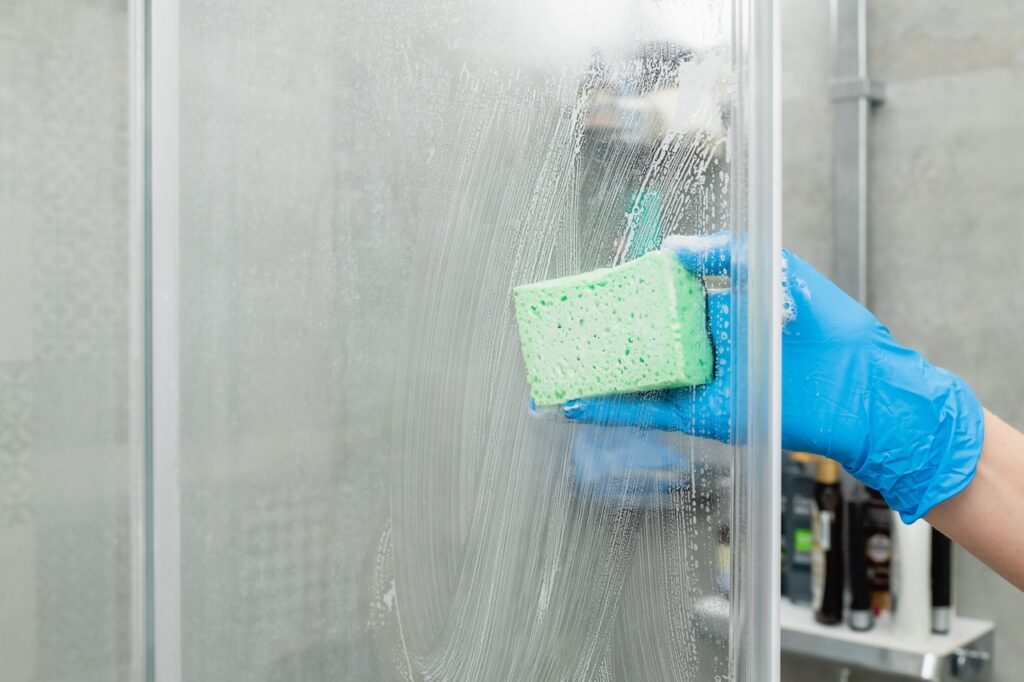
Periodic cleaning will be the best way to prevent mold from growing on your shower door.
Keeping your shower spotless doesn’t have to be overwhelming — just consistent.
- Weekly Maintenance. Clean the shower glass and frame using a mild detergent or diluted vinegar solution. Focus on corners and edges where residue accumulates.
- Monthly Deep Cleaning. Inspect seals and tracks, remove any buildup, and scrub using a baking soda paste. If you notice recurring mold spots, apply a mold prevention spray after cleaning.
- Quarterly Inspection. Look for early warning signs like discoloration, odor, or loose caulking. Address these issues before they escalate into larger mold problems.
Conclusion
Shower door mold is a common but preventable problem. By combining consistent cleaning, moisture control, and professional help when needed, you can maintain a spotless, healthy bathroom year-round.
If your mold problem has spread beyond what regular cleaning can handle, trust PuroClean of Burlington — your local experts in mold remediation and water damage restoration. We’ll remove the mold safely, restore your bathroom surfaces, and help you keep it mold-free for good.
Call (262) 342-2226 today for professional shower mold removal in Burlington, WI, or surrounding areas.
FAQs About Shower Door Mold
Q1: What causes mold to grow on shower doors?
Moisture, poor ventilation, and soap residue create the ideal environment for mold growth. Without regular cleaning, spores spread quickly on glass and seals.
Q2: Can shower door mold make you sick?
Yes. Prolonged exposure can trigger respiratory irritation, allergies, or headaches — especially for people with asthma or weakened immune systems.
Q3: How do I prevent mold from returning after cleaning?
Keep the area dry by wiping down doors after use, running the fan, and applying a water-repellent coating to the glass.
Q4: Can I use bleach to remove mold on shower doors?
Bleach kills surface mold but doesn’t always reach spores hidden in seals or frames. Non-toxic cleaners or professional mold removal are safer long-term options.
Q5: How often should I clean my shower doors?
Wipe down after each use and perform deep cleaning at least once a month to maintain a mold-free environment.
Summary
- Shower door mold thrives in humid bathrooms and can pose health and structural risks.
- Regular cleaning and proper ventilation are essential for prevention.
- Natural cleaners like vinegar and baking soda can handle mild cases.
- Persistent or hidden mold requires professional remediation.
- PuroClean of Burlington offers expert mold removal throughout southeastern Wisconsin.
Check out more topics in our blog: