 PuroClean Disaster Response Services
Biohazard situations rarely announce themselves clearly. They often begin quietly, with an unusual odor, a room no one enters anymore, a plumbing issue that seems manageable, or a health emergency that leaves behind more than emotional impact. In this blog, we will explore the most common biohazard situations homeowners face, why they occur, and what makes them different from ordinary household messes.
Understanding these risks early can help homeowners recognize when a situation goes beyond routine cleaning and may require professional attention, such as the types of biohazard cleanup Apex NC homeowners encounter in real residential settings, to avoid exposure that could affect health, safety, and the livability of the home.
Understanding Biohazards in a Residential Setting
A biohazard refers to biological material that can pose a risk to human health if not handled properly. Inside a home, this typically includes blood, bodily fluids, waste, and other organic matter that may carry bacteria or pathogens. Unlike visible dirt or clutter, these materials can seep into surfaces, linger in the air, and spread beyond the area where the incident occurred.
Many homeowners do not immediately recognize these conditions as hazardous, which is why professional response is often delayed, and the need for specific types of biohazard cleanup Apex NC services may only become clear after contamination has spread. According to the Centers for Disease Control and Prevention (CDC), exposure to biological contaminants indoors can increase the risk of infection and long-term health complications, especially when cleanup is incomplete or improper.
Why Biohazard Situations Are More Common Than People Think
Biohazard situations are not limited to extreme or rare events. They occur in everyday homes due to aging populations, medical emergencies, substance use, and structural issues like plumbing failures. As more people choose to age in place, the likelihood of incidents involving unattended medical events increases. Additionally, lifestyle pressures and mental health challenges can contribute to conditions that quietly escalate over time.
Many of these biohazard scenarios at home develop gradually, which makes them harder to detect early. By the time they are discovered, contamination may already be present beyond what is visible on the surface.
How Biohazards Differ from Standard Cleaning Issues
Standard cleaning focuses on appearance and surface-level hygiene. Biohazards, however, involve contamination that can penetrate flooring, walls, furniture, and ventilation systems. Household cleaners are not designed to neutralize pathogens or prevent cross-contamination. Without proper containment and disposal, cleaning attempts may actually spread harmful material to unaffected areas.
This distinction is critical when evaluating types of biohazard cleanup Apex NC, homeowners may require. The goal is not just to clean, but to restore safety.
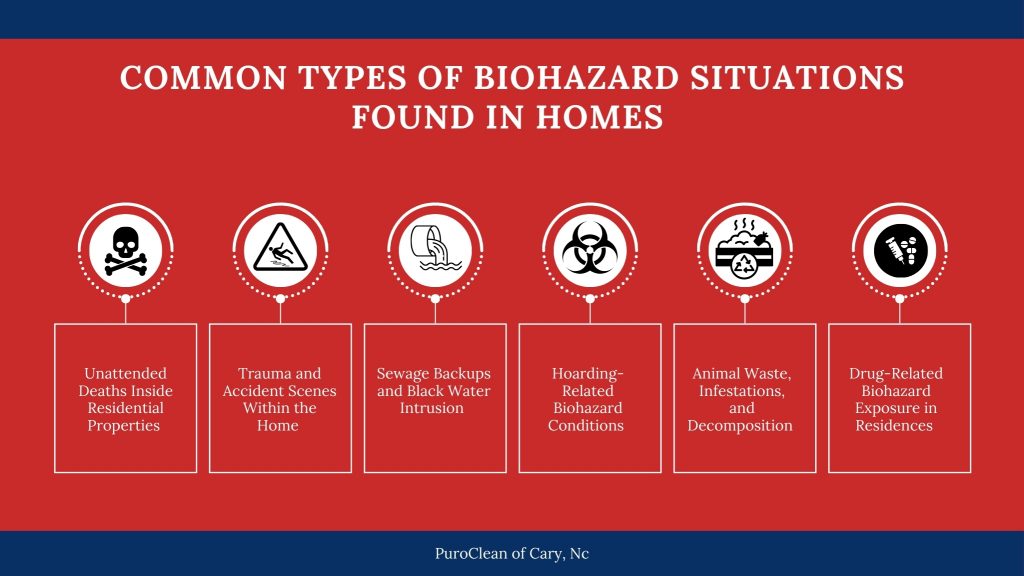
Common Types of Biohazard Situations Found in Homes
Biohazard situations vary widely, and identifying the type involved is essential for determining the right response. Each category presents unique risks and cleanup challenges, which is why proper assessment matters before any action is taken.
Unattended Deaths Inside Residential Properties
Unattended deaths create hazardous conditions because biological processes continue after life ends. Over time, bodily fluids and gases are released, allowing contamination to spread into floors, walls, and surrounding spaces. These materials can carry harmful bacteria and produce strong odors that signal deeper absorption into the structure.
Standard cleaning methods cannot address this level of contamination. Situations like this often fall under specialized types of biohazard cleanup Apex NC services due to the technical handling and disposal involved.
Trauma and Accident Scenes Within the Home
Falls, medical emergencies, and serious injuries can leave behind blood and bodily fluids. Even when the incident itself is resolved quickly, residue may remain on surfaces that are frequently touched or walked on. These materials are considered biohazardous because they can transmit pathogens if not properly removed. Homeowners may underestimate these biohazard scenarios at home because the area looks clean after initial wiping, but microscopic contamination can still pose a risk.
Sewage Backups and Black Water Intrusion
Sewage contains bacteria, viruses, and parasites that make exposure dangerous. The Environmental Protection Agency (EPA) classifies sewage-contaminated water as “black water,” the highest risk category. When sewage enters a home through drains or flooding, it contaminates everything it touches. These incidents are among the most common reasons homeowners seek types of biohazard cleanup Apex NC, assistance, especially after storms or plumbing failures.
Hoarding-Related Biohazard Conditions
Hoarding conditions can lead to significant biological risks when waste, spoiled food, or animal activity is present. Over time, limited airflow and excessive accumulation create environments where bacteria, mold, and pests thrive.
According to the American Psychiatric Association, hoarding disorder affects an estimated 2.6% of the population, with higher prevalence among older adults and individuals with other mental health conditions. These biohazard scenarios at home often require careful, staged cleanup to reduce exposure risks and prevent further spread within the property.
Animal Waste, Infestations, and Decomposition
Pets, wildlife intrusion, or infestations can introduce biological hazards through waste, nesting materials, or decomposition. Rodents and insects can carry pathogens that spread through droppings and contact with surfaces. If an animal dies within walls or crawl spaces, decomposition can contaminate surrounding materials.
These conditions worsen quickly if untreated, making early identification critical within types of biohazard cleanup Apex NC planning.
Drug-Related Biohazard Exposure in Residences
Drug use within a home can leave behind needles, blood, and chemical residue on surfaces. In some cases, particles may become airborne when disturbed, increasing the risk of exposure beyond the immediate area. Even after visible items are removed, contamination can remain on floors, furniture, and frequently touched surfaces.
This is one of the more overlooked biohazard scenarios at home because signs are not always obvious, and standard cleaning methods may not fully address hidden residue or contact risks.
Health and Safety Risks Associated with Household Biohazards
Biohazards affect more than just cleanliness. They can compromise indoor safety and well-being if not addressed properly.
Common risks include:
- Exposure to bacteria and pathogens
- Respiratory irritation from airborne contaminants
- Skin contact leading to infection
- Spread of contamination to other rooms
Recognizing these risks early helps homeowners understand why professional evaluation is often necessary for types of biohazard cleanup Apex NC cases.
Why Professional Biohazard Cleanup Is Often Necessary
Biohazard cleanup requires training, protective equipment, and regulated disposal methods. Professionals follow strict protocols designed to contain and neutralize contamination safely.
Professional cleanup is needed because it includes:
- Proper containment to prevent spread
- Specialized disinfectants and tools
- Safe handling and disposal of hazardous waste
- Verification that affected areas are treated correctly
These steps are essential when dealing with advanced biohazard scenarios at home that exceed routine cleaning capabilities.
What Homeowners Should Avoid Doing After Discovering a Biohazard
Discovering a biohazard can be overwhelming, but certain actions can make the situation worse.
Homeowners should avoid:
- Attempting cleanup without protective equipment
- Using household cleaners on contaminated materials
- Moving items between rooms
- Allowing untrained individuals to enter affected areas
In situations involving biohazards, homeowners can refer to our blog, What Should You Do Immediately After a Biohazard Spill in Your Home or Business, as early decisions often influence how biohazard cleanup services in Apex, NC are performed and how effectively contamination is managed.
Conclusion
Biohazard situations are more common in residential settings than many homeowners realize. From medical emergencies to structural failures, these conditions require careful identification and response. Understanding the most common biohazard scenarios at home helps homeowners recognize risks early and make informed decisions that protect health and safety. Knowing when a situation goes beyond routine cleaning is the first step toward restoring a safe living environment.
FAQ
Q1. What qualifies as a biohazard inside a home?
A: Any biological material that can pose a health risk, such as blood, bodily fluids, waste, or contaminated water.
Q2. Are biohazard situations always obvious?
A: No. Many develop quietly over time and are only noticed when odors, health symptoms, or damage appear.
Q3. When should professional cleanup be considered?
A: If biological material is present and cannot be safely cleaned using standard household methods.


 PuroClean Disaster Response Services