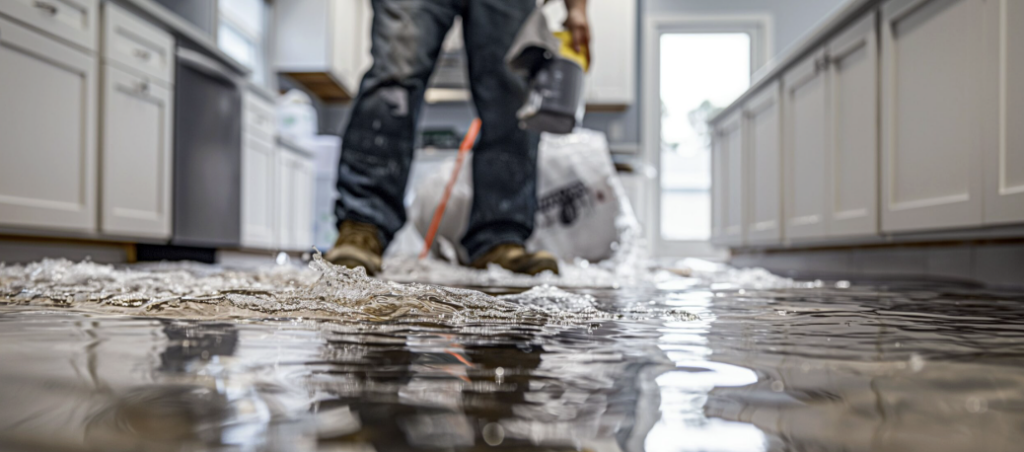
Yes. Water can remain hidden inside flooring systems, wall cavities, insulation, cabinets, ceilings, and structural materials after all visible standing water has been extracted. Extraction removes liquid water that equipment can physically reach. Structural drying addresses moisture absorbed into porous materials or trapped inside concealed assemblies.
A room may look dry while carpet padding remains saturated, drywall contains elevated moisture, or water is trapped beneath vinyl flooring. Without moisture evaluation and controlled drying, hidden water can contribute to swelling, staining, material deterioration, odors, and mold growth.
Quick Answer: Where Does Water Remain Hidden After Extraction?
After standing water is removed, moisture may remain:
Beneath carpet and carpet padding.
Under laminate, vinyl plank, sheet vinyl, hardwood, or tile assemblies.
Inside drywall and wall cavities.
Within fiberglass, cellulose, or foam insulation.
Behind baseboards, cabinets, vanities, and built-in furniture.
Between floors or above ceiling materials.
Inside wood framing and structural subflooring.
Within concrete, masonry, and grout.
Under appliance platforms and shower or tub assemblies.
Inside HVAC chases, plumbing penetrations, and other concealed spaces.
The amount of visible water does not necessarily indicate the full size of the affected area. Water can travel laterally beneath flooring, wick upward into walls, and move through openings around pipes, wiring, fasteners, and framing.
The ANSI/IICRC S500 standard addresses building and material science, psychrometry, drying technology, inspection, and other components of professional water-damage restoration.[1]
Why Water Extraction Does Not Mean the Building Is Dry
Water extraction and structural drying perform different jobs. Extraction removes bulk liquid water. Structural drying removes excess moisture that has been absorbed by or trapped within building materials.
Process
Primary Function
What May Remain Afterward
Pumping
Removes deeper standing water
Surface water, saturated flooring, and moisture inside materials
Mechanical extraction
Removes accessible water from floors, carpet, or surfaces
Moisture inside padding, subfloors, walls, framing, and concealed cavities
Structural drying
Promotes evaporation and removes moisture from the air
Persistent moisture if materials are inaccessible, damaged, or unsuitable for in-place drying
Material removal
Eliminates unsalvageable material and creates access
Moisture in retained structural materials that still require drying
A wet vacuum may leave a carpet surface appearing improved while water remains inside the pad. Similarly, mopping a hard floor cannot remove water that migrated through seams and beneath the finished flooring.
Persistent dampness, odor, contamination, or mold growth
Under vinyl or laminate
Water enters through seams, edges, and transitions
Trapped moisture, swollen cores, adhesive failure, or odor
Hardwood flooring
Wood absorbs water through edges, ends, and the underside
Cupping, crowning, buckling, finish damage, or staining
Wall cavities
Water enters beneath baseboards or through wall openings
Wet insulation, framing, drywall backing, and concealed microbial growth
Behind cabinets
Water travels beneath toe kicks or through wall penetrations
Swollen cabinet materials, trapped moisture, deterioration, or odor
Ceiling assemblies
Water travels from an upper floor, roof, bathroom, or mechanical system
Sagging drywall, wet insulation, electrical concerns, or collapse hazards
Subflooring
Water penetrates the flooring system or moves from an adjacent room
Swelling, loss of strength, delamination, or flooring failure
Concrete and masonry
Porous materials absorb and retain moisture
Delayed flooring installation, adhesive problems, salts, or moisture transfer
A moisture assessment should follow the likely water path rather than stopping at the edge of the visible stain.
How Water Travels Beyond the Visible Puddle
Gravity
Water moves downward through floor penetrations, framing gaps, stairs, utility chases, and ceiling assemblies. A leak on one floor can damage rooms below without leaving a continuous visible path.
Capillary Action
Porous materials can draw water through small spaces. Drywall, wood, carpet padding, insulation, and other materials may absorb water beyond the area directly covered by the puddle.
Lateral Movement
Water can spread beneath floating floors, cabinets, walls, and continuous flooring. The room where water becomes visible may not be the room where the source is located.
Air Movement and Evaporation
Some liquid water evaporates into the air, increasing humidity. That moisture can condense on cooler surfaces or slow the drying of other materials when it is not removed through dehumidification or ventilation appropriate to the conditions.
Pressure
Pressurized plumbing leaks can force water into cavities or through small openings. Appliance supply failures and slab leaks may spread water rapidly before the source is shut off.
How Different Building Materials Hold Moisture
Drywall
Drywall can wick water upward from the floor. Paint, wallpaper, tile, cabinets, or baseboards may slow evaporation from the surface. Wet insulation inside the wall can keep the cavity damp even when exposed drywall feels dry.
Wood
Framing, subflooring, hardwood, cabinets, and trim absorb moisture and change dimension. The surface may dry before the material’s interior reaches an appropriate moisture level.
Insulation
Wet insulation may hold water against framing and wall materials. Some insulation types lose performance, compress, become contaminated, or remain difficult to dry inside a closed cavity.
Water may enter through seams and reach moisture-sensitive cores or underlayment. Swelling and separation can continue after standing water is removed.
Vinyl Flooring
Vinyl itself may resist water while trapping moisture beneath the product. Attached pads, separate underlayment, adhesive, dust, and nearby wall materials may remain affected.
Concrete
Concrete is porous and can absorb moisture. A dry-looking surface does not establish that the slab is ready for adhesive, coatings, or replacement flooring.
Signs Water May Still Be Hidden After Extraction
Possible warning signs include:
A persistent musty, earthy, or damp odor.
Indoor humidity that remains unusually high.
Carpet that feels cool, damp, or soft in isolated areas.
Flooring that cups, crowns, buckles, lifts, or separates.
Baseboards that swell, detach, or develop stains.
Paint or wallpaper that bubbles, blisters, or peels.
Drywall that feels soft or shows a growing stain.
Cabinet toe kicks or panels that swell.
Dark grout or flooring adhesive that does not return to its normal appearance.
Condensation on windows, pipes, or other cool surfaces.
Visible suspected mold along flooring edges or wall bottoms.
Recurring water stains after the visible surface was cleaned.
Drying equipment that fills a dehumidifier rapidly without improvement.
These signs do not independently prove where moisture is located. They indicate that the area should be evaluated further.
How Professionals Look for Hidden Moisture
No single instrument can answer every moisture question. Professionals commonly combine visual observations, knowledge of building assemblies, measurements, and limited access when necessary.
Non-Penetrating Moisture Meters
Non-penetrating meters can scan certain materials without making pin holes. They are useful for identifying patterns and comparing areas, but readings can be influenced by material density, metal, layers, and the meter’s settings.
Pin-Type Moisture Meters
Pin meters use probes to evaluate moisture-related electrical resistance at specific points. They can help assess wood and some other materials, but readings must be interpreted using the appropriate material scale and conditions.
Thermo-Hygrometers
These instruments evaluate air temperature and relative humidity. Restoration professionals use environmental readings to understand drying conditions and the moisture load within the affected space.
Thermal Imaging Cameras
Thermal cameras display surface-temperature differences that may help locate areas requiring closer evaluation. They do not directly detect water or mold.
Inspection Cameras and Limited Openings
Small openings or inspection cameras may be used when surface measurements cannot establish conditions inside a wall, cabinet, ceiling, or other concealed assembly.
Direct Material Inspection
Technicians may lift carpet, remove a baseboard, open a toe kick, or inspect a flooring edge when necessary to evaluate padding, subflooring, insulation, or other hidden materials.
Can Thermal Imaging Detect Hidden Water?
A thermal camera cannot see water directly. It displays differences in surface temperature. Evaporation, air leakage, insulation, sunlight, HVAC operation, electrical components, and building geometry can all create temperature patterns.
A cooler or warmer area may suggest a location that deserves additional moisture testing, but the thermal pattern should be confirmed with appropriate instruments and inspection. Similarly, the absence of a visible temperature difference does not prove that a material is dry.
Thermal imaging is most useful as one part of a broader moisture investigation—not as a stand-alone mold detector or moisture measurement.
What to Do After Standing Water Has Been Extracted
Confirm that the source has been stopped. Extraction cannot succeed while water continues entering the building.
Ask which rooms and materials were evaluated. The visible water boundary may not represent the full affected area.
Request moisture documentation. Ask what materials were wet and how drying progress will be evaluated.
Keep drying equipment operating as directed. Do not unplug or move equipment without discussing it with the restoration team.
Maintain access for monitoring. Technicians may need to revisit flooring, walls, cabinets, or adjacent rooms.
Report new warning signs. Notify the team about odors, stains, swelling, noises, or water appearing in another location.
Do not begin reconstruction prematurely. Wet materials should not be covered with new flooring, paint, drywall, or cabinets.
The EPA recommends drying wet or damp materials within approximately 24 to 48 hours when possible to reduce the potential for mold growth.[2] Prompt extraction helps, but moisture trapped inside materials still needs to be addressed.
Part 2 explains the professional moisture-assessment and drying process, when materials must be opened or removed, drying timelines, mold risk, cost factors, insurance coverage, FAQs, and wiki-style references.
Professional Hidden-Moisture Assessment Process
A professional assessment follows the likely path of the water rather than stopping where the visible puddle ended. The process may expand as technicians identify flooring transitions, connected wall cavities, lower floors, or concealed materials affected by the loss.
1. Confirm the Water Source
The source must be stopped before reliable drying can proceed. A plumber, roofer, appliance technician, utility provider, or other qualified professional may be needed to complete the source repair.
2. Evaluate Safety and Contamination
The team considers electrical hazards, unstable ceilings, slip risks, sewage, floodwater, chemicals, and other site-specific conditions. The water source affects protective equipment, material-removal decisions, cleaning, and containment.
3. Establish the Visible Loss Boundary
Technicians document the rooms, flooring, walls, ceilings, cabinets, and contents showing visible effects. This creates a starting point for the moisture investigation.
4. Follow Likely Water Pathways
The assessment may continue beyond the visible boundary to include:
Adjacent rooms sharing continuous flooring.
Walls located downhill from the source.
Rooms beneath an upper-floor water loss.
Closets and cabinets with limited airflow.
Flooring transitions, seams, and perimeter gaps.
Utility penetrations and plumbing chases.
Insulated walls and ceilings.
5. Compare Affected and Unaffected Materials
Readings from affected areas may be compared with similar materials in unaffected parts of the property. Because materials naturally differ, comparison areas should be selected and interpreted carefully.
6. Determine Whether Access Is Necessary
If surface observations cannot establish the condition of a concealed cavity, limited access may be recommended. This can include lifting carpet, removing a baseboard, opening a cabinet toe kick, or creating a small inspection opening.
7. Document the Drying Scope
The resulting scope identifies which materials can remain, which need removal, what equipment is appropriate, and how progress will be monitored.
How Hidden Moisture Is Dried
Drying concealed moisture requires access, evaporation, humidity control, and verification. Simply heating the room or placing a fan in the doorway may not address wet material beneath floors or behind finished surfaces.
Mechanical Water Extraction
Technicians remove as much accessible liquid water as practical before relying on evaporation. Extraction can reduce drying time because moving liquid water mechanically is generally more efficient than attempting to evaporate all of it.
Air Movement
Air movers increase airflow across appropriately exposed wet surfaces. Placement depends on the affected materials, room layout, contamination conditions, and access to the wet assembly.
Dehumidification
Dehumidifiers remove water vapor from the air. Without sufficient dehumidification, moisture evaporating from materials can accumulate indoors and slow continued drying.
Temperature Management
Temperature affects evaporation and equipment performance. The appropriate temperature range depends on the materials, equipment, occupants, and project conditions.
Cavity Drying
Wall, ceiling, cabinet, and floor cavities may require limited openings or specialty systems. Cavity drying should be used only when the assembly can be evaluated and the water source and contamination conditions support in-place drying.
Material Removal
Removal may be necessary when materials are contaminated, deteriorated, physically damaged, mold-affected, or preventing access to wet structural components. Selective removal can also shorten drying by exposing framing and subflooring.
Monitoring and Adjustment
Technicians may return to record material and environmental conditions, reposition equipment, and determine whether the drying plan is producing progress. The ANSI/IICRC S500 addresses professional water-restoration procedures, building science, psychrometry, drying technology, and documentation.[1]
How Long Can Hidden Moisture Take to Dry?
There is no universal drying time for concealed water damage. Drying may take longer when water has reached dense materials, multiple layers, insulated cavities, cabinets, hardwood flooring, or a large concrete slab.
Factors affecting the timeline include:
The amount of water released.
How long the water remained before extraction.
The water source and contamination level.
The porosity and thickness of affected materials.
The number of wet layers in the assembly.
Whether paint, vinyl, cabinets, or flooring restrict evaporation.
Indoor temperature and relative humidity.
Access to wall, ceiling, and floor cavities.
Whether wet insulation remains in place.
The equipment configuration and monitoring results.
Equipment should not be removed solely because a predetermined number of days has passed. Drying should be evaluated using appropriate measurements, observations, and established project goals.
Why Some Areas Dry More Slowly
Moisture can become trapped between materials with low permeability. Examples include water beneath sheet vinyl, behind painted drywall, under cabinets, or between a finished floor and concrete slab. These assemblies may need additional access before meaningful drying can occur.
Dense wood and masonry can also remain wet internally after the surface has improved. Reconstruction or flooring installation should wait until the relevant substrate satisfies appropriate drying and installation requirements.
When Materials Need to Be Opened or Removed
Not every wet wall, floor, or cabinet must be demolished. Removal decisions should be based on the water source, material condition, exposure time, contamination, accessibility, and expected restoration result.
Condition
In-Place Drying May Be Considered
Opening or Removal May Be More Likely
Water source
Known, relatively sanitary water source
Sewage, exterior floodwater, chemicals, or unknown contamination
Material condition
Material remains structurally sound and dimensionally stable
Material is swollen, sagging, crumbling, delaminated, or otherwise damaged
Accessibility
Moisture can evaporate and drying progress can be verified
Finishes, cabinets, insulation, or flooring prevent access and evaporation
Insulation
Insulation type and condition support effective restoration
Insulation is saturated, compressed, contaminated, or obstructing cavity drying
Mold condition
No visible growth or regulated mold condition is identified
Visible suspected mold or established remediation requirements are present
Drying progress
Measurements show meaningful improvement
Moisture remains trapped or readings fail to improve
Wet Drywall
Structurally sound drywall affected by a prompt, relatively sanitary loss may sometimes be dried. Removal becomes more likely when drywall is sagging, contaminated, mold-affected, covered with a restrictive finish, or concealing wet insulation.
Wet Flooring
Flooring may need to be lifted or removed when water is trapped beneath it, the product has swollen or separated, or the subfloor cannot otherwise be evaluated. Learn more in Can Wet Carpet Be Saved After Water Damage?
Wet Cabinets
Solid wood and plywood may respond differently from particleboard or fiberboard. Toe kicks or end panels may be opened selectively to assess wall and floor conditions without automatically removing an entire cabinet system.
Can Hidden Moisture Cause Mold?
Yes. Moisture trapped inside porous building materials can create conditions that support mold growth. The EPA recommends drying water-damaged areas and materials within approximately 24 to 48 hours when possible.[2]
This does not mean every wet material develops visible mold after two days. Temperature, humidity, material type, contamination, airflow, and duration all affect growth. It does mean that concealed moisture should be evaluated promptly rather than left to dry without verification.
Possible indications of concealed microbial growth include:
A musty odor with no visible source.
Discoloration appearing along baseboards or flooring edges.
Recurring staining after the surface was cleaned.
Visible suspected growth inside an opened cavity.
Carpet or flooring that remained damp for an extended period.
Past water damage that was never professionally dried.
Do not use ordinary fans to blow air across visible suspected mold or contaminated materials. Texas regulates professional mold assessment and remediation, and applicable projects may require licensed mold professionals.
The cost of addressing hidden water depends on where the moisture traveled and what must be done to reach, dry, clean, or replace the affected materials. The initial extraction invoice may represent only one portion of the complete project.
Cost Factor
What It May Include
Why It Affects the Project
Affected area
Additional rooms, floors, walls, or continuous flooring
A larger area requires more evaluation, equipment, and labor
Moisture location
Floor cavities, walls, ceilings, cabinets, insulation, or subfloors
Concealed moisture may require specialty access or drying systems
Water source
Sanitary water, appliance discharge, sewage, or exterior flooding
Contamination changes protection, cleaning, and removal requirements
Exposure time
Time between the water release, discovery, and drying
Longer exposure can increase absorption, deterioration, and microbial concerns
Material removal
Flooring, drywall, insulation, trim, or cabinet components
Removal creates labor, disposal, and reconstruction costs
Drying equipment
Air movers, dehumidifiers, filtration, and specialty systems
Equipment type, quantity, duration, and monitoring vary by scope
Reconstruction
Drywall, paint, flooring, trim, insulation, or cabinets
Finish matching and material availability can affect final cost
Ask whether an estimate covers extraction only, mitigation and drying, or the complete restoration and reconstruction scope.
Will Homeowners Insurance Cover Hidden Water Damage?
Insurance may cover hidden moisture and resulting property damage when the loss originated from a covered sudden and accidental event. Coverage may be limited or excluded when the damage resulted from gradual leakage, seepage, maintenance, exterior flooding, or another excluded cause.
The Texas Department of Insurance states that most homeowners and renters policies cover sudden and accidental water damage, while gradual leaks and seepage are commonly excluded.[3]
Coverage questions may include:
What caused the water release?
Was the event sudden, gradual, or hidden?
When was the damage discovered and reported?
Was emergency extraction reasonable and necessary?
Which concealed materials were documented as wet?
Can the materials be dried, or must they be removed?
Is access to reach the wet area covered?
Does the policy cover mold assessment or remediation?
What deductible and coverage limits apply?
Document Hidden Damage as It Is Discovered
If additional moisture is found after the adjuster’s first inspection:
Photograph the area before additional permanent work.
Record moisture findings and affected materials.
Notify the adjuster promptly.
Submit a supplemental estimate when the scope changes.
Retain removed materials for inspection when requested and reasonably safe.
Keep restoration invoices, monitoring records, and source-repair reports.
Water can remain concealed until it evaporates, drains, or is removed, and the timeline varies widely. Wet insulation, low airflow, cool temperatures, restrictive finishes, and closed cavities can slow drying substantially.
Can a Surface Feel Dry While Moisture Remains Underneath?
Yes. Carpet fibers, vinyl flooring, painted drywall, wood, and concrete can feel dry at the exposed surface while padding, backing, cores, cavities, or deeper material layers remain wet.
Do Moisture Meters Detect Water Behind Walls?
Moisture meters can help identify moisture patterns or readings that warrant further investigation, but their capabilities depend on the meter, material, depth, and wall assembly. Metal, wiring, layers, and material density can affect readings.
Can a Thermal Camera See Water?
No. A thermal camera displays surface-temperature differences, not water. Thermal patterns can help identify areas for follow-up testing, but they should be confirmed with moisture instruments and inspection.
Must Walls Be Opened to Dry Hidden Moisture?
Not always. Limited cavity drying may be possible when the drywall remains sound, the water source is appropriate, insulation does not obstruct drying, and progress can be verified. Opening or removal is more likely when contamination, deterioration, insulation, or restrictive finishes prevent effective drying.
How Quickly Can Hidden Moisture Lead to Mold?
Mold may begin growing on damp materials within approximately 24 to 48 hours under favorable conditions. Timing varies according to temperature, humidity, material, contamination, and airflow.
Can Water Remain Under Vinyl Plank Flooring?
Yes. Water can enter through seams, edges, and transitions and remain within attached padding, separate underlayment, adhesive, or the subfloor.
Can Hidden Water Damage Dry on Its Own?
Some moisture may evaporate naturally, but concealed assemblies can dry too slowly or unevenly to prevent damage. Without measurements, there is no reliable way to know whether the complete affected area has dried.
Should I Paint Over a Water Stain After Extraction?
Not until the source is corrected and the material is verified dry. Painting too soon can trap moisture, conceal deterioration, and allow the stain to return.
Why Does the Room Still Smell Musty After Extraction?
A continuing odor may indicate wet padding, concealed moisture, contamination, microbial growth, or materials that require additional cleaning or removal. The source should be investigated rather than covered with fragrance.
Find and Dry Hidden Moisture After Water Extraction
Standing water removal is an essential first step, but the property is not necessarily dry when the puddles are gone. Flooring, walls, insulation, cabinets, ceilings, and structural materials may continue holding moisture outside the visible loss area.
PuroClean can evaluate moisture migration, document affected materials, remove accessible water, establish controlled drying, monitor progress, and coordinate necessary restoration.
Institute of Inspection, Cleaning and Restoration Certification. ANSI/IICRC S500 Standard for Professional Water Damage Restoration. Industry-standard resource addressing professional water-damage restoration, building science, psychrometry, drying technology, and documentation. ↩↩