 PuroClean Disaster Restoration
Executive Summary
Water damage categorization is crucial for determining the proper cleanup approach and understanding health risks. Categories range from clean water (Category 1) to grossly contaminated water (Category 3). This guide explains each category, provides real-world context from a Greenfield family’s experience, and outlines the immediate steps you should take when water invades your home. Understanding these categories helps homeowners make informed decisions about safety, cleanup, and when professional restoration is necessary.
Why Water Damage Categories Matter More Than You Think
When Sarah Mitchell from Greenfield, Indianapolis woke up to water pooling in her basement, she assumed all water damage was the same. She grabbed towels and a shop vacuum, ready to tackle the problem herself. Three days later, her family was experiencing headaches and respiratory issues. The water hadn’t come from a clean source as she thought. It was Category 2 water from a washing machine overflow that had sat long enough to become Category 3. What seemed like a simple DIY job had turned into a health hazard requiring professional intervention.
Sarah’s story illustrates why understanding water damage categories isn’t just technical jargon. These classifications directly impact your family’s health, your restoration approach, and even your insurance claim.
What Are Water Damage Categories?
Water damage categories classify water based on contamination levels and health risks. The Institute of Inspection, Cleaning and Restoration Certification (IICRC) established these standards to protect homeowners and guide restoration professionals.
Think of categories as a contamination scale. Category 1 represents the cleanest water, while Category 3 poses the most serious health threats. This classification system helps everyone involved understand the urgency and required safety measures.
What Is Category 1 Water Damage?
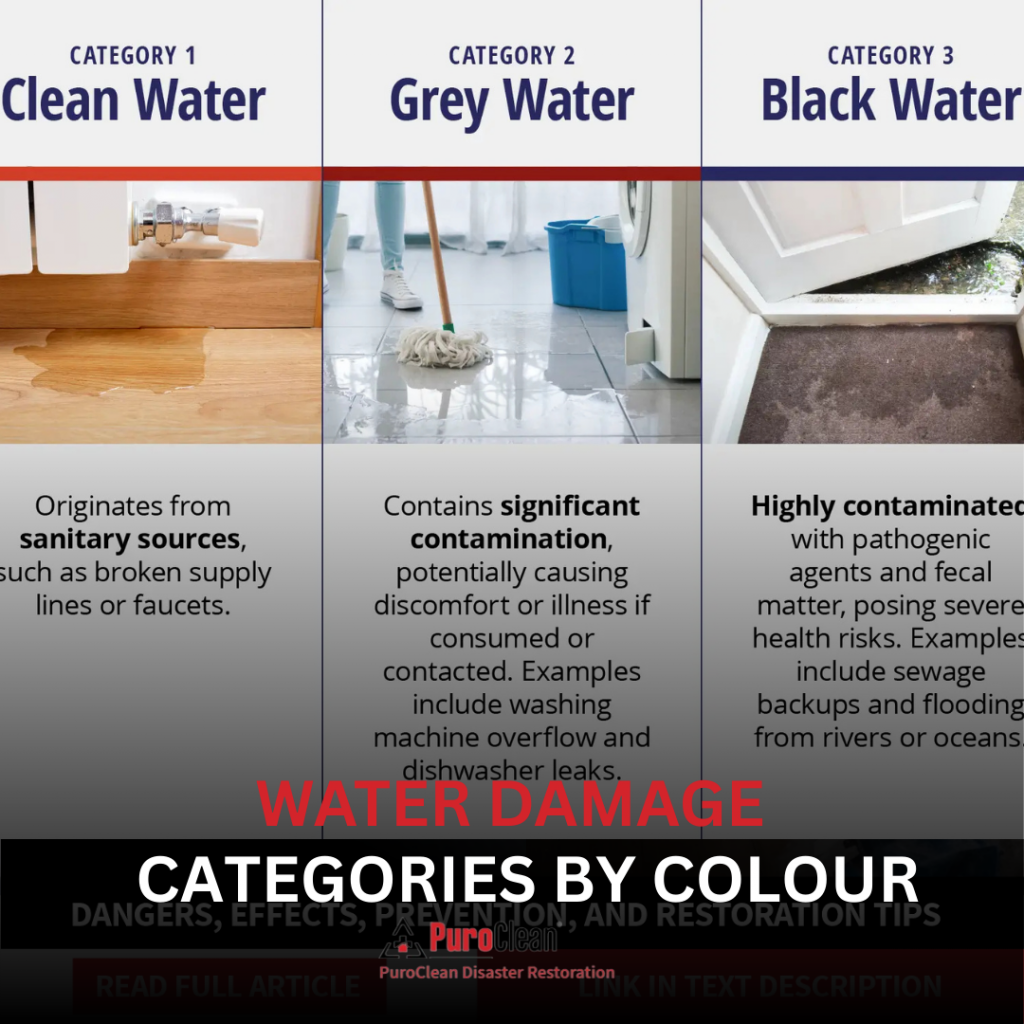
Category 1 water damage involves clean water from sanitary sources that poses no substantial health risk. This is water you could theoretically drink without getting sick.
Common Category 1 sources include broken water supply lines, toilet tank overflows (not bowl), melting ice or snow, and rainwater that hasn’t contacted contaminants. When your kitchen sink supply line bursts, that’s typically Category 1 water.
The key characteristic is that Category 1 water originates from a clean source and hasn’t contacted any contaminated surfaces. However, timing matters significantly. Category 1 water left untreated for 24 to 48 hours can degrade into Category 2 as it absorbs contaminants from building materials and begins supporting microbial growth.
What Should I Do If I Have Category 1 Water Damage?
Speed is your best friend with Category 1 water damage. First, stop the water source if safely possible. Turn off the water supply valve or shut off your main water line if needed.
Remove standing water immediately using pumps, wet vacuums, or extraction equipment. The faster you remove water, the less damage occurs and the lower the chance of category escalation.
Move wet items to dry areas. Furniture, electronics, and personal belongings suffer less damage when removed from wet environments quickly. Begin air drying by opening windows, using fans, and running dehumidifiers.
Document everything with photos and videos before, during, and after cleanup. This documentation proves invaluable for insurance claims.
When Should I Call Professionals for Category 1 Water?
While Category 1 water presents the lowest risk, professional help is often necessary. Call professionals when water damage affects more than a small area, when water has penetrated wall cavities or subflooring, or when you lack proper extraction and drying equipment.
Professional restoration teams have moisture meters, thermal imaging cameras, and industrial-grade equipment that detect hidden moisture you might miss. They also understand the science of structural drying, preventing future mold growth.
What Is Category 2 Water Damage?
Category 2 water damage involves water with significant contamination that could cause discomfort or illness if contacted or consumed. This water contains chemical, biological, or physical contaminants.
Typical Category 2 sources include washing machine or dishwasher overflows, toilet overflows containing urine but no feces, aquarium spills, and water from sump pump failures. This water has touched surfaces or contains materials that make it unsafe.
Category 2 water is sometimes called “gray water” in the restoration industry. It requires more cautious handling than Category 1 and can quickly become Category 3 if not addressed promptly.
How Quickly Does Category 2 Water Become Category 3?
Category 2 water can degrade to Category 3 in less than 48 hours. Temperature, environment, and time accelerate this transition. Warm, humid conditions speed up bacterial growth and contamination.
When Category 2 water sits in your home, it seeps into porous materials like drywall, insulation, and wood. These materials provide nutrients for bacterial growth. The water also picks up additional contaminants from these materials, increasing its hazard level.
What Should I Do If I Have Category 2 Water Damage?
Category 2 water requires protective equipment. Wear rubber gloves, boots, and eye protection at minimum. Avoid direct contact with the water.
Ventilate the area immediately by opening windows and doors. This reduces humidity and slows bacterial growth. Stop the water source if you can do so safely.
Remove and dispose of porous materials that absorbed Category 2 water. This includes carpet padding, insulation, drywall that wicked up water, and any materials that cannot be thoroughly cleaned and disinfected.
Contact restoration professionals promptly. Category 2 water damage often requires antimicrobial treatments and specialized drying techniques that exceed typical homeowner capabilities.
What Is Category 3 Water Damage?
Category 3 water damage is grossly contaminated water that contains pathogenic agents and can cause severe illness or death if ingested. This is the most dangerous classification.
Category 3 sources include sewage backups, toilet overflows containing feces, flooding from rivers or streams, and any standing water that has supported microbial growth. All water rising from below ground level is considered Category 3.
Category 3 water is commonly called “black water” because of its often-dark appearance and high contamination levels. This water contains bacteria, fungi, viruses, and other harmful organisms.
Can Category 1 or Category 2 Water Become Category 3?
Absolutely. Any category of water becomes Category 3 when it contacts Category 3 sources or sits untreated long enough to support pathogenic growth.
For example, Category 1 water from a supply line break becomes Category 3 if it flows through areas contaminated with sewage or animal waste. Similarly, any water sitting stagnant for several days in warm conditions can develop Category 3 characteristics.
What Should I Do If I Have Category 3 Water Damage?
Category 3 water demands professional restoration services. Do not attempt DIY cleanup. The health risks are substantial and the required safety protocols are beyond consumer-grade capabilities.
Evacuate the affected area immediately, especially children, elderly family members, and anyone with compromised immune systems. Category 3 water carries serious pathogens that spread through air and surface contact.
Contact your insurance company to report the damage. Then call professional restoration services equipped to handle hazardous materials. Professional teams wear protective suits, respirators, and use specialized disinfection procedures.
Document the damage from a safe distance for insurance purposes, but do not enter contaminated areas without proper protection.
What Protective Equipment Do I Need for Different Water Categories?
Category 1 water requires basic protection like rubber gloves and boots if you’re handling cleanup yourself. These prevent slips and protect against any sharp debris hidden in water.
Category 2 water demands rubber gloves, waterproof boots, safety goggles, and N95 respirators at minimum. Consider disposable protective coveralls if you’re removing contaminated materials.
Category 3 water requires professional-grade equipment including full-body protective suits, heavy-duty gloves, rubber boots, face shields or goggles, and respirators rated for biohazard protection. This level of protection exceeds what most homeowners have access to.
How Do Water Damage Categories Affect Restoration Costs?
Categories directly influence restoration costs through required safety measures, disposal needs, and restoration scope. Category 1 damage costs less because fewer materials need disposal and less intensive safety protocols apply.
Category 2 damage increases costs due to antimicrobial treatments, additional disposal requirements, and greater restoration scope. Porous materials that could be saved with Category 1 water often need replacement after Category 2 exposure.
Category 3 damage represents the highest costs. Everything the water contacted requires disposal and replacement. Restoration teams must follow strict safety protocols, use specialized equipment, and often remove substantial amounts of building materials. The entire affected area requires thorough disinfection.
What Materials Can Be Saved After Water Damage in Each Category?
Category 1 water damage allows you to save most materials if dried quickly. Hard surfaces clean easily, while carpets and pads can often be extracted and dried if addressed within 24 hours.
Category 2 water limits what you can save. Hard, non-porous surfaces like tile, metal, and sealed wood can usually be cleaned and disinfected. However, porous materials like carpet, drywall, and insulation typically need replacement.
Category 3 water requires disposal of nearly everything it contacted. Porous materials like drywall, insulation, carpet, and padding must be removed and discarded. Even some hard surfaces may need replacement depending on contamination severity and porosity.
How Do I Know Which Category of Water Damage I Have?
Identifying your water category starts with finding the source. Trace where the water originated. A broken supply line suggests Category 1, while a toilet overflow indicates Category 2 or 3 depending on bowl contents.
Consider what the water contacted. Clean water that flowed through sewage-affected areas becomes Category 3 regardless of its original source. Water that sat for several days likely degraded from its original category.
Assess the water’s appearance and odor. Clean, clear water without smell typically indicates Category 1. Cloudy, discolored water with slight odor suggests Category 2. Dark water with foul odor signals Category 3.
When in doubt, treat water as a higher category. The health risks of underestimating contamination far exceed the costs of being cautious.
What Happens If I Treat Category 2 or 3 Water as Category 1?
Treating contaminated water as clean water creates serious health risks. Sarah Mitchell’s experience from Greenfield demonstrates these consequences. Her family developed respiratory issues and persistent headaches because they worked in contaminated water without protection.
Exposure to Category 2 or 3 water without proper protection can cause skin infections, respiratory illnesses, gastrointestinal problems, and more severe conditions depending on specific contaminants present. Children, elderly individuals, and those with weakened immune systems face greater risks.
Inadequate treatment also allows mold growth, lingering bacteria, and persistent odors. These problems compound over time, eventually requiring more extensive and expensive remediation than if handled correctly initially.
How Long Can I Wait Before Starting Water Damage Restoration?
For Category 1 water, you have roughly 24 to 48 hours before the water degrades to Category 2. Begin extraction and drying immediately to prevent category escalation.
Category 2 water gives you even less time. Start professional restoration within 24 hours to prevent Category 3 degradation and minimize material damage.
Category 3 water demands immediate professional response. Every hour of delay increases contamination spread, material damage, and health risks. Contact restoration professionals as soon as you discover Category 3 water damage.
Should I File an Insurance Claim for All Water Damage Categories?
Insurance claims make sense for most water damage scenarios regardless of category. Document all damage thoroughly before cleanup begins. Take photos and videos from multiple angles showing the extent and source of water.
Contact your insurance provider promptly to report the damage. They’ll guide you through their claims process and may send an adjuster to assess damage. Keep all receipts for emergency services, temporary repairs, and related expenses.
Professional restoration companies often work directly with insurance companies, simplifying the claims process. They provide detailed documentation and estimates that support your claim.
What Questions Should I Ask a Water Restoration Company?
When calling a restoration company, ask about their experience with your specific water category. Confirm they have IICRC certification and appropriate insurance coverage.
Inquire about their response time. Water damage restoration is time-sensitive, and delays worsen outcomes. Ask about their emergency availability and typical arrival times.
Request information about their restoration process, equipment, and antimicrobial treatments. Understanding their approach helps you evaluate their competence and professionalism.
Ask for references or reviews from previous customers with similar damage types. This provides insight into their work quality and customer service.
Real Story Lesson: What Sarah Learned About Water Categories
After Sarah Mitchell’s experience required professional Category 3 remediation, she understood why water damage categories matter. The restoration process removed her basement drywall, insulation, carpet, and several personal items. The total cost exceeded $12,000.
Had Sarah recognized the Category 2 nature of her washing machine overflow immediately, she could have called professionals within hours. Earlier intervention would have prevented Category 3 escalation, saved materials, reduced costs, and protected her family’s health.
Sarah now shares her story with neighbors and friends. Her key message: when water invades your home, identify the category quickly, protect yourself appropriately, and don’t hesitate to call professionals. The money saved on DIY attempts rarely justifies the health risks and eventual remediation costs.
Living in Greenfield or Surrounding Indianapolis Areas?
If you’re experiencing water damage in Greenfield, Indianapolis, or nearby communities, understanding your water category is just the first step. Professional assessment and rapid response make the difference between minor repairs and major reconstruction.
PuroClean Disaster Restoration serves Greenfield and the greater Indianapolis area with 24/7 emergency response. Their IICRC-certified technicians quickly assess your water damage category, implement appropriate safety measures, and begin professional restoration.
Don’t make Sarah’s mistake. Whether you’re dealing with a burst pipe, appliance overflow, or sewage backup, time matters. Every hour of delay allows more damage, higher costs, and greater health risks.
Frequently Asked Questions
Can I clean Category 1 water damage myself?
Small Category 1 water incidents affecting limited areas can potentially be handled with proper equipment and quick action. However, professional help ensures complete drying and prevents hidden moisture problems that lead to mold growth. When water affects large areas, penetrates structural materials, or you lack professional extraction equipment, call restoration professionals.
How can I tell if water damage has developed mold?
Visible mold appears as fuzzy patches in black, green, white, or other colors. Musty odors often indicate hidden mold growth. Mold typically develops within 24 to 48 hours in wet environments. If you see or smell mold, professional assessment is necessary to determine extent and appropriate remediation.
Does homeowner’s insurance cover all water damage categories?
Insurance coverage varies by policy and damage cause. Most policies cover sudden and accidental water damage like burst pipes but exclude damage from neglect or lack of maintenance. Flood damage typically requires separate flood insurance. Review your specific policy and contact your insurance agent to understand your coverage.
What’s the difference between water damage category and class?
Water damage categories classify contamination levels while classes measure evaporation rates and moisture absorption. Categories determine health risks and safety protocols. Classes guide the drying approach and equipment needs. Both classifications work together to inform proper restoration strategies.
How do restoration professionals test for water categories?
Professionals identify categories primarily through source identification and visual assessment. They trace water origins, evaluate contamination likelihood, and inspect affected materials. For questionable situations, they may collect samples for laboratory testing to confirm contamination levels and identify specific pathogens.
Can Category 3 water damage affect my home’s air quality?
Category 3 water severely impacts indoor air quality. Airborne pathogens, bacteria, and mold spores spread through contaminated areas. These contaminants cause respiratory issues, allergic reactions, and other health problems. Professional restoration includes air scrubbing and antimicrobial treatments to restore safe air quality.
Conclusion
Water damage categories aren’t abstract classifications. They’re practical tools that protect your health, guide your response, and influence restoration outcomes. Category 1 water from clean sources requires prompt drying to prevent escalation. Category 2 water demands protective equipment and professional antimicrobial treatment. Category 3 water necessitates immediate professional intervention with full hazardous material protocols.
Understanding these categories helps you respond appropriately when water invades your Greenfield home. Quick, informed action minimizes damage, controls costs, and protects your family’s health.
If you’re facing water damage of any category in Greenfield, Indianapolis, or surrounding areas, don’t wait. Call PuroClean Disaster Restoration at (317) 467-4436 for immediate assistance. Their certified professionals respond 24/7, assess your specific water category, and implement appropriate restoration strategies to return your home to safe, dry conditions.
 PuroClean Disaster Restoration