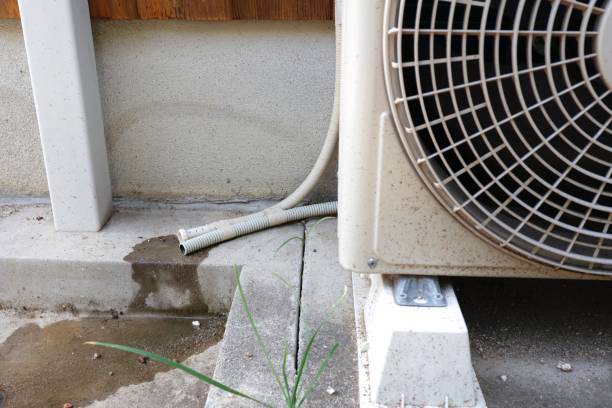
Ductless mini-splits have become a common sight across South Florida, especially in condos, older homes, and additions where running ductwork was not practical. They cool quietly and efficiently, which is exactly why a problem can go unnoticed. When mini-split AC leaks start, the water often does not stay on the floor below the unit. It can run down the wall behind it, soak the drywall and insulation, and show up as a stain or a smell long after the leak began. This guide covers what causes mini-split AC leaks in Hollywood homes, the five warning signs to watch for, and why a professional assessment matters.
What Causes Mini-Split AC Leaks?
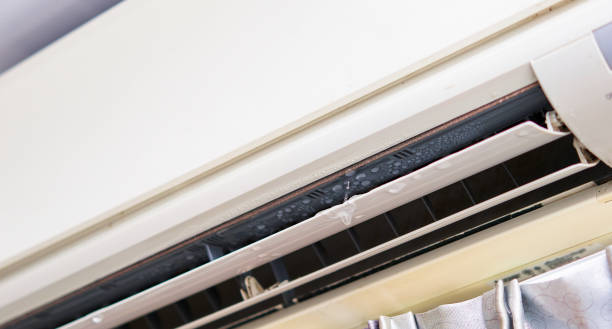
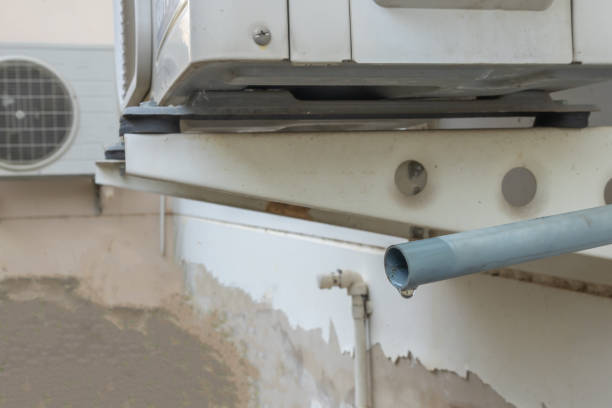
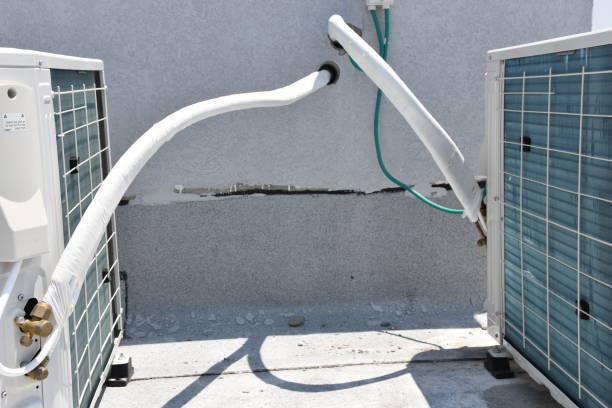
A mini-split removes humidity from your air as it cools, and that water is supposed to collect in a drain pan and flow out through a condensate drain line. Nearly every leak traces back to that path being interrupted. The most common cause is a clogged or disconnected drain line. Other causes include a line without enough downward slope, a cracked or corroded drain pan, a dirty filter or coil that lets the coil freeze and then release extra meltwater, an indoor unit that was not mounted level, and refrigerant lines without enough insulation, which can sweat and drip. Because these systems run most of the year in South Florida, there is a steady supply of condensate to overwhelm any weak point.
Why Do Mini-Split AC Leaks Often End Up Inside the Wall?
The indoor unit is mounted high on the wall, and the refrigerant lines and drain line pass through an opening behind it. When water escapes, gravity and that opening can send it into the wall cavity rather than onto the floor. Drywall paper and insulation can hold that moisture for a long time, so the first visible sign may be a stain well below the unit, a swollen baseboard, or a musty smell instead of a puddle. A moisture assessment can show how far the water traveled before anything gets patched or painted.
Five Warning Signs of Mini-Split AC Leaks
- Dripping or streaking below the indoor unit. Water running down the wall or dripping from the bottom of the unit means condensate is not draining as it should.
- Stains or bubbling paint on the wall near or below the unit. Moisture inside the wall pushes paint off the drywall, and a brown ring often follows.
- A musty smell when the unit runs. A smell with no visible source can mean moisture is trapped in the wall or in the unit itself. Our post on musty smell with no leak covers other hidden causes worth ruling out.
- Swollen baseboards or damp flooring along that wall. Water that reaches the bottom of the wall wicks into trim and flooring before it shows on the surface.
- Ice, frost, or heavy sweating on the unit or the refrigerant lines. This can signal airflow or refrigerant problems that release extra water when the ice melts.
Should You Keep Running a Leaking Mini-Split?
If water is actively dripping, switching the unit off can stop new condensation from adding to the problem while you arrange help. Running a leaking unit for days can send a steady amount of water into the wall. Stay clear of outlets and cords near any standing water. Turning the unit off is a temporary step, not a fix, and the next step is to have the cause found and the wall assessed.
Who Should You Call: an HVAC Technician or a Water Damage Company?
You will often need both. An HVAC technician can correct the cause inside the system, such as the drain line, slope, drain pan, insulation, or refrigerant. A water damage team assesses how far the water traveled, removes materials that cannot be dried, and dries the structure. Even after the unit is fixed, the wall may still be wet. Our post on water damage mitigation vs. restoration explains how the interior process works, and our guide to AC drain line leaks in Miramar covers the same kind of problem in ducted systems.
Does a Ductless Leak Need Extra Attention in a Condo?
In a condo, water from a mini-split can reach the unit below or a shared wall before you see a problem in your own unit. If that could be the case, notify your association promptly, document the damage, and have a professional assess it. Our post on upstairs condo water damage walks through how responsibility and documentation usually play out when a leak crosses unit lines.
Can Mini-Split AC Leaks Lead to Mold?
Moisture trapped in a wall is the kind of condition mold needs. The EPA advises drying water-damaged areas within 24 to 48 hours to prevent mold growth, which is why a leak that has been quietly running for weeks deserves a prompt look. If a musty smell or visible growth is already present, our guide to mold damage restoration explains what to expect, and PuroClean’s local mold removal team handles remediation.
Will Insurance Cover Mini-Split AC Leaks?
Coverage depends on your specific policy, the cause of loss, your limits, and any exclusions. Policies often treat a sudden failure differently from damage that developed gradually or from a maintenance issue, which is one reason documentation matters. Photograph the unit, the wall, and any staining with dates, note when you first noticed the problem, and keep records of the HVAC service and any water damage work. Your insurer decides coverage, and thorough records simply give them what they need.
Get Certified Water Damage Mitigation & Restoration in Hollywood
Whether a mini-split leak has already reached the wall or you want a certified partner on file before one does, PuroClean of Hallandale Beach provides certified water damage mitigation and restoration for residential and commercial properties throughout Hollywood and the surrounding area. Learn more about our water damage mitigation and mold removal services, or see PuroClean’s national water damage restoration and mold removal pages.
- IICRC-certified technicians trained to the ANSI/IICRC S500 standard for water damage mitigation, restoration, and structural drying practices
- PuroClean of Hallandale Beach is licensed in Florida for mold remediation, EPA certified, and IICRC certified in Water Damage Restoration (WRT), Applied Structural Drying (ASD), Applied Microbial Remediation (AMRT), and Trauma & Crime Scene Cleanup (TCST)
- 35+ years of insurance claims and risk management experience, applied to thorough, carrier-ready documentation from the first extraction through final repairs
- Full-process management from initial mitigation through reconstruction and final repairs, so you have one continuous point of contact for the entire job
- 24/7 emergency availability for both residential and commercial properties throughout Hollywood, Hallandale Beach, Miramar, Pembroke Park, Pembroke Pines, and West Park
Don’t wait for mini-split AC leaks to turn into mold. Call PuroClean of Hallandale Beach at (754) 263-0203 for certified water damage mitigation today.
Frequently Asked Questions
Can I fix mini-split AC leaks myself?
Routine filter care is usually the owner’s job, but once water has leaked, an HVAC technician should find and correct the cause, and a water damage professional should check whether the wall is wet. Clearing a line without assessing the wall can leave hidden moisture behind.
How long can a leaking mini-split run before mold grows?
The EPA advises drying water-damaged materials within 24 to 48 hours to prevent mold growth, so even a slow leak is worth assessing promptly.
Does homeowners insurance cover a leaking mini-split?
Coverage depends on your policy, the cause of loss, your limits, and any exclusions. Reviewing your policy and speaking with your insurer is the best way to understand your situation.
Who should I call first, an HVAC technician or a water damage company?
If water is actively leaking, an HVAC technician can address the unit. A water damage company assesses and dries the structure. Many situations need both.
Available 24/7/365 | IICRC Certified | (754) 263-0203 | Contact Us Online | Google Business Profile