 PuroClean of Central Southwest Houston
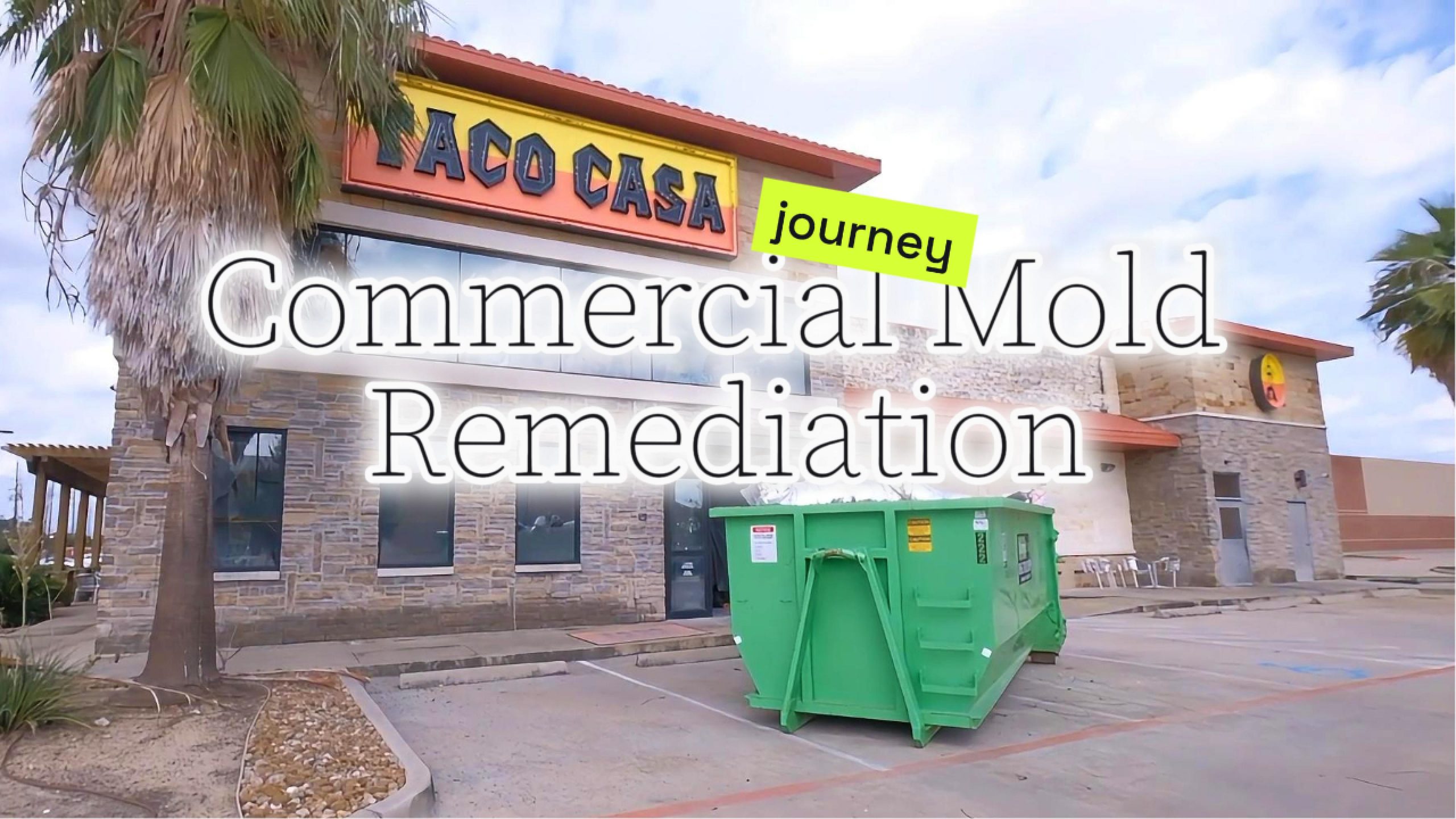
When Taco Casa contacted PuroClean of Central Southwest Houston for a commercial mold remediation project, the team anticipated a 13-day timeline per the initial protocol from LoneStar Mold Testing. However, once we took a deeper look behind the walls, it became clear that the job would require more resources. A combination of hidden moisture, HVAC imbalances, and structural concerns quickly expanded the scope of work. The project had multiple revisions, roof repair, and more demo than expected to ensure the mold will be entirely and safely eliminated.
Early Findings: Known HVAC Imbalance & Humidity Issues
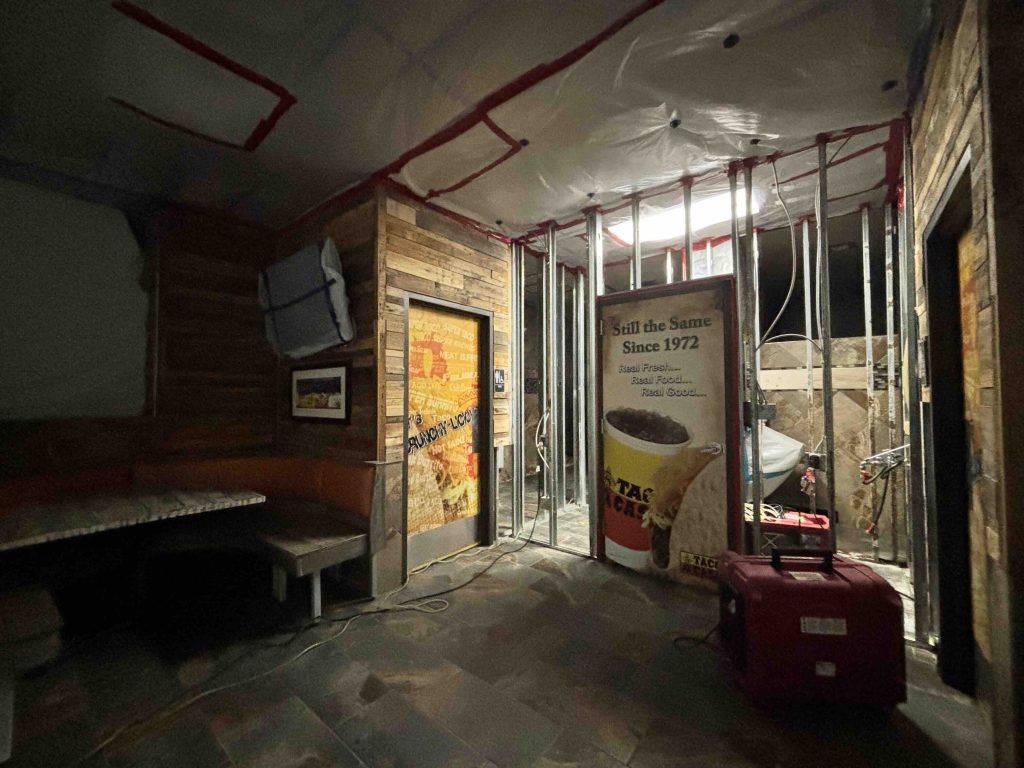
From the beginning, the team identified that the HVAC system was unbalanced—certain rooms were hotter than others, creating humidity pockets ideal for mold growth. The restroom and maintenance closet showed the most advanced contamination, prompting immediate containment to isolate affected areas. Air scrubbers were placed in each room per LoneStar’s protocol to establish negative pressure and prevent cross-contamination during demolition.
Once walls were opened, it became clear that the mold growth extended beyond the initially assessed areas. Even more concerning, moisture was entering the building from external sources, further complicating remediation.
Roof Leak Discovery and Exterior Moisture Intrusion
Midway through demolition, PuroClean uncovered a roof leak that had been allowing moisture to penetrate the structure. This not only contributed to mold growth but also required a full pause in the project while the facility’s landlord arranged repairs.
Additional investigation revealed that the dining room walls also showed significant signs of moisture intrusion from the exterior, requiring them to be removed and added to the remediation plan. These conditions were not part of the original assessment and required official protocol amendments before work could continue.
Protocol Adjustments Made During the Commercial Mold Project
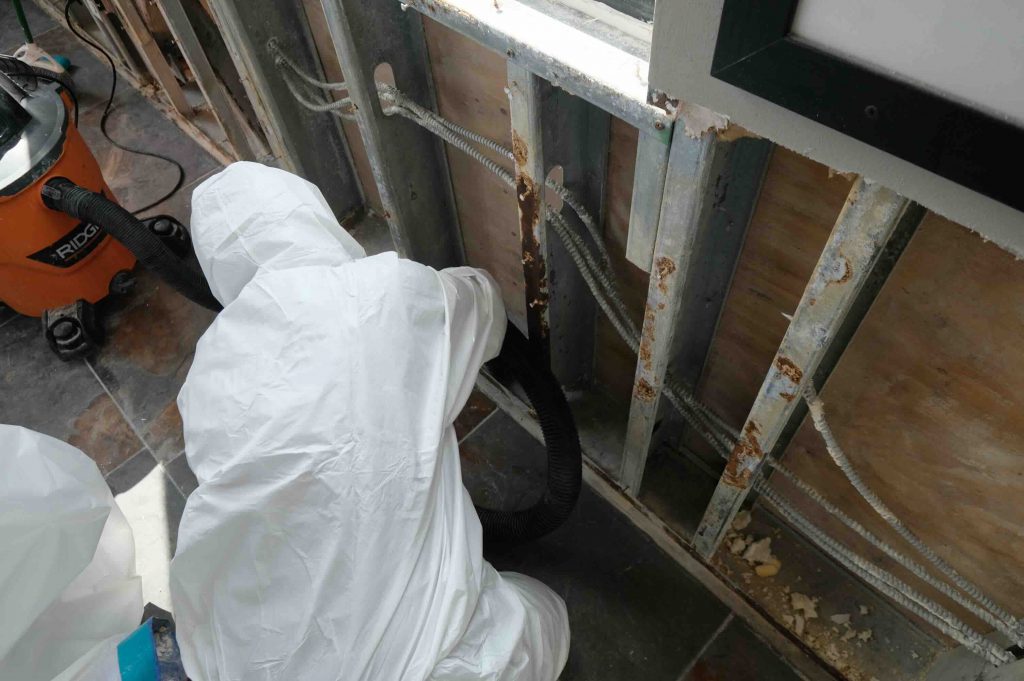
As remediation revealed the true scope of contamination and moisture problems, several critical adjustments were made to the LoneStar Mold Testing protocol. All updates were submitted, reviewed, and approved before continuation, ensuring full compliance with state mold remediation standards.
1. Expanded Mold-Impacted Areas—Over 150 sq ft Found
Demolition exposed more than double the originally estimated mold contamination—over 150 square feet. Because this exceeded the initial notification threshold, work was paused while the hygienist filed updated state notifications and revised the removal plan.
2. Wider Demolition Required
Although the janitor’s closet showed heavy contamination, mold was also found in:
- The standing area
- Both restrooms
- Sections of the dining room
- Multiple interior walls
This required expanding containment zones and adjusting cleanup, demolition, and post-remediation verification procedures.
3. No Mold Behind FRP Panels
Despite concerns, no mold was found behind the FRP (fiberglass reinforced polymer) panels, saving time and focusing efforts where contamination was confirmed.
4. HVAC Removal and Protocol Modification
The HVAC system imbalance was a known cause of mold growth. To safely remediate the system, HVAC components were:
- Removed by the vendor
- Inspected and cleaned
- Added officially to the updated protocol
Reconstruction could not begin until HVAC work was completed, as improper airflow could reintroduce moisture issues.
5. Roof Leak Added to the Scope
The newly discovered roof leak required the landlord’s repair team to intervene. The protocol was updated to include this source of moisture before encapsulation or reconstruction could continue.
6. Moisture Penetration in the Dining Room
Once additional walls were opened, the dining room was found to have ongoing exterior moisture penetration, leading to expanded demolition and cleaning requirements.
7. Additional Containment and Equipment
Due to the significantly increased scope:
- Additional containment zones were added
- Negative pressure was recalibrated
- Extra air scrubbers were installed
- Equipment remained in place longer than planned
- Air change rates were increased per hygienist recommendations
These changes ensured safe working conditions and prevented airborne mold from spreading.
Passing Clearance and Final Documentation
After extensive demolition, cleaning, fogging, and encapsulation, LoneStar performed final swab testing, air sampling, and visual inspection. All containment areas passed clearance.
Both PuroClean and the hygienist completed and signed the CMDR (Certificate of Mold Damage Remediation), confirming the building was restored to safe conditions and ready for reconstruction.
Conclusion
What started as a contained, 13-day mold remediation project escalated into a multi-layered operation requiring architectural investigation, moisture-source repair, protocol revisions, and coordinated approval from multiple parties. Through every phase, PuroClean of Central Southwest Houston worked closely with LoneStar Mold Testing, the facility’s landlord, and the HVAC vendor to ensure the work met the highest safety and compliance standards.
Ultimately, the Commercial Mold project was completed successfully, clearing contamination, resolving moisture issues, and preparing Taco Casa for safe reconstruction and reopening.
For more information on Mold Remediation Services, call (832) 856-5900 or go to PuroClean of Central Southwest Houston website.

 PuroClean of Central Southwest Houston