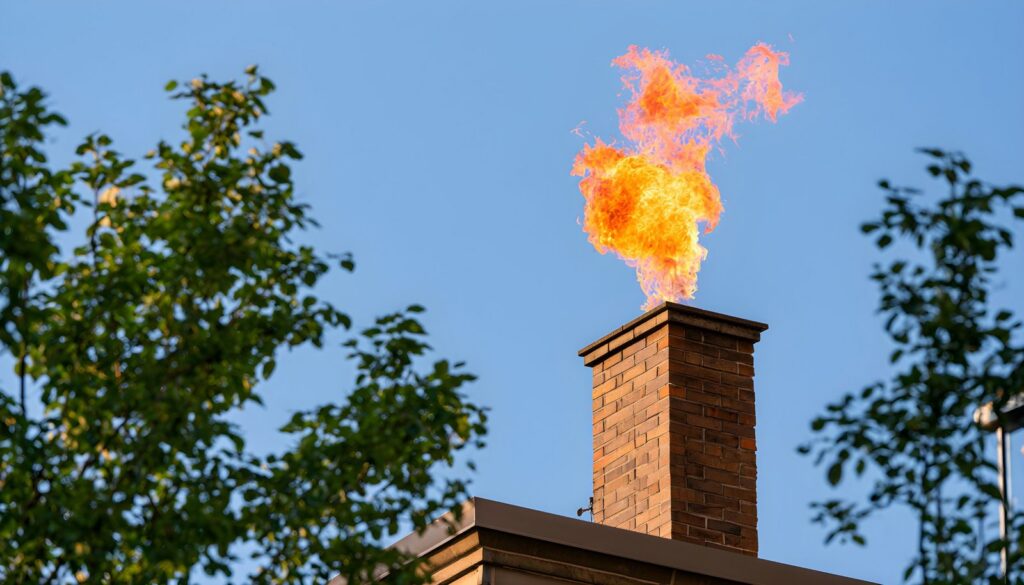
A chimney fire can leave damage behind even when it stays inside the flue and burns out on its own. Heat can crack the flue liner, and smoke and soot can push back into the room and settle on walls, ceilings, and fabrics. If firefighters responded, there may be water damage too. The chimney needs a professional inspection before you light another fire, and chimney fire smoke damage inside the home needs its own cleanup. If you think a chimney fire is burning right now, get everyone out of the house and call 911.
Key Takeaways
- A chimney fire can crack the flue liner and damage the chimney even if it went out on its own.
- Don’t use the fireplace or wood stove again until a certified chimney sweep has inspected it.
- Soot settles well beyond the fireplace, often on cold exterior walls, ceilings, and fabrics.
- Wiping or scrubbing soot with household cleaners can smear it and make it harder to remove.
Signs You May Have Had a Chimney Fire
Some chimney fires are loud and obvious. Others burn slowly and go unnoticed until a later inspection. The Chimney Safety Institute of America (CSIA) describes loud cracking and popping, dense smoke, and an intense, hot smell as signs of an active chimney fire.
After the fire, the evidence is often in and around the chimney itself. CSIA lists signs that a chimney sweep looks for, including:
- Puffy or honeycombed creosote
- Warped metal on the damper, connector pipe, or factory-built metal chimney
- Cracked or collapsed flue tiles, or tiles with large chunks missing
- A discolored or distorted rain cap
- Creosote flakes on the roof or ground, or roofing damaged by hot creosote
- Cracks in exterior masonry or smoke escaping through mortar joints
Because most chimney fires go undetected, CSIA recommends having a CSIA Certified Chimney Sweep inspect your chimney every year. A factory-built metal chimney damaged by a chimney fire should no longer be used and must be replaced.
Why a Contained Chimney Fire Still Needs an Inspection
A chimney fire that stays in the flue can still weaken the chimney. Heat can crack flue tiles and displace mortar, giving flames a path to the wood framing of the house the next time you burn a fire.
Fires that spread beyond a fireplace or chimney cause an outsized share of heating fire damage. Based on 2020 to 2024 averages, the National Fire Protection Association (NFPA) reports that larger, non-confined fires involving fireplaces or chimneys were 6% of home heating equipment fires. Those fires caused 19% of the direct property damage.
After a chimney fire, have a CSIA-certified chimney sweep inspect the flue, liner, and damper before you use the fireplace or wood stove again. Repairs to the chimney itself belong to that specialist. From the ground, you can also check the roof around the chimney for the same signs of roof water damage you would look for after a storm.
Where Chimney Fire Smoke Damage Settles Inside
Smoke from a chimney fire can travel well beyond the fireplace. As it cools, soot settles on surfaces around the home, and it tends to collect in predictable places.
This table shows where soot often settles after a chimney or wood stove fire and what it can look like.
| Where soot settles | What you might see |
|---|---|
| Fireplace surround, mantel, and hearth | Black or gray film, darkest near the opening |
| Walls and ceiling above the fireplace or stove | Gray haze or dark streaks rising from the opening |
| Exterior walls and windows | Faint lines or patches where cooler surfaces drew soot in |
| Furnace filters and return vents | Dark buildup around vent covers and on the filter |
| Upholstery, carpet, curtains, and bedding | Gray tint and a lingering smoke odor |
Smoke odor can stay in soft materials long after the soot is gone. The approach is similar to removing smoke odor after wildfire smoke enters your home, though a chimney fire usually leaves heavier residue closer to the source.
What Not to Clean Yourself
Soot is oily and fine, so the wrong cleaning method can spread it or set the stain. Until the damage has been assessed, avoid these steps:
- Don’t wipe walls or ceilings with a wet cloth or all-purpose cleaner, which can smear soot into the surface.
- Don’t vacuum soot with a household vacuum, which can blow fine particles back into the air.
- Don’t wash smoke-damaged fabrics or clothing in hot water before checking how to treat them.
- Don’t paint over soot or smoke stains, since the odor and discoloration can come back through the paint.
- Don’t run the furnace until the filter has been changed and the vents checked for soot.
If anyone in the home has a respiratory condition, or if young children or pets live there, ask your doctor or veterinarian whether they should stay elsewhere during cleanup.
If Water Was Used to Put Out the Fire
If firefighters responded, they may have used water or other extinguishing methods in the firebox, chimney, or nearby walls. That water can soak the hearth, the floor in front of it, and the wall cavity around the chimney. Wet materials need to be dried promptly, separate from the soot cleanup. Professional water damage restoration can find where moisture has spread and dry the structure.
What Professional Smoke and Soot Cleanup Involves
Smoke and soot restoration starts with a thorough assessment, since smoke can reach hidden areas such as wall cavities, insulation, and air ducts. Different fires leave different kinds of residue, so cleaning methods are matched to the residue. Soot can also be acidic and may keep damaging surfaces and metal fixtures if it’s left in place. What can be cleaned and what needs replacing depends on an inspection of the affected materials.
If heat or water damaged drywall, flooring, or trim near the chimney, PuroClean of Kalispell, MT, also offers reconstruction after fire damage once cleanup is complete.
Get Help With Smoke and Soot Damage in Kalispell
Call a professional when soot has spread beyond the fireplace, smoke odor lingers after airing out the house, or water was used to put out the fire. PuroClean of Kalispell, MT, can assess the damage, answer your questions, and help you take the next steps toward recovery. Call (406) 890-6202 or learn more about fire damage restoration in Kalispell.
Frequently Asked Questions About Chimney Fire Damage
Does Homeowners Insurance Cover Chimney Fire Damage?
It depends on your policy and what caused the fire. Damage to the chimney, smoke and soot cleanup, and water damage may be handled differently. Ask your insurer how your policy applies, and keep photos and receipts from the start.
Can Water From Putting Out the Fire Lead to Mold?
It can if wet drywall, framing, or flooring isn’t dried. Moisture can stay trapped in the wall around the chimney after the surface looks dry. Learn how long it takes for mold to grow after water damage.
How Can I Tell If Water Got Into the Walls Around the Chimney?
Look for bubbling paint, soft spots, or stains on the wall near the chimney, and check the baseboards for dampness. These signs of water damage hiding behind your walls apply here too.
Can a Damaged Chimney Cause Leaks Later?
It can. Cracked masonry, a damaged crown, or loose flashing can let rain or snowmelt in over time, and the leak may not show right away. If you notice new stains near the chimney, these steps for finding a hidden water leak can help.