An ice dam causes a ceiling leak when a ridge of ice at the roof edge traps melting snow. That water backs up under the shingles, drips into the attic, and soaks the insulation and drywall below. Inside, it often shows up as a stain where the ceiling meets an exterior wall.
For Kalispell homeowners, the best time to prevent ice dam water damage is before snow builds up on the roof. Unlike roof damage after a summer storm, an ice dam leak starts with heat escaping from the house. For a general overview, see PuroClean’s guide to ice dam prevention.
Key Takeaways
- Ice dams form when attic heat melts snow on the upper roof and the water refreezes at the colder eaves.
- Water trapped behind the ice can back up under shingles and into the attic, exterior walls, and ceilings.
- Ceiling stains near exterior walls and damp attic insulation are key signs that water has gotten in.
- Attic air sealing, a roof rake used from the ground, and clear gutters lower the risk. Chipping at the ice does not.
How an Ice Dam Forms
An ice dam needs snow on the roof, a roof surface warm enough to melt it, and eaves cold enough to refreeze it. Warm air can leak into the attic through gaps around light fixtures, vents, and the attic hatch, or through thin insulation. That heat melts the underside of the snow on the upper roof.
The meltwater runs down to the eaves, which sit outside the heated part of the house and stay colder. There it refreezes, and each melt and freeze adds to the ridge of ice. Once the ridge is tall enough, new meltwater pools behind it. Shingles are designed to shed running water, not hold back standing water, so the pooled water can work its way underneath.
Kalispell winters reliably supply the snow. National Weather Service snowfall records for the Kalispell area show seasonal totals ranging from about 19 inches to nearly 100 inches from the 2005–06 season through 2022–23. Most of that snow falls between November and March. Any stretch of milder days between snowfalls can melt it on the roof and start the refreeze at the eaves.
Where Ice Dam Water Damage Shows Up Inside
Water from an ice dam enters near the roof edge, so damage usually starts along the outside walls. It can travel along rafters and wall framing before it appears inside.
This table shows where ice dam water can travel and what you might notice in each spot.
| Where the water goes | What you might notice |
|---|---|
| Attic insulation near the eaves | Insulation that feels damp, looks matted, or has darkened |
| Ceiling drywall along exterior walls | Brown or yellow stains, bubbling paint, or a sagging spot |
| Inside exterior walls | Peeling paint, damp baseboards, or stains below the ceiling line |
| Upper-floor window frames | Water at the top of the frame or stained trim |
A small stain may not show how far the moisture has spread. For more on what to check, see how to tell if water damage is hiding behind your walls.
Warning Signs to Check This Winter
You can spot most signs of an ice dam without climbing a ladder. Check after a snowfall, and again after a few days of thawing and refreezing.
Outside the Home
Start with the roof edge and gutters, where ice dams build first.
- A thick ridge of ice along the roof edge or packed into the gutters
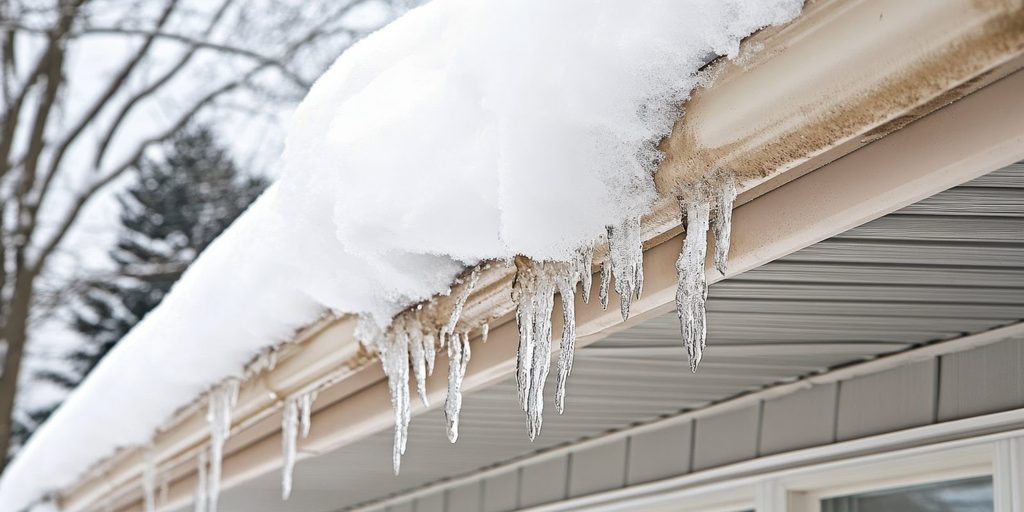
- Large icicles with water dripping behind the gutters
- Ice forming on the siding or the underside of the soffits
Inside the Home
Check ceilings and walls along the outside edges of upper floors, and the attic if you can reach it safely.
- New stains or bubbling paint on ceilings near exterior walls
- Damp insulation or dripping water in the attic near the eaves
- A musty smell in upstairs rooms or closets along exterior walls
If you see a stain but can’t find its source, these steps for finding a hidden water leak can help.
Safe Ways to Prevent Ice Dams
The most reliable way to prevent ice dams is to keep the roof cold enough that snow doesn’t melt unevenly. That means keeping warm air out of the attic and clearing snow from the roof edge safely.
Before Snow Builds Up
Fall is the easiest time to address the causes of ice dams.
- Clear leaves from gutters and downspouts so they can drain during a thaw.
- Have a qualified contractor or energy auditor check the attic for air leaks and thin insulation.
- Make sure bathroom and kitchen exhaust fans vent outside, not into the attic.
During the Winter
Removing snow from the lower roof leaves less water to refreeze at the eaves.
- Use a long-handled roof rake to pull snow off the roof edge while standing on the ground.
- Keep the rake and any ladder well away from overhead power lines.
- Don’t climb onto a snowy or icy roof. Hire a roofing or snow-removal contractor for higher sections.
Why You Should Not Chip Ice Off Your Roof
Chipping at an ice dam can do more harm than the ice itself. Shingles become brittle in the cold, and a hammer or ice pick can crack them or tear them loose. That creates new openings for water once the ice melts.
Working on an icy roof or ladder also carries a real risk of falling. If an ice dam is already causing a leak, call a roofing contractor with the equipment to remove ice without damaging the roof. Once the ice is gone, check for the same signs of roof water damage you would look for after a storm.
What to Do If an Ice Dam Causes a Ceiling Leak
Deal with safety first, then limit how far the water spreads.
- Keep power and water apart. If water is dripping near a light fixture, ceiling fan, or outlet, turn off that circuit at the breaker first, if you can reach the panel safely. Do not do this if the panel is wet or you would have to stand in water to reach it. Do not touch the fixture, the switch, or any wiring. If you notice sparking, smoke, or a burning smell, leave the area and call 911.
- Stay out from under a sagging ceiling. Wet drywall can hold pooled water and may give way.
- Protect your belongings. Move furniture, rugs, and electronics away from the leak, and set out buckets to catch drips.
- Document the damage. Take photos of the ceiling, the attic if you can reach it safely, and the ice on the roof edge. If you plan to file a claim, ask your insurer how your policy applies.
- Get the area dried promptly. Wet insulation and drywall can hold moisture long after the dripping stops. Learn how long it takes for mold to grow after water damage.
What Professional Drying and Repair Involve
A ceiling that looks dry on the surface can still have wet insulation and framing above it. Water mitigation focuses on finding where moisture has spread, removing wet materials that can’t be dried, and drying the structure. Once it is dry, PuroClean of Kalispell, MT, also offers reconstruction after water damage to repair ceilings and walls. What can be saved depends on an inspection of the affected materials.
Get Help With Ice Dam Water Damage in Kalispell
Call a professional when water has reached the inside of the house or you aren’t sure how far it has spread. PuroClean of Kalispell, MT, can assess the situation, dry the affected areas, and help you take the next steps toward restoring your home. Call (406) 890-6202 or learn more about water damage restoration in Kalispell.
Frequently Asked Questions About Ice Dams
Does Homeowners Insurance Cover Ice Dam Water Damage?
It depends on your policy and what caused the damage. Interior water damage, roof repairs, and ice removal may be handled differently. Ask your insurer how your policy applies, and keep photos and receipts from the start.
Can an Ice Dam Leak Lead to Mold?
It can if wet insulation, drywall, or framing isn’t dried. Attic insulation near the eaves can stay damp out of sight, so check it after any leak. These signs that mold is growing after water damage show what to look for.
What Should I Do If I Find Mold in the Attic After an Ice Dam?
Avoid disturbing it, and don’t try to remove it until you know where the moisture is coming from. If the growth covers more than a small area, professional mold removal can address both the mold and the materials it has affected.