


24/7 Call or Text 651-329-5436
Water Damage Restoration in Farmington, MN
Water damage restoration Farmington MN depends on which side of town you are on, because Farmington has two distinct sides. The original town grew up along the Vermillion River, and the city’s comprehensive plan notes that most downtown homes were built before 1950. North of the river, most homes date from the 1980s on, starting with Dakota County Estates and followed by a mid-1990s boom of 300 to 350 new homes a year, then the Charleswood, Middle Creek and Vermillion Grove neighborhoods in the 2000s. PuroClean of Lakeville provides 24/7 water damage restoration in Farmington, MN, for both, along with mold, fire and biohazard cleanup.
Office: 15195 Boulder Ct, Unit 50, Rosemount, MN 55068 · 24/7: (952) 377-8477
The Vermillion River and Farmington’s water risks
The Vermillion River runs right through town. The city’s park plan shows the river’s floodway and floodplain covering most of Rambling River Park, and high water reached open areas of the park in spring 2023. The city has also studied recurring flooding in the industrial park along Eaton Avenue, linked to heavier and more intense rain. You don’t need to live on the river to get water in your basement, though. Common causes include:
- Sump pumps that fail or can’t keep up during heavy rain or a fast spring thaw
- Window wells that fill with water or snowmelt
- Older plumbing and foundations in pre-1950 homes near downtown
- Failed water heaters, washing machine hoses and supply lines in 1990s and 2000s homes that are now roughly 20 to 35 years old
- Pipes that freeze in exterior walls during a deep cold snap
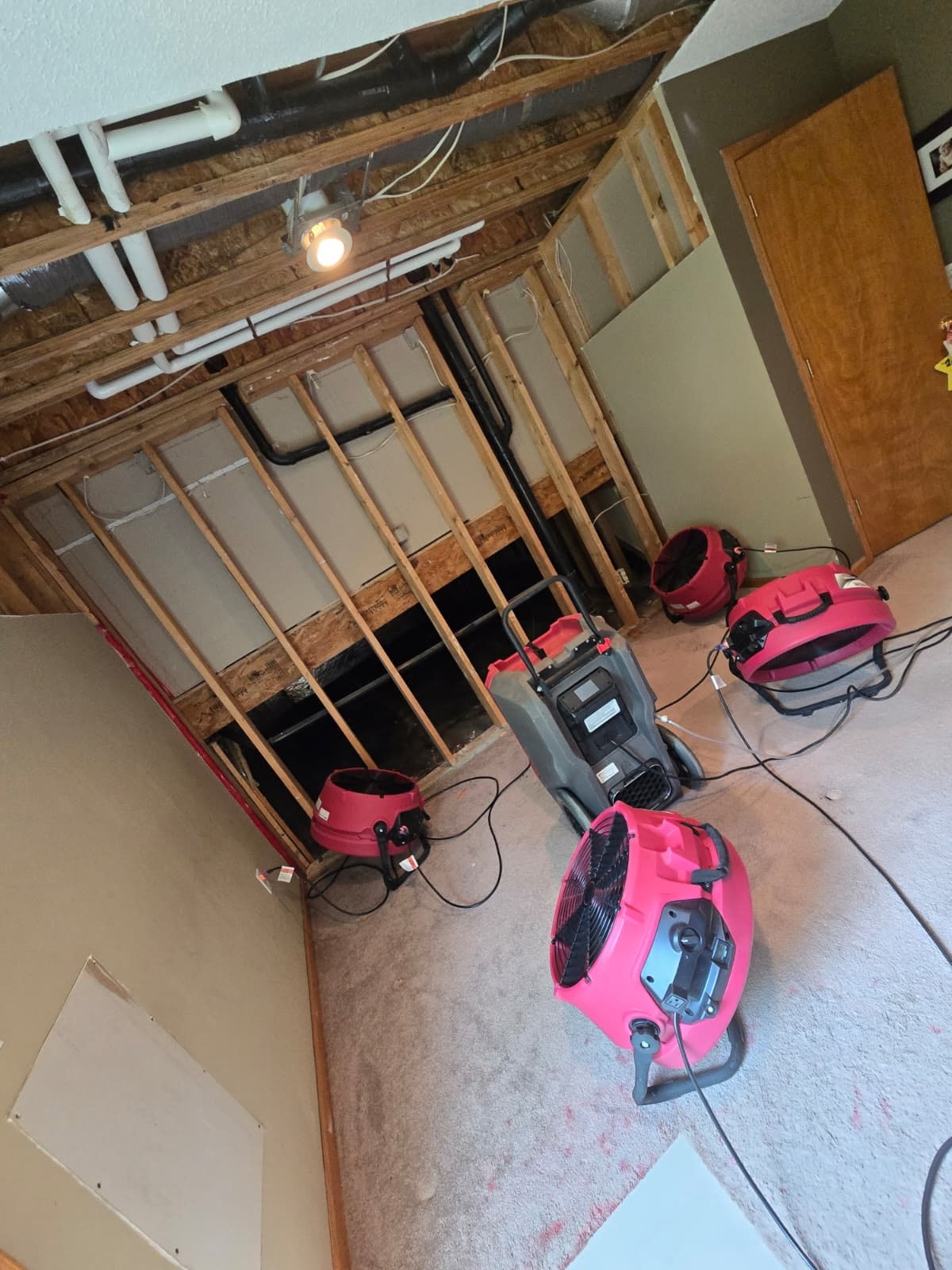
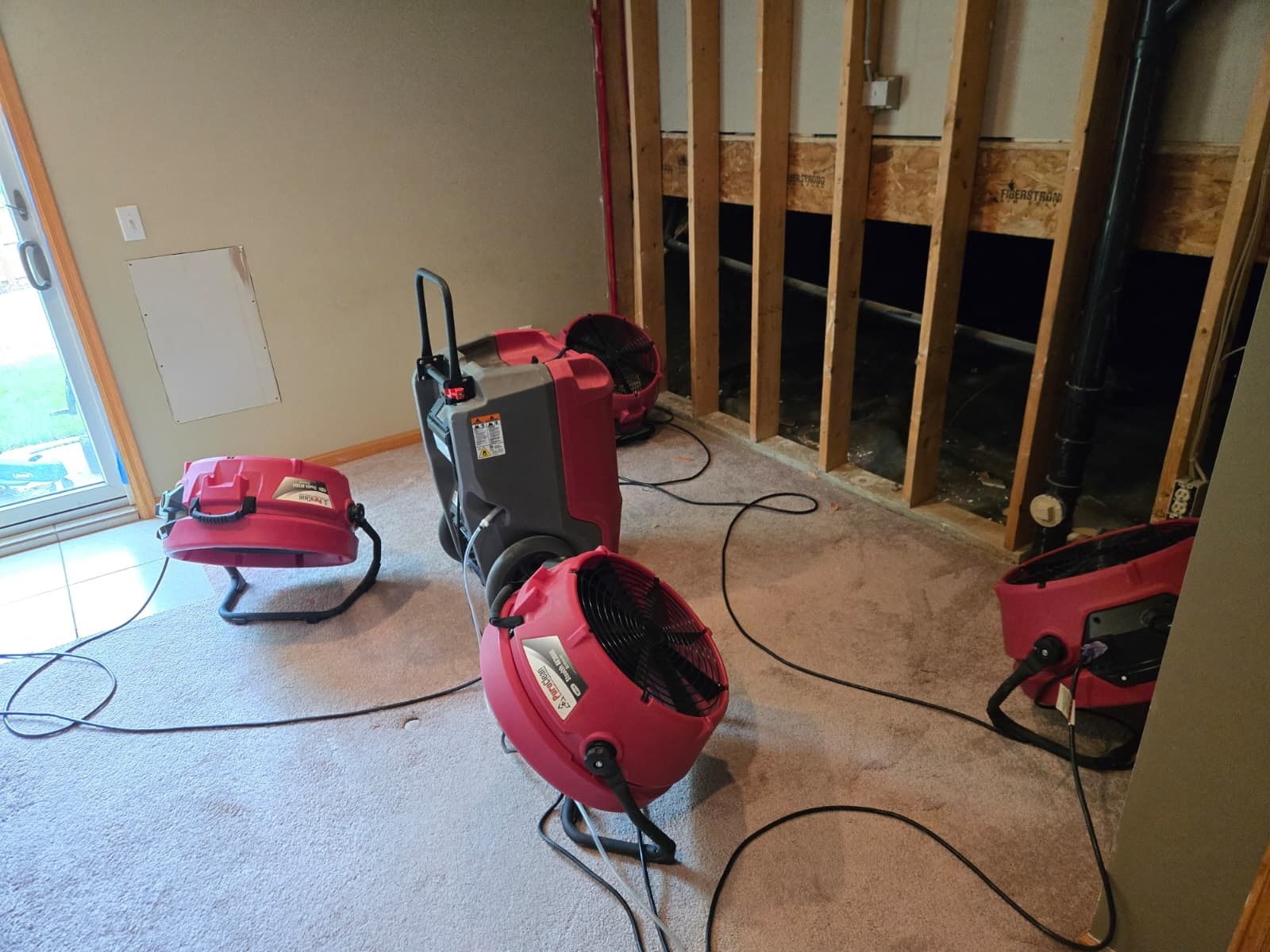
Our water damage restoration process is the same every time: stop the source, extract standing water, measure moisture in drywall, framing and flooring, remove materials that can’t be dried, and set up air movers and dehumidifiers. We check moisture readings throughout drying and keep records, so you and your insurer can see the progress.
Mold Remediation in Farmington
Farmington is the youngest community in Dakota County, with a median age under 35, according to the city. A lot of families use finished basements as playrooms and bedrooms, which makes mold worth taking seriously. The EPA says water-damaged areas should be dried within 24 to 48 hours to prevent mold growth.
When mold is already there, our mold removal team finds the moisture source first. Then we build containment to keep spores out of the rest of the house, remove moldy drywall, carpet and insulation, clean and treat the framing and dry the area. Common spots in Farmington homes include basement bathrooms, the bottom of finished walls after a past leak, and attics where bathroom fans don’t vent outdoors.
Fire, Smoke and Biohazard Cleanup
Our fire damage restoration team handles board-up, soot and smoke odor removal and drying after firefighting. We also handle sewage cleanup, hoarding and trauma scenes through biohazard cleanup, with care and privacy.
Water Damage Restoration Farmington MN: Sewer Backup? What Farmington Says to Do
According to the city’s sewer services page, the city clears blockages in its main line, while the line from your home to the main is the property owner’s responsibility. The city asks residents to call 651-280-6800 during business hours or 911 after hours so it can help find the blockage. It also recommends notifying your insurance agent and documenting your calls and costs, and it notes that many homeowners policies exclude sewer backup damage. Sewage is contaminated, so cleanup should be done safely and thoroughly.
What to Do First: Water Damage Restoration Farmington MN
- Stay out of standing water near electricity, and keep kids and pets away.
- Shut off the main water valve if a pipe or appliance is leaking.
- Move valuables and photos to a dry place.
- Take pictures before anything is thrown out.
- Call us at (952) 377-8477, 24/7.
Insurance: What We Can and Can’t Do
Your insurance company decides what’s covered, and policies vary a lot, especially for groundwater, flooding and sewer backup. We’ll document the damage with photos, moisture readings and a written scope, and walk your adjuster through the work. For questions about your policy, talk to your agent.
Why a Local Team for Water Damage Restoration Farmington MN
We’re based in neighboring Rosemount and work throughout southern Dakota County. Our technicians are IICRC-certified, use professional extraction, drying and containment equipment, and explain what they find before work starts.
Areas Near Farmington We Serve
We also serve Lakeville, Rosemount, Apple Valley, Eagan, Elko New Market and Hastings.
Water Damage Restoration Farmington MN FAQ
Do I need flood insurance if I’m near the Vermillion River?
That’s a question for your insurance agent. You can check flood maps for your address through FEMA’s Flood Map Service Center. Standard homeowners policies generally don’t cover flooding.
Why did you cut the bottom of my drywall?
A “flood cut” removes wet drywall and insulation so the framing behind it can dry and to lower the chance of mold.
Do you work in older downtown homes?
Yes. Older basements and foundations need careful drying and moisture checks, and we adjust our approach to the building.
Your First Week of Water Damage Restoration Farmington MN: What Happens When
Most people have never been through a water loss before, so it helps to know the road ahead. No two jobs are identical. A slow leak behind a dishwasher and a basement full of sump water dry very differently. But most water damage restoration Farmington MN homeowners go through follows the same basic stages, and our goal is to make each one clear before it starts.
The first visit: make it safe and get the water out
Our IICRC-certified technicians start by checking that the water source is shut off and that it’s safe to work near outlets, appliances and the electrical panel. We identify whether it’s clean water, gray water from an appliance or contaminated water from a drain or flooding, because that decides what can be saved. Then we extract standing water from carpet, floors and subfloors and move or lift furniture off wet flooring.
Before we take anything out, we measure, explain what we found and agree on a plan with you. If baseboards, carpet pad or the lower part of the drywall have to go, you’ll know why. Air movers and dehumidifiers go in last.
The middle days: measure, adjust, repeat
Water damage restoration Farmington MN families can trust isn’t about leaving fans behind and hoping. We return to check moisture in the same marked spots, write down the numbers and reposition equipment where readings are slow to drop. The room may feel warm and the equipment will hum. That’s the process working.
The finish: proof that it’s dry
Equipment comes out when the readings say the structure is dry, not before. Many jobs take a few days, while hardwood, plaster in older downtown homes, concrete and sewage losses can take longer. You get the drying records for your files, and then rebuilding, such as drywall, paint and flooring, can begin.
Found water in your Farmington basement? The EPA recommends drying wet materials within 24 to 48 hours to help prevent mold. Don’t wait until Monday. For water damage restoration Farmington MN, call (952) 377-8477, any hour.
Moisture Mapping and Structural Drying, Explained Simply
Think of moisture mapping as a weather map for your walls and floors. Water travels in ways you can’t see: up drywall like a paper towel, under vinyl plank and laminate, along the bottom plate of a wall and into insulation. The surface may look fine while the materials underneath are soaked.
To find it, technicians use moisture meters, and thermal imaging where it’s useful, and compare each reading with the same material in a dry part of your home. We mark wet areas on a sketch and in photos. That map is the plan for water damage restoration Farmington MN homes need: it shows what can be dried in place, what has to come out and exactly where to aim equipment.
Drying, the core of water damage restoration Farmington MN, comes down to three things working together. Moving air pulls moisture off wet surfaces. Dehumidifiers capture that moisture from the air so it can’t settle back into the house. And a controlled indoor temperature keeps evaporation going. When water is trapped inside a wall cavity or under a floor, small access holes or a lifted carpet edge let the dry air reach it. It’s careful, measured work, and it’s why we track numbers instead of guessing.
A Minnesota Year of Water Risks
Every season in Dakota County brings its own threat. Knowing when each one peaks helps you watch for it, and it explains most of the water damage restoration Farmington MN calls we take.
Winter: frozen pipes and ice dams
Deep cold can freeze water lines in exterior walls, unheated garages, crawl spaces and three-season porches. Ice expands, the pipe splits, and the leak often starts only when it thaws. On the roof, heat leaking into the attic melts snow that refreezes at the eaves and forms an ice dam. Meltwater then backs up under shingles and drips into insulation and ceilings, sometimes for weeks before a stain appears.
Late winter and spring: freeze-thaw and snowmelt
Repeated freeze-thaw cycles open small gaps around foundations, window wells and slabs. When a heavy snowpack melts quickly and the ground below is still frozen, the water can’t soak in, so it runs toward the lowest point, which is often your basement wall. This is also when sump pumps work hardest.
Spring and summer: sump pump failures and sewer backups
A sump pump can fail from a stuck float, an aging motor, a clogged or frozen discharge line or a power outage during a storm. Heavy rain can also overload sewer lines, and tree roots or buildup in your service line can push wastewater up through a floor drain. Sewage is contaminated, so it calls for protective gear, removal of affected porous materials and disinfection.
Whatever season it is, water damage restoration Farmington MN work always starts the same way: find the source and stop it.
Season-by-Season Prevention Checklist
The cheapest water damage restoration Farmington MN is the job you prevent. You can’t control the weather, but you can make your home a lot harder for water to get into. Print this list or save it to your phone, and work through it as the seasons change.
Fall
- Shut off and drain outdoor faucets, and disconnect garden hoses.
- Clean gutters and make sure downspouts carry water well away from the foundation.
- Test your sump pump with a bucket of water and confirm the discharge line is clear.
Winter
- Keep the heat steady during cold snaps, even when you travel, and open cabinets under sinks on outside walls.
- Watch for icicles and ice dams along the roof edge after big snowfalls.
- Know where your main water shutoff is and make sure it turns easily.
Spring
- Clear snow away from the foundation and out of window wells before a big thaw.
- Test the sump pump again and ask a plumber about a battery backup or alarm.
- Check that soil still slopes away from the house after winter settling.
Year-round
- Replace rubber washing machine hoses with braided steel hoses.
- Check under sinks, around toilets and near the water heater for drips.
- Ask a plumber whether a backwater valve makes sense for your floor drain.
Older Downtown Homes and Newer Builds Dry Differently
Farmington’s mix of housing changes how we approach water damage restoration Farmington MN homeowners need. In older homes near downtown, basements may have block or stone foundation walls, plaster, older wiring and materials that react differently to water than modern drywall. We take extra care with readings and drying speed so older materials aren’t stressed.
In 1980s to 2000s homes north of the river, the usual challenge is finished square footage: carpet on concrete, vinyl plank floors, insulated walls and basement bedrooms. Water can hide under flooring and behind finished walls, so careful moisture mapping matters even more. Either way, water damage restoration Farmington MN residents get is matched to the building, not a one-size-fits-all plan.
Documenting Water Damage for Your Insurance Claim
Whether a loss is covered is your insurance company’s decision, and we won’t guess at it, on water damage restoration Farmington MN jobs or anywhere else. What you can control is the quality of your records. Here’s general guidance that helps in almost any claim:
- Record before you clean: Take wide photos of each room, then close-ups of damaged flooring, walls, furniture and the source. Short videos with a spoken description work well.
- Note dates and times: When you found the water, when you shut it off and who you called.
- Build an inventory: List damaged items with a brand, rough age and what you paid if you know it.
- Keep every receipt: Plumbers, drain cleaning, temporary lodging and supplies you bought to protect the home.
- Check your flood risk: If you live near the Vermillion River, look up your address on FEMA’s Flood Map Service Center and ask your agent what applies to you.
As part of water damage restoration Farmington MN customers receive our photos, moisture logs and written scope, which you can pass to your adjuster.
When to Call for Water Damage Restoration Farmington MN
Not every drip needs a restoration crew. Call for water damage restoration Farmington MN when:
- Water soaked carpet, drywall or a finished lower level, or spread past one room.
- It came up through a floor drain, from a sewer line or from outside.
- A ceiling is stained, bulging or dripping during a thaw.
- You don’t know how long the leak has been running.
- You notice swelling trim, cupping floors or a musty smell.
- Box fans have run for a day and the area still feels damp.
If you’re unsure, call anyway. A quick conversation can save materials that would otherwise be replaced. For musty smells or visible growth, see our mold removal service, and our water damage restoration service page explains our full process.
Call for help now: (952) 377-8477
Neighboring Cities We Help
Beyond water damage restoration Farmington MN, our nearby office covers the rest of the south metro. See our pages for water damage restoration in Rosemount, water damage restoration in Apple Valley, restoration services in Eagan and mold removal in Apple Valley.
More Water Damage Restoration Farmington MN Questions
Why is the dehumidifier collecting so much water?
That water came out of your walls, floors and air. It’s a sign drying is working. The amount usually drops as materials dry, which is one of the things we watch on our readings.
Can carpet in my basement be saved?
Sometimes. After a clean-water leak that’s caught early, carpet can often be dried, though the pad usually has to be replaced. After sewage or outside floodwater, affected carpet and pad are generally removed. We’ll tell you which situation you’re in during your water damage restoration Farmington MN visit.
Should I turn off the drying equipment at night?
Please don’t. On any water damage restoration Farmington MN job, turning it off pauses drying and can let humidity build back up. If noise is a problem in a bedroom area, tell us and we’ll look at the setup with you.
Call PuroClean of Lakeville for Farmington Emergencies
Water damage gets worse the longer it sits. Call (952) 377-8477 any time, day or night, or send us a message.
Other Damage After the Water in Farmington?
Water that sits for a day or two can lead to mold, and many house fires leave water damage behind from firefighting. If you’re dealing with either in Farmington, see our mold remediation in Farmington and fire and smoke damage restoration in Farmington pages, or call (952) 377-8477 any time, 24/7, for a free estimate.

