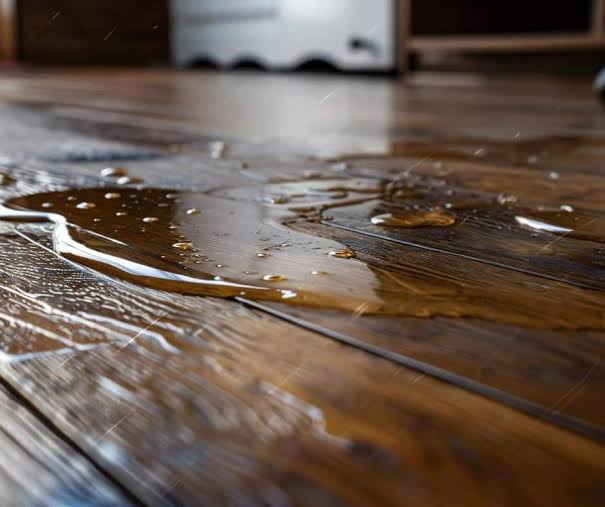
When a plumbing leak, ice maker line burst, or heavy rainstorm spills water across your home’s laminate flooring, your immediate instinct is naturally to grab towels and mop up the mess.
Within an hour or two, the top floor surface looks completely dry to the naked eye, leading many Gwinnett County homeowners to assume the danger has passed. Unfortunately, surface appearance is highly deceiving when dealing with composite laminate flooring. Unlike solid hardwood or 100% waterproof luxury vinyl plank (LVP), traditional laminate flooring is constructed around a composite High-Density Fiberboard (HDF) or Medium-Density Fiberboard (MDF) core.
When standing water sits on laminate for even a short window of time, moisture migrates downward through microscopic click-lock seams, edge joins, and expansion gaps along walls. Once trapped beneath the top decorative clear wear layer, water saturates the internal wood fibers, expanding the planks and soaking into foam underlayment pads and wooden subfloors. Here is an authoritative, technical breakdown of why surface drying will not save water-damaged laminate flooring, how to spot subterranean structural failure, and what professional restoration steps protect your property value and living health.
The Mechanics of Laminate Flooring Water Damage
To understand why dry surface laminate continues to deteriorate after a water intrusion event, it is essential to examine how composite laminate planks are engineered:
1. The Protective Wear Layer vs. The Vulnerable HDF Core: The top surface of a laminate plank is sealed with a clear, water-resistant aluminum oxide protective wear layer. While this top shield repels quick surface spills, the internal core beneath is composed of highly compressed, recycled wood fibers and resins (HDF). When water slips past unsealed click-lock seams, the exposed HDF core acts like a sponge, absorbing water rapidly and swelling uncontrollably.
2. Trapped Water Beneath Underlayment Membranes: Most floating laminate floor installations rely on a thin foam, felt, or rubber underlayment pad laid directly over concrete slabs or plywood subflooring. When water penetrates floor seams, it trickles beneath the laminate layer and gets trapped between the non-porous underlayment pad and subfloor, creating a permanent dark moisture reservoir.
3. Capillary Action and Seam Wicking Dynamics: Water moves laterally through tight click-lock channels via capillary action. Even if you mop up visible surface puddles immediately, gallons of water may already be trapped beneath neighboring planks several feet away from the initial spill site.
4 Critical Signs Your Laminate Floor Is Ruined Below the Surface
Even if your floors feel completely dry to the touch, watch out for these progressive structural failure symptoms over the days following a water event:
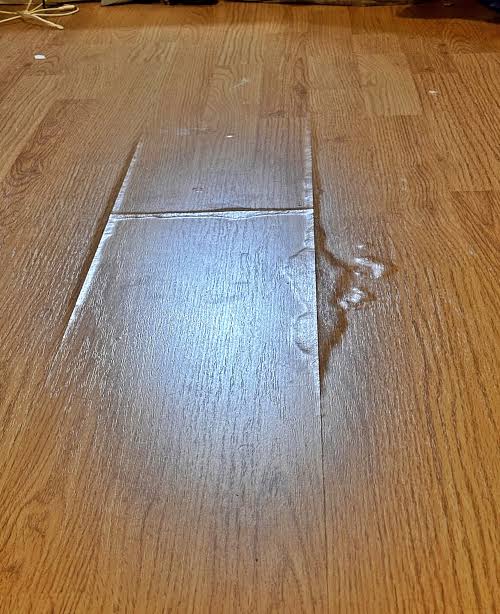
- 1. Cupping, Crowning, and Board Peaking: As the HDF core swells from absorbed subterranean moisture, the edges of adjacent planks push forcefully against each other and lift upward, creating raised, sharp ridges along every seam (known in the flooring industry as board peaking).
- 2. Buckling, Surface Bubbling, and Layer Delamination: Excess internal hydraulic pressure causes the top decorative photo paper layer to detach from the swollen fiberboard core, resulting in unsightly surface bubbles, peeling laminate layers, and severe floor buckling.
- 3. Spongy or Sinking Underfoot Feel: When trapped moisture disintegrates the foam underlayment pad and rots the underlying subfloor plywood or OSB panels, walking across the room creates a soft, springy, or distinctly uneven sensation underfoot.
- 4. Persistent Musty Odors and Mold Spore Proliferation: Trapped moisture beneath dark laminate planks creates the ultimate breeding ground for mold and bacterial colony growth. A continuous earthy, damp smell in your living room or kitchen signals hidden fungal growth within 24 to 48 hours.
Laminate Water Damage Symptom & Restoration Matrix
Understanding damage severity helps homeowners choose the right professional mitigation pathway:
| Visual Symptom | Hidden Sub-Surface Reality | Risk to Property | Required Restoration Protocol |
| Surface completely dry; minor joint darkness | Moisture trapped in underlayment pad & plank bottom | Low to Moderate; high risk of hidden mold growth | Thermal imaging scan, non-intrusive moisture testing, and commercial dehumidification setup. |
| Raised plank edges (peaking) & swelling seams | HDF core permanently swollen; moisture in subfloor | High; structural core breakdown & irreversible plank damage | Selective removal of swollen planks, subfloor drying, & structural antimicrobial treatment. |
| Buckled floor section & soft/spongy subfloor feel | Plywood subfloor delamination & heavy underlayment saturation | Critical; subfloor structural decay & widespread mold infestation | Full floor tear-out under dust containment, subfloor drying, & structural replacement. |
| Musty smell; black staining along baseboards | Active black mold colony thriving beneath floating floor | Severe indoor air quality hazard & health risk | IICRC mold remediation, containment installation, HEPA air scrubbing, & complete floor restoration. |
How PuroClean Restores Subfloors and Mitigates Laminate Damage
At PuroClean of Snellville & Lawrenceville, we know that surface drying represents only 10% of the total restoration equation. Our IICRC-certified technicians use advanced diagnostic and structural drying equipment to protect your home’s framing and subflooring:
- Advanced Infrared Thermal Imaging Surveys: We scan floors with FLIR thermal cameras to map exact subterranean water migration footprints beneath laminate planks without unnecessarily tearing up dry sections of your flooring.
- Precision Intrusive & Non-Intrusive Moisture Metering: Digital moisture meters measure exact wood moisture content (WMC) percentage levels inside the subfloor framing to ensure subfloors reach true dry standards before rebuilding.
- High-Capacity Industrial Drying Systems: We deploy Low Grain Refrigerant (LGR) dehumidifiers and directed high-velocity air movers to draw trapped moisture out of concrete slabs and wooden subfloor joists.
- Controlled Selective Floor Removal: When laminate planks are permanently swollen beyond recovery, we cleanly remove damaged sections under dust containment to expose wet subfloors for rapid sanitization and drying.
- EPA-Registered Antimicrobial Treatments: We treat exposed concrete and plywood subflooring with hospital-grade antimicrobials to eliminate bacteria, suppress mold growth, and restore indoor air safety.
Navigating Insurance Coverage for Laminate Floor Water Damage in Gwinnett County
Navigating your homeowners insurance policy coverage for laminate floor water damage in North Georgia requires technical clarity and thorough documentation:
- Sudden & Accidental Plumbing Bursts: Standard homeowners policies generally cover laminate flooring replacement and subfloor drying if the damage resulted from a sudden pipe break, ice maker leak, or appliance failure.
- Long-Term Seepage Exclusions: Insurance adjusters may deny coverage if they determine the leak was slow and ongoing over several months due to neglected homeowner maintenance.
- Matching Material Endorsements: Replacing damaged laminate often requires replacing the entire connected room floor if matching planks are no longer manufactured or available in the retail market.
PuroClean works directly with your insurance carrier from day one. We provide detailed thermal moisture reports, daily moisture logs, and itemized Xactimate estimates to ensure your claim is fully supported and handled transparently.
Frequently Asked Questions (FAQ)
Q: Can water-damaged laminate flooring dry out on its own?
No. Once water penetrates the seams and saturates the high-density fiberboard (HDF) core, the swollen wood fibers cannot naturally shrink back to their original dimensions. Trapped sub-surface moisture will rot the subfloor and breed mold if not mechanically dried using professional LGR dehumidification equipment.
Q: How fast does mold grow under wet laminate flooring?
In Gwinnett County’s warm, humid subtropical climate, mold spores germinate beneath saturated laminate flooring and inside underlayment pads within 24 to 48 hours of initial water contact.
Q: Can swollen laminate floor seams be repaired or sanded down?
No. Unlike solid hardwood, laminate flooring cannot be sanded or refinished. Swollen HDF core planks are permanently damaged and must be replaced, and the subfloor underneath must be thoroughly dried and sanitized.
Q: Why choose PuroClean of Snellville & Lawrenceville for water damage emergency response?
Our IICRC-certified technicians respond 24/7 throughout Lawrenceville, Snellville, Grayson, Lilburn, Dacula, Suwanee, and all of Gwinnett County. We arrive rapidly with advanced thermal imaging technology, industrial drying equipment, and direct insurance billing to protect your home value and family health.
Water Spill or Leak on Your Laminate Floors?
Don’t rely on surface drying alone while hidden water rots your subfloors and breeds mold. Contact the certified water extraction and structural drying experts at PuroClean of Snellville & Lawrenceville immediately for 24/7 emergency response.
24/7 Emergency Hotline: (770) 810-5499
Serving Snellville, Lawrenceville, Grayson, Dacula, Suwanee & All of Gwinnett County

Rapid Water Extraction • Thermal Moisture Detection • Structural Subfloor Drying • Direct Insurance Billing