The kitchen is widely considered the heart of the home, where families in Snellville and Lawrenceville gather to cook, share meals, and create memories. However, because it is the central hub for cooking appliances, heat sources, open flames, and electrical equipment, it is also the location where household fires most frequently originate. A momentary distraction while frying food, a grease splatter, or an electrical malfunction on a stove burner can turn a routine meal into an alarming emergency within seconds.
Once the fire department departs and the immediate danger passes, property owners face the daunting task of assessing the damage. Kitchen fires create a complex mix of property loss, including charred cabinetry, melted plastic, structural weakening, toxic soot deposits, corrosive smoke residues, and water damage from firefighting efforts. Navigating kitchen fire restoration requires rapid action, specialized equipment, and an understanding of how smoke and soot interact with different household materials.
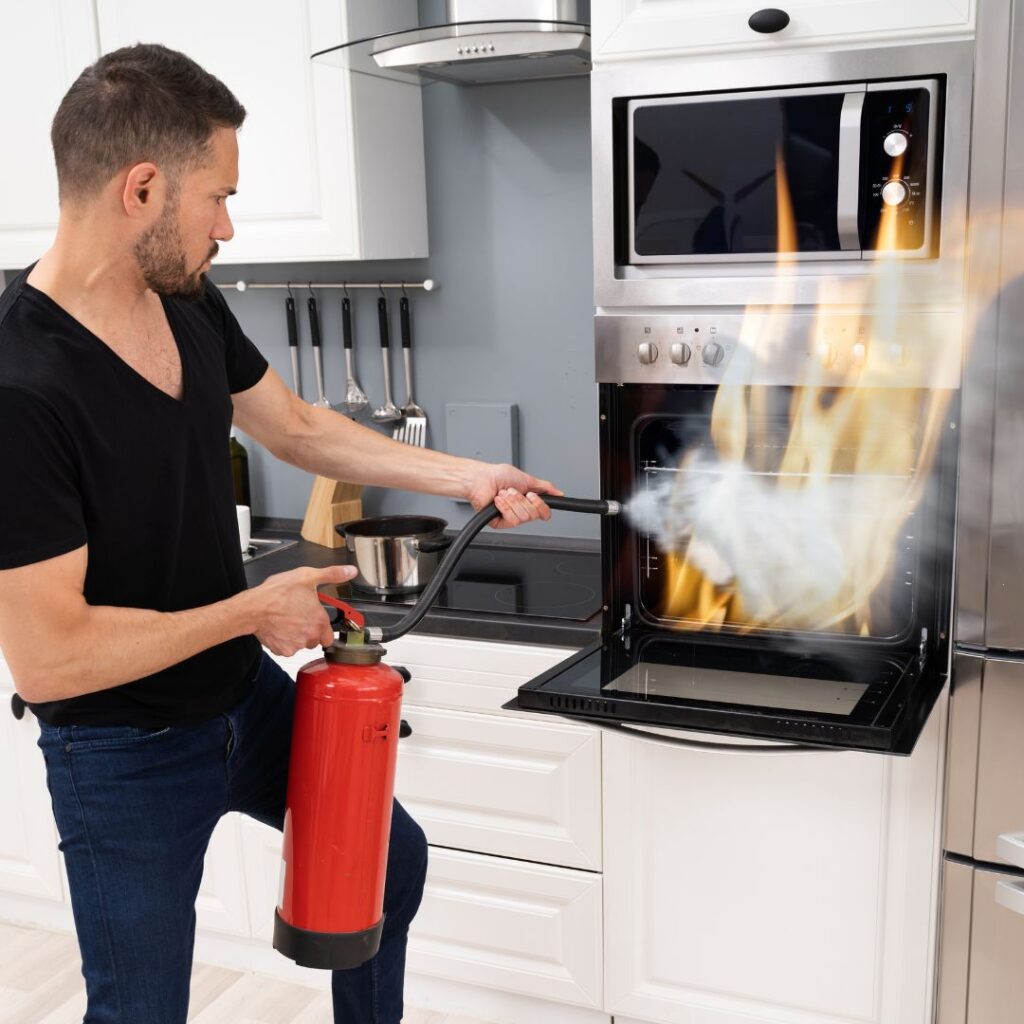
The Immediate Danger: Why Kitchen Fires Are Uniquely Destructive
Kitchen fires differ significantly from standard wood or paper fires due to the fuels involved. When cooking oil, butter, grease, synthetic materials, and electrical wiring combust, they generate distinct chemical byproducts that make cleanup particularly challenging.
Grease and Protein Fires: Grease fires burn at extremely high temperatures and release thick, sticky protein residues. Unlike dry wood ash, protein smoke forms an invisible or yellowish film that coats walls, ceiling fans, cabinets, and appliances. Protein residue carries a pungent, rancid odor that penetrates deep into porous building materials and cannot be eliminated through conventional household cleaning.
Synthetic Smoke and Plastic Combustion: Modern kitchens contain extensive synthetic materials, including plastic appliance housings, vinyl flooring, laminate countertops, and synthetic cabinet finishes. When synthetic materials burn, they produce dense, smeary black soot and release volatile organic compounds and acid harmful to lungs and structural surfaces.
Corrosive Soot Behavior: Soot particles are highly acidic. Within hours of a fire, acidic soot begins etching glass, staining metal fixtures, dulling stainless steel appliances, and permanently discoloring bathroom and kitchen tiles. Delaying professional smoke restoration allows acidic residues to permanently pit and corrode metal surfaces throughout the home.
Understanding the Different Types of Smoke and Soot Residue
Restoration technicians evaluate the specific type of fire to determine the appropriate chemical cleaning solutions and restoration methods required. The primary types of smoke damage encountered during kitchen fires include:
1. Wet Smoke Residue: Produced by low heat, smoldering fires common in kitchen cabinets or appliance wire shorts. Wet smoke creates sticky, pungent, smeary soot masses that require specialized chemical solvents to remove without driving contaminants deeper into surfaces.
2. Dry Smoke Residue: Generated by high heat, fast burning fires involving wood framing or dry drywall. Dry soot consists of small, powdery particles that are easiest to clean using specialized HEPA vacuuming and dry chemical sponge wiping.
3. Oily Grease Soot: Resulting from burning cooking oils, lard, and food products. Oily soot spreads rapidly across kitchen ceilings, wall surfaces, and light fixtures, forming a greasy layer that smears if wiped with standard household rags.
4. Fire Extinguisher Chemical Residue: While dry chemical fire extinguishers save lives, the monoammonium phosphate powder they release is corrosive to electrical contacts and metal piping, requiring specialized dry extraction techniques.
Why DIY Kitchen Fire Cleanup Is Risky and Unsafe
After a small stove fire, many homeowners in Lawrenceville and Snellville attempt to scrub walls and cabinets using retail cleaners, water, or bleach. Unfortunately, DIY fire cleanup frequently escalates total repair costs for several reasons:
Smearing and Setting Soot: Applying liquid cleaners directly to oily soot or protein film dissolves the particles and forces them deeper into drywall pores, wooden cabinetry grain, and grout lines, turning minor surface staining into permanent damage.
Spreading Odors Through HVAC Systems: Turning on your central heating or air conditioning system after a fire circulates soot particles and burnt grease odors throughout your home, contaminating untouched bedrooms, air ducts, and upholstery.
Health Hazards from Toxic Air Quality: Inhaling fine soot particles and off-gassing synthetic chemicals presents severe respiratory risks. Soot contains microscopic carcinogens, carbon particles, and chemical toxins that irritate lungs and exacerbate asthma.
The Professional Kitchen Fire Restoration Process
Restoring a fire-damaged kitchen requires a systematic approach following standards established by the Institute of Inspection, Cleaning and Restoration Certification. Professional restoration experts take structured steps to return your home to a safe condition:
Step 1: Emergency Inspection and Structural Assessment. Technicians assess fire damage, structural integrity of floor joists and roof trusses, electrical safety, and the extent of smoke migration throughout surrounding rooms.
Step 2: Board-Up and Site Containment. If doors or windows were damaged during fire response, technicians install secure board-ups. Plastic containment barriers and negative air machines prevent soot and odor migration to unimpacted areas.
Read Also: Kitchen Safety: How To Put Out A Grease Fire
Step 3: Water Extraction and Structural Drying. If fire sprinklers or fire department hoses were utilized, water extraction begins immediately to prevent secondary mold growth and wood rot in subflooring.
Step 4: Soot and Smoke Residue Removal. Certified specialists utilize specialized chemical sponges, HEPA vacuums, and alkaline cleaning agents designed specifically to neutralize acidic soot on walls, ceilings, and light fixtures.
Step 5: Advanced Odor Neutralization. Eliminating burnt grease and smoke odors requires advanced technology. Restoration specialists deploy thermal fogging, ozone generators, and hydroxyl air scrubbers to break down odor molecules at the molecular level within porous building framing.
Step 6: Structural Repair and Reconstruction. Charred cabinetry, damaged drywall, ruined countertops, and melted subflooring are safely removed and rebuilt, restoring your kitchen to pre-loss condition.
Navigating Homeowners Insurance Claims for Kitchen Fires
Unlike sewer backups or overland flooding, kitchen fire damage is almost universally covered under standard Georgia HO-3 homeowners insurance policies. Your policy typically covers structural repairs (Dwelling Coverage), personal property replacement (Contents Coverage), and temporary living expenses (Loss of Use).
To ensure your insurance claim progresses smoothly:
1. Report the Incident Promptly: Notify your insurance agent immediately after the fire is extinguished. Obtain a claim number and record the adjuster contact details.
2. Document All Losses Thoroughly: Take detailed photographs and video footage of charred cabinets, ruined appliances, smoked drywall, and damaged cookware before anything is discarded.
3. Work With a Restoration Partner Who Handles Insurance Billing: Professional restoration firms like PuroClean of Snellville and Lawrenceville utilize industry-standard Xactimate pricing software, providing itemized scope documentation directly to insurance adjusters to streamline approval.
Kitchen Fire Prevention Tips for Gwinnett County Homeowners
Preventing a kitchen fire is always preferable to undergoing restoration. Implement these essential kitchen safety practices today:
Never Leave Cooking Unattended: Unattended cooking is the leading cause of residential kitchen fires. Always stay in the kitchen when frying, grilling, or boiling food.
Keep Flammable Items Away From Stovetops: Maintain a three-foot safety zone clear of oven mitts, wooden utensils, paper towels, dish towels, and food packaging.
Keep a Class K or ABC Fire Extinguisher Nearby: Store a working fire extinguisher in or near the kitchen. Never use water to extinguish a grease fire, as water causes burning grease to explode and spread rapidly.
Install Interconnected Smoke Alarms: Ensure functional smoke detectors are installed inside and directly outside kitchen and dining areas. Test smoke alarm batteries monthly.
Frequently Asked Questions (FAQ)
Q1: Does standard homeowners insurance cover kitchen fire damage in Georgia?
Answer: Yes. Standard HO-3 homeowners insurance policies cover sudden and accidental kitchen fires, including fire suppression water damage, smoke removal, soot cleanup, structural repairs, and personal property replacement.
Q2: Can I save my kitchen cabinets after a fire, or do they need replacement?
Answer: Cabinet salvageability depends on material type and heat exposure. Solid wood cabinets with light smoke or soot staining can often be chemically cleaned, deodorized, and refinished. However, charred cabinets, warped laminate, or particle board cabinets heavily saturated with water usually require complete replacement.
Q3: How long does the smoke odor removal process take?
Answer: Minor smoke odor treatment may take 24 to 48 hours using hydroxyl generators and HEPA air scrubbers. Severe grease fire losses involving deep protein smoke penetration can take several days of specialized thermal fogging, structural sealing, and air filtration.
Q4: Is it safe to stay in my home after a kitchen fire?
Answer: If the fire caused significant smoke migration or required fire extinguisher discharges, staying in the home is generally unsafe due to toxic air quality and airborne soot particles. Your insurance Loss of Use coverage helps pay for temporary hotel accommodations.
Q5: Why shouldn’t I use water to clean soot off my kitchen walls?
Answer: Water breaks down greasy soot particles and drives them deep into drywall pores and paint, creating permanent stains and spreading odors. Professional restoration specialists use dry chemical sponges and specialized soot removers.
Call to Action: Contact PuroClean of Snellville & Lawrenceville
| 24/7 Professional Kitchen Fire & Smoke Damage Restoration If your home in Snellville, Lawrenceville, Grayson, or Gwinnett County has suffered kitchen fire, smoke, or soot damage, call the certified experts at PuroClean immediately. We restore your home safely and handle your insurance process seamlessly. PuroClean of Snellville & Lawrenceville Operated by: Jiselle Severe Phone: (770) 810-5499 Address: 478 Northdale Rd., Suite 201, Lawrenceville, GA 30046 Services: 24/7 Fire Damage Repair, Smoke Odor Removal, Soot Mitigation, Water Extraction, Structural Reconstruction, and Direct Insurance Billing. |