


Georgia’s coastal influence and weather patterns mean the late fall/winter season can be surprisingly wet and volatile. In fact, NOAA reports that unusually warm, rainy Decembers can trigger statewide floods – e.g. December 2015 saw record rainfall and widespread flooding in Georgia. Locally, low-lying areas of Gwinnett County are especially vulnerable.

Officials note that “Wolf Creek in Lawrenceville flows into the Yellow River and there is a high probability there could be flooding in the area if we get more than half a foot of rain in 24–48 hours”. In practice, slow-moving storm systems or tropical remnants dumping even a few inches of rain can swell streams and inundate homes.
For example, a historic flash flood event in Gwinnett once sent over a foot of water into roads and buildings – “many homes, apartments, businesses and roads from Norcross to Lawrenceville to Lilburn were flooded”. In short, heavy November–January rains can easily cause flooded basements, soaked walls and streets.
Table of Contents
Local Weather Patterns and Past Events
Atlanta-area forecasts for 2025 warned of an “unpredictable winter” under La Niña, with ice storms (not snow) posing the biggest threat. Historically, this has been true: even light freezing rain or sleet events can paralyze the metro area. For instance, back-to-back ice storms in January 2025 brought Atlanta and Gwinnett County to a standstill. Such storms can cause power outages and burst pipes even if only a coating of ice accumulates.
In southern Gwinnett, officials say the “south and western parts of the county traditionally have the greatest potential for flooding – …southern parts of Lawrenceville and even over in Norcross”. In addition, powerful spring and fall thunderstorms occasionally spawn tornadoes or straight-line winds that break branches and damage roofs. Overall, the key local factors are heavy rain plus occasional freeze/thaw cycles.
Atlanta’s Piedmont Park blanketed in snow after a January 2025 winter storm.
Common Storm and Flood Damage
Severe winter and coastal storms can cause a variety of damage to homes and businesses:
- Wind and Debris: Thunderstorm winds or ice-laden branches often snap trees and can pry off roof shingles, siding, or shutters. Gwinnett police warn that downed trees and power lines from storms create major hazards. A fallen limb or heavy rain can break windows, collapse gutters or dent metal awnings on business storefronts.
- Flooding and Water Damage: Basement floods and first-floor water intrusion are very common during these storms. Heavy rain can overflow yard drains and storm sewers, sending water under walls and through floors. Inland ponds and creeks quickly rise after sustained rain – for example, NOAA noted massive rainfall caused roads in Norcross and Lawrenceville to be submerged by several feet. Once inside, water can saturate carpets, drywall and wood – warping floors and causing ceiling leaks.
- Frozen Pipes and Ice Dams: Georgia’s freeze-thaw winter can burst plumbing. Even a mild freeze can solidify standing water in pipes and expand metal, causing cracks. PuroClean reports that “frozen or burst pipes are one of the most frequent causes of winter water damage”, sending hundreds of gallons of water into a home if a pipe fails. Roof leaks from ice dams are another risk: when ice builds up on roof edges, meltwater seeps under shingles and drips into attics or ceilings. Homeowners often discover wet insulation or mold stains weeks after a warm spell follows ice.
- Mold and Contamination: Any standing water left behind will likely lead to mold growth within 24–48 hours. Floods can also carry sewage or chemicals, so carpets and porous materials soaked in floodwater are often unsalvageable. In short, flood-damaged drywall, insulation, floor coverings, furniture and belongings may all need cleaning or disposal to prevent health hazards.
Preparedness Tips for Homeowners and Businesses incase of Floods.
Taking simple precautions before and during a storm can greatly reduce damage:
- Clean gutters and drains: Remove leaves and debris from gutters, downspouts and yard drains. Extend downspouts away from the foundation, so water doesn’t pool against your home.
- Trim trees and secure property: Cut back weak limbs that could fall on your roof or vehicles. Secure patio furniture, trash bins, and outdoor decorations that high winds can turn into projectiles.
- Install and check sump pumps: If you have a basement, make sure your sump pump is operational and its battery backup is charged. Test it by pouring water into the pit. Consider raising furnaces or electrical panels if you live in a flood-prone area (a FEMA guideline recommends elevating utilities above possible flood levels).
- Emergency kit and plan: Keep flashlights, batteries, a battery-powered radio, and canned food on hand. Have emergency phone numbers (including a local plumber and electrician). Create a family evacuation plan if authorities issue orders.
- Insurance check: Review your insurance policy now – standard homeowner policies typically do not cover flood damage. If you are in a flood-prone area (even moderate risk), consider the National Flood Insurance Program (NFIP) flood coverage before the next storm. Document your valuable belongings ahead of time with photos or video so you can prove ownership later.
Steps to Take Immediately After a Flood or Storm
After the water recedes and it’s safe to return, act quickly but carefully:
- Ensure safety first: Turn off electricity and gas before entering a flooded building. If you suspect a gas leak (smell rotten eggs), shut off the main gas valve, open windows, and leave the building immediately; only re-enter once officials say it’s safe. Do not use open flames or electrical tools in standing water. For added caution, have an electrician inspect your wiring before powering up.
- Document everything: Before you clean up, photograph and video all damage to your structure and belongings. Floods erase evidence fast. Take serial numbers of ruined appliances and hold onto carpet or fabric samples as proof. This documentation is critical for insurance claims.
- Remove water and dry out: Pump out standing water as soon as you can, then remove wet carpet, drywall, and insulation (these materials hold moisture and foster mold). Use fans, dehumidifiers and wet/dry vacuums to dry floors, walls and furniture. NFIP guidance notes that beginning drying immediately helps stop mold growth, which flood insurance usually will not cover. Open windows to ventilate if weather permits.
- Discard contaminated items: Throw out all perishable food and medicine that contacted floodwater. Discard rugs, upholstery, and mattresses soaked in floodwater or sewage (floodwater is considered highly contaminated). Keep wearing waterproof boots and masks while cleaning up.
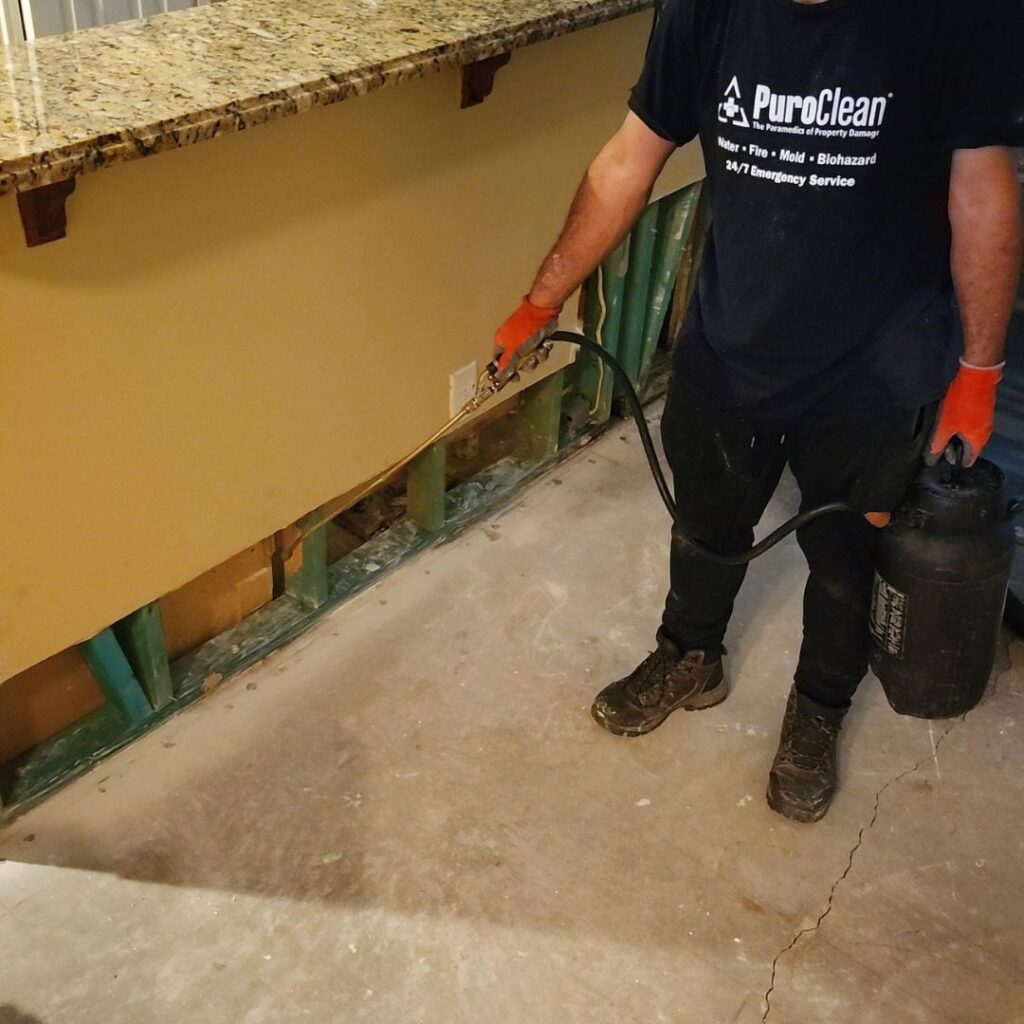
- Get professional help: Call a licensed restoration contractor (like PuroClean of Lawrenceville) to inspect electrical, plumbing, and structural integrity. Experts have moisture meters and thermal cameras to find hidden water, and they’ll know how to clean and sanitize surfaces. FEMA and flood advisers strongly recommend using licensed, insured contractors for major repairs. They can also coordinate with your insurance company and provide itemized damage estimates, saving you time and hassle.
Flood and storm damage is tough on any home or business, but acting fast – and asking for help early – makes recovery easier. Safety and sanitation should always come first, then focus on drying, disinfecting, and rebuilding step by step. Remember the old adage: “Turn around, don’t drown” – never drive through flooded roads, and stay tuned to local weather or emergency alerts.
Professional Help Is Available
In the Lawrenceville/Gwinnett community, you’re not alone after a disaster. PuroClean of Lawrenceville stands ready 24/7 to assist homeowners and businesses with emergency restoration. If floodwater or storm damage affects your property, our local team will respond quickly to extract water, dry out structures, and remediate mold and other hazards.
We work directly with your insurance and use industrial-grade equipment (pumps, dehumidifiers, air movers, etc.) to reduce damage and prevent secondary problems. Our experienced technicians also handle board-ups, tarp roofs, and remove debris so you can focus on your family or business. With PuroClean’s community-focused approach, you’ll get compassionate service and expert care to get your property back to normal after the holidays or any storm – often before it gets worse.
Stay safe this holiday season: Plan ahead for winter storms, heed flood warnings, and reach out for help right away if disaster strikes. PuroClean of Lawrenceville is proud to be part of the community, helping neighbors recover quickly and safely from the unexpected.