


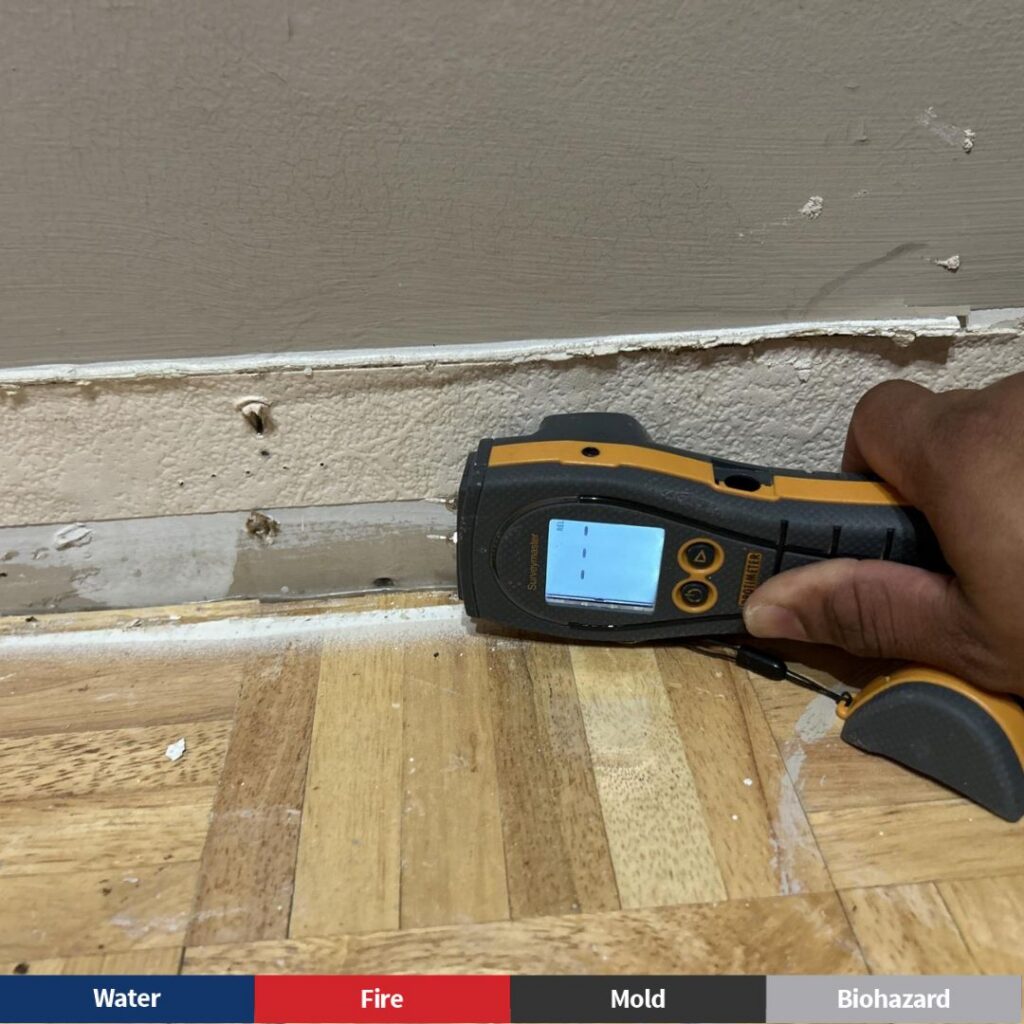
Hidden Water damage in Lawrenceville homes is not always obvious. In many Lawrenceville homes, the most serious damage happens out of sight—behind walls, under floors, and inside ceilings. By the time stains appear or floors begin to warp, moisture may have already caused structural deterioration or mold growth.
Because Gwinnett County experiences heavy rainfall, seasonal storms, and high humidity, hidden moisture is a common and costly problem for homeowners. This is why professional hidden water damage restoration companies rely on advanced detection tools like moisture meters and thermal imaging—technology far beyond what visual inspection or DIY methods can provide.
In this guide, we explain how moisture meters and thermal imaging work, why they are critical for accurate water damage detection, and how Lawrenceville homeowners benefit from professional, technology-driven restoration.
Table of Contents
Why Hidden Water Damage Is a Serious Problem for Lawrenceville Homeowners
Hidden water damage is one of the leading causes of unexpected repair costs and secondary damage in homes across Lawrenceville and surrounding Gwinnett County communities.
When water is not fully detected and dried, it can lead to:
- Structural weakening of drywall, framing, and subfloors
- Mold growth, which thrives in Georgia’s warm, humid climate
- Persistent odors and poor indoor air quality
- Repeat insurance claims due to unresolved moisture
- Higher restoration and reconstruction costs
Unlike visible flooding, hidden moisture continues damaging materials silently. This is why professional detection is essential—not optional.
Where Hidden Water Damage in Lawrenceville Homes is Found
After a plumbing leak, roof failure, or appliance malfunction, water often migrates to areas homeowners cannot see. In Lawrenceville homes, hidden water damage commonly occurs:
Behind Walls and Insulation
Water travels vertically and horizontally through drywall and insulation, especially around bathrooms, kitchens, and laundry rooms.
Under Flooring
Hardwood, laminate, tile, and carpet can trap moisture beneath the surface, leading to warping, cupping, and adhesive failure.
In Ceilings
Roof leaks or upstairs plumbing failures allow water to pool above ceilings, weakening drywall and increasing collapse risk.
Crawl Spaces and Basements
Many Gwinnett County homes have crawl spaces that retain moisture long after surface water appears dry, creating ideal conditions for mold.
Because these areas are concealed, specialized detection tools are required to identify the full extent of damage.
What Are Moisture Meters and How Do They Work?
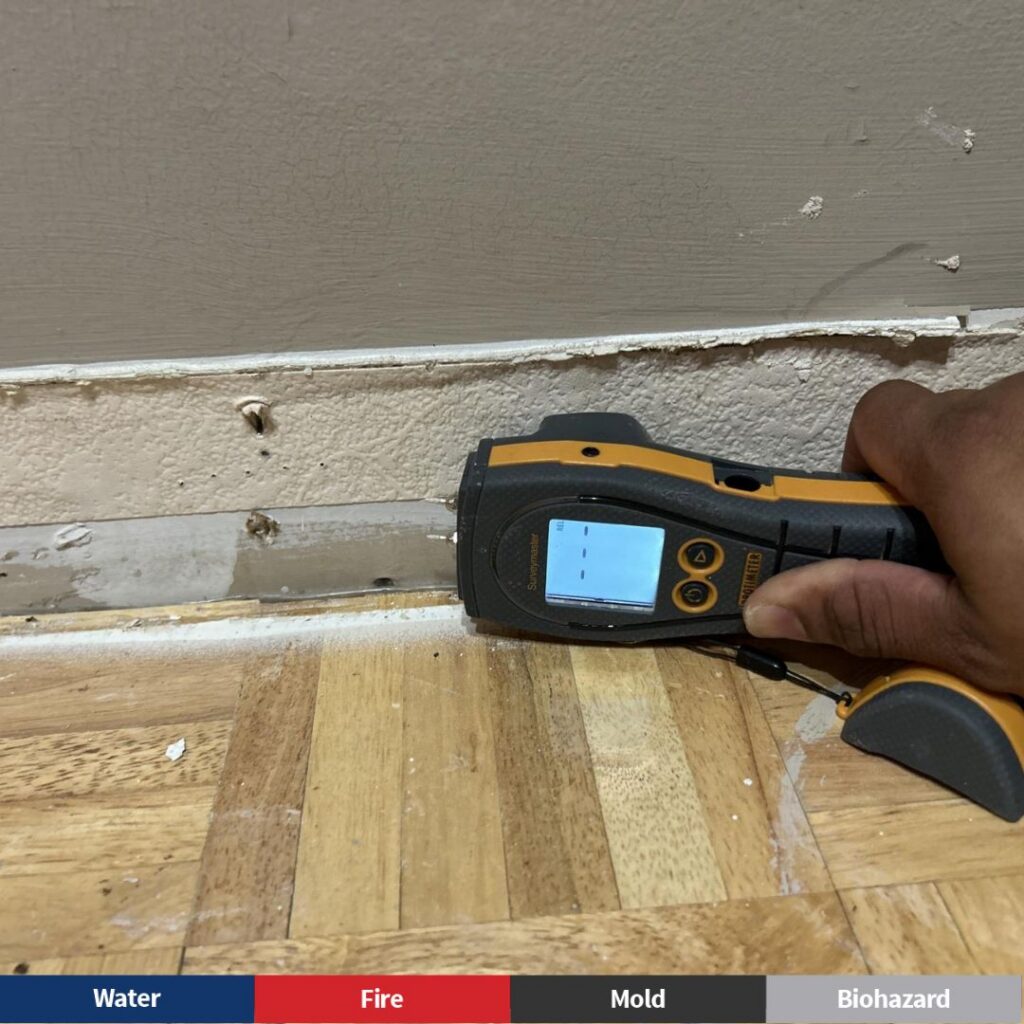
Moisture meters are professional instruments used to measure the moisture content inside building materials such as drywall, wood, concrete, and flooring.
Types of Moisture Meters Used in Water Damage Restoration
Pin-Type Moisture Meters
- Use small probes to penetrate materials
- Provide precise moisture readings
- Ideal for confirming saturation levels in framing and wood
Pinless (Non-Invasive) Moisture Meters
- Scan materials using electromagnetic signals
- Detect moisture without damaging surfaces
- Useful for rapid assessment across large areas
Why Moisture Meters Matter
Visual inspection cannot detect moisture trapped inside walls or beneath floors. Moisture meters allow restoration professionals to:
- Identify the full scope of water damage
- Create accurate drying plans
- Monitor progress during drying
- Confirm when materials are truly dry—not just surface-dry
Without moisture readings, drying efforts are guesswork—and guesswork leads to missed damage.
What Is Thermal Imaging and Why Is It Critical for Water Damage Detection?
Thermal imaging uses infrared cameras to detect temperature differences in building materials. Because water affects temperature, trapped moisture appears as cooler areas on thermal images.
How Thermal Imaging Works in Water Damage Restoration
- Moist areas retain temperature differently than dry materials
- Infrared cameras visualize these differences in real time
- Technicians can “see” moisture without opening walls or floors
Benefits of Thermal Imaging for Lawrenceville Homes
- Non-invasive detection—no unnecessary demolition
- Faster identification of hidden leaks and saturation
- Improved accuracy in large or multi-level homes
- Early detection before visible damage appears
Thermal imaging is especially valuable after storm-related water damage, roof leaks, or pipe failures common in Lawrenceville neighborhoods.
Why Homeowners Cannot Rely on DIY Water Damage Detection
Many homeowners attempt to manage water damage using fans, dehumidifiers, or visual inspection alone. Unfortunately, these methods often fail to address hidden moisture.
Limitations of DIY Detection
- Household fans do not extract moisture from walls or subfloors
- Visual dryness does not indicate internal dryness
- Store-bought dehumidifiers lack commercial capacity
- No way to verify moisture levels without professional tools
As a result, homeowners may believe the issue is resolved—only to face mold growth or structural issues weeks later.
How Professionals Combine Moisture Meters and Thermal Imaging
Professional water damage restoration companies do not rely on a single tool. Instead, they use moisture meters and thermal imaging together to achieve comprehensive detection.
The Professional Detection Process
- Thermal imaging scans identify suspicious moisture patterns
- Moisture meters confirm saturation levels inside materials
- Moisture mapping documents affected areas
- Drying plans are customized based on data—not assumptions
- Ongoing monitoring ensures complete drying before completion
This data-driven approach prevents under-drying and protects homeowners from future damage.
How Advanced Detection Protects Your Home and Reduces Restoration Costs
Using moisture meters and thermal imaging provides measurable benefits for Lawrenceville homeowners:
- Shorter drying times, reducing disruption
- Fewer tear-outs, preserving undamaged materials
- Lower reconstruction costs
- Reduced mold risk, avoiding expensive remediation
- Better insurance documentation, supporting claim approval
Proper detection ensures restoration is done right the first time—saving time, money, and stress.
Why PuroClean of Lawrenceville Leads in Water Damage Detection
When it comes to water damage restoration in Lawrenceville, GA, PuroClean of Lawrenceville is recognized for its advanced, technology-driven approach.
What Sets PuroClean of Lawrenceville Apart
- IICRC-Certified Technicians trained in industry best practices
- Professional-grade moisture meters and thermal imaging cameras
- Detailed moisture mapping and documentation
- Local expertise with Lawrenceville homes and Gwinnett County conditions
- 24/7 emergency response for immediate water damage needs
PuroClean of Lawrenceville does not rely on surface-level assessments. Their team uses precise data and advanced tools to uncover hidden water damage, ensure thorough drying, and protect homes from long-term issues.
This commitment to accuracy and accountability is why homeowners and insurance professionals trust PuroClean when water damage occurs.
Signs You May Have Hidden Water Damage in Your Lawrenceville Home
Even without visible flooding, homeowners should contact a professional if they notice:
- Musty or persistent odors
- Warped or buckling floors
- Bubbling paint or peeling wallpaper
- Unexplained humidity or dampness
- Recent plumbing leaks, storms, or appliance failures
Early detection significantly reduces restoration costs and prevents mold growth.
Protect Your Lawrenceville Home from Hidden Water Damage
Water damage is not always visible—but its effects can be devastating if ignored. Moisture meters and thermal imaging allow professionals to detect what homeowners cannot see, ensuring complete restoration and long-term protection.
If your Lawrenceville home has experienced water intrusion or you suspect hidden moisture, professional detection is essential.
Contact PuroClean of Lawrenceville (770) 810-5499 today for expert water damage restoration backed by advanced technology, local experience, and 24/7 emergency response throughout Lawrenceville and Gwinnett County.