A failing shower pan is one of the most deceptive, destructive, and financially taxing water damage threats facing property owners across Gwinnett County.
Unlike a sudden supply line burst or an overflowing toilet tank, a shower pan membrane failure typically begins as a silent, hidden trickle beneath your bathroom’s tile flooring. Every time someone steps into the shower, water passes through porous grout lines or unsealed tile joints, saturates the underlying mortar bed, and slowly seeps through cracked rubber, vinyl, or copper pan liners.
In residential properties throughout Lawrenceville, Snellville, Grayson, Lilburn, Dacula, and Suwanee, shower pan leaks frequently migrate downward into structural floor joists, plywood subflooring, dirt crawlspaces, or first-floor drywall ceilings below. Left unaddressed, this hidden reservoir of moisture rapidly breeds toxic black mold, triggers severe subfloor structural decay, and leads to extensive reconstruction repairs. Here is a complete, authoritative guide on how to identify a leaking shower pan, take immediate containment action, navigate complex insurance claims, and execute professional structural drying.
5 Early Warning Signs of a Leaking Shower Pan
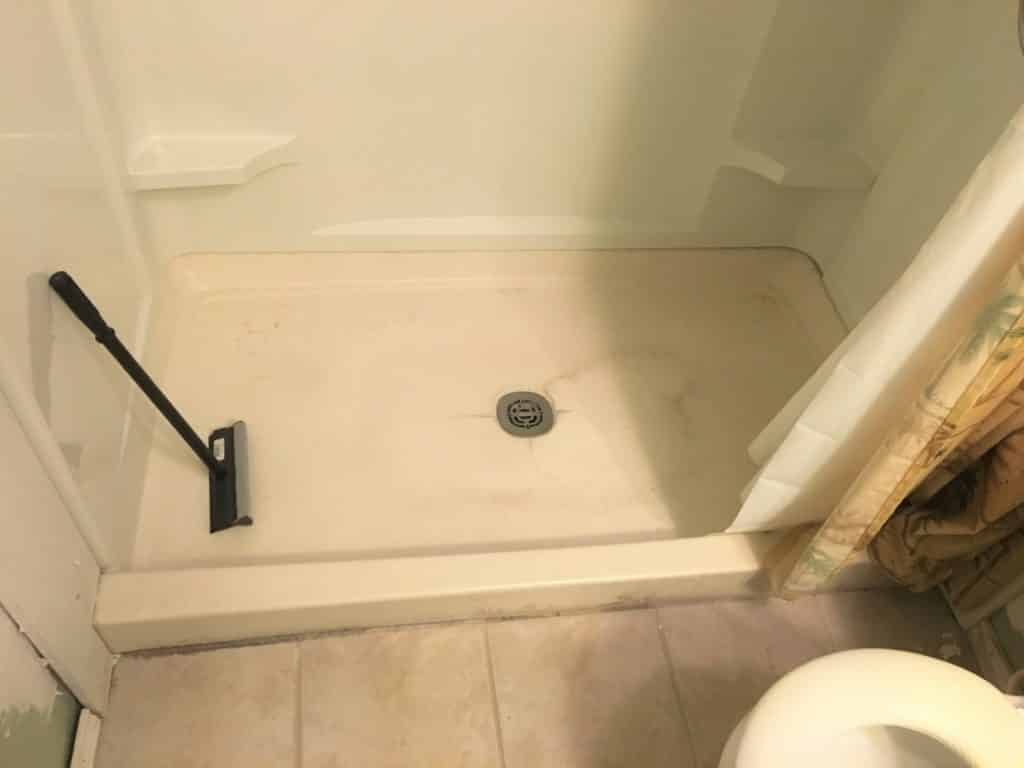
Detecting a shower pan leak in its early stages can save homeowners thousands of dollars in structural floor joist framing repairs. Look out for these 5 critical warning indicators:
1. Water Stains and Discoloration on Ceilings Below: Yellowish-brown water rings, dark streaks, or sagging drywall panels on the ceiling directly beneath a second-story or main-level bathroom are definitive indicators of active subterranean water migration originating from the shower assembly above.
2. Cracking, Flaking, or Discolored Tile Grout: Persistent dampness trapped beneath floor tiles causes cementitious grout lines to crack, flake away, or turn dark grey/black due to continuous saturation and sub-tile fungal growth.
3. Loose, Squishy, or Spongy Floor Tiles: When trapped water rots the underlying cement board substrate or plywood subfloor, shower floor tiles lose their adhesive bond, feeling loose, uneven, or distinctly spongy underfoot.
4. Persistent Musty Odors in the Bathroom or Adjoining Closets: A continuous earthy, musty odor in the master bathroom or adjacent walk-in closets—even after thorough surface cleaning—signals hidden black mold colony growth thriving beneath the shower base or inside wall cavities.
5. Peeling Paint, Blistering Drywall, and Swelling Baseboards: Water wicking upward through timber wall studs causes wall paint to bubble, wallpaper seams to separate, and wooden baseboards in adjacent hallways or bedrooms to swell, warp, and rot.
5 Immediate Emergency Steps to Take When You Suspect a Shower Pan Leak
If you discover evidence of a leaking shower pan, taking swift action reduces secondary structural damage and prevents widespread indoor air contamination:
Critical Plumbing & Drywall Warning
Do NOT continue using the shower or apply topical surface caulk over wet tiles. Trapping moisture inside a wet subfloor accelerates structural wood decay and accelerates mold growth within 24 to 48 hours.
1.Stop Using the Shower Enclosure Immediately: Containment.
Cease all use of the affected shower unit right away. Do not attempt temporary caulking hacks over wet tile, as topically sealing wet tile traps moisture deeper inside subfloor assemblies, accelerating wood decay and mold proliferation.
Verification: The shower fixtures remain completely off and the tile surface is dried off.
2.Inspect Lower Ceiling and Crawlspace Areas: Visual Check.
Check the room or crawlspace directly beneath the shower enclosure for active water droplets, sagging drywall sheets, or wet floor joists. Place a bucket under active ceiling drips if safe to do so.
Verification: Active drips below are caught in containment buckets and floor areas are secured.
3.Document Visible Damage with Photos and Video: Insurance File.
Take clear, timestamped photographs of stained ceilings, loose floor tiles, warped baseboards, and any visible water pooling to create an undisputed evidence file for your insurance claim.
Verification: All visible stains, cracked tiles, and ceiling damage are clearly captured on video/photo.
4.Perform a Static Plug Test: Isolation Test.
Block the shower drain opening with an expandable mechanical test plug and fill the shower base with 2 inches of standing water without running the wall mixing valves. If the water level drops without wall water running, the leak is definitively isolated to the pan liner membrane.
Verification: Water level drop confirms an active pan liner breach versus an in-wall supply pipe leak.
5.Contact Certified Emergency Restoration Specialists: 24/7 Mitigation.
Call PuroClean of Snellville & Lawrenceville immediately for 24/7 thermal moisture mapping, structural subfloor drying, and professional water damage containment.
Verification: Technicians arrive on-site with thermal cameras and extraction units.
Shower Leak Diagnosis & Remediation Matrix
Distinguishing between various bathroom water intrusion sources ensures targeted, cost-effective restoration and plumbing repairs:
| Leak Indicator | Primary Leak Source | Diagnostic Method | Corrective Restoration Action |
| Water drips continuously only when shower valve is turned ON | In-wall supply pipe, elbow connector, or shower riser leak | Pressure testing plumbing lines & wall acoustic leak detection equipment | Open wall cavity; repair copper/PEX pipe; dry wall studs & cavity insulation thoroughly. |
| Water drips during showering; pan holds static standing water | Diverter valve, faucet trim escutcheon seal, or tile wall grout breach | Isolate wall spray with plastic sheeting containment test | Re-seal tile wall fixtures, replace valve cartridge, & dry wet wall cavity assemblies. |
| Water level drops during static drain plug test | Failing shower pan liner, membrane tear, or drain flange clamping seal | Static water level test utilizing an expandable drain test plug | Remove lower tile tier & pan liner; dry saturated subfloor framing; install new waterproof membrane. |
| Musty odor & sagging ceiling drywall in room directly below | Long-term subterranean subfloor saturation & structural wood rot | Infrared thermal imaging & intrusive pin-type moisture meter mapping | Extract standing water, remove unsalvageable subfloor/drywall, & deploy commercial LGR drying systems. |
How PuroClean Restores Subfloor and Structural Water Damage
Cleaning up surface water is completely insufficient when resolving a subterranean shower pan leak. PuroClean of Snellville & Lawrenceville follows strict IICRC S500 standard protocols to restore your property safely:
- Advanced Thermal Moisture Mapping: Infrared thermal imaging cameras identify the exact boundaries of hidden water migration traveling beneath subfloors, behind ceramic tile walls, and inside ceiling joist cavities without unnecessary wall destruction.
- Precision Controlled Demolition: Unsalvageable wet materials—such as decayed plywood subflooring, saturated fiberglass insulation, and ruined ceiling drywall—are cleanly removed under dust containment to expose wet structural framing.
- Industrial-Grade Structural Drying: Commercial Low Grain Refrigerant (LGR) dehumidifiers and high-velocity air movers draw deeply embedded moisture out of solid timber joists and subfloor framing to achieve structural equilibrium.
- EPA-Registered Antimicrobial Sanitization: All exposed structural wood members and concrete surfaces are treated with hospital-grade antimicrobial solutions to destroy bacteria and suppress fungal growth during the drying process.
- Comprehensive Rebuilding Handover: We provide complete moisture clearance documentation and dry-standard verification reports to handover clean, fully dried structural framing ready for tile installation and rebuilding.
Navigating Insurance Coverage for Shower Pan Leaks in Gwinnett County
Navigating homeowners insurance coverage for shower pan leaks in North Georgia requires clear documentation and technical clarity:
- Sudden & Accidental Water Discharge: Standard homeowners policies generally cover sudden physical water damage caused by plumbing system breaks or sudden mechanical failures.
- Long-Term Maintenance Exclusions: Insurance adjusters may deny claims if they determine the leak was ongoing for months due to neglected homeowner maintenance, unsealed grout, or long-term wear.
- Tear-Out and Access Coverage: Most home insurance policies include coverage for tearing out building materials (such as bathroom flooring or ceiling drywall) to access the damaged plumbing or shower pan component, even if replacing the pan liner itself is excluded under maintenance rules.
PuroClean works directly with your insurance adjuster from day one. We provide thermal imaging logs, moisture readings, and itemized Xactimate estimates to support your claim transparency.
Frequently Asked Questions (FAQ)
Q: Can I repair a leaking shower pan without removing the existing floor tile?
No. While temporary topical sealants or grout paint exist on the retail market, they cannot repair a torn subterranean pan membrane or dry wet subfloor wood beneath. Proper permanent restoration requires removing lower tile rows to replace the liner and dry structural subflooring.
Q: How long does it take to dry structural subfloor wood damaged by a shower leak?
Professional structural drying typically takes 3 to 5 days using commercial LGR dehumidifiers and directed air movers. Drying times vary based on moisture penetration depth, ambient humidity, and subfloor material thickness.
Q: Will mold grow under my bathroom floor tile after a shower pan leak?
Yes. In North Georgia’s humid climate, mold spores germinate inside wet subfloors and wall cavities within 24 to 48 hours of water exposure. Immediate professional drying is essential to prevent widespread mold contamination.
Q: Why choose PuroClean of Snellville & Lawrenceville for bathroom water emergency response?
Our IICRC-certified technicians respond 24/7 throughout Lawrenceville, Snellville, Grayson, Lilburn, Dacula, Suwanee, and all of Gwinnett County. We arrive rapidly with advanced thermal imaging, high-capacity drying equipment, and direct insurance billing to safeguard your property value and living health.
Suspecting a Leaking Shower Pan or Ceiling Water Damage?
Don’t let hidden subterranean shower leaks destroy your home’s structural subfloor framing, ceilings, and indoor air quality. Contact the certified water mitigation and structural drying experts at PuroClean of Snellville & Lawrenceville immediately for 24/7 emergency response.
24/7 Emergency Hotline: (770) 810-5499
Serving Snellville, Lawrenceville, Grayson, Dacula, Suwanee & All of Gwinnett County

Rapid Water Extraction • Thermal Moisture Mapping • Structural Drying • Direct Insurance Billing