


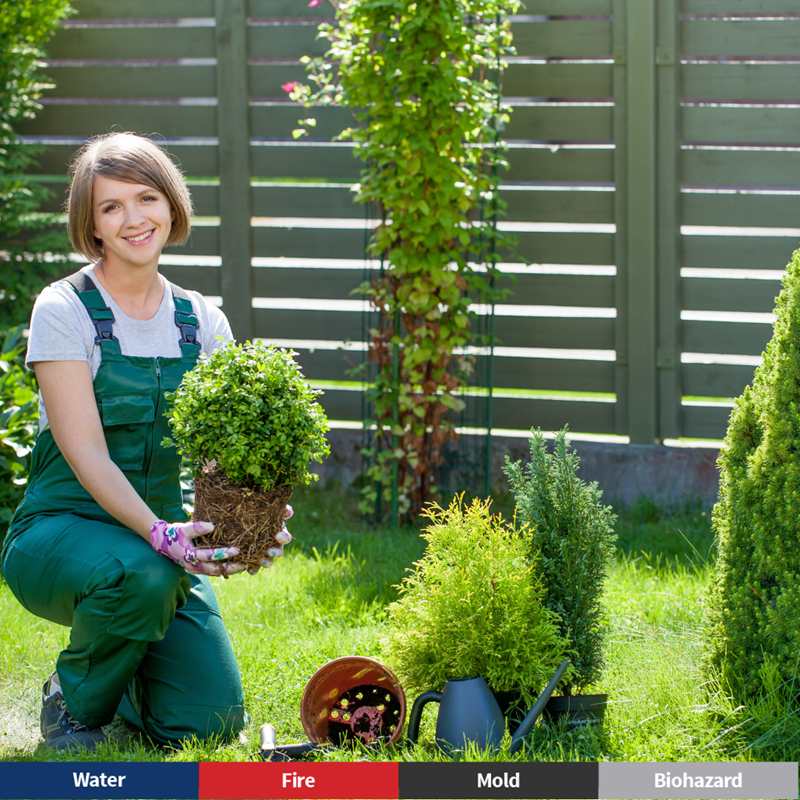
Beautiful landscaping adds curb appeal, shade, and value to a home. But what many homeowners don’t realize is this:
The way your yard is designed can directly determine whether water stays outside—or slowly makes its way into your home.
Across Lawrenceville and surrounding neighborhoods, restoration calls often trace back to a surprising root cause: landscaping choices made years earlier that now create ideal conditions for hidden water intrusion.
This isn’t about floods or storms.
This is about slow, silent moisture problems caused by grading, trees, plants, and drainage patterns around the house.
The Goal of Landscaping (That Often Gets Overlooked)
Table of Contents
Landscaping should do one critical job beyond aesthetics:
Direct water away from your home.
When soil grading, plant placement, and hardscaping interfere with that goal, water begins to collect where it shouldn’t—next to foundations, under slabs, behind walls, and eventually inside ceilings and floors.
1) Poor Yard Grading That Slopes Toward the House
Over time, soil settles. Mulch beds build up. Garden borders are added.
What was once a slight slope away from the home can slowly become a slope toward it.
During rain, water now flows toward the foundation instead of away from it. This creates:
- Hydrostatic pressure against foundation walls
- Seepage into basements and crawl spaces
- Moisture intrusion under flooring
Many homeowners never notice this subtle change until water damage appears indoors.
2) Trees Planted Too Close to the Structure
Trees are one of the biggest contributors to hidden water issues.
Roots:
- Disrupt soil structure and grading
- Intrude into underground drain and sewer lines
- Create pockets where water pools near the home
Above ground, branches drop leaves that clog gutters, causing roof-edge overflow and water entry into attics and walls.
What starts as a landscaping feature becomes a moisture pathway into the structure.
3) Flower Beds and Mulch Holding Moisture Against Walls
Mulch is designed to retain moisture for plants. When placed directly against exterior walls, it:
- Keeps siding and brick constantly damp
- Encourages mold and rot
- Allows moisture to seep into wall cavities
This is especially problematic after long periods of rain and humidity common in Georgia.
4) Downspouts That Empty Too Close to the Home
A very common issue: downspouts that discharge water right next to the foundation or into flower beds.
This concentrates hundreds of gallons of roof runoff into one small area. Over time, that water:
- Saturates soil
- Seeps into foundations
- Travels into flooring and walls
Simple extensions can prevent thousands in repairs.
5) Hardscaping That Traps Water
Walkways, patios, and decorative borders sometimes unintentionally create barriers that trap water near the house instead of letting it drain away naturally.
If water has nowhere to go, it goes down—toward your foundation.
How This Becomes Interior Water Damage
Here’s what most homeowners don’t connect:
Landscaping issue → Exterior moisture buildup → Foundation/wall intrusion → Hidden structural moisture → Visible interior damage
This is how you end up with:
- Warped floors
- Musty smells
- Ceiling stains
- Mold growth
- Peeling paint
- Recurring water damage with no “obvious” leak
By the time you see it inside, the problem has been developing outside for months or years.
Read More:
Signs Your Landscaping May Be Causing Water Problems
Walk around your home after a heavy rain. Look for:
- Standing water near the foundation
- Overflowing gutters from nearby trees
- Mulch or soil touching siding
- Downspouts dumping water next to the house
- Eroded soil channels pointing toward the home
These are early warnings.
Prevention Tips That Protect Your Home
- Ensure soil slopes away from the house
- Keep mulch and plants several inches from exterior walls
- Trim tree branches away from the roof
- Clean gutters regularly
- Extend downspouts 3–5 feet from the foundation
- Avoid planting large trees close to the structure
These small adjustments dramatically reduce the risk of hidden moisture intrusion.
When Landscaping-Related Water Damage Has Already Started
If you’re noticing interior signs like ceiling stains, wall discoloration, warped flooring, or musty odors, the moisture may already be inside the structure.
At this point, drying the surface isn’t enough. The affected materials inside walls, ceilings, or floors must be properly dried to prevent mold and structural deterioration.
That’s where PuroClean of Lawrenceville helps homeowners identify hidden moisture, stop the intrusion at its source, and restore the home safely.
The Key Takeaway
Landscaping should protect your home from water—not guide water into it.
If water damage seems to appear without a clear cause, step outside. The answer is often in your yard design, not your roof.
And addressing it early can save you from costly restoration later.