


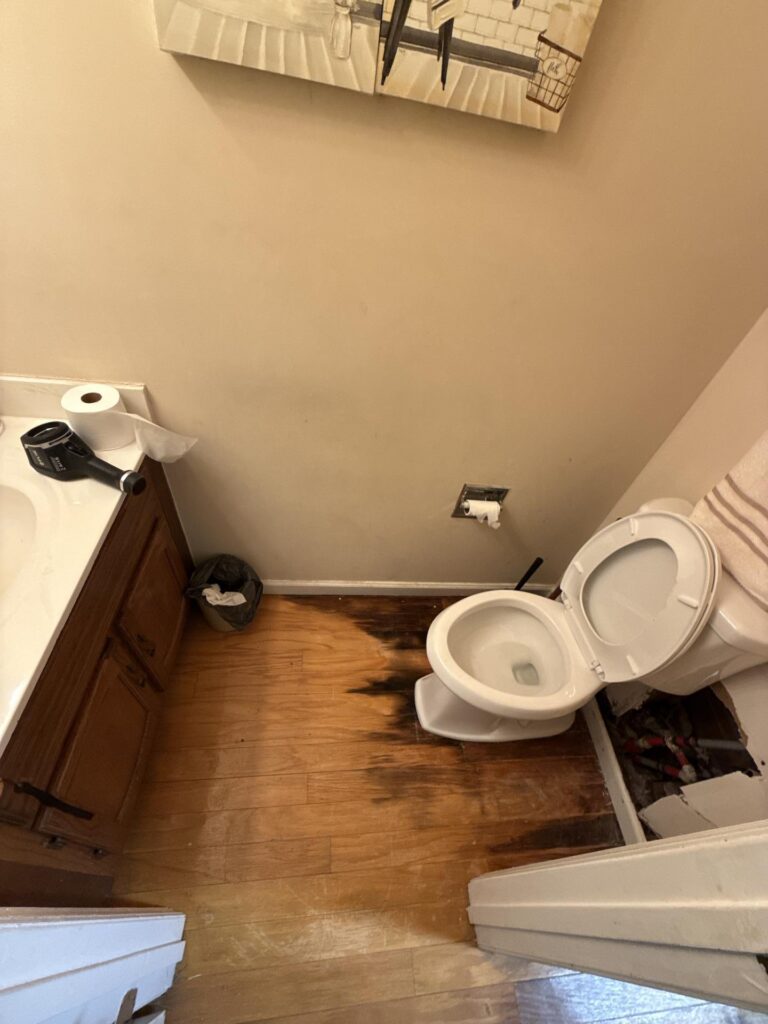
When water slips beneath your floorboards, the damage doesn’t always appear immediately. Moisture trapped under floorboards causes hidden water damage and leads to structural damage. In many Lawrenceville homes, a small leak, appliance failure, or unnoticed spill can seep under hardwood, laminate, or engineered floors, silently causing swelling, warping, mold growth, and structural problems.
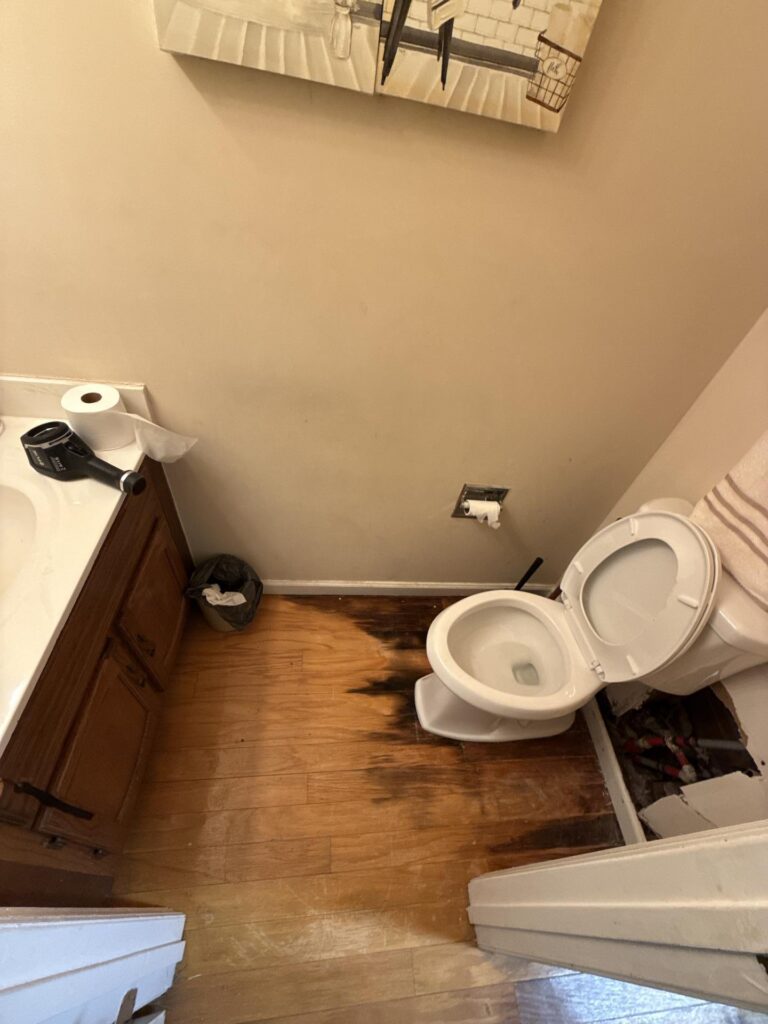
Understanding the causes, spotting early warning signs, and knowing when to call a professional can save you thousands in repairs. This guide walks you through everything homeowners and property managers in Lawrenceville need to know about trapped moisture under floors, and what to do next.
Table of Contents
Why Water Gets Trapped Under Floorboards
Water becomes trapped when it infiltrates layers beneath the visible surface. Instead of drying naturally, moisture gets sealed beneath floor coverings, creating the perfect environment for damage.
The most common causes include:
1. Plumbing Leaks Beneath the Floor
Small pipe leaks often travel sideways before they travel down, soaking the subfloor.
Kitchen and bathroom supply lines, refrigerator lines, and laundry areas are frequent culprits in Lawrenceville homes.
2. Appliance Malfunctions
Dishwashers, washing machines, ice makers, and water heaters can leak slowly over time.
Because these leaks are usually hidden behind appliances, water gets trapped before anyone notices.
3. Roof Leaks Dripping Into Lower Levels
During heavy Georgia rains, roof damage allows water to run down interior walls and settle beneath floors.
4. Flooding or Standing Water
Basement flooding, storm intrusion, or large spills can overwhelm flooring materials, forcing water underneath even if the top layer dries.
5. High Indoor Humidity
Lawrenceville’s humid climate can allow moisture to accumulate under floors, especially if ventilation is poor or vapor barriers are missing.
Early Warning Signs Your Floor Has Moisture Trapped Underneath
Water under floorboards rarely stays silent for long. Watch for these symptoms:
1. Warping or Buckling
Hardwood boards may rise, twist, or cup when moisture causes them to expand.
Laminate planks often separate or bubble.
2. Soft or Spongy Spots
A weakened subfloor feels soft when walked on, indicating saturation beneath the surface.
3. Musty Odors
A damp, earthy smell signals mold growth—one of the earliest markers of hidden moisture.
4. Discoloration or Staining
Dark patches, uneven tones, or cloudy areas on wood or laminate may appear as water spreads underneath.
5. Mold Growth Along Edges
Mold often starts around baseboards, floor joints, or gaps before spreading across hidden layers.
6. Temperature Changes
Moist areas feel cooler to the touch due to evaporation beneath the boards.
If you notice any combination of these signs, the moisture problem is already developing—don’t wait.
What Happens If Water Remains Under Your Floors
Ignoring moisture trapped under floorboards can lead to serious, expensive problems:
- Structural weakening of the subfloor and joists
- Permanent flooring damage, requiring full replacement
- Mold growth within 24–48 hours, especially in humid Georgia climates
- Odor problems that spread through the home
- Electrical risks if the moisture travels to wiring channels
- Increased pest activity, since insects and rodents thrive in damp environments
The longer water sits, the more destructive it becomes.
How Professionals Remove Moisture Trapped Under Floorboards
If you’re facing moderate to severe moisture, professional mitigation is the safest route. Here’s what the process typically looks like from experts like PuroClean of Lawrenceville:
1. Moisture Detection with Advanced Equipment
Thermal imaging, non-invasive moisture meters, and hydrometers help locate exactly where water is trapped without tearing up your floors unnecessarily.
2. Extracting Surface and Subsurface Water
Professionals use high-powered extractors and floor-drying mats to pull moisture up through the wood, laminate, and subfloor.
3. Drying and Dehumidification
Industrial-grade air movers and dehumidifiers remove moisture from both the air and the flooring assembly, preventing mold and warping.
4. Controlled Demolition (If Necessary)
If materials are too damaged or mold has formed, professionals remove only what’s needed—saving the homeowner from excessive repairs.
5. Treating Mold and Sanitizing the Area
Antimicrobial solutions and HEPA filtration prevent or remove mold growth beneath the floors.
6. Restoring and Reinstalling Flooring
Once everything is dry, your team restores the flooring to pre-loss condition, ensuring structural stability and a clean, safe living space.
DIY vs. Professional Help: What You Can and Can’t Do
Some minor moisture events can be managed at home, but most trapped-water situations require professional intervention.
You Can Do:
- Dry small spills immediately.
- Run fans and dehumidifiers after minor exposure.
- Lift corner planks (laminate only) to inspect the underlayment.
You Shouldn’t Do:
- Pull up hardwood floors without expertise.
- Attempt mold cleanup under floors—it’s unsafe and ineffective.
- Assume a floor is dry just because it “looks fine.”
If the water source was a plumbing leak, appliance failure, sewage backup, or flooding, always call a professional.
How to Stop Moisture Trapped Under Floorboards in Lawrenceville Homes.
Prevention saves money and protects your home from long-term damage. Here’s what helps:
1. Fix Leaks Immediately
Even a slow drip can saturate subfloors.
2. Seal Gaps and Cracks
Caulking around baseboards, doorways, and transition strips helps block water intrusion.
3. Use Waterproof Underlayment
If you’re installing new floors, opt for moisture-resistant materials suitable for humid Georgia weather.
4. Maintain Appliances
Check hoses, connectors, and seals regularly.
5. Keep Indoor Humidity Below 55%
A dehumidifier in humid seasons can prevent condensation beneath floors.
6. Add Mats Near Entryways
Rainwater from shoes can seep between planks.
When to Call a Water Damage Professional in Lawrenceville
If your floors show warping, softness, mold, or persistent odors—or if a leak or flood occurred—contact PuroClean of Lawrenceville immediately.
Professionals can prevent:
- Structural collapse
- Mold contamination
- Flooring replacement costs
- Long restoration timelines
Early intervention is significantly cheaper than full floor reconstruction.
Final Thoughts on Moisture Trapped Under Floorboards
Water trapped under floorboards is one of the most overlooked causes of long-term property damage in Lawrenceville homes. While the warning signs may start subtly, the consequences can escalate quickly. Whether the cause is a hidden leak, humid weather, or an unexpected spill, acting promptly is crucial.
With the right detection tools, drying techniques, and restoration expertise, professionals can save your floors and stop moisture from destroying your home. If you suspect water beneath your floors, don’t wait—get help before the problem spreads.