When a structure fire occurs in Snellville, public safety officials and emergency crews work swiftly to extinguish active flames. However, once the fire trucks leave, property owners face an equally challenging opponent: airborne smoke, fine ash, and chemical soot deposits.
Smoke residues are highly acidic and toxic. They migrate into unburned rooms, penetrate wall cavities, settle inside HVAC air ducts, and bond to building materials. Delaying response or attempting improper clean-up methods can turn easily cleanable surfaces into permanently ruined assets, while exposing occupants to hazardous airborne particulates.
This emergency guide provides Snellville homeowners and commercial operators with actionable protocols to manage smoke and ash safely during the crucial initial hours following a fire.
Immediate Safety Precautions Before Re-Entering

Prioritize safety over property retrieval. Do not re-enter your Snellville property until local fire authorities explicitly declare the structure structurally sound and safe.
- Wear Proper Personal Protective Equipment (PPE): If authorized to enter, always wear N95 or P100 respirator masks, thick nitrile or work gloves, safety goggles, and long-sleeved clothing to avoid breathing fine soot particles or absorbing toxic chemicals through skin contact.
- Do Not Turn On the HVAC System: Avoid running central heating, cooling, or ventilation units. Operating these systems distributes heavy soot particulates into unaffected rooms and contaminates the entire duct network.
- Avoid Wet Wiping Soot Unassisted: Wiping oily or dry soot with household cleaners or wet rags can smear acidic residues deeper into porous drywall, paint, and wood grain, permanently staining the material.
- Limit Foot Traffic: Keep walking across affected carpets and flooring to a minimum. Walking embeds fine ash and soot deep into carpet fibers and wood subfloors.
Understanding Smoke & Ash Damage Timeline
Chemical reaction rates speed up as acidic soot contacts ambient humidity, making fast restoration necessary.
| Time Horizon | Corrosive Chemical Impact | Professional Restoration Action |
| Within Hours | Yellowing of synthetic plastics; porous materials absorb smoke odors; metal fixtures begin tarnishing. | Pre-treat metallic surfaces, apply emergency corrosion inhibitors, establish HEPA air scrubbing. |
| Days 1 – 3 | Acidic soot causes irreversible etching on glass and tile; painted walls discolor permanently; wood finishes peel. | Execute specialized dry sponge soot removal, initiate thermal fogging and HEPA air filtration. |
| Days 4 – 7 | Vinyl flooring requires replacement; metal plumbing and appliances pit; mortar and grout absorb dark soot. | Deep chemical cleaning of structural materials, encapsulation sealing, and specialized contents cleaning. |
| Weeks 1+ | Permanent structural odor saturation; severe indoor air quality hazards; HVAC system replacement required. | Complete structural tear-out of non-restorable materials, duct replacement, and ozone/hydroxyl deodorization. |
4-Step Emergency Action Plan for Snellville Residents
Step 1: Document Soot and Ash Dispersion
Capture detailed photographs and videos of soot patterns, ash accumulation on window sills, smoke webbing in room corners, and damaged contents before moving anything. This visual proof is vital for your insurance claim submission.
Step 2: Neutralize Corrosive Residues on Metallic & Glass Surfaces
Lightly wipe down exposed chrome, aluminum, brass, and glass fixtures with approved restoration-grade neutralizers or professional guidance. Prompt attention prevents pitting and permanent etching.
Step 3: Contain Airborne Particulates
Isolate severely damaged rooms by closing interior doors and sealing off supply and return HVAC vents with plastic sheeting and painters tape to block cross-contamination into clean spaces.
Step 4: Contact Certified Smoke Restoration Professionals
Call PuroClean of Snellville & Lawrenceville at (770) 810-5499. Removing embedded smoke particles requires commercial HEPA air scrubbers, hydroxyl generators, thermal foggers, and dry-chemical sponges operated by IICRC-certified technicians.
Professional Deodorization vs. Masking Agents
A common mistake property owners make is using commercial air fresheners, scented candles, or home store foggers. These products only cover up odors temporarily without eliminating the odor-causing volatile organic compounds (VOCs).
PuroClean uses a comprehensive multi-step deodorization approach:
- Thermal Fogging: Replicates heat and particle size to penetrate structural pores exactly as original fire smoke did, neutralizing odor molecules on contact.
- Hydroxyl & Ozone Technology: Breaks down chemical odor chains at the molecular level without damaging sensitive electronics or materials.
- Odor-Blocking Encapsulation: Applies specialized sealants to exposed wood framing and subfloors prior to drywall re-installation, ensuring long-term protection against odor resurgence.
Frequently Asked Questions (FAQ)
Q: Why is soot dangerous to inhale after a fire?
Soot consists of microscopic particles produced by incomplete combustion of synthetic materials, plastics, and chemicals. Inhaling soot can trigger respiratory issues, aggravate asthma, and introduce toxic carcinogens into lungs.
Q: Can food items exposed to smoke or ash be saved?
No. Any food in unsealed cardboard, plastic bags, or open containers must be discarded due to potential chemical contamination and smoke penetration. Canned goods should also be discarded if exposed to extreme heat or chemical soot.
Q: How do professionals remove smoke smell from clothing and textiles?
Specialized restoration dry cleaning utilizes ozone chambers and specialized washing equipment to remove deeply embedded soot particles and chemical odors without destroying delicate fabrics.
Q: What is smoke webbing and why does it form in corners?
Smoke webbing occurs when synthetic materials burn, releasing ionized soot particles. These charged particles attract each other, forming black, spiderweb-like strands in cool room corners and along ceiling lines.
Q: How long does smoke damage restoration take for a home in Snellville?
Depending on the severity and extent of smoke migration, professional smoke mitigation and deodorization can take anywhere from 3 days to 2 weeks.
Need Immediate Smoke & Ash Damage Restoration in Snellville?
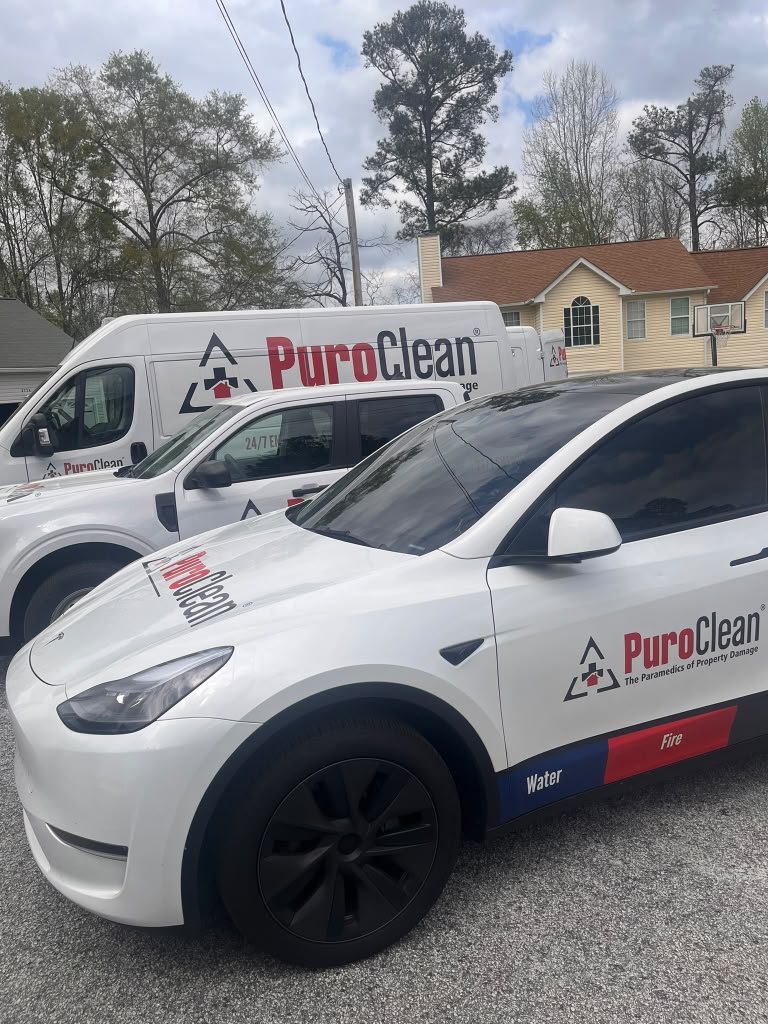
Don’t let acidic smoke and ash destroy your home or business. Trust the local experts at PuroClean of Snellville & Lawrenceville for fast emergency response, professional soot removal, and complete odor elimination.
24/7 Fire & Smoke Response Line: (770) 810-5499
Serving Snellville, Lawrenceville, Grayson, Lilburn, Loganville & All of Gwinnett County
Specializing in Soot & Ash Clean-Up, Structural Deodorization, HVAC Cleaning & Direct Insurance Billing