

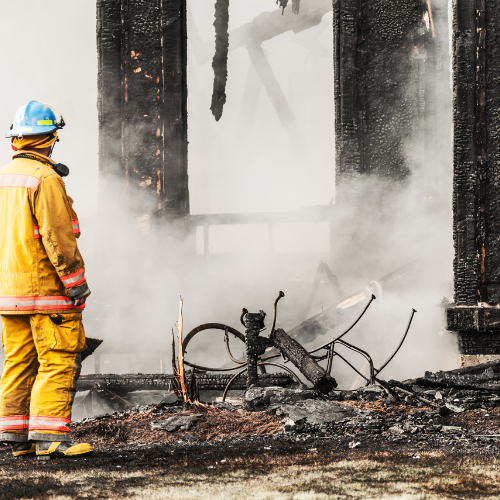
A house fire in Lawrenceville is never a single-layer problem. What most homeowners see is burned material and blackened walls. What they don’t see are the multiple types of fire damage spreading through the structure at the same time.
Fire, heat, smoke, soot, and even the water used to extinguish the flames each create a different category of damage. If even one layer is missed during cleanup, you can face recurring odors, corrosion, mold growth, and structural problems weeks or months later.
Understanding the types of fire damage is the key to ensuring your home is fully and safely restored.
Table of Contents
1) Heat (Thermal) Damage
Extreme heat travels far beyond the room where the fire started. In many Lawrenceville homes, heat spreads through framing, attic cavities, and hallways, causing:
- Warped doors, cabinets, and flooring
- Cracked drywall and ceilings
- Damaged wiring behind walls
- Compromised structural framing
- Shattered windows and weakened masonry
Even areas untouched by flames may be structurally unsafe due to heat exposure.
Restoration focus: structural assessment, removal of compromised materials, and controlled rebuild.
2) Smoke Damage
Smoke is microscopic and highly invasive. It flows through:
- Air ducts and HVAC systems
- Wall cavities and insulation
- Upholstery, clothing, and carpets
- Electronics and appliances
Smoke carries acidic particles that continue damaging surfaces long after the fire is out. This is the primary cause of persistent “fire smell” in homes.
Restoration focus: air scrubbing, HVAC decontamination, and professional deodorization.
3) Soot Damage (Different Types)
Soot is not just dirt. It is an acidic, oily residue that permanently stains and corrodes materials if not treated correctly.
Types of soot commonly found after residential fires:
- Wet soot – sticky and smeary from slow, smoky fires
- Dry soot – powdery residue from fast-burning fires
- Protein soot – nearly invisible but causes powerful odors (often from kitchen fires)
- Fuel-oil soot – common from furnace puff-backs
Restoration focus: dry chemical sponging, HEPA vacuuming, and specialized cleaning agents before any wet cleaning begins.

4) Water Damage from Firefighting
One of the most overlooked types of fire damage is water damage.
Fire hoses can release hundreds of gallons of water into a property, leading to:
- Saturated drywall and insulation
- Warped hardwood and laminate flooring
- Ceiling collapse risk
- Mold growth within 24–48 hours
Restoration focus: immediate water extraction, commercial drying equipment, and moisture mapping.
5) Corrosion and Acidic Residue
Within hours, acidic smoke residue begins corroding:
- Metal fixtures and hardware
- Plumbing components
- Appliances and electronics
- Door handles, hinges, and rails
This is why items may fail days after the fire if not professionally cleaned.
Restoration focus: residue neutralization and content restoration.
6) Odor Contamination
Smoke odor embeds into porous materials and resurfaces repeatedly if not removed at the molecular level.
Restoration focus: thermal fogging, hydroxyl or ozone treatment, and removal of odor-holding materials.
7) Hidden Fire Damage Behind Walls
Heat and smoke travel through unseen pathways like wall cavities, attics, and duct systems.
Signs of hidden damage:
- Lingering odor
- Peeling paint weeks later
- Electrical issues
- Recurring soot stains
Restoration focus: inspection tools, cavity cleaning, and targeted demolition where needed.
How PuroClean of Lawrenceville Addresses Every Type of Fire Damage
Professional fire restoration is not surface cleaning. It is a layered process designed to address each type of fire damage:
- Emergency board-up and structural stabilization
- Soot and smoke residue removal
- Water extraction and structural drying
- Deep deodorization and air purification
- Structural cleaning and repairs
- Content cleaning and restoration
- Assistance with documentation for insurance claims
This ensures your home is returned to pre-loss condition safely and completely.
Why This Matters for Lawrenceville Homes
Homes in Lawrenceville often feature drywall assemblies, attic insulation, and HVAC layouts that allow smoke and heat to spread quickly. Without professional remediation, hidden contamination can remain long after visible repairs are done.
Incomplete cleanup is the main reason homeowners experience:
- Persistent fire odors
- Mold after a fire
- Appliance and wiring failures
- Reappearing stains on walls and ceilings
Frequently Asked Questions About Types of Fire Damage
How soon should fire damage cleanup begin?
Immediately. Acidic soot begins corroding surfaces within hours, and water damage can trigger mold growth in 24–48 hours.
Is smoke damage really that serious if nothing burned in that room?
Yes. Smoke travels invisibly and embeds into materials, causing odor, staining, and corrosion even in rooms far from the fire.
Why can’t I clean soot with household cleaners?
Soot smears easily and can permanently stain surfaces if handled incorrectly. Professional dry cleaning methods are required first.
Does homeowners insurance cover all types of fire damage?
Most policies cover fire, smoke, soot, and water damage from firefighting efforts. Proper documentation is critical for full claim approval.
How long does fire damage restoration take?
Depending on severity, full restoration can take from several days to a few weeks, especially when structural drying and deodorization are required.
Can electronics be saved after smoke exposure?
Often, yes. With prompt professional cleaning and decontamination, many electronics can be restored before corrosion sets in.
Final Thoughts
Fire damage is deceptive. What you see is only a fraction of what has occurred inside the structure. Heat, smoke, soot, water, corrosion, and odor contamination must all be addressed to prevent long-term problems.
If your home has experienced a fire, professional assessment and restoration are essential to ensure every type of fire damage is properly treated.
For fast, compassionate, and expert fire damage restoration in Lawrenceville, contact PuroClean of Lawrenceville for immediate assistance.