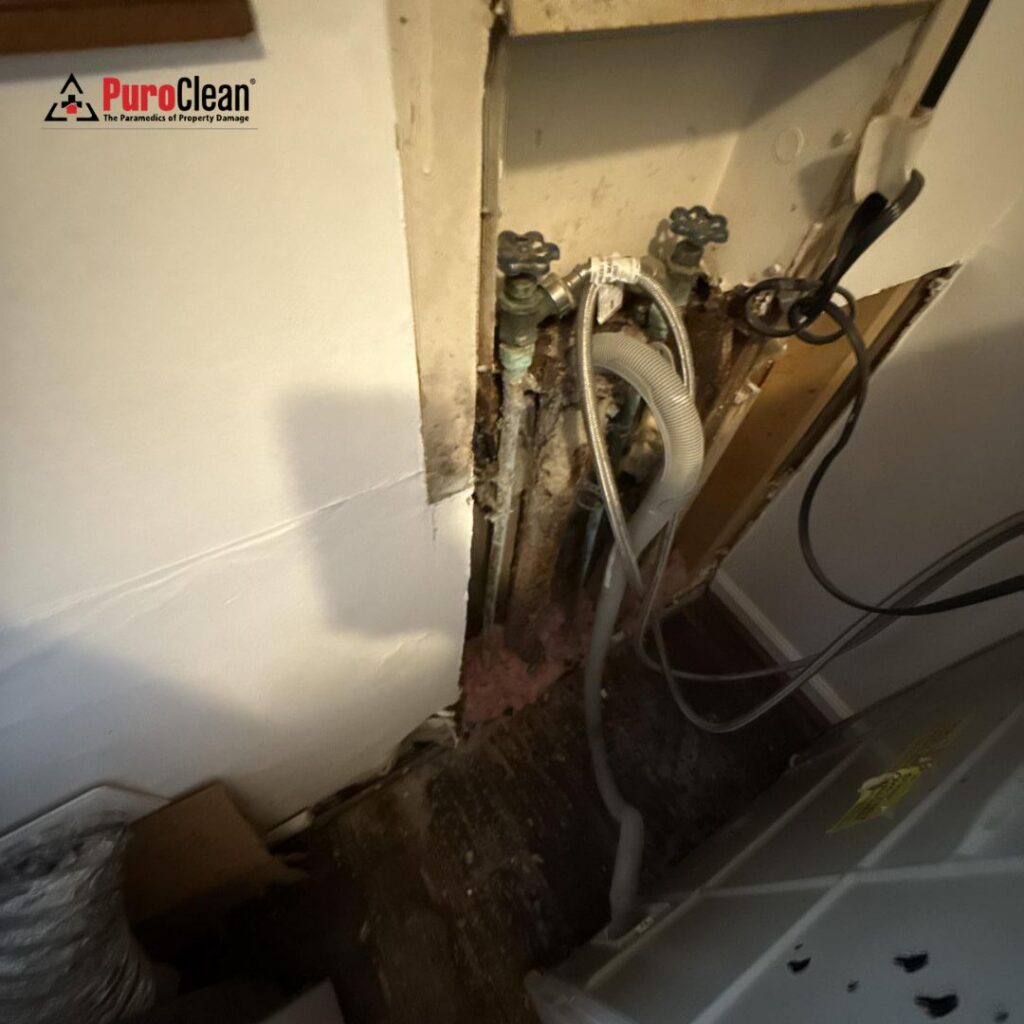
Water heaters are among the hardest-working appliances in any Gwinnett County home, continuously heating and storing dozens of gallons of water day and night.
However, due to age, sediment accumulation, internal tank corrosion, or high municipal water pressure, water heaters eventually reach the end of their functional lifespan. When a water heater fails, it rarely results in a minor drip; more often, it causes a catastrophic tank burst or supply line rupture that releases hundreds of gallons of pressurized water into basements, garages, crawlspaces, or main-level utility closets.
In communities like Lawrenceville, Snellville, Grayson, Lilburn, and Dacula, water heater leaks represent a leading cause of severe residential water damage claims. The speed with which you react during the first 30 to 60 minutes dictates whether the water remains contained or migrates deep into subfloors, drywall, and adjacent living areas. Here is a comprehensive, step-by-step emergency response plan to guide you safely through a water heater flooding crisis.
5 Immediate Emergency Steps When Your Water Heater Leaks
Safety and rapid suppression are your absolute top priorities when dealing with a flooded utility space, basement, or main floor. Follow these five immediate steps as soon as you discover a leaking or bursting water heater:
Step 1: Turn Off the Power or Gas Supply Immediately: Safety comes first. If you have an electric water heater, go to your main circuit breaker panel and switch off the breaker dedicated to the water heater. If you have a gas water heater, turn the gas control valve on the unit to the “OFF” or “PILOT” position. Never touch electrical breaker panels or switches if you are standing in water.
Step 2: Shut Off the Cold Water Supply Valve: Locate the cold water shutoff valve above the top of the water heater tank. Turn the lever clockwise (or pull down if it is a ball valve) to stop fresh water from continuously filling the tank and pouring onto your floor. If the valve is corroded, stuck, or broken, shut off your home’s main water supply valve near the street or meter immediately.
Step 3: Relieve Pressure and Drain Remaining Water: Attach a standard garden hose to the drain valve at the bottom of the water heater tank and run the opposite end to a floor drain, driveway, or outdoors. Open a hot water faucet inside the house to break the vacuum and allow the remaining water inside the tank to drain safely without causing further flooding.
Step 4: Document the Damage Thoroughly for Insurance: Before moving damaged items or wiping up water, take detailed photos and video of the leaking water heater, serial/model plate, standing water levels, ruined flooring, baseboards, and personal property. Thorough photographic evidence is critical for filing your insurance claim smoothly and proving proof of loss.
Step 5: Call a Certified Emergency Restoration Team: Do not rely solely on a plumber. While a licensed plumber replaces or repairs the water heater appliance, a certified restoration team like PuroClean of Snellville & Lawrenceville brings commercial-grade water extractors, LGR dehumidifiers, and thermal imaging cameras to extract water and dry saturated subfloors and drywall before mold takes root.
Common Causes of Water Heater Failures in Gwinnett County
Understanding why water heaters burst or leak helps local homeowners identify warning signs before catastrophic flooding occurs:
Internal Tank Sediment and Corrosion: North Georgia water contains minerals that settle at the bottom of storage tanks over time. As this sediment bakes against the heating element, it creates hot spots that weaken the tank’s glass lining, leading to rust and eventual tank rupture.
Excessive Thermal Expansion and High PSI: Water expands as it heats. If your home lacks an expansion tank or if your Temperature and Pressure (T&P) relief valve fails, excessive internal pressure can crack tank walls or blow out flexible supply lines.
Corroded Sacrificial Anode Rod: The anode rod inside your tank attracts corrosive elements to protect the steel lining. Once the anode rod depletes completely (usually every 3 to 5 years), rust begins attacking the tank walls directly.
Aging Flex Line and Valve Connections: Copper, braided stainless steel, or CPVC supply lines connecting your home’s plumbing to the water heater degrade over time, leading to sudden high-pressure joint bursts.
Water Heater Leak Severity and Response Matrix
Categorizing the severity of a water heater leak helps determine the necessary level of emergency response:
| Leak Classification | Common Symptoms & Indicators | Structural & Property Risk | Action Required |
| Minor Seepage / Drip (Early Warning) | Small puddles around base, slow drip from T&P valve, rusty drain pan water. | Low immediate risk; localized moisture on concrete or drain pan. | Turn off power/gas; call a plumber for valve replacement or tank inspection. |
| Active Tank Rupture (Moderate Flood) | Continuous flowing water, saturated utility closet, standing water in basement/garage. | Moderate to High; water wicks into subflooring, baseboards, and drywall. | Shut off main water valve & power; call PuroClean for emergency extraction. |
| Catastrophic Burst (Major Crisis) | Pressurized stream from top line or sudden bottom blow-out; multi-room flooding. | Severe; collapsed ceilings below, ruined hardwood, structural joist saturation. | Evacuate wet areas; kill main breaker; call PuroClean for 24/7 disaster response. |
Why Professional Restoration is Crucial After a Water Heater Flood
Water heater leaks often occur in enclosed utility closets, basements, or garages where water can seep unnoticed under walls and beneath flooring assemblies. Simply moping up visible water leaves vast amounts of moisture trapped inside subfloors, wall cavities, and insulation.
PuroClean of Snellville & Lawrenceville utilizes scientific structural drying principles to restore your home safely and thoroughly:
Thermal Imaging Infrared Scanning: Detect hidden water migration paths running under hardwood, laminate, or tile, as well as moisture climbing inside wall drywall without tearing down walls needlessly.
Heavy-Duty Truck-Mounted Extraction: Extract hundreds of gallons of standing water from carpets, concrete slabs, and subflooring in minutes to prevent deep structural saturation.
Commercial LGR Dehumidifiers: Lower indoor relative humidity below 40% to force moisture out of dense structural timbers, framing studs, and subfloor joists.
EPA-Registered Antimicrobial Treatments: Disinfect wet utility areas to eliminate bacteria, prevent musty odors, and suppress mold germination within the critical 24 to 48 hour window.
Filing Your Insurance Claim for a Leaking Water Heater in Georgia
Most standard homeowners insurance policies in Georgia cover water damage caused by sudden and accidental water heater ruptures. However, policies generally do not cover the cost of purchasing a new water heater appliance itself, as that is considered routine home maintenance.
To ensure your water damage restoration claim is processed smoothly:
- Report the loss to your insurance agent immediately.
- Keep the failed water heater unit or broken supply hose so the claims adjuster can inspect the cause of loss.
- Partner with PuroClean of Snellville & Lawrenceville. We provide comprehensive moisture readings, thermal imaging reports, and itemized Xactimate estimates directly to your adjuster to streamline approval and maximize your claim payout.
Frequently Asked Questions (FAQ)
Q: How long do water heaters typically last in Lawrenceville and Snellville?
Conventional tank water heaters typically last between 8 to 12 years in Gwinnett County. If your water heater is over 10 years old, inspecting it regularly for rust stains, metallic tastes in hot water, or dampness around the base is essential to prevent a sudden burst.
Q: What should I do if my water heater is leaking from the top?
A leak from the top of the tank usually indicates a loose or corroded cold water inlet pipe, hot water outlet pipe, or a faulty Temperature and Pressure (T&P) relief valve. Shut off the cold water supply valve above the unit and call a professional immediately to prevent further tank pressure buildup.
Q: Can water damage from a water heater cause mold in my basement?
Yes. In Georgia’s humid subtropical climate, mold spores germinate on wet drywall, carpet padding, concrete, and wood within 24 to 48 hours following a water heater flood. Professional structural drying and antimicrobial sanitization are vital to prevent fungal colonies from taking root.
Q: Why choose PuroClean of Snellville & Lawrenceville for water damage restoration?
Our certified technicians offer rapid 24/7 emergency response throughout Lawrenceville, Snellville, Grayson, Lilburn, Dacula, and all of Gwinnett County. We arrive quickly with commercial extraction equipment, manage all insurance documentation, and restore your property safely to pre-loss condition.
Water Heater Flooded Your Gwinnett County Home?

Don’t let standing water ruin your floors, subfloors, and walls. Contact the certified water extraction and structural drying experts at PuroClean of Snellville & Lawrenceville immediately for rapid 24/7 emergency response.
24/7 Water Emergency Hotline: (770) 810-5499
Serving Lawrenceville, Snellville, Grayson, Dacula, Suwanee & All of Gwinnett County
Rapid Water Extraction • Thermal Moisture Scanning • Structural Drying • Direct Insurance Billing